Man's eternal quest and other talks

 74
74

Man's eternal quest and other talks
Yogananda's collected talks, *Man's Eternal Quest*, offer direct, unadorned guidance for the earnest spiritual seeker. Unlike many contemporary spiritual texts that rely on jargon or anecdote, these lectures, first published in 1985, cut to the chase, emphasizing direct experience over abstract theorizing. The strength lies in their consistent focus on practical application, particularly concerning meditation and the cultivation of inner stillness. A notable passage discusses the "science of religion," framing spiritual practice not as blind faith but as an empirical pursuit of truth. However, the collection's format as transcribed talks can sometimes lead to repetition of core ideas across different sections, which, while reinforcing, may feel somewhat redundant to readers already familiar with Yogananda's broader corpus. Nonetheless, for those seeking a clear roadmap to self-awareness and divine connection, this book provides an accessible, actionable framework. It offers a grounded approach to esoteric principles.
📝 Description
74
### What It Is
*Man's Eternal Quest and Other Talks* presents a collection of lectures and discourses delivered by Paramahansa Yogananda. Originally compiled and published in 1985, the work captures Yogananda's teachings on spiritual development and the path to self-realization. The talks cover a broad spectrum of topics, from the nature of consciousness to practical methods for achieving inner peace and divine communion. The emphasis is on the direct experience of truth rather than mere intellectual understanding.
### Who It's For
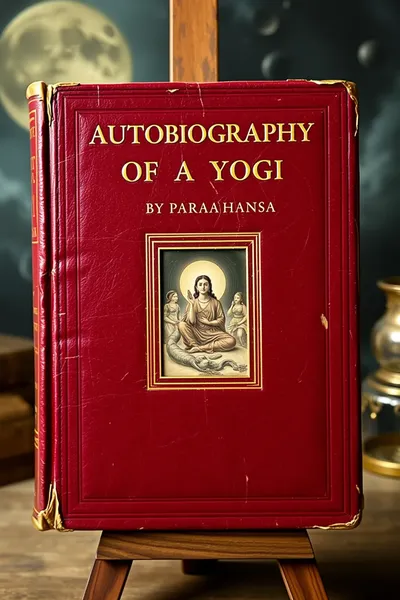
This volume is intended for individuals actively engaged in spiritual seeking, particularly those interested in yogic philosophy and meditation as pathways to enlightenment. It will appeal to students of comparative religion, philosophy, and psychology who are exploring the deeper dimensions of human existence and consciousness. Readers who have encountered Yogananda's other works, such as *Autobiography of a Yogi*, will find these talks to be a natural extension of his core teachings, offering further guidance on the practical application of spiritual principles.
### Historical Context
Paramahansa Yogananda (1893-1952) was a pivotal figure in introducing India's spiritual traditions to the West. His lectures, many of which form the basis of this book, were delivered during a period of significant interest in Eastern spirituality in America. He founded Self-Realization Fellowship in 1920, disseminating the Kriya Yoga tradition. His teachings emerged alongside those of other influential figures like Swami Vivekananda and Jiddu Krishnamurti, contributing to a broader cultural dialogue on consciousness and spirituality that began in the late 19th century and gained momentum throughout the 20th.
### Key Concepts
The book explores several central themes crucial to spiritual growth. One primary concept is the "inner search" for God, posited not as an external entity but as an inherent reality within each individual. Yogananda frequently discusses "Kriya Yoga" as a scientific technique for spiritual advancement, designed to accelerate evolution of consciousness. Another significant idea is the understanding of "Maya" or illusion, which veils the true nature of reality and the divine self, and the techniques for piercing this veil through focused meditation and devotion. The talks also address the "omnipresence of God" and the practical means to realize this truth in daily life.
💡 Why Read This Book?
• Understand the core principles of Kriya Yoga as a scientific path to spiritual evolution, offering a structured method for consciousness expansion that you won't find in purely philosophical texts. • Learn practical techniques for perceiving the "omnipresence of God," moving beyond abstract belief to direct experiential realization, a key tenet of Yogananda's teachings. • Grasp the concept of "Maya" and how to discern illusion from reality, equipping you with tools to navigate the material world while seeking inner truth, as presented in his discourses.
⭐ Reader Reviews
Honest opinions from readers who have explored this book.
❓ Frequently Asked Questions
When was *Man's Eternal Quest* first published?
The collection of talks by Paramahansa Yogananda, titled *Man's Eternal Quest*, was first published in 1985, making it a significant compilation of his teachings made available to a wider audience.
What is Kriya Yoga as discussed in Yogananda's talks?
Kriya Yoga, as presented in *Man's Eternal Quest*, is described as a scientific technique for spiritual advancement and the hastening of human evolution, focused on controlling the life force through specific yogic practices.
Did Yogananda teach in the West?
Yes, Paramahansa Yogananda was instrumental in bringing the teachings of yoga and meditation to the West, establishing Self-Realization Fellowship in 1920 to disseminate these ancient spiritual sciences.
What does Yogananda mean by the 'inner search'?
The 'inner search,' a recurring theme in *Man's Eternal Quest*, refers to the spiritual practice of looking within oneself for God or ultimate truth, rather than seeking it in external objects or doctrines.
Are these talks suitable for beginners in spirituality?
Yes, while drawing on deep spiritual concepts, the talks in *Man's Eternal Quest* are generally accessible to beginners due to Yogananda's clear explanations and emphasis on practical application of spiritual principles.
What is Maya according to Yogananda's teachings?
Maya, as explained in *Man's Eternal Quest*, refers to the cosmic illusion or divine play that veils the true spiritual reality, creating the perception of a separate, material world and self.
🔮 Key Themes & Symbolism
The Science of Meditation
The book consistently frames meditation not as a passive contemplation but as an active, scientific method for spiritual progress. Yogananda elaborates on techniques, particularly those related to Kriya Yoga, designed to directly influence consciousness and accelerate one's evolutionary journey. The talks emphasize the practical, observable results of consistent practice, aligning spiritual pursuit with empirical investigation and personal experience.
Realizing God's Omnipresence
A central tenet is the understanding and realization of God's all-pervading nature. Yogananda guides readers away from abstract theological concepts towards experiencing the divine presence in all aspects of existence. This involves shifting one's perception from the limited material world to the infinite spiritual reality, a transformation facilitated through focused inner work and devotion.
The Nature of Maya
The concept of Maya, or cosmic illusion, is explored as the primary barrier to spiritual realization. The talks explain how this illusion creates the sense of individuality and separation from the divine. Yogananda provides insights into recognizing the transient nature of the material world and the techniques required to pierce this veil, leading to the discovery of the eternal Self.
The Path of Self-Realization
Ultimately, the collection serves as a guide to self-realization, defined as the direct, experiential knowledge of one's true divine nature. The emphasis is on the individual's inherent capacity for this realization, achievable through disciplined effort, wisdom, and grace. The talks outline the steps and inner states necessary to attain this ultimate goal of spiritual life.
💬 Memorable Quotes
“The goal of man is to know God.”
— This concise statement encapsulates the primary purpose of human existence as presented by Yogananda. It frames spiritual practice not as an optional pursuit but as the fundamental objective of life, urging individuals to orient their efforts towards this ultimate realization.
“When you are meditating, you are not alone.”
— This highlights the presence of the divine or higher consciousness experienced during deep meditation. It reassures the practitioner that their inner journey is supported by a cosmic intelligence, fostering a sense of connection and reducing feelings of isolation.
“The Kingdom of God is within you.”
— This familiar phrase, re-contextualized by Yogananda, emphasizes that the divine realm is not an external location but an inner state of being. The quest for God is thus an inward journey of discovering one's own true nature.
“Perceive the divine in all things.”
— This calls for a shift in perception, encouraging the recognition of the sacred in every aspect of creation. It moves beyond dualistic thinking, promoting an understanding of the underlying unity and divine essence that permeates the universe.
“True happiness is not in possessions, but in possession of self.”
— This contrasts worldly pursuits and material accumulation with the inner attainment of self-mastery and spiritual awareness. It suggests that genuine and lasting joy arises from inner development rather than external circumstances.
🌙 Esoteric Significance
Tradition
Yogananda's teachings are firmly rooted in the yogic and Vedantic traditions of India, specifically the lineage of Kriya Yoga as passed down through his guru, Sri Yukteswar Giri. This work fits within the broader Hindu philosophical framework but emphasizes a practical, scientific methodology for spiritual realization, making it accessible within a Western context. It departs from purely devotional or ascetic paths by offering systematic techniques for consciously altering consciousness.
Symbolism
The concept of "prana" (life force) is central, representing the vital energy that sustains all existence and can be directed through yogic techniques. The "spine" is often alluded to as the central channel for spiritual energy, with the chakras representing distinct points of consciousness along this pathway. The "inner search" itself symbolizes the turning inward from the external world of Maya to discover the true Self, often depicted as a light or divine presence within.
Modern Relevance
Yogananda's emphasis on meditation as a practical tool for stress reduction, mental clarity, and spiritual growth continues to resonate strongly. Contemporary mindfulness movements, secularized versions of meditation practices, and even some branches of transpersonal psychology draw implicitly or explicitly on the foundations laid by figures like Yogananda. His holistic approach to well-being, integrating mind, body, and spirit, finds echoes in modern wellness culture and the ongoing exploration of consciousness.
👥 Who Should Read This Book
• Individuals exploring yogic philosophy and meditation: This book offers direct teachings from a master on the practical application of Kriya Yoga and the path to self-realization. • Seekers interested in comparative religion: Readers studying Eastern spiritual traditions will find valuable insights into Hindu philosophy and its practical manifestation in lived experience. • Those seeking a structured approach to inner development: The collection provides actionable guidance and conceptual frameworks for anyone looking to deepen their spiritual practice and understand consciousness.
📜 Historical Context
Paramahansa Yogananda's lectures, compiled in *Man's Eternal Quest*, emerged from a fertile period of East-West spiritual exchange. First published in 1985, these talks reflect the ongoing influence of his teachings, which began in earnest with his arrival in the United States in 1920. Yogananda was a key figure in popularizing yogic philosophy and meditation, notably through his organization, Self-Realization Fellowship. His work gained traction amidst a growing Western interest in Eastern religions, a trend also seen in the popularity of figures like Swami Vivekananda earlier in the century. While Yogananda's approach centered on Kriya Yoga and direct spiritual experience, he operated within a broader intellectual landscape that included philosophical movements like Transcendentalism and Theosophy, as well as the emerging field of psychology exploring consciousness. His teachings offered a practical, experiential alternative to more abstract metaphysical systems, emphasizing a 'science of religion' accessible through disciplined practice.
📔 Journal Prompts
Reflect on the "inner search" as a method for understanding your own consciousness.
Consider the practical application of realizing God's "omnipresence" in your daily interactions.
Analyze how the concept of "Maya" might influence your perceptions of reality.
Explore the "science of religion" through the lens of your personal spiritual experiences.
How can "Kriya Yoga" techniques, as described, be integrated into a modern, active lifestyle?
🗂️ Glossary
Kriya Yoga
A specific yogic technique taught by Paramahansa Yogananda, described as a scientific method for spiritual advancement and the hastening of human evolution through control of life force.
Maya
A Sanskrit term referring to cosmic illusion or the divine play that conceals the true spiritual reality, causing beings to perceive a separate, material world.
Prana
The vital life force or energy that permeates the universe and sustains all living beings, which can be consciously controlled and directed through yogic practices.
Self-Realization
The direct, experiential knowledge of one's true divine nature, leading to liberation from suffering and the realization of unity with the Absolute.
Chakras
Energy centers within the subtle body, typically along the spine, associated with different states of consciousness and physiological functions, as described in yogic traditions.
Inner Search
The process of turning one's attention inward, away from external distractions, to explore the depths of one's own consciousness and discover the divine within.
Omnipresence
The quality of being present everywhere at the same time; in a spiritual context, referring to the all-pervading nature of God or the Absolute.