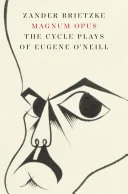
Magnum Opus
 83
83

Magnum Opus
Zander Brietzke’s Magnum Opus offers a compelling re-evaluation of Eugene O'Neill’s monumental, yet incomplete, family saga. Brietzke argues persuasively that the extant *A Touch of the Poet* and *More Stately Mansions* function as distilled embodiments of the entire eleven-play cycle O'Neill envisioned between 1935 and 1939. The book’s strength lies in its meticulous archival work, bringing O'Neill’s fragmented intentions into sharper focus. Brietzke’s interpretation of the psychological underpinnings of the family’s historical trajectory is particularly sharp, especially when he connects the characters' aspirations to the broader failures of the American Dream. A limitation, however, is the dense academic prose, which may occasionally obscure the theatrical imagination Brietzke strives to evoke. The exploration of O'Neill's own psychological state as reflected in the plays, particularly concerning the legacy of his father, offers a valuable lens. Ultimately, Magnum Opus provides a significant contribution to O'Neill scholarship, re-framing our understanding of a dramatic project left tragically unfinished.
📝 Description
83
### What It Is
Magnum Opus presents an original and provocative analysis of Eugene O'Neill's ambitious, yet largely unrealized, cycle play project. Between 1935 and 1939, the Nobel laureate playwright conceived a monumental series intended to chronicle an American family's saga across generations. Despite this grand vision, only two of the eleven projected plays, *A Touch of the Poet* and *More Stately Mansions*, were completed.
### Who It's For
This work is intended for scholars of American drama, literary critics specializing in 20th-century theater, and students of Eugene O'Neill's oeuvre. It will also appeal to readers interested in the intersection of literary creation, archival research, and theatrical interpretation. Those fascinated by the psychological depth and historical sweep of O'Neill's dramatic output will find particular value.
### Historical Context
Eugene O'Neill's cycle project emerged during a period of intense creative output and personal struggle for the playwright, following his successes with plays like *Long Day's Journey into Night* (though published posthumously) and *The Iceman Cometh*. The 1930s saw significant shifts in American theater, with emerging realist and expressionist movements influencing dramatic writing. O'Neill's own engagement with psychoanalysis and existential themes placed him at the forefront of contemporary intellectual currents, though his vast, unfinished cycle remained a subject of speculation and scholarly debate long after his death.
### Key Concepts
The central argument of Magnum Opus posits that the two completed plays, *A Touch of the Poet* and *More Stately Mansions*, encapsulate the thematic and structural core of O'Neill's entire intended cycle. Brietzke employs archival research, including O'Neill's notes and drafts, alongside rigorous literary analysis and imaginative theatrical reconstruction to demonstrate how these two works serve as microcosms of the larger, unwritten saga. The book explores the recurring motifs of familial legacy, the pursuit of an elusive American Dream, and the psychological burdens passed down through generations, as distilled within these extant texts.
💡 Why Read This Book?
• Gain a unique perspective on Eugene O'Neill's unrealized eleven-play cycle, understanding how *A Touch of the Poet* and *More Stately Mansions* (written between 1935-1939) are argued to contain its essential DNA. • Access the results of extensive archival research, including O'Neill's notes and drafts, offering insights into the playwright's creative process that are not readily available elsewhere. • Appreciate a novel critical framework for analyzing dramatic cycles, learning how to identify core thematic and structural elements within incomplete or fragmented artistic endeavors.
⭐ Reader Reviews
Honest opinions from readers who have explored this book.
❓ Frequently Asked Questions
What is Eugene O'Neill's Magnum Opus cycle play project?
It was an ambitious, unfinished series of eleven plays conceived by Eugene O'Neill between 1935 and 1939, intended to trace the history of an American family across several generations.
Which plays did O'Neill complete for his Magnum Opus cycle?
Only two plays were completed: *A Touch of the Poet* and *More Stately Mansions*. The full cycle was envisioned to have eleven parts.
What is Zander Brietzke's central argument in Magnum Opus?
Brietzke argues that the two completed plays, *A Touch of the Poet* and *More Stately Mansions*, represent the core thematic and structural essence of the entire eleven-play cycle.
What methods does Brietzke use in his analysis?
He combines archival research of O'Neill's papers, literary analysis of the plays, and a form of theatrical imagination to reconstruct and interpret the cycle's potential.
When did Eugene O'Neill work on this cycle?
Eugene O'Neill worked on the Magnum Opus cycle project primarily between 1935 and 1939.
What is the significance of the completed plays within the cycle?
Brietzke posits that *A Touch of the Poet* and *More Stately Mansions* are not merely isolated works but contain the foundational elements and thematic preoccupations of the entire, unwritten eleven-play saga.
🔮 Key Themes & Symbolism
The Unfinished Cycle
The book centers on Eugene O'Neill's grand, yet ultimately incomplete, eleven-play cycle intended to span generations of an American family. Brietzke focuses on the period from 1935 to 1939 when O'Neill conceived this monumental work. The analysis posits that the two completed plays, *A Touch of the Poet* and *More Stately Mansions*, serve as concentrated expressions of the entire cycle's thematic and structural ambitions, offering a lens through which to understand the unwritten narratives and O'Neill's vision of historical and familial continuity.
Legacy and Inheritance
Central to O'Neill's cycle, and thus to Brietzke's analysis, is the exploration of how familial legacies—both positive and destructive—are inherited across generations. The completed plays, particularly *A Touch of the Poet*, delve into the psychological burdens and aspirations passed down, examining how past traumas and societal pressures shape the present and future of the family. This theme connects directly to O'Neill's broader interest in the American experience and the often-illusory pursuit of reinvention.
Archival Discovery and Interpretation
Magnum Opus is deeply rooted in archival research, engaging with O'Neill's extensive notes, drafts, and correspondence related to the cycle project. Brietzke uses these primary sources not just to reconstruct O'Neill's intentions but to critically interpret them, blending scholarly analysis with theatrical imagination. This approach allows for a reconstruction of the potential dramatic and thematic scope of the unrealized plays, offering a unique insight into the creative process behind a legendary playwright's most ambitious undertaking.
The American Dream's Shadow
The cycle plays, as interpreted by Brietzke, engage critically with the concept of the American Dream. The family's trajectory through generations reflects not only aspirations for success and fulfillment but also the inherent disillusionment and psychological toll that the pursuit of this ideal can exact. The completed works, *A Touch of the Poet* and *More Stately Mansions*, are presented as microcosms illustrating the complex relationship between individual ambition and the often-unfulfilled promises of American identity.
💬 Memorable Quotes
“Brietzke argues that *A Touch of the Poet* and *More Stately Mansions* represent the core of the entire cycle.”
— This central thesis suggests that these two extant plays are not merely fragments but contain the essential thematic and structural DNA of the larger, unwritten eleven-play saga O'Neill envisioned.
“The work combines archival research, literary analysis, and theatrical imagination.”
— This methodological approach highlights the book's interdisciplinary nature, moving beyond traditional literary criticism to reconstruct the performative potential of O'Neill's unfinished project.
“O'Neill worked on the cycle from 1935 to 1939.”
— This specific timeframe anchors the conception of the ambitious, multi-generational family saga within a particular period of O'Neill's creative output and the broader context of American literary history.
“The cycle was proposed to include eleven plays.”
— This detail underscores the sheer scale of O'Neill's ambition for the project, emphasizing the magnitude of what was envisioned and the significant loss represented by its incomplete state.
“The plays trace the history of an American family through several generations.”
— This describes the fundamental narrative scope of O'Neill's cycle, focusing on themes of lineage, historical progression, and the evolution of a single family's experience within the American context.
🌙 Esoteric Significance
Tradition
While not strictly adhering to a singular esoteric tradition, O'Neill's work, particularly his cycle plays, engages deeply with themes that resonate with Gnostic and Hermetic thought. The exploration of inherited curses, the struggle against fate, and the search for redemption or self-knowledge within a fallen world echoes Gnostic narratives of spiritual struggle. The cyclical nature of familial history and the weight of ancestral patterns can be seen through a Hermetic lens of cosmic and personal recurrence. Brietzke's analysis, by focusing on the psychological and generational transmission of 'burdens' and 'aspirations,' touches upon a form of secularized spiritual inquiry into human destiny.
Symbolism
Within the context of O'Neill's cycle, though not explicitly esoteric, symbols often carry profound psychological and archetypal weight. The 'house' or inherited estate can symbolize the weight of the past and ancestral burdens, a recurring motif in *A Touch of the Poet*. The 'mask' or the projected persona, a concept O'Neill explored in other works, signifies the gap between inner reality and outward appearance, a common theme in mystical traditions seeking to unveil hidden truths. The cyclical structure itself acts as a powerful symbol of repetition, fate, and the potential for breaking free from predetermined patterns.
Modern Relevance
Modern scholars and practitioners interested in psychological depth in drama, as well as those exploring the intersection of personal history and collective identity, find resonance in O'Neill's unfinished cycle. Brietzke's work provides a framework for understanding how artistic ambition can be distilled even in incomplete forms. Contemporary explorations of generational trauma, the critique of the American Dream, and the use of archival material in creative scholarship can draw inspiration from this analysis. Thinkers focused on the enduring impact of family lineage and the psychological inheritance of trauma find O'Neill's themes, as illuminated by Brietzke, remarkably relevant to current discussions in psychology and sociology.
👥 Who Should Read This Book
• Literary scholars and theater historians specializing in 20th-century American drama, particularly Eugene O'Neill, seeking a new critical perspective on his unfinished magnum opus. • Graduate students of literature and dramatic arts who need in-depth analysis of O'Neill's oeuvre, focusing on the interplay between completed works and ambitious unrealized projects. • Readers interested in the creative process of playwrights and the challenges of large-scale literary projects, particularly those fascinated by archival research and its application to literary criticism.
📜 Historical Context
Eugene O'Neill’s Magnum Opus cycle project emerged in the late 1930s, a period of profound personal and artistic development for the playwright. Having achieved significant critical acclaim and Nobel Prize recognition by 1936, O'Neill was grappling with personal demons and existential questions that deeply informed his work. The era was characterized by a burgeoning interest in psychoanalysis, which clearly influenced O'Neill's explorations of family dynamics and inherited trauma. While playwrights like Tennessee Williams and Arthur Miller would later tackle similar themes of American identity and familial struggle, O'Neill's ambitious, multi-generational scope was unparalleled. The intellectual currents of the time, including existentialism and social realism, provided fertile ground for his dramatic inquiries. Despite the conceptual grandeur of the cycle, only two plays, *A Touch of the Poet* (1942) and *More Stately Mansions* (published posthumously), were realized, leaving the full vision largely to scholarly reconstruction and interpretation.
📔 Journal Prompts
The concept of the 'core' of an unfinished cycle, as presented in Magnum Opus.
O'Neill's period of work on the cycle: 1935-1939.
The relationship between *A Touch of the Poet* and *More Stately Mansions* as argued by Brietzke.
The role of archival research in understanding Eugene O'Neill's intentions.
Familial legacy as a driving force in O'Neill's cycle.
🗂️ Glossary
Cycle Play
A series of plays, often connected by characters, themes, or historical scope, intended by the author to form a larger, unified work.
Archival Research
The study and interpretation of primary source documents, such as manuscripts, letters, and notes, to understand historical events or creative processes.
Literary Analysis
The critical examination of a literary work, focusing on its structure, style, themes, characters, and historical context.
Theatrical Imagination
The ability to envision and interpret dramatic texts not just as literature but as potential stage productions, considering performance, staging, and audience reception.
American Family Saga
A narrative that chronicles the history and experiences of a single family across multiple generations, often reflecting broader societal changes and the American experience.
O'Neill's Cycle Project
Refers specifically to Eugene O'Neill's planned but largely uncompleted series of eleven plays from 1935-1939, intended to depict an American family's generational history.
Core of the Cycle
The central argument of Brietzke's work, positing that the two completed plays (*A Touch of the Poet*, *More Stately Mansions*) contain the essential thematic and structural essence of the entire intended eleven-play cycle.