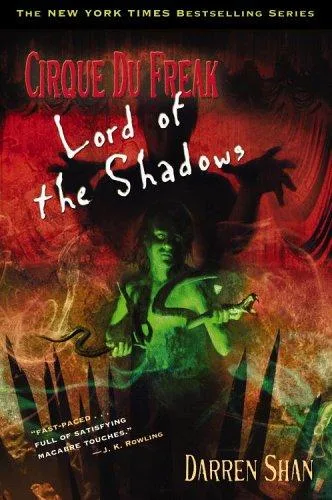
Lord of the Shadows (Cirque Du Freak #11)
 78
78

Lord of the Shadows (Cirque Du Freak #11)
Darren Shan's *Lord of the Shadows* continues to deliver the grim intensity that fans have come to expect, pushing the *Cirque Du Freak* series into its penultimate stages. The narrative doesn't shy away from the brutal realities of the vampaneze-vampire war, presenting a visceral depiction of conflict and its cost. One particular strength lies in the exploration of desperation; characters are driven to extreme measures, showcasing a compelling, albeit bleak, portrayal of survival. However, the sheer relentless darkness can, at times, feel overwhelming, occasionally sacrificing nuanced character moments for the sake of plot progression. The depiction of the final confrontation, while visually striking, feels somewhat rushed, especially considering the build-up across previous novels. Despite this, the book effectively ratchets up the stakes, leaving readers in a precarious position as the saga nears its conclusion. It remains a potent, dark fantasy that does not flinch from its own grim premise.
📝 Description
78
### What It Is
*Lord of the Shadows*, the eleventh installment in Darren Shan's *Cirque Du Freak* series, plunges readers into the escalating conflict between vampires and their vampaneze adversaries. Published in 2004, this installment continues the dark, fantastical narrative arc that began with the first book. The story focuses on the dire consequences of the ongoing war and the difficult choices faced by its protagonists as they grapple with the potential annihilation of their respective species. It is set within a world where supernatural creatures coexist uneasily with humanity, often hidden from plain sight.
### Who It's For
This volume is primarily for established fans of the *Cirque Du Freak* saga, who have followed the intricate plot and character developments through its preceding ten books. Readers who appreciate gothic fantasy, stories with morally ambiguous characters, and narratives exploring themes of loyalty, sacrifice, and the nature of good versus evil will find *Lord of the Shadows* compelling. It appeals to those who enjoy complex mythologies and a consistently dark, often brutal, tone within their young adult or adult fantasy literature.
### Historical Context
Published in 2004, *Lord of the Shadows* emerged during a period when the young adult fantasy genre was experiencing a surge in popularity, fueled by series like *Harry Potter* and *Twilight*. Darren Shan's work, however, distinguished itself with a more mature and unflinching approach to violence and thematic darkness. While not directly engaging with specific esoteric movements of the time, its exploration of monstrous races, hidden societies, and the blurred lines between humanity and the 'other' tapped into broader cultural fascinations with the supernatural. The series' initial publication run saw considerable success, establishing Shan as a significant voice in dark fantasy for younger audiences, contrasting with the more lighthearted fantasy prevalent in some earlier decades.
### Key Concepts
The narrative hinges on the concept of species warfare, specifically the ancient and bloody conflict between vampires and vampaneze. This war is not merely physical but also ideological, involving differing philosophies on survival, power, and coexistence. The book also delves into the idea of destiny versus free will, as characters are forced to confront prophecies and their own roles within a larger, often tragic, unfolding of events. The consequences of leadership, particularly in times of crisis, and the erosion of innocence are also central, as characters witness and participate in increasingly grim realities. The concept of 'tainted' blood and its implications for identity and belonging is another significant element.
💡 Why Read This Book?
• Gain insight into the mechanics of species conflict as depicted in the vampaneze-vampire war, a central theme first introduced in the early books of the *Cirque Du Freak* series. • Experience the weight of leadership decisions under duress, particularly how characters like Mr. Tall are forced to make difficult choices impacting entire races. • Explore the theme of destiny and prophecy as it impacts the protagonist's journey, a concept that becomes increasingly critical in the later stages of the *Cirque Du Freak* saga.
⭐ Reader Reviews
Honest opinions from readers who have explored this book.
❓ Frequently Asked Questions
What is the primary conflict in Lord of the Shadows?
The primary conflict is the escalating war between the vampires and the vampaneze, a brutal struggle for survival and dominance that threatens to consume both species.
Who are the main characters involved in the conflict?
Key characters include Darren Shan, Mr. Tiny, Mr. Tall, and the leaders of the vampaneze, all deeply entrenched in the ongoing war and its devastating consequences.
What is the significance of the Cirque Du Freak in this book?
The Cirque Du Freak serves as a backdrop and a refuge for some characters, but its inhabitants are increasingly drawn into the wider supernatural conflict, highlighting its role as a hidden world.
Does Lord of the Shadows offer any resolution to the main conflict?
No, this installment escalates the conflict significantly rather than resolving it, setting the stage for the series' final confrontation and leaving many plot threads unresolved.
What themes does Darren Shan explore in this book?
Shan explores themes of war, sacrifice, destiny, the corrupting nature of power, and the blurred lines between good and evil, all within a dark fantasy setting.
When was Lord of the Shadows first published?
Lord of the Shadows was first published in 2004, continuing the narrative arc of the Cirque Du Freak series.
🔮 Key Themes & Symbolism
Species Warfare
The narrative is dominated by the existential conflict between vampires and vampaneze. This war is not merely a backdrop but the driving force, exploring the brutal realities of inter-species conflict, the desperation for survival, and the moral compromises made by all sides. The book depicts the widespread destruction and loss of life, questioning the nature of inherent enmity and the possibility of peace when deeply ingrained hatred exists. It presents a stark view of a world where species cannot coexist, forcing characters to choose sides and face devastating consequences.
Destiny and Prophecy
Central to the plot is the role of destiny and prophecy in shaping the characters' lives and the outcome of the war. Characters grapple with foretold events and their predetermined roles, questioning whether they have agency or are merely pawns in a larger cosmic game. This theme delves into the psychological impact of believing one's fate is sealed, exploring themes of free will versus determinism. The book examines how characters react when faced with prophecies, some embracing them and others fighting against them, leading to complex character arcs and plot developments.
The Cost of Power
The pursuit and exercise of power, particularly in the context of war, are critically examined. Characters, especially those in leadership positions like Mr. Tall and the vampaneze leaders, face the immense burden of making decisions that result in widespread death and destruction. The book illustrates how power can corrupt and how the desire for dominance leads to moral decay. It explores the psychological toll of wielding power responsibly, or irresponsibly, and the sacrifices required to maintain control or achieve victory, often at a terrible personal and societal price.
Erosion of Innocence
As the war intensifies, the characters, particularly Darren Shan himself, undergo a profound loss of innocence. Witnessing and participating in brutal violence, betrayal, and the deaths of loved ones forces them to mature rapidly and adopt a more jaded worldview. The narrative highlights how prolonged conflict strips away youthful idealism, replacing it with pragmatism, cynicism, and a deep understanding of the world's harsh realities. This theme underscores the tragic impact of the war on the younger generation and their transition into a world defined by struggle.
💬 Memorable Quotes
“The war was no longer a conflict of armies, but a battle for the soul of every creature.”
— This interpretation highlights the book's focus on the moral and existential stakes of the ongoing conflict, suggesting that the war transcends mere physical combat and impacts the very essence of being for vampires and vampaneze.
“To survive, one must become the monster one fights.”
— This concept reflects the theme of moral compromise and the loss of innocence, where characters must adopt brutal tactics and potentially embrace darker aspects of themselves to overcome their enemies.
“Destiny is a cage, but freedom lies in how we choose to rattle its bars.”
— This idea speaks to the tension between predetermined fate and free will explored in the series, suggesting that while external forces may impose a path, individual choices within those constraints define one's true freedom.
“Every victory was stained with the blood of the fallen, a grim reminder of the price.”
— This interpretation emphasizes the heavy cost of the war, illustrating that even moments of success are overshadowed by the immense loss and sacrifice, contributing to the book's dark and somber tone.
“The line between hunter and hunted blurred with every passing day.”
— This paraphrased concept captures the escalating and chaotic nature of the conflict, where the distinctions between aggressor and victim become increasingly indistinct as the war progresses.
🌙 Esoteric Significance
Tradition
While not explicitly tied to a single esoteric tradition, *Lord of the Shadows* draws upon archetypes and themes common in Western occultism, particularly those concerning duality, shadow selves, and the nature of the monstrous. It echoes Gnostic ideas of a fallen world and the struggle against malevolent forces (the vampaneze representing a corrupted or opposing 'other'). The vampire mythos itself has deep roots in folklore and has been reinterpreted through various esoteric lenses, often symbolizing primal instincts, forbidden knowledge, or the shadow aspect of the psyche. Shan's work updates these concepts for a modern, younger audience, presenting them through a narrative of species conflict.
Symbolism
The vampire, a central figure, symbolizes immortality, predatory nature, and the allure of forbidden power, often representing the shadow self or the primal instincts lurking beneath civilization. The vampaneze, as the antithesis, can symbolize a perverted or corrupted form of existence, a mirror image of the vampire that highlights the destructive potential inherent in all beings when driven by hatred. The 'Cirque Du Freak' itself functions symbolically as a liminal space, a hidden world where the boundaries between human and monster, reality and illusion, are constantly tested and blurred.
Modern Relevance
Contemporary urban fantasy and paranormal romance often explore similar themes of hidden supernatural societies and inter-species conflict, owing a debt to series like *Cirque Du Freak*. Thinkers and writers examining the 'monstrous other' in literature and culture find fertile ground in Shan's work. Furthermore, the series' unflinching look at the psychological toll of war and violence continues to be relevant in discussions about trauma and resilience in young adult literature and beyond, influencing how modern narratives grapple with dark themes.
👥 Who Should Read This Book
• Young adult readers seeking dark fantasy narratives that explore mature themes of war, sacrifice, and moral ambiguity. • Fans of gothic literature and vampire lore who appreciate a gritty, complex take on classic mythological creatures. • Readers interested in exploring the psychological impact of conflict and the erosion of innocence within a fantastical setting.
📜 Historical Context
Published in 2004, *Lord of the Shadows* arrived during a boom period for dark fantasy aimed at younger audiences, a trend amplified by the global success of series like J.K. Rowling's *Harry Potter*. Darren Shan’s *Cirque Du Freak* series, however, carved out a distinct niche by embracing a more visceral and unflinching depiction of violence and mature themes, setting it apart from lighter fare. While not directly aligned with specific esoteric movements of the era, its exploration of hidden worlds, monstrous beings, and the moral ambiguity of its characters resonated with a growing interest in the supernatural and gothic elements within popular culture. The series gained considerable traction, earning critical attention and a dedicated readership that appreciated its darker, more complex narrative. Its publication followed a period where occult and gothic literature, from Bram Stoker's *Dracula* (1897) to more contemporary horror, had laid groundwork for such dark fantasy narratives, though Shan's YA focus was innovative for its time.
📔 Journal Prompts
The escalating vampaneze-vampire war and its toll.
Darren's evolving moral compass amidst conflict.
The symbolism of the Cirque Du Freak as a sanctuary.
Confronting one's own shadow self, as represented by the conflict.
The weight of leadership and prophecy on characters like Mr. Tall.
🗂️ Glossary
Vampaneze
A race of beings who are mortal enemies of the vampires, depicted as having a different physiology and a deep-seated hatred for vampires, driving the central conflict of the series.
Cirque Du Freak
A traveling circus troupe comprised of supernatural beings, serving as both a hidden community and a point of entry into the world of monsters for the protagonist, Darren Shan.
Tainted Blood
A concept referring to bloodlines or individuals considered impure or corrupted, often used to denote those who are half-vampire or have mixed heritage, leading to prejudice and conflict.
Vampaneze Lord
Powerful leaders within the vampaneze hierarchy, commanding armies and directing the war effort against the vampires. Their actions often escalate the conflict.
Mr. Tiny
A mysterious and powerful entity who manipulates events from behind the scenes, often acting as an antagonist or a force of chaos within the narrative.
Mr. Tall
The leader of the vampires and a significant figure in the supernatural world, responsible for guiding his people through the war and making critical decisions.
The Great Vampire War
The overarching conflict between the vampires and the vampaneze, a central plot element that drives the narrative, leading to widespread destruction and loss.