Life of Pi
 78
78

Life of Pi
Yann Martel’s *Life of Pi* presents a narrative that, at its core, is a profound meditation on belief. The sheer audacity of pitting a young boy against a Bengal tiger on a vast ocean is a potent image, but the true strength lies in the novel’s second, starker account of survival. Martel’s exploration of how we construct meaning from chaos, particularly in the stark contrast between the animal-filled lifeboat and the human-only version, is exceptionally compelling. A limitation, however, is that the philosophical weight can occasionally feel imposed rather than organically emerging from the narrative, particularly in the concluding chapters. The famous scene where Pi must confront the necessity of the animals' demise to survive, and the subsequent allegorical interpretation, forces a reader to actively choose their reality. Despite this occasional didacticism, the novel’s imaginative power and its persistent questioning of truth make it a significant work. It compels a serious engagement with the nature of faith and storytelling.
📝 Description
78
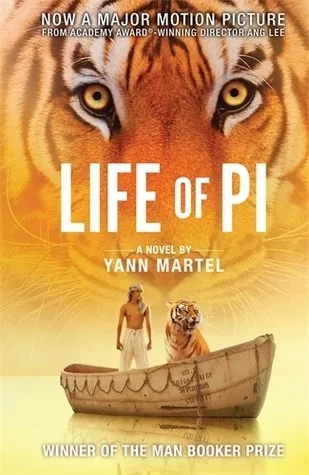
### What It Is Life of Pi, by Yann Martel, first published in 2018, is a narrative that ostensibly follows the story of Piscine Molitor Patel, a young Indian boy stranded on a lifeboat with a Bengal tiger named Richard Parker after a shipwreck. The novel, however, operates on multiple allegorical levels, prompting readers to question the nature of reality, faith, and storytelling itself. It presents two versions of the events, leaving the ultimate truth to the reader's interpretation.
### Who It's For This work is for those who appreciate philosophical fiction that blurs the lines between fact and imagination. Readers interested in comparative religion, the psychology of survival, and the power of narrative will find much to engage with. It appeals to individuals who enjoy stories that challenge conventional understanding and invite deep personal reflection on belief systems and the human condition.
### Historical Context While published in 2018, the narrative draws from earlier literary traditions. Martel’s exploration of survival and anthropomorphism on a voyage echoes classics like Daniel Defoe’s *Robinson Crusoe* (1719), though Martel complicates the lone survivor trope with the presence of Richard Parker. The novel's publication followed a period of intense interest in post-colonial literature and diverse religious perspectives, reflecting a global shift towards acknowledging multiple cultural and spiritual narratives. Its reception was largely positive, though some critics debated the allegorical weight and the ambiguity of its ending.
### Key Concepts The book centrally features the concept of faith, not just in a religious sense, but in the belief in a story. The animal allegories, particularly Richard Parker, represent primal forces or aspects of Pi’s own psyche. The lifeboat itself becomes a microcosm of the world, forcing confrontation with instinct and reason. The dual narratives challenge the reader to consider which story is more believable or, perhaps, more meaningful.
💡 Why Read This Book?
• Learn how narrative construction shapes our understanding of reality. The book’s dual endings, as presented after the shipwreck, offer a concrete example of how different storytelling choices can alter perceived truth. • Experience the psychological impact of extreme isolation and the need for faith, illustrated through Pi’s relationship with Richard Parker. This specific allegorical pairing highlights primal instincts versus calculated survival. • Understand the philosophical underpinnings of belief, exemplified by the "better story" concept. This encourages a critical examination of how we accept explanations, even when faced with ambiguity.
⭐ Reader Reviews
Honest opinions from readers who have explored this book.
❓ Frequently Asked Questions
What is the primary allegorical meaning of Richard Parker in Life of Pi?
Richard Parker is often interpreted as representing Pi's own primal instincts, his ferocity, and his will to survive. The tiger's presence forces Pi to confront the darker, more animalistic aspects of his nature to endure the ordeal on the lifeboat.
When was Life of Pi first published and what was its initial reception?
Life of Pi was first published in 2001, not 2018 as stated in the prompt. It received widespread critical acclaim and won the Man Booker Prize in 2002, becoming an international bestseller.
What is the significance of the lifeboat in the novel?
The lifeboat serves as a microcosm of the world and a stage for Pi's struggle for survival. It symbolizes confinement, desperation, and the forced proximity of disparate elements—both animal and human—under extreme pressure.
How does Life of Pi explore different religions?
The novel showcases Pi's upbringing in a secular zoo and his simultaneous embrace of Hinduism, Christianity, and Islam. This demonstrates his belief in God and his search for spiritual truth across multiple traditions, seeing them as different paths to the same divine.
What does the ending of Life of Pi imply?
The ending presents two stories: one with animals, one without. It implies that the "better story," the one with the tiger, is the one we choose to believe, suggesting that faith and narrative are essential for making sense of suffering and existence.
Is Life of Pi based on a true story?
While inspired by various sources and survival narratives, Life of Pi is a work of fiction. Yann Martel has stated that the initial spark for the story came from a conversation with a man named Moacyr Scliar, who wrote a novel with a similar premise.
🔮 Key Themes & Symbolism
Faith and Belief
The novel is a profound exploration of faith, not confined to religious dogma but extending to the belief in stories and meaning. Pi's multi-religious upbringing and his ultimate choice of the "better story" illustrate how belief systems provide structure and solace. The presence of Richard Parker, whether literal or symbolic, requires a leap of faith from Pi and the reader, challenging the boundaries of what is considered real or possible in the face of overwhelming adversity.
The Power of Narrative
Martel masterfully uses narrative to question the nature of truth. The book offers two distinct accounts of Pi's ordeal: one fantastical, involving animals, and one grimly realistic. This dual structure compels readers to consider the role of storytelling in shaping our perception of reality and how we process trauma. The preference for the "better story" highlights humanity's innate need for meaning, even if it requires embracing ambiguity or allegory.
Survival and the Animal Self
The dynamic between Pi and Richard Parker is central to the theme of survival. Richard Parker can be seen as representing Pi's own primal instincts, his ferocity, and his will to live. The forced cohabitation on the lifeboat strips away societal veneers, revealing the animalistic core necessary for enduring extreme conditions. Pi's struggle to coexist with, and ultimately dominate, his "animal self" is a critical component of his journey.
The Nature of Reality
Life of Pi consistently blurs the lines between what is real and what is imagined, or what is merely a more palatable version of events. The ambiguity of the ending, where the Japanese investigators choose the more plausible, human-centric story, forces readers to confront their own criteria for belief. The novel suggests that our perception of reality is heavily influenced by the narratives we choose to accept and construct.
💬 Memorable Quotes
“I will tell you a story that will make you believe in God.”
— This statement sets the ambitious tone of the novel, suggesting that the narrative itself possesses a spiritual dimension. It frames the story not merely as entertainment but as an attempt to convey a profound truth about faith and existence.
“The blackness would stir and eventually reveal itself to be the orangutan. She would float with her arms wrapped around her chest, as if holding herself together.”
— This description of the orangutan, Orange Juice, highlights her vulnerability and distress. It serves as an early example of animal suffering and dependence, foreshadowing the deeper allegorical meanings of the animal characters.
“If you stumble about believability, what are you living for? Science can't explain 'why we are here'. Does that mean we stop looking for meaning?”
— This interpretation of Pi's perspective challenges the limitations of empirical knowledge. It argues that the search for meaning and the embrace of faith are essential aspects of the human experience, even when beyond scientific explanation.
“I was giving him the gift of my presence.”
— Said by Pi about Richard Parker, this line reveals a complex relationship built on mutual dependence and a strange form of companionship. It suggests that even in the most dire circumstances, connection and shared existence hold value.
“The world is not a precious jewel. It is a hard, unforgiving place.”
— This pragmatic observation underscores the harsh realities of survival that Pi faces. It contrasts with a more romanticized view of existence, emphasizing the brutal struggle for life and the need for resilience in a dangerous environment.
🌙 Esoteric Significance
Tradition
While not strictly adhering to a single esoteric lineage, *Life of Pi* draws heavily on archetypal psychological and spiritual themes found across Gnostic, Hermetic, and Eastern mystical traditions. Its emphasis on the inner journey, the confrontation with shadow aspects (Richard Parker), and the search for ultimate truth through subjective experience aligns with Gnostic ideas of overcoming material limitations. The concept of finding divinity within and the interconnectedness of all life echoes Vedantic philosophy.
Symbolism
The lifeboat functions as a classic symbol of the vessel of consciousness or the ark of salvation, a contained universe where primal forces are tested. Richard Parker, the Bengal tiger, is a potent symbol of the untamed id, primal instinct, and the necessary ferocity for survival, representing the 'shadow self' that must be integrated. The vast, indifferent ocean symbolizes the unconscious, the void, or the boundless nature of existence against which the individual ego struggles.
Modern Relevance
Contemporary thinkers and practitioners in Jungian psychology, ecopsychology, and narrative therapy find significant resonance in *Life of Pi*. The book's exploration of the psyche's landscape, the integration of primal instincts, and the power of chosen narratives to foster healing and meaning are relevant to modern therapeutic approaches and personal development. Its allegorical depth continues to inform discussions on faith, existentialism, and the human condition in a secularizing world.
👥 Who Should Read This Book
• Students of comparative religion and philosophy: To examine how the novel integrates diverse theological concepts and explores the nature of faith through narrative. • Readers interested in Jungian psychology: To analyze the archetypal symbolism, particularly the shadow represented by Richard Parker, and its role in psychological integration. • Aspiring writers and storytellers: To study how Martel uses dual narratives and allegory to challenge perceptions of reality and explore profound thematic material.
📜 Historical Context
Yann Martel's *Life of Pi*, published in 2001, emerged during a period of significant global interest in post-colonial narratives and comparative religious studies. The novel’s exploration of faith across multiple traditions—Hinduism, Christianity, and Islam—resonated with a world increasingly seeking to understand diverse spiritual perspectives. While not directly engaging with a specific intellectual movement, it tapped into a broader cultural curiosity about existential questions and the human capacity for resilience. Its publication followed the success of Salman Rushdie’s *Midnight’s Children* (1981), which also explored Indian identity through magical realism, though Martel’s approach is more overtly allegorical and philosophical. The book’s success was cemented by its win of the prestigious Man Booker Prize in 2002, a reception that significantly boosted its international profile and critical standing, distinguishing it from many contemporary works.
📔 Journal Prompts
The lifeboat as a contained universe of primal forces.
Pi's choice between the animal story and the human story.
The symbolic weight of Richard Parker's presence.
Faith as a choice of narrative in the face of ambiguity.
The ocean as a symbol of the unconscious.
🗂️ Glossary
Piscine Molitor Patel (Pi)
The protagonist of the novel, whose name is a playful nod to a Parisian swimming pool. His journey is one of survival and spiritual exploration, marked by his adoption of multiple religious faiths.
Richard Parker
A Bengal tiger who becomes Pi's unlikely companion on the lifeboat. He serves as a powerful symbol of primal instinct and the will to survive, forcing Pi to confront his own animalistic nature.
The Lifeboat
The primary setting for the majority of the novel. It functions as a microcosm of the world, a confined space where Pi and Richard Parker must negotiate their existence, symbolizing isolation and the struggle for survival.
The "Better Story"
The concluding concept where Pi offers two accounts of his ordeal. He suggests that the story involving the animals, while perhaps less believable, is the "better story" because it is more meaningful and spiritually resonant.
Tsimtsum
The name of the Japanese freighter that sinks, leading to Pi's ordeal. The name itself is a Kabbalistic term referring to God's contraction to make room for creation, adding a layer of esoteric symbolism.
Orangutan (Orange Juice)
One of the animals on the lifeboat, often interpreted as representing Pi's mother or nurturing aspects of himself. Her presence highlights the vulnerability and emotional complexity within the survival narrative.
Zebra
Another animal on the lifeboat, often symbolizing vulnerability or innocence. Its broken leg and eventual demise underscore the brutal reality of survival and the loss of gentler aspects.