Letter to Doctor A. Brigham on animal magnetism

 82
82

Letter to Doctor A. Brigham on animal magnetism
Stone's "Letter to Doctor A. Brigham" offers a valuable, if somewhat dry, window into the intellectual anxieties surrounding animal magnetism in the 1830s. The strength of the work lies in its direct engagement with a contemporary medical debate; Stone is not merely describing mesmerism but actively dissecting its claims, particularly concerning its potential for both healing and manipulation. He questions the mechanism by which these effects are produced, showing a critical mind at work. A notable limitation is the text's dense, formal prose, which can obscure the fascinating subject matter for a modern reader. The passages where Stone grapples with the ethical implications of exerting influence over a suggestible subject, fearing its misuse, highlight the societal unease of the era. The verdict here is one of historical importance, despite its accessibility challenges.
📝 Description
82
### What It Is
This slim volume, "Letter to Doctor A. Brigham on animal magnetism," penned by William L. Stone and first published in 1837, addresses the burgeoning field of animal magnetism, more commonly known today as mesmerism. It presents a critical examination of the phenomenon, engaging with the scientific and philosophical discourse surrounding it during the early 19th century. The work is not a treatise on occult practices but rather a reasoned response to contemporary claims and theories regarding what was then considered a potent, almost mystical, force.
### Who It's For
Scholars of 19th-century science and philosophy, particularly those interested in the history of psychology and the early investigation of consciousness and altered states. It will also appeal to individuals researching the intellectual climate that surrounded early magnetic healing and the societal reactions to such phenomena. Those studying the evolution of mesmerism from a scientific curiosity to a popular practice will find this a valuable primary source.
### Historical Context
The early to mid-19th century was a fertile ground for exploring the boundaries of human perception and physical interaction. Animal magnetism, popularized by Franz Mesmer in the late 18th century, had evolved significantly by the 1830s. Physicians and laymen alike debated its efficacy and underlying principles. Stone’s letter engages directly with this ongoing discourse, reflecting a period where phenomena like somnambulism and trance states were being investigated with a mixture of scientific rigor and speculative enthusiasm. This era also saw the rise of phrenology and spiritualism, contributing to a broader cultural interest in hidden forces and the human mind.
### Key Concepts
The central concept is "animal magnetism" itself, understood by Stone and his contemporaries as a vital fluid or force that could be manipulated, often through touch or proximity, to induce altered states of consciousness, alleviate ailments, or even exert influence over another person. The work also touches upon the nature of suggestion, the role of the operator's intent, and the susceptibility of the patient. It implicitly contrasts these observable phenomena with more established medical practices of the time, situating it within debates about the validity of non-traditional therapeutic methods.
✍️ Author
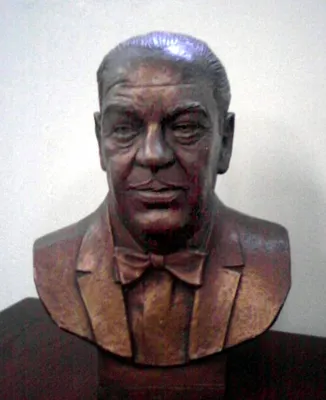
William L. Stone
William Clement Stone (May 4, 1902 – September 3, 2002) was an American businessman, philanthropist and New Thought self-help book author.
💡 Why Read This Book?
• Understand the 1830s discourse on animal magnetism by engaging with Stone’s critical analysis of its purported mechanisms and effects. • Examine the ethical quandaries surrounding suggestion and influence as presented in the text, offering a historical perspective on consent and manipulation. • Appreciate the intellectual climate of early 19th-century America, where phenomena like mesmerism were debated by figures like Stone and Dr. A. Brigham.
⭐ Reader Reviews
Honest opinions from readers who have explored this book.
❓ Frequently Asked Questions
When was William L. Stone's "Letter to Doctor A. Brigham on animal magnetism" first published?
The work was first published in 1837, placing it directly within the period of intense interest and debate surrounding animal magnetism and mesmerism in the United States.
What is the primary topic discussed in the letter?
The letter primarily discusses and critically examines the phenomenon of animal magnetism, also known as mesmerism, and its implications.
Who was Doctor A. Brigham mentioned in the title?
Doctor A. Brigham was a physician of the era with whom Stone was corresponding, indicating a direct engagement with contemporary medical and scientific thought regarding mesmerism.
Is this book a practical guide to performing mesmerism?
No, the book is not a practical guide. It is a philosophical and critical examination of the concept of animal magnetism, rather than an instruction manual.
What was the general reception of animal magnetism in the 1830s?
Animal magnetism was a subject of considerable debate. While some embraced it as a therapeutic or scientific breakthrough, others, like Stone, approached it with skepticism and critical inquiry, fearing its potential for misuse.
What is the historical significance of Stone's letter?
Its significance lies in its documentation of the intellectual response to mesmerism during a key period of its popularization, reflecting the scientific and ethical concerns of the time.
🔮 Key Themes & Symbolism
The Nature of Animal Magnetism
Stone's work dissects the concept of animal magnetism as it was understood in the early 19th century, questioning whether it represented a genuine vital force or a product of suggestion and psychological susceptibility. He probes the mechanisms proposed by proponents, distinguishing between observable effects and speculative explanations. The exploration centers on the debate between a tangible, transferable energy and the power of the human mind's influence over itself and others, a core inquiry in early psychical research.
Ethics of Influence and Suggestion
A significant thread in Stone's analysis is the ethical dimension of animal magnetism. He raises concerns about the potential for operators to exert undue influence over susceptible individuals, particularly in the context of therapeutic or hypnotic states. This theme touches upon early considerations of consent, manipulation, and the psychological vulnerabilities inherent in the practice, reflecting societal anxieties about control and autonomy in an era exploring new forms of mental interaction.
Scientific Skepticism and Validation
This letter embodies a spirit of critical inquiry applied to phenomena that bordered on the mystical. Stone's approach exemplifies a nascent scientific skepticism, demanding evidence and logical coherence rather than accepting extraordinary claims at face value. His dialogue with Dr. A. Brigham highlights the ongoing tension between empirical observation and theoretical frameworks in understanding consciousness and bodily forces, a crucial aspect of 19th-century intellectual development.
The Mind-Body Connection
While not framed in modern psychological terms, the letter grapples with the profound connection between the mind and body. The phenomena attributed to animal magnetism—altered states, perceived healing, and sensory disturbances—forced contemporaries to consider how mental states could manifest physically. Stone's examination implicitly explores the limits of materialist explanations and the possibility of non-physical influences or the powerful, inherent capacity of the psyche.
💬 Memorable Quotes
“The author expresses concern over the potential for misuse of animal magnetism.”
— This paraphrased concept highlights Stone's apprehension regarding the ethical implications of mesmerism. He foresaw dangers in the manipulative potential of the practice, reflecting a broader societal anxiety about unregulated psychic influence.
“Stone questions the very nature of the force described as 'animal magnetism'.”
— This reflects Stone's analytical approach. He sought to understand if the observed effects were due to a genuine external force, as proponents claimed, or rather to internal psychological states and the power of suggestion.
“The work engages with contemporary medical theories regarding vital fluids.”
— This points to the scientific context of the time, where concepts like 'vital fluids' were still part of medical discourse. Stone's letter situates the debate on animal magnetism within these existing, often speculative, physiological models.
“The letter is framed as a direct correspondence with Doctor A. Brigham.”
— This highlights the personal and academic nature of the discourse. It suggests a reasoned debate occurring between intellectual peers, rather than a public proclamation, aiming for clarification and critical assessment.
“The author considers the role of the operator's intent and the subject's receptivity.”
— This captures Stone's exploration of the interpersonal dynamics inherent in mesmerism. He recognized that the interaction between the mesmerist and the mesmerized was key, involving both the will of one and the suggestibility of the other.
🌙 Esoteric Significance
Tradition
While not strictly an occult text, "Letter to Doctor A. Brigham" engages with phenomena often relegated to esoteric circles. It operates within the lineage of early psychical research that sought to scientifically validate or refute claims of subtle energies and altered consciousness, a precursor to later movements like Theosophy and parapsychology. Its critical stance, however, departs from purely mystical interpretations, aiming for rational analysis within a framework that acknowledged yet questioned unseen influences.
Symbolism
The primary 'symbol' explored is animal magnetism itself, often conceived as a vital fluid or invisible force. This concept functions symbolically, representing the unknown energies that were believed to connect living beings. The act of mesmerization, with its focus on gaze, touch, and magnetic passes, can be seen as a ritualistic enactment of this symbolic force, aiming to harmonize or manipulate these perceived energetic flows between individuals.
Modern Relevance
Contemporary discussions in consciousness studies, parapsychology, and even hypnotherapy echo the questions raised by Stone. His examination of suggestion, placebo effects, and the mind-body connection remains pertinent. Thinkers and practitioners interested in the historical roots of altered states of consciousness, the ethics of influence in therapeutic contexts, and the boundary between science and subjective experience can draw from Stone's early, critical perspective.
👥 Who Should Read This Book
• Students of 19th-century American intellectual history interested in the reception of Mesmerism and its scientific validation debates. • Researchers of the history of psychology and consciousness exploring early attempts to understand altered states and psychic phenomena. • Skeptics and critical thinkers examining historical claims of subtle energies and therapeutic forces, seeking reasoned counterarguments from the era.
📜 Historical Context
Published in 1837, William L. Stone's "Letter to Doctor A. Brigham on animal magnetism" emerges from a period of intense fascination and scientific scrutiny of mesmerism. Following Franz Mesmer's late 18th-century theories, animal magnetism had evolved into a complex subject debated by physicians, scientists, and the public. In the United States, figures like Charles Poyen were popularizing Mesmeric practices, while others, like Dr. A. Brigham himself, were investigating its therapeutic potential. Stone's work represents a critical response within this milieu, questioning the underlying principles and ethical ramifications. It sits alongside contemporary interests in phrenology and early spiritualism, reflecting a broader cultural exploration of hidden human capacities and forces.
📔 Journal Prompts
The ethical implications of 'animal magnetism' as discussed by Stone.
Stone's critique of the proposed mechanisms of influence.
The contrast between Stone's skepticism and the era's acceptance of Mesmerism.
Your own reflections on suggestion and susceptibility.
The concept of 'vital fluids' in 19th-century scientific discourse.
🗂️ Glossary
Animal Magnetism
A term popularized by Franz Mesmer, referring to a supposed universal vital fluid or force that could be transmitted between living beings, capable of inducing altered states of consciousness and healing.
Mesmerism
The practice derived from animal magnetism, involving the induction of a trance-like state through suggestion and manipulation, often by a practitioner known as a 'mesmerist'.
Somnambulism
A state of sleepwalking or a sleep-like condition, often induced by mesmerism, characterized by unconsciousness of the waking self and sometimes heightened suggestibility or perceived psychic abilities.
Vital Fluid
A concept prevalent in 18th and 19th-century medicine and natural philosophy, referring to an essential, often invisible, substance believed to animate living organisms and be involved in physiological processes.
Suggestion
In the context of mesmerism, the process by which a practitioner implants ideas, commands, or beliefs into the mind of a susceptible subject, which the subject then acts upon.
Operator
In the context of animal magnetism, the individual who practices mesmerism, aiming to influence the subject through magnetic passes, touch, or focused intent.
Subject
The individual upon whom mesmerism is practiced; the person susceptible to the 'operator's' influence and the induction of altered states.