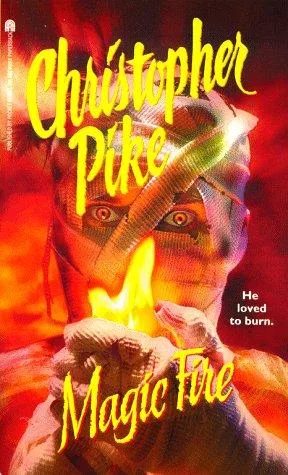
Last Act

 78
78

Last Act
Pike's *Last Act* offers a chilling exploration of how a single, pivotal moment can fracture a person's reality. The novel excels in its depiction of escalating paranoia, making the reader question the reliability of the narrator and the characters' perceptions alongside them. A particularly effective passage involves the protagonist's fragmented recollections of the central event, creating a palpable sense of unease and mystery. However, the pacing occasionally falters in the middle section, becoming somewhat repetitive before regaining momentum. The strength lies in its psychological tension, but its ultimate impact is slightly diminished by a resolution that feels a touch too convenient. *Last Act* is a solid, if not entirely flawless, psychological thriller that lingers.
📝 Description
78
### What It Is Christopher Pike's *Last Act*, first published in 1988, is a novel that delves into the psychological and potentially supernatural aftermath of intense personal trauma. It follows characters grappling with the consequences of a dramatic event, exploring themes of memory, guilt, and the blurred lines between reality and delusion.
### Who It's For This work is suited for readers who appreciate suspenseful narratives with a psychological edge, particularly those interested in how authors explore the human psyche under duress. It will appeal to fans of speculative fiction that skirts the edges of the uncanny without necessarily providing explicit supernatural explanations.
### Historical Context Published in 1988, *Last Act* emerged during a period when psychological thrillers and horror were gaining mainstream traction, often exploring the darker aspects of human nature and societal anxieties. Pike's work from this era, including *Last Act*, often positioned itself against the more overtly supernatural or creature-feature horror prevalent at the time, focusing instead on internal conflict and unsettling atmospheres. It existed alongside novels by authors like Stephen King, though Pike's focus tended to be more on character psychology and less on grander supernatural mythologies.
### Key Concepts The novel centers on the concept of the 'last act,' a metaphorical or literal culmination of events that forces characters to confront their deepest fears and unresolved issues. It examines how individuals construct narratives around traumatic experiences, sometimes leading to self-deception or a distorted perception of reality. The narrative also touches upon themes of identity and how past actions can irrevocably shape one's present and future.
💡 Why Read This Book?
• Gain insight into the narrative techniques used to portray psychological disintegration, as seen in the fragmented memory sequences concerning the titular 'last act.' • Understand how Christopher Pike, in his 1988 publication, differentiated his suspense from contemporary supernatural horror by focusing on internal character trauma. • Experience a compelling portrayal of guilt and delusion, particularly how the protagonist's internal state is externalized through unsettling atmospheric descriptions.
⭐ Reader Reviews
Honest opinions from readers who have explored this book.
❓ Frequently Asked Questions
What is the main theme explored in Christopher Pike's *Last Act*?
The primary theme is the psychological impact of trauma and guilt, and how individuals grapple with the 'last act' that irrevocably changes their lives, often leading to distorted perceptions of reality.
When was Christopher Pike's *Last Act* first published?
The novel *Last Act* by Christopher Pike was first published in 1988.
Does *Last Act* involve explicit supernatural elements?
While the atmosphere can be unsettling and characters may question reality, *Last Act* primarily focuses on psychological suspense rather than overt supernatural phenomena.
Who are the main characters in *Last Act*?
The central figures are typically those directly involved in or affected by the traumatic 'last act,' often including a protagonist struggling with memory and consequence.
What makes *Last Act* stand out from other thrillers of the late 1980s?
It distinguishes itself by concentrating on the internal landscape of its characters and the subjective experience of trauma, a contrast to more action-oriented or overtly supernatural narratives common at the time.
Is *Last Act* part of a series?
No, *Last Act* is a standalone novel by Christopher Pike and is not part of a larger series.
🔮 Key Themes & Symbolism
Fractured Memory
The novel delves into how traumatic events can shatter an individual's recollection of reality. Characters struggle to piece together fragmented memories, leading to doubt about what actually occurred during the titular 'last act.' This theme is crucial to the suspense, as the reader is kept in the dark alongside the protagonists, forced to question the veracity of their own recollections and interpretations of past events.
Guilt and Consequence
A significant undercurrent in *Last Act* is the burden of guilt and the inescapable nature of consequences stemming from a singular, defining moment. The characters are haunted by their roles in, or proximity to, the pivotal event, showcasing how unresolved guilt can manifest as psychological distress, paranoia, and a distorted perception of their present lives.
The Nature of Reality
Pike masterfully blurs the lines between what is real and what is imagined or remembered imperfectly. The narrative questions whether reality is objective or subjective, particularly when filtered through the lens of extreme emotional distress. The unsettling atmosphere serves to underscore this theme, making the reader constantly re-evaluate the characters' experiences and sanity.
The 'Last Act' Metaphor
The concept of the 'last act' functions as both a literal event and a metaphorical turning point. It represents a climax of action or emotion from which there is no turning back, forcing characters into a new, often difficult, phase of existence. The novel explores the profound psychological weight of such finality and its aftermath.
💬 Memorable Quotes
“The past isn't dead, it's not even past.”
— This reflects the novel's emphasis on how past traumas and actions continue to exert a powerful influence on the present, shaping characters' perceptions and behaviors.
“Sometimes the scariest monsters are the ones we carry inside.”
— This interpretation highlights the novel's focus on internal psychological struggles and personal demons rather than external, tangible threats.
“What if the memory itself is the trap?”
— This captures the essence of the protagonist's dilemma, suggesting that the way one remembers or misremembers a past event can be more psychologically damaging than the event itself.
“Every ending is a new beginning, but not always a happy one.”
— This suggests that while the 'last act' concludes a phase, the subsequent period is fraught with difficulty and uncertainty, underscoring the novel's exploration of struggle and unresolved issues.
“The truth is often hidden in the shadows of what we choose to forget.”
— This speaks to the theme of suppressed memories and the idea that crucial elements of reality might be obscured by denial or the deliberate avoidance of painful recollections.
🌙 Esoteric Significance
Tradition
While not explicitly tied to a single esoteric lineage, *Last Act* touches upon Gnostic themes of illusory reality and the struggle against a demiurgic influence (here, the protagonist's own fractured psyche or past trauma). The focus on internal perception and the potential for liberation through confronting hidden truths aligns with certain Hermetic principles of self-knowledge as a path to understanding the greater cosmos. It explores the idea that our internal world shapes our external experience.
Symbolism
The 'last act' itself serves as a potent symbol for a climactic, life-altering event that demands confrontation. Shadows and fragmented reflections frequently appear, symbolizing the obscured nature of truth, the fractured self, and the subconscious mind. These elements represent the hidden aspects of the characters' psyches and the veiled reality they inhabit, suggesting that true understanding requires looking beyond the surface.
Modern Relevance
Contemporary discussions around trauma-informed care and the power of narrative in healing echo themes present in *Last Act*. Therapists and writers exploring the impact of memory, PTSD, and subjective experience on well-being find resonance in Pike's depiction of psychological landscapes. The novel's exploration of how individuals construct reality in the face of overwhelming events remains relevant in understanding mental health challenges and the subjective nature of human experience.
👥 Who Should Read This Book
• Readers interested in psychological thrillers that prioritize character interiority and suspense over explicit gore or supernatural phenomena. • Young adult readers seeking narratives that explore complex emotional themes like guilt, memory loss, and the consequences of actions. • Students of narrative structure who wish to examine how unreliable narration and fragmented timelines can be employed to create mystery and tension.
📜 Historical Context
Christopher Pike's *Last Act*, released in 1988, emerged in a vibrant period for suspense and psychological thrillers. This era saw authors like Stephen King dominating bestseller lists with a blend of the supernatural and the mundane, while others like Dean Koontz explored darker, more visceral themes. Pike, however, carved a niche by often focusing on the internal lives of his young protagonists, exploring their anxieties, relationships, and the unsettling nature of their own perceptions, sometimes bordering on the uncanny without fully committing to explicit paranormal explanations. The late 1980s also saw a rise in teen-centric horror and suspense, a market Pike frequently tapped into. While not directly engaging with specific philosophical movements, his work often touched upon existential anxieties and the subjective nature of reality, themes that resonated with a readership questioning the certainty of the world around them, particularly in the wake of the Cold War and growing technological advancements.
📔 Journal Prompts
The nature of the 'last act' and its lasting psychological imprint.
Reflections on how fragmented memories shape a character's present reality.
The internal 'monsters' characters confront versus external threats.
Analyzing the symbolism of shadows and obscured truths within the narrative.
Exploring the connection between past trauma and present perception as depicted in the book.
🗂️ Glossary
Last Act
The pivotal, climactic event in the novel that triggers significant psychological repercussions and defines the characters' subsequent experiences.
Fragmented Memory
A recurring motif where characters' recollections of events are incomplete, distorted, or non-linear, reflecting psychological trauma or suppressed information.
Psychological Suspense
A genre of thriller that relies on building tension through the characters' mental states, internal conflicts, and uncertain perceptions of reality.
Unreliable Narrator
A narrative voice whose credibility is compromised, often due to mental instability, bias, or deliberate deception, forcing the reader to question the information presented.
Guilt
A pervasive emotional state experienced by characters stemming from their perceived responsibility or involvement in the traumatic 'last act,' influencing their actions and mental well-being.
Perception of Reality
The subjective interpretation of events and surroundings by characters, often blurred or distorted due to trauma, fear, or internal psychological conflicts.
Consequence
The direct or indirect results of actions, particularly those related to the central 'last act,' which characters must face and contend with throughout the narrative.