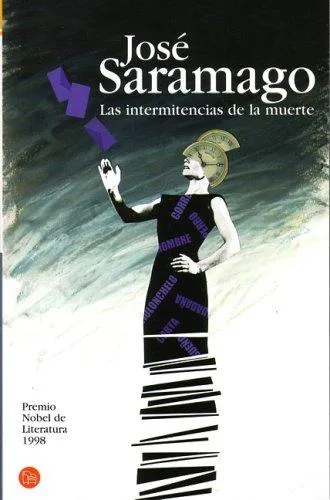
Las Intermitencias de La Muerte
 78
78

Las Intermitencias de La Muerte
Saramago's "Las Intermitencias de La Muerte" is a masterful, if bleak, exploration of mortality's absent presence. The premise—death going on strike—is immediately arresting and allows Saramago to dissect societal structures built on the fear of dying. The novel excels in its detailed depiction of how institutions, from the state to the church, flounder when confronted with a reality they cannot control or commodify. The character of Death, eventually personified and seeking to understand its own cessation, is a particular triumph, humanizing the ultimate unknown. However, the narrative occasionally becomes bogged down in its own allegorical framework, with lengthy philosophical discussions that, while insightful, can slow the pacing. A particularly striking passage involves the state's attempt to deport the 'undead' to a neighboring country that has not experienced death's strike, a darkly humorous and poignant commentary on borders and belonging. Ultimately, Saramago delivers a profound meditation on life's value when its end is suspended, even if the journey there feels occasionally protracted.
📝 Description
78
### What It Is Las Intermitencias de La Muerte, by Nobel laureate José Saramago, presents a world where death, personified as a scythe-wielding entity, ceases its activities for an unspecified period. This cessation triggers a societal upheaval, as humanity grapples with the implications of absolute immortality, at least temporarily. The novel explores the existential, philosophical, and practical consequences of a world without death's finality, forcing characters and readers alike to confront what it means to live when the ultimate end is deferred.
### Who It's For This work is for readers who appreciate allegorical fiction that probes deep philosophical questions through unconventional premises. It appeals to those interested in existentialism, the nature of mortality, and the societal structures that arise from fear and its absence. Readers familiar with Saramago's distinctive narrative style, characterized by long sentences and unconventional punctuation, will find this novel a compelling addition to his oeuvre. It’s for those who enjoy literature that challenges conventional thinking about life, death, and the human condition.
### Historical Context Published in 2005, "Las Intermitencias de La Muerte" emerged during a period of significant global introspection following the turn of the millennium. Saramago, already a celebrated figure and a Nobel Prize winner in Literature in 1998, was writing from a position of established literary authority. The novel can be seen in dialogue with broader philosophical discussions of the late 20th and early 21st centuries concerning mortality, the human desire for eternal life, and the role of existential dread in shaping human culture and behavior. It follows in the tradition of authors like Albert Camus and Jean-Paul Sartre, who explored similar themes of absurdity and meaning in a world devoid of inherent divine purpose, though Saramago’s approach is distinctively his own.
### Key Concepts The novel centers on the concept of 'death' as an active agent that can choose to stop its work. This immediately reframes mortality not as a natural law, but as a conditional state. The ensuing societal response, particularly the attempts by the state to manage the 'undead' and the black market for death certificates, highlights how human institutions are built upon the premise of mortality. The narrative also explores the psychological impact of prolonged, indefinite life, questioning whether it leads to greater appreciation or to ennui and despair. The 'intermittency' itself becomes a metaphor for the unpredictable nature of existence and the human tendency to seek order even in the face of ultimate chaos.
💡 Why Read This Book?
• Understand the societal constructs built around mortality, as demonstrated by the state's bewildered response to death's cessation in the novel's opening chapters. • Contemplate the human condition when the ultimate deadline is removed, examining the existential ennui and philosophical shifts explored through characters dealing with indefinite life. • Appreciate Saramago's unique narrative voice and allegorical technique, evident in the personification of Death and its subsequent quest to understand its own purpose.
⭐ Reader Reviews
Honest opinions from readers who have explored this book.
❓ Frequently Asked Questions
What is the central premise of "Las Intermitencias de La Muerte"?
The novel's core idea is that death, personified, decides to stop working. This leads to a world where people no longer die, creating significant societal and existential challenges for humanity.
When was "Las Intermitencias de La Muerte" published?
The book was first published in the original Spanish in 2005, a year after Saramago's previous novel, "The Double" (or "A Sombra do Cipreste São as Minhas Raízes").
Does the novel offer a solution to the problem of immortality?
Rather than offering a solution, the novel explores the consequences and philosophical implications of a world without death, questioning the very nature of life and its value.
Is this book a fantasy novel?
While it features a supernatural premise (death stopping its work), the book is primarily an allegorical philosophical novel, using the fantasy element to explore human existence and societal structures.
What is Saramago's writing style like in this book?
Saramago employs his characteristic long, flowing sentences, minimal punctuation (often using commas where periods might typically appear), and a narrative voice that is both detached and deeply insightful, making for a distinctive reading experience.
How is 'death' portrayed in the novel?
Initially, death is an unseen force. Later, it is personified as a scythe-wielding figure who becomes increasingly frustrated and confused by its own inactivity, eventually seeking to understand why it has ceased its work.
🔮 Key Themes & Symbolism
The Absurdity of Existence
The novel presents the cessation of death as an absurd event, mirroring existentialist philosophy's view of the universe's lack of inherent meaning. Saramago uses this premise to explore how humans create meaning and order in a fundamentally chaotic or indifferent reality. The societal panic and the subsequent attempts to manage a population that cannot die highlight the arbitrary nature of our established systems, which are often predicated on mortality. The 'undead' become a symbol of life stripped of its usual context, forcing a re-evaluation of what constitutes a meaningful existence when the ultimate end is suspended.
Personification of Death
Saramago's decision to personify Death as a character is central to the novel's esoteric and philosophical dimensions. This figure, initially a silent force, evolves into a being grappling with its own purpose and identity when its function is removed. This portrayal invites contemplation of death not merely as an event, but as an entity or a principle whose absence has profound repercussions. It allows for an exploration of the relationship between life and death as a dialectical pair, where the value and definition of one are intrinsically linked to the presence of the other.
Societal Collapse and Adaptation
The narrative meticulously details how human society, particularly the state, reacts to the unprecedented phenomenon of universal immortality. Institutions designed to manage death—cemeteries, funeral homes, insurance companies—become obsolete, while new problems arise, such as the care of the elderly who can no longer pass peacefully. This section of the book serves as a critique of bureaucratic and political responses to existential crises, showing how systems struggle to adapt when fundamental assumptions are challenged. The black market for death certificates exemplifies human ingenuity and exploitation in the face of the unknown.
The Meaning of Life Without End
By removing death, Saramago forces a confrontation with the question of life's inherent value. Without the finite boundary of mortality, does life retain its urgency and meaning? The novel suggests that prolonged, indefinite existence can lead to a profound sense of ennui, apathy, and a loss of appreciation for the present moment. It posits that the finitude of life is a crucial element that imbues it with significance, driving ambition, love, and the pursuit of legacy. The suffering of the 'undead' becomes a powerful argument for the necessity of death.
💬 Memorable Quotes
“The death that was the ultimate certainty, the end of the story, had vanished.”
— This line encapsulates the novel's central disruption: the removal of a foundational element of human existence. It signifies the breakdown of perceived natural order and the ensuing existential vacuum.
“Death, who was a woman, decided one day not to kill anymore.”
— This introduces the personification of Death, transforming an abstract concept into an active agent. It sets the stage for an exploration of Death's motivations and the consequences of its deliberate cessation of activity.
“The living, having no reason to fear death, feared living.”
— This paraphrase highlights the novel's argument that mortality provides structure and meaning to life. Without it, existence can become a burden, leading to a different kind of dread.
“The state then began to consider the living who had not died as a problem.”
— This reflects the bureaucratic and institutional response to the extraordinary. It shows how even a seemingly positive event (no one dying) can become a crisis for systems designed to manage the opposite.
“It is not life that is a problem, but the fear of death.”
— This concept suggests that human suffering and societal structures are often driven by the anxiety surrounding mortality. When that fear is removed, other, perhaps more insidious, problems emerge.
🌙 Esoteric Significance
Tradition
While not explicitly aligned with a single esoteric tradition, "Las Intermitencias de La Muerte" resonates with Gnostic and Hermetic thought concerning the nature of existence and the illusionary aspects of the material world. The personification of Death as a sentient entity that can choose to act or not act echoes Gnostic ideas of personified cosmic forces or aeons. The novel's exploration of a disrupted natural order and the subsequent societal chaos can be viewed through a Hermetic lens, which often emphasizes the importance of universal laws and their balance. Saramago’s work departs from traditional esoteric teachings by focusing on the socio-political and existential consequences rather than prescribed spiritual practices or metaphysical systems.
Symbolism
The central symbol is **Death** itself, personified. Its cessation of work symbolizes the disruption of fundamental cosmic or natural laws. Its eventual reappearance, driven by a need for purpose and understanding, represents the inevitable return of balance, suggesting that life and death are interdependent. Another motif is the **black market for death certificates**, symbolizing humanity's attempt to reassert control and create artificial order in the face of overwhelming existential change, highlighting the commodification of even the most profound aspects of existence.
Modern Relevance
Contemporary thinkers in fields ranging from speculative philosophy to critical theory can find fertile ground in Saramago's work. The novel's examination of societal response to existential crises is particularly relevant in an era marked by climate change, pandemics, and political instability. Philosophers exploring the ethics of longevity or the meaning of life in a secular age might draw upon its insights. Furthermore, writers and artists interested in allegorical storytelling and the personification of abstract concepts continue to find inspiration in Saramago's bold approach to universal themes.
👥 Who Should Read This Book
• Students of existentialist and absurdist literature: Gain a unique allegorical perspective on mortality, meaning, and the human condition, complementing works by Camus and Kafka. • Readers interested in philosophical fiction: Explore complex questions about life, death, and societal structures through Saramago's distinctive narrative voice and imaginative premise. • Fans of José Saramago: Discover another masterful example of his signature style, characterized by long sentences, unique punctuation, and profound social commentary.
📜 Historical Context
José Saramago's "Las Intermitencias de La Muerte" (The Intermittencies of Death), published in 2005, emerged from a literary landscape shaped by post-modernism and a continued engagement with existential themes. Saramago, a recipient of the 1998 Nobel Prize in Literature, was already a globally recognized voice, known for his distinctive narrative style and his allegorical critiques of power and human nature. The novel can be seen in dialogue with the philosophical currents of the late 20th century, particularly those exploring the human condition in the absence of divine certainty, a lineage traceable to thinkers like Albert Camus and Jean-Paul Sartre, though Saramago's method is unique. While not directly engaging with specific esoteric traditions in its published reception, its premise of a personified, volitional Death touches upon ancient archetypes found in various mythologies and Gnostic traditions, where cosmic forces are often depicted as acting with intention. The novel’s reception was generally positive, with critics acknowledging Saramago's intellectual rigor and imaginative power, though some noted its characteristic narrative density. It did not face significant censorship but, like much of Saramago's work, prompted considerable academic and critical discussion regarding its philosophical underpinnings.
📔 Journal Prompts
The cessation of Death's work and its societal implications.
Death's personal crisis and its search for purpose.
The state's administrative response to the absence of mortality.
The existential ennui experienced by the 'undead'.
The black market for death certificates and its symbolic meaning.
🗂️ Glossary
Intermittencies
The state of being intermittent; occurring at intervals; not continuous. In the novel's context, it refers to death's temporary cessation of activity.
Undead
A term used in the novel to describe individuals who, after death ceases its work, are unable to die. They continue to exist indefinitely, creating new societal challenges.
Death (personified)
In the novel, Death is depicted as a sentient entity, initially a figure with a scythe, who decides to stop killing. This personification allows for an exploration of Death's own existential quandaries.
The Grigori
A clandestine organization that emerges to deal with the 'undead' problem, particularly by facilitating the return of death certificates or managing those who refuse to die.
Black Market for Death
An underground network that emerges to handle the disposal of the 'undead' or to facilitate the process of death for those who wish it, creating a new form of illicit commerce.
Ennui
A feeling of listlessness and dissatisfaction arising from a lack of occupation or excitement. The novel explores this as a potential consequence of indefinite life.
State Apparatus
Refers to the institutions and structures of government and administration within the novel's world, which struggle to cope with the unprecedented event of death's absence.