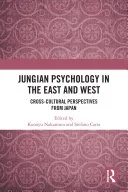
Jungian Psychology in the East and West
 82
82

Jungian Psychology in the East and West
Konoyu Nakamura and Stefano Carta’s edited volume, Jungian Psychology in the East and West, provides a much-needed scholarly bridge between Western analytical psychology and Eastern spiritual traditions. The strength of this collection lies in its diverse range of contributors, each offering specific case studies and theoretical analyses that move beyond Jung’s initial engagement with the East. A particular highlight is the exploration of how Jungian concepts are reinterpreted within specific cultural milieus, such as the application of individuation to Buddhist monastic life. However, the book sometimes suffers from a degree of academic density, which may present a barrier for readers less familiar with Jungian terminology. Despite this, the work offers significant value by demonstrating the cross-cultural applicability and critical examination of Jung’s seminal ideas, particularly in its detailed examination of archetypal patterns in non-Western mythologies.
📝 Description
82
### What It Is Jungian Psychology in the East and West is a collection of essays, first published in 2021, that examines the intricate relationship between Carl Jung's analytical psychology and various Eastern spiritual and philosophical traditions. The book presents original research and comparative studies, moving beyond Jung's own engagement with these cultures to explore how his theories are understood, applied, and sometimes challenged in Eastern contexts. It offers a nuanced perspective on the universality of psychological archetypes and the collective unconscious.
### Who It's For This volume is intended for academics, students, and practitioners of psychology interested in cross-cultural perspectives. It will appeal to scholars of comparative religion, philosophy, and Eastern studies who seek to integrate psychological frameworks into their analyses. Furthermore, individuals drawn to Jungian thought and its global implications, particularly its intersection with non-Western consciousness, will find substantial material here.
### Historical Context The genesis of this collection lies in the well-documented influence of Eastern thought on Carl Jung's development of concepts like archetypes and the collective unconscious. While Jung himself extensively referenced texts such as the I Ching and Buddhist scriptures, dedicated scholarly work exploring the reciprocal dialogue between his psychology and Eastern philosophies remained relatively sparse until recent decades. This book addresses that gap, building on the foundation laid by Jung's own comparative studies and the subsequent growth of transpersonal psychology.
### Key Concepts The central concepts explored include the universality of archetypes across diverse cultures, the nature of the collective unconscious as a shared psychic inheritance, and the application of Jungian analytical tools to Eastern religious practices and philosophies. It investigates how concepts such as synchronicity and the individuation process are interpreted through lenses like Vedanta, Zen Buddhism, and Taoism, revealing both commonalities and divergences in psychic expression.
💡 Why Read This Book?
• Gain a nuanced understanding of how Carl Jung's theories on archetypes and the collective unconscious are interpreted and applied within specific Eastern philosophical frameworks, as explored in chapters discussing Vedanta and Zen Buddhism. • Discover the comparative material Jung utilized, such as his references to the I Ching, and see how contemporary scholars build upon this foundation to analyze cross-cultural psychic realities. • Examine the practical implications of integrating Jungian psychology with Eastern spiritual practices, offering unique insights for personal development that transcend Western-centric psychological models.
⭐ Reader Reviews
Honest opinions from readers who have explored this book.
❓ Frequently Asked Questions
What specific Eastern religions are discussed in relation to Jungian psychology?
The book engages with several Eastern traditions, including Vedanta, Zen Buddhism, and Taoism, examining how Jungian concepts like archetypes and the collective unconscious manifest and are interpreted within these spiritual and philosophical systems.
Does this book offer new interpretations of Jung's own work?
Yes, while acknowledging Jung's extensive use of Eastern material, the book presents contemporary scholarly interpretations and applications of his theories, often from Eastern perspectives or through cross-cultural comparative analysis.
Who are the primary authors or editors contributing to this collection?
The book is edited by Konoyu Nakamura and Stefano Carta, with contributions from various scholars specializing in psychology, philosophy, and religious studies.
What is the significance of the collective unconscious in the context of Eastern thought as presented in this book?
The work explores how the concept of the collective unconscious, a core Jungian idea, finds parallels or unique expressions within the shared mythologies, cultural symbols, and spiritual experiences of various Eastern societies.
Is this book suitable for someone new to Jungian psychology?
While it builds upon Jungian foundations, the book is geared towards those with some familiarity with analytical psychology. Readers new to Jung might benefit from foundational reading before delving into these specific cross-cultural analyses.
When was Jungian Psychology in the East and West first published?
The book was first published on July 29, 2021, reflecting recent scholarship in the field of comparative psychology and religion.
🔮 Key Themes & Symbolism
Archetypes and Eastern Myth
This theme investigates the presence and interpretation of Jungian archetypes within the rich tapestry of Eastern mythologies and religious narratives. It moves beyond Jung's initial identification of these universal patterns to explore how they are culturally contextualized and expressed in traditions like Hinduism and Buddhism. The work examines how figures, symbols, and narrative structures in Eastern lore can be understood through an archetypal lens, offering insights into the shared psychological underpinnings of human experience across vastly different cultural landscapes.
Collective Unconscious in Comparative Religion
The collection delves into the concept of the collective unconscious, proposing that this shared psychic inheritance manifests distinctively yet recognizably across Eastern religious practices and philosophical systems. It explores how communal myths, ritualistic behaviors, and spiritual disciplines in the East can be seen as expressions of this deeper, transpersonal layer of the psyche. The book seeks to demonstrate the universality of the collective unconscious while acknowledging the unique cultural mediations through which it appears.
Individuation and Eastern Paths
A significant focus is placed on the Jungian process of individuation – the journey toward psychological wholeness – and its parallels or divergences within Eastern spiritual paths. The book scrutinizes how concepts like self-realization, enlightenment, or liberation in traditions such as Zen or Taoism can be viewed through the framework of individuation. It questions whether Eastern asceticism, meditation, and philosophical inquiry represent alternative routes to psychological integration or distinct models of personal development.
Synchronicity and Eastern Worldviews
The principle of synchronicity, Jung's concept of meaningful coincidences, is examined in relation to Eastern philosophies that often emphasize interconnectedness and causality beyond linear logic. The essays explore how Eastern cosmologies, which frequently view the universe as an interconnected web of events, provide fertile ground for understanding synchronistic phenomena. The book considers whether Eastern spiritual practices cultivate a greater receptivity to these meaningful acausal connections.
💬 Memorable Quotes
“Jung's investigation of Eastern religions supplied him with cross-cultural material for his hypotheses.”
— This highlights the foundational role Eastern thought played in Jung's formulation of key psychological concepts, particularly archetypes and the collective unconscious, providing empirical grounding from non-Western sources.
“Literature dealing with Jung's cross-cultural comparative material has previously been scarce.”
— This points to a gap in scholarly work that the collection aims to fill, focusing specifically on the detailed analysis and application of Jungian theory within Eastern contexts.
“The book offers an introduction to a range of topics representing Jungian psychology in the East and West.”
— This indicates the collection serves as a gateway for readers to explore the complex interplay between Jungian thought and diverse Eastern spiritual and philosophical traditions.
“Archetypes manifest in psychic reality across cultures.”
— This interpretation underscores the central Jungian thesis that universal psychological patterns, or archetypes, are not confined to Western consciousness but are observable phenomena in the psychic lives of people globally.
“The collective unconscious provides a shared psychic foundation.”
— This paraphrased concept emphasizes Jung's idea of a universal, inherited layer of the psyche that connects all humans, and suggests the book explores how this shared foundation is expressed in Eastern cultures.
🌙 Esoteric Significance
Tradition
This work engages deeply with the Hermetic and Gnostic impulses within analytical psychology, particularly Jung's own interest in esoteric traditions and the symbolic language of the psyche. It fits within a lineage of thinkers who seek to understand the human soul through universal patterns and symbolic correspondences, bridging the empirical claims of psychology with the intuitive wisdom found in diverse spiritual systems. The book departs from purely Western esoteric interpretations by critically examining and integrating Eastern philosophical frameworks.
Symbolism
Key symbols explored include the mandala, often found in both Eastern spiritual art and Jungian analysis, representing wholeness and the Self. Another significant motif is the 'shadow' aspect, examined in relation to Eastern concepts of ego dissolution or the overcoming of attachment, revealing how this dark, repressed psychic content is understood and integrated across different cultural paradigms. The concept of the 'anima/animus' is also implicitly explored through Eastern archetypal figures and relational dynamics.
Modern Relevance
Contemporary thinkers in transpersonal psychology, integral theory, and depth psychology continue to draw upon the cross-cultural dialogues initiated by Jung and expanded by works like this. Practitioners of mindfulness, meditation, and contemplative practices who are interested in the psychological underpinnings of their traditions find valuable connections here. The book remains relevant for anyone seeking to understand the universal human psyche beyond Western cultural biases, informing contemporary discussions on consciousness and spirituality.
👥 Who Should Read This Book
• Students of comparative religion and philosophy seeking to understand the psychological dimensions of Eastern spiritual traditions. • Jungian analysts and psychotherapists interested in expanding their theoretical framework with cross-cultural perspectives. • Scholars of mysticism and esoteric traditions looking for connections between Western depth psychology and Eastern contemplative practices.
📜 Historical Context
Published in 2021, Jungian Psychology in the East and West arrives at a time when the cross-cultural application and critique of Western psychological theories are increasingly robust. The mid-20th century saw Carl Jung himself extensively engage with Eastern philosophies, notably referencing texts like the I Ching and Buddhist scriptures to support his theories of archetypes and the collective unconscious. However, the academic exploration of this dialogue remained somewhat niche for decades. This volume builds upon the groundwork laid by early comparative psychologists and transpersonal theorists, addressing a need for dedicated scholarship that moves beyond Jung's personal engagement. While Jung's contemporaries like Mircea Eliade explored comparative mythology, this collection specifically focuses on the psychological dimensions and applications, offering a contemporary scholarly perspective that was less common before the late 20th century.
📔 Journal Prompts
The concept of the collective unconscious as expressed in Eastern mythologies.
Jung's use of the I Ching as a comparative tool.
Archetypal manifestations in Zen Buddhist narratives.
The process of individuation within Vedanta philosophy.
Synchronicity and Eastern worldviews on causality.
🗂️ Glossary
Archetype
A universal, inherited pattern or image that derives from the collective unconscious and is the psychic counterpart of a myth or symbol. Examples include the Mother, the Hero, and the Shadow.
Collective Unconscious
The part of the unconscious mind derived from ancestral experience and capable of functioning across cultures and generations, containing archetypes.
Individuation
The psychological process of integrating the conscious and unconscious aspects of the self to achieve wholeness and self-realization.
Synchronicity
The occurrence of two or more events that appear significantly related but have no discernible causal connection, interpreted as a meaningful coincidence.
Vedanta
A school of Hindu philosophy that aims to understand the true nature of reality, often emphasizing the unity of Atman (individual soul) and Brahman (universal consciousness).
Zen Buddhism
A school of Mahayana Buddhism emphasizing meditation, intuition, and the direct experience of enlightenment, often through koans and sudden insight.
Taoism
A Chinese philosophy and religion emphasizing living in harmony with the Tao (the Way), characterized by simplicity, spontaneity, and a naturalistic worldview.