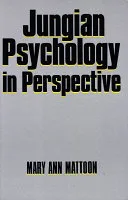
Jungian Psychology in Perspective
 83
83

Jungian Psychology in Perspective
Mary Ann Mattoon’s "Jungian Psychology in Perspective" offers a commendably clear exposition of Carl Jung’s intricate psychological system. Unlike many introductory texts that can become lost in jargon, Mattoon’s prose maintains a consistent clarity, particularly when discussing the archetypes. For instance, her explanation of the anima and animus as distinct psychic counterparts, rather than mere gendered projections, provides a solid conceptual foundation. However, the book’s primary limitation lies in its relative brevity; while comprehensive in scope, it occasionally feels more like a syllabus than an exhaustive exploration. The section on dream analysis, while accurate, could benefit from more extensive illustrative examples to fully capture the symbolic richness Jung himself emphasized. Despite this, the work remains a valuable primer for anyone seeking to grasp the foundational elements of analytical psychology without succumbing to overly academic dryness. It serves as a solid, if somewhat concise, introduction to Jung's revolutionary ideas.
📝 Description
83
### What It Is Mary Ann Mattoon's "Jungian Psychology in Perspective" offers a structured examination of Carl Jung's psychological framework. Published initially in 1985, the book serves as an accessible entry point for understanding the core tenets of analytical psychology. It systematically breaks down complex theories, making them digestible for those new to Jungian thought. The work aims to present Jung's ideas not as a finished system, but as an evolving perspective on the human psyche, acknowledging its depth and potential for further exploration.
### Who It's For This volume is principally geared towards students and practitioners of psychology, particularly those interested in depth psychology and its symbolic language. It also appeals to individuals engaged in the study of mythology, comparative religion, and esoteric traditions, where Jungian concepts frequently intersect with archetypal patterns. Anyone seeking to understand the unconscious mind, dream analysis, and the process of individuation through a Jungian lens will find this book a valuable resource. It requires no prior extensive knowledge of Jung, though a curiosity about the human psyche is essential.
### Historical Context "Jungian Psychology in Perspective" emerged during a period when Jungian thought was solidifying its position as a distinct school of psychotherapy, separate from Freudian psychoanalysis. The mid-1980s saw continued academic engagement with Jung's extensive writings, which had been accumulating since the early 20th century. While figures like Erich Fromm and Karen Horney had already offered critiques and developments of Freudian ideas, Jung presented a more spiritual and mythological dimension that continued to intrigue and challenge the predominantly secular scientific establishment. Mattoon's work appeared as Jungian analysts and scholars sought to synthesize and clarify his often dense theoretical output for a broader audience.
### Key Concepts The book systematically introduces foundational Jungian concepts such as the collective unconscious, archetypes, the persona, shadow, anima/animus, and the process of individuation. It explores the function of complexes, the role of dreams as messages from the unconscious, and the dynamics of psychological types. Mattoon explains these ideas through Jung's own terminology and theoretical development, providing a coherent overview of his unique contributions to understanding the human psyche beyond purely behavioral or ego-centric models. The emphasis is on how these elements interact to shape an individual's inner life and external behavior.
💡 Why Read This Book?
• Gain a structured understanding of core Jungian concepts like the collective unconscious and individuation, presented clearly by Mary Ann Mattoon, which helps demystify Jung's complex theories for new students. • Learn about the function of complexes and the symbolic language of dreams as explained by Mattoon, offering a unique lens for self-reflection beyond superficial analysis. • Grasp the historical placement of Jungian psychology, understanding its distinctiveness from Freudian psychoanalysis as detailed in the book's context, enriching your comparative study of psychological schools.
⭐ Reader Reviews
Honest opinions from readers who have explored this book.
❓ Frequently Asked Questions
What is the primary focus of Mary Ann Mattoon's "Jungian Psychology in Perspective"?
The book's primary focus is to present a clear and structured overview of Carl Jung's analytical psychology. It systematically explains core concepts like archetypes, the collective unconscious, and individuation for a general audience interested in depth psychology.
When was "Jungian Psychology in Perspective" first published?
Mary Ann Mattoon's "Jungian Psychology in Perspective" was first published in 1985, placing it within the continued academic discourse and development of Jungian thought in the late 20th century.
Who would benefit most from reading this book?
Students of psychology, particularly those interested in depth psychology, as well as individuals studying mythology, comparative religion, and esoteric traditions would find this book beneficial. It's suitable for those new to Jung's work.
Does the book discuss dream analysis from a Jungian perspective?
Yes, the book addresses dream analysis, explaining dreams as messages from the unconscious mind according to Jungian theory. It covers how dreams can offer insights into an individual's inner life and unconscious processes.
How does this book relate to Carl Jung's original works?
Mattoon's book serves as an accessible guide to Jung's complex original works. It synthesizes his key ideas, making them more digestible than Jung's own dense writings, acting as a vital secondary source for understanding his theories.
What is the concept of 'individuation' as presented in the book?
Individuation, as explored in the book, refers to the lifelong psychological process of self-realization and differentiation. It is the journey towards becoming one's true self, integrating conscious and unconscious aspects of the personality.
🔮 Key Themes & Symbolism
Archetypes and the Collective Unconscious
Mattoon's work highlights Jung's concept of archetypes as universal, archaic patterns and images that derive from the collective unconscious. These are not just inherited ideas but innate psychic predispositions that shape human experience and expression across cultures and time. The book explores how these archetypal patterns manifest in myths, symbols, and individual psychology, forming the bedrock of Jung's understanding of the shared human psyche beyond personal history.
The Process of Individuation
Central to Mattoon's exposition is the concept of individuation, Jung's term for the psychological process of integrating the conscious and unconscious aspects of the personality to achieve wholeness. The book explains this as a lifelong journey of self-discovery, involving confrontation with the shadow, integration of the anima/animus, and the development of a unique individual consciousness that remains connected to the collective. It's presented as the primary goal of psychological development in Jungian thought.
The Role of Dreams and Symbols
The book emphasizes Jung's view of dreams as vital messages from the unconscious, offering compensatory perspectives on conscious attitudes. Mattoon details how dreams utilize symbolic language—images, metaphors, and narratives—that are often archetypal in nature. Understanding these symbols is crucial for navigating the individuation process, as dreams provide direct access to the deeper layers of the psyche, guiding the individual toward greater self-awareness and psychic balance.
Psychological Types and Complexes
Mattoon explains Jung's theory of psychological types (e.g., introversion/extraversion, thinking/feeling, sensing/intuition) as fundamental ways individuals orient themselves to the world and process information. The book also delves into the concept of complexes—emotionally charged clusters of associations around a core archetype—which can influence behavior and perception, often operating outside of conscious awareness until examined through Jungian analysis.
💬 Memorable Quotes
“The collective unconscious is a reservoir of latent images, the archetypes.”
— This statement encapsulates Jung's revolutionary idea that our psyche contains inherited patterns of thought and imagery, shared by all humanity. Mattoon uses this to explain the universal nature of certain symbols and myths that appear across diverse cultures.
“Individuation is the process of becoming who you are.”
— This concise interpretation highlights the core aim of Jungian psychology: the development of a unique, integrated self. Mattoon explains this journey involves confronting one's total personality, both light and shadow aspects, to achieve psychological wholeness.
“Dreams are the direct expressions of the unconscious.”
— This emphasizes Jung's belief in the significance of dreams as vital communications from the deeper psyche. Mattoon uses this to illustrate how dream analysis can reveal unconscious conflicts and guide personal growth.
“The persona is the mask we present to the world.”
— Mattoon's explanation of the persona points to the social roles and outward identities individuals adopt. The book explores the necessity of this 'mask' while cautioning against over-identification with it, which can obscure the true self.
“The shadow contains repressed or unacknowledged parts of the personality.”
— This highlights a crucial aspect of Jungian analysis: the integration of the shadow. Mattoon explains that acknowledging and understanding these darker, unaccepted elements is essential for psychological balance and authenticity.
🌙 Esoteric Significance
Tradition
While not strictly belonging to a single esoteric lineage, Jungian psychology, as presented by Mattoon, shares significant overlaps with Hermetic and Gnostic traditions through its emphasis on inner transformation, the symbolic nature of reality, and the quest for individuation. Jung's exploration of alchemy and his engagement with figures like the psychologist and philosopher Miguel de Unamuno reveal a deep interest in spiritual and psychological development that transcends purely scientific paradigms. The work aligns with esoteric goals of self-knowledge and the integration of the soul.
Symbolism
Key symbols explored in Mattoon's work include the archetypes of the Shadow, Anima/Animus, and the Self. The Shadow represents the dark, unacknowledged aspects of the personality, often projected onto others. The Anima (in men) and Animus (in women) symbolize the contrasexual element within the psyche, crucial for relating to the opposite sex and integrating emotional or rational functions. The Self archetype represents wholeness and the ultimate goal of individuation, often symbolized by mandalas or divine figures.
Modern Relevance
Contemporary thinkers and practitioners in fields ranging from depth psychology and transpersonal psychology to literary criticism and comparative mythology continue to draw heavily on Jungian concepts. Modern applications include archetypal branding, the use of Jungian analysis in therapeutic settings for trauma and identity issues, and explorations of consciousness in spiritual circles. The emphasis on symbols, dreams, and the unconscious remains highly relevant for understanding the human psyche in an increasingly complex and often disembodied modern world.
👥 Who Should Read This Book
• Aspiring Jungian analysts and psychotherapists seeking a foundational text to grasp core analytical psychology principles before engaging with Jung's denser original works. • Students of mythology, comparative religion, and philosophy interested in how Jungian archetypes provide a framework for understanding universal human narratives and spiritual quests. • Individuals on a personal growth path who wish to explore their inner world through concepts like the unconscious, dream interpretation, and the process of individuation.
📜 Historical Context
Published in 1985, Mary Ann Mattoon's "Jungian Psychology in Perspective" arrived as analytical psychology continued to carve out its distinct niche within the broader landscape of psychotherapy. The mid-20th century saw Jung's ideas gain traction, offering an alternative to the more reductionist approaches of behaviorism and even certain aspects of Freudian psychoanalysis, which Jung himself had diverged from significantly in the 1930s. While Jung died in 1961, his influence persisted through texts like Mattoon's, which sought to distill his complex theories for students and practitioners. This period was marked by ongoing academic engagement, with scholars like Marie-Louise von Franz continuing Jung's work on fairy tales and archetypes. Mattoon's book provided a structured overview, helping to solidify Jungian concepts amidst a psychotherapeutic field that was also being influenced by humanistic psychology and emerging systems theory.
📔 Journal Prompts
The persona's construction and its relation to authentic selfhood.
Archetypal patterns observed in personal relationships or societal narratives.
Dream symbolism and its potential message from the unconscious.
The integration of the shadow aspects of personality.
Reflections on the journey of individuation and self-discovery.
🗂️ Glossary
Collective Unconscious
A concept introduced by Carl Jung, referring to the inherited, universal layer of the human psyche containing archetypes and primal images shared by all people.
Archetype
Universal, archaic patterns and images that derive from the collective unconscious and are the psychic counterpart of instinct. Examples include the Mother, the Hero, the Trickster.
Individuation
The lifelong psychological process of differentiation of the self, involving the integration of conscious and unconscious aspects of personality to achieve wholeness and self-realization.
Persona
The social mask or role that an individual presents to the world, often developed to meet societal expectations and conceal the true self.
Shadow
The unconscious or repressed aspects of the personality, often including primitive instincts, desires, and weaknesses that the ego rejects or denies.
Anima/Animus
The unconscious feminine side in the male psyche (Anima) and the unconscious masculine side in the female psyche (Animus), crucial for relating to the opposite sex and integrating psychic functions.
Complex
A core pattern of emotionally charged thoughts, memories, and perceptions that are organized around a common theme, often stemming from an archetype and operating unconsciously.