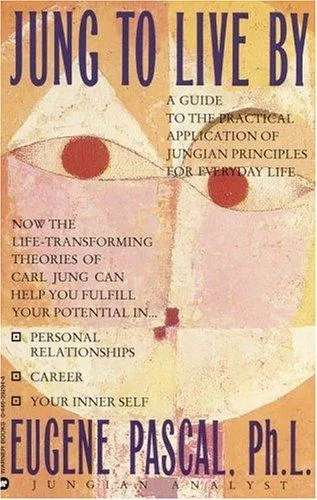
Jung to live by
 76
76

Jung to live by
Pascal's "Jung to Live By" attempts to bridge the vast chasm between Jungian theory and everyday application. The strength lies in its earnest effort to demystify complex archetypal psychology for the lay reader. Pascal's discussion of the 'Shadow' as a practical, ever-present aspect of the self, rather than a purely negative entity, offers a valuable reframe. However, the book sometimes simplifies Jung's intricate models to a degree that risks losing some of their original nuance, particularly when discussing the integration of the Anima and Animus. While accessible, it occasionally feels like a primer rather than a deep dive. Nevertheless, for those seeking an introduction to applying Jungian concepts to personal development, it provides a solid, if somewhat generalized, starting point.
📝 Description
76
### What It Is Eugene Pascal's "Jung to Live By", first published in 1992, offers a practical application of Carl Jung's complex psychological theories. It aims to translate the abstract concepts of analytical psychology into actionable principles for personal growth and understanding the human psyche. The book serves as a guide for integrating Jungian archetypes and individuation processes into daily life, moving beyond academic discourse to lived experience.
### Who It's For This work is intended for individuals seeking a deeper comprehension of their inner world, particularly those interested in the psychological underpinnings of myths, dreams, and personal struggles. It appeals to readers who find traditional self-help approaches insufficient and desire a framework that addresses the symbolic and archetypal dimensions of human existence. Those familiar with or curious about Carl Jung's extensive writings will find Pascal's approach accessible.
### Historical Context Published in the early 1990s, "Jung to Live By" emerged during a period where Jungian psychology, though established, was undergoing re-evaluation and popularization. The era saw a continued interest in depth psychology and its therapeutic applications, following figures like Marie-Louise von Franz and James Hillman. Pascal's work contributed to making Jungian concepts more digestible for a broader audience, bridging the gap between academic analysis and practical self-discovery, at a time when postmodern critiques were also beginning to question grand psychological narratives.
### Key Concepts The book systematically explores core Jungian ideas such as the collective unconscious, archetypes (like the Shadow and Anima/Animus), individuation, and the process of psychological integration. Pascal emphasizes the importance of confronting one's own complexes and understanding the symbolic language of the unconscious through dreams and synchronicities. The overarching aim is to facilitate a more conscious engagement with the self, leading to a more meaningful and integrated life.
💡 Why Read This Book?
• You will learn how to identify and engage with archetypal patterns, such as the Shadow, in your daily life, moving beyond abstract theory to practical self-awareness as outlined in Pascal's approach to Jungian psychology. • You will gain tools for interpreting the symbolic language of your unconscious through dream analysis and recognizing synchronicities, concepts central to Jung's work that Pascal makes accessible. • You will understand the process of individuation not as a distant ideal but as a concrete path toward personal wholeness, drawing on the 1992 publication's focus on integrating psychological complexities.
⭐ Reader Reviews
Honest opinions from readers who have explored this book.
❓ Frequently Asked Questions
What is the core message of Eugene Pascal's 'Jung to Live By'?
The book's core message is to translate Carl Jung's analytical psychology into practical strategies for personal growth and self-understanding, making complex concepts like archetypes and individuation actionable in everyday life.
When was 'Jung to Live By' first published and by whom?
'Jung to Live By' was first published in 1992 by Eugene Pascal, aiming to offer a more accessible interpretation of Jungian psychology.
How does the book explain Jung's concept of individuation?
Pascal explains individuation as the lifelong process of becoming a psychologically whole and unique individual, integrating conscious and unconscious aspects of the self, a journey he details through practical examples.
What are some of the key Jungian concepts discussed in the book?
Key concepts include the collective unconscious, archetypes (such as the Shadow, Anima, and Animus), complexes, dream analysis, and the process of psychological integration towards wholeness.
Is 'Jung to Live By' suitable for beginners in Jungian psychology?
Yes, the book is designed to be accessible to beginners, offering a practical gateway into Jungian thought without requiring prior extensive knowledge of academic psychology.
What is the significance of the year 1992 for this book?
The year 1992 marks the original publication of 'Jung to Live By', placing it within a period of renewed popular interest in psychological depth and self-exploration following established psychoanalytic traditions.
🔮 Key Themes & Symbolism
Archetypes in Daily Life
Pascal's work focuses on making Jungian archetypes tangible for the average reader. Concepts like the Shadow, Anima, and Animus are presented not as mere theoretical constructs but as dynamic forces influencing our perceptions, relationships, and decisions daily. The book guides readers to recognize these archetypal energies within themselves and others, offering a framework for understanding recurring patterns of behavior and motivation. This practical application moves Jungian psychology from the consulting room into the lived experience of anyone seeking self-awareness and personal integration.
The Path of Individuation
Individuation, the central process in Jungian psychology, is explored by Pascal as a practical journey toward wholeness. It involves the conscious integration of all aspects of the personality, including the often-unacknowledged unconscious elements. The book frames this lifelong endeavor as an active pursuit, encouraging readers to engage with their inner world, confront complexes, and strive for psychological authenticity. This perspective demystifies individuation, presenting it as an achievable goal through consistent self-reflection and engagement with the symbolic language of the psyche.
Symbolism and the Unconscious
Understanding the unconscious mind, according to Pascal's interpretation of Jung, is largely achieved through its symbolic expressions. The book emphasizes the importance of dreams, fantasies, and synchronicities as vital channels through which the unconscious communicates. Readers are encouraged to develop a practice of observing and interpreting these symbolic messages. This approach highlights how paying attention to the subtle, often-overlooked signs from the inner world can unlock profound insights into one's psychological landscape and guide personal development.
Integrating Psychological Complexes
Pascal addresses psychological complexes as emotionally charged clusters of ideas and images residing in the unconscious, often stemming from personal experiences and archetypal patterns. The book advocates for a conscious confrontation and integration of these complexes, rather than their suppression or uncontrolled expression. By understanding the origins and dynamics of one's complexes, particularly those related to the Shadow, readers can achieve greater emotional balance and freedom. This integration is presented as a crucial step in the broader process of individuation.
💬 Memorable Quotes
“The Shadow is not merely evil, but contains vital aspects of our personality.”
— This interpretation highlights Pascal's re-framing of the Shadow archetype. Instead of a purely negative entity to be feared or repressed, it's presented as a repository of unacknowledged potential, energy, and even creativity that, when integrated, can enrich the personality.
“Individuation is the process of becoming who you truly are.”
— This concise statement captures the essence of Jung's concept of individuation as presented by Pascal. It emphasizes the inherent potential within each person and the lifelong journey of self-realization and psychological wholeness.
“Dreams are the royal road to the unconscious.”
— Paraphrasing a common sentiment in Jungian psychology, this emphasizes the book's focus on dream analysis as a primary method for accessing and understanding the hidden dynamics of the unconscious mind.
“Archetypes manifest in our relationships and life patterns.”
— This interpretation underscores Pascal's practical approach, suggesting that the abstract concept of archetypes is observable in concrete human interactions and the recurring themes that shape our lives.
“Confronting our complexes leads to greater self-awareness.”
— This highlights the book's therapeutic angle, proposing that facing and understanding emotionally charged psychological patterns (complexes) is essential for personal growth and achieving a more conscious understanding of oneself.
🌙 Esoteric Significance
Tradition
Pascal's work is firmly rooted in the tradition of analytical psychology, a branch of depth psychology founded by Carl Jung. While not strictly an esoteric text in the vein of Hermeticism or Kabbalah, Jungian psychology itself draws heavily on Gnostic, alchemical, and Eastern philosophical traditions. Pascal's contribution lies in translating these Jungian explorations of the psyche, which often touch upon archetypal and symbolic realms, into a practical framework for modern individuals seeking meaning and wholeness.
Symbolism
Key symbols explored in the context of Jungian psychology, and thus Pascal's work, include the Shadow, representing the unacknowledged or repressed aspects of the self; the Anima (in men) and Animus (in women), representing the contrasexual soul-image; and the Self, the archetype of wholeness and the regulating center of the psyche. These archetypal symbols are seen as universal patterns that manifest in dreams, myths, and personal experiences, guiding the process of individuation.
Modern Relevance
Contemporary thinkers and practitioners in areas such as archetypal psychology, depth psychotherapy, and even certain strands of transpersonal psychology continue to draw upon Jung's foundational concepts as interpreted by authors like Pascal. His emphasis on practical application makes Jungian ideas relevant for modern self-help, mindfulness practices, and personal development movements seeking to integrate psychological depth with everyday living.
👥 Who Should Read This Book
• Individuals new to Jungian psychology: Those curious about concepts like archetypes, the unconscious, and individuation will find Pascal's accessible approach a valuable entry point. • Self-help readers seeking depth: Readers dissatisfied with superficial self-help advice and desiring a more profound framework for understanding their inner lives will appreciate the psychological underpinnings. • Personal development enthusiasts: Anyone on a journey of self-discovery and psychological integration can benefit from practical strategies for applying Jungian principles to daily challenges and growth.
📜 Historical Context
Published in 1992, Eugene Pascal's "Jung to Live By" entered a landscape where Carl Jung's analytical psychology, while influential, was often perceived as dense and academic. The preceding decades had seen significant expansion and interpretation of Jungian thought, notably through figures like Marie-Louise von Franz, who continued Jung's work on fairy tales and alchemy. Pascal's effort coincided with a broader cultural interest in depth psychology and self-help, seeking to make these complex ideas accessible. It emerged in contrast to more behaviorist or cognitive approaches gaining traction in mainstream psychology. While not a direct engagement with a specific contemporary, its aim was to democratize Jungian insights, presenting them as practical tools for personal transformation, a goal pursued by other popularizers of psychological thought during that era.
📔 Journal Prompts
The manifestations of your Shadow archetype in recent interactions.
The recurring symbols in your dreams and their potential meanings.
Your personal understanding of the individuation process.
Moments of synchronicity and their significance in your life.
Integrating the Anima/Animus as described by Pascal.
🗂️ Glossary
Archetype
Universal, archaic patterns and images that derive from the collective unconscious and are the psychic counterpart of instinct. They are inherited potentials for experience and behavior.
Collective Unconscious
A concept introduced by Jung, referring to the deepest layer of the unconscious psyche, containing inherited structures and predispositions common to all humanity.
Individuation
The lifelong psychological process of differentiation of the self, by which an individual becomes a whole, integrated, and unique personality.
Shadow
The archetype of the darker side of the personality, containing repressed weaknesses, instincts, and shortcomings, as well as undeveloped positive traits.
Anima/Animus
The contrasexual aspect of the psyche. The Anima is the feminine archetype in the male unconscious; the Animus is the masculine archetype in the female unconscious.
Complex
An emotionally charged group of ideas, memories, and feelings in the unconscious, often stemming from archetypal patterns and personal experiences.
Synchronicity
Meaningful coincidences; the occurrence of two or more events that appear to be causally unrelated but are experienced as occurring together in a meaningful manner.