Jung
 82
82

Jung
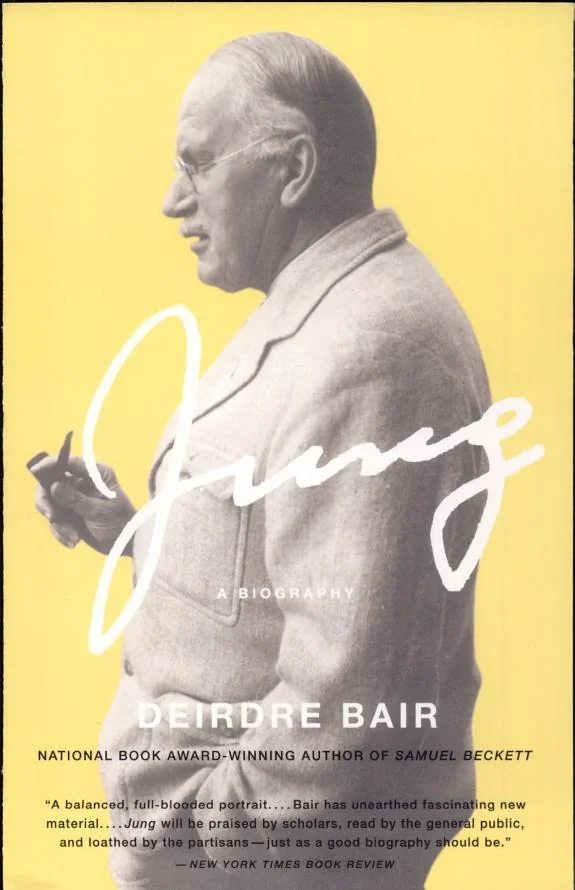
Deirdre Bair’s comprehensive biography of Carl Jung is an ambitious undertaking, successfully contextualizing the psychiatrist's life within the tumultuous intellectual landscape of the early 20th century. Bair excels at tracing Jung's intellectual lineage, particularly his fraught relationship with Sigmund Freud and the subsequent divergence of their psychoanalytic theories. The meticulous detail provided regarding Jung's personal life, including his marriage and extramarital affairs, offers a candid, if at times unsparing, perspective on the man behind the theories. A notable strength lies in the book's thorough exploration of Jung's development of concepts like the collective unconscious and archetypes, grounding them in his lived experiences and intellectual pursuits. However, the sheer volume of information can occasionally feel overwhelming, with the narrative sometimes becoming bogged down in minutiae. Bair’s unflinching portrayal of Jung's less palatable aspects, while admirable for its honesty, may challenge readers seeking a purely hagiographic account. The book's exploration of Jung's engagement with alchemy, while informative, could have benefited from further explicit connection to its psychological implications for the modern reader. Overall, Bair delivers a scholarly, critical, and deeply researched portrait of a complex figure.
📝 Description
82
### What It Is Deirdre Bair's biography of Carl Jung offers an extensive examination of the psychiatrist's life and work, charting his intellectual development from his early years through his groundbreaking contributions to psychology. The book meticulously details Jung's complex relationships, his theoretical innovations, and his eventual separation from Sigmund Freud. It traces the evolution of his ideas on the collective unconscious, archetypes, and individuation, presenting a comprehensive portrait of a pivotal figure in 20th-century thought.
### Who It's For This biography is suited for serious students of psychology, history of ideas, and depth psychology. Readers interested in the personal journey behind major theoretical shifts will find Bair's detailed account engaging. It is for those who appreciate rigorous biographical research and wish to understand the socio-cultural and intellectual milieu that shaped Jung's psyche and his analytical psychology.
### Historical Context Published in 2003, Bair's work emerged decades after Jung's death in 1961, allowing for a comprehensive synthesis of available research and personal accounts. It situates Jung's work within the burgeoning field of psychoanalysis and its subsequent fragmentation, particularly his pivotal 1913 break with Freud. The biography implicitly engages with the intellectual currents of early 20th-century Europe, including the impact of World War I and the rise of various philosophical and spiritual movements that influenced Jung's exploration of the psyche.
### Key Concepts The book elaborates on Jung's foundational concepts, including the exploration of the collective unconscious, a shared reservoir of human experience expressed through archetypes. It details his theories on introversion and extraversion, psychological types, and the process of individuation—the lifelong journey toward self-realization. Bair also addresses Jung's controversial work on alchemy and his engagement with mythology and religion as expressions of the psyche's deepest structures.
💡 Why Read This Book?
• Understand the specific intellectual split between Jung and Freud around 1913, gaining insight into how their core psychological theories diverged following their collaboration. • Grasp the personal and professional factors that shaped Jung's development of the concept of the collective unconscious, a cornerstone of analytical psychology. • Appreciate the biographical context for Jung's later work on alchemy, understanding how his life experiences informed his interpretation of these ancient symbolic systems.
⭐ Reader Reviews
Honest opinions from readers who have explored this book.
❓ Frequently Asked Questions
When did Carl Jung first break with Sigmund Freud?
Carl Jung officially broke with Sigmund Freud in 1913. This pivotal event marked a significant divergence in their psychoanalytic theories and personal relationship, leading Jung to develop his own school of analytical psychology.
What is the collective unconscious according to Jung?
The collective unconscious, a central concept in Jungian psychology, is described as a universal, inherited layer of the unconscious mind containing archetypes—primordial images and patterns of thought derived from humanity's ancestral experiences.
What period of Jung's life does Deirdre Bair focus on?
Deirdre Bair's biography covers Carl Jung's entire life, from his birth in 1875 through his intellectual development and career, up to his death in 1961, detailing his major theoretical contributions and personal journey.
How does the book address Jung's interest in alchemy?
The biography details Jung's extensive engagement with alchemical texts and symbolism, presenting it not merely as an academic pursuit but as a significant influence on his development of concepts like individuation and the understanding of the psyche's transformative processes.
Was Jung's work controversial during his lifetime?
Yes, Jung's work, particularly his theories on archetypes, the collective unconscious, and his engagement with spiritual and esoteric traditions, was often controversial. His perceived departure from orthodox psychoanalysis and his exploration of non-rational aspects of the psyche generated significant debate.
What is 'individuation' in Jungian psychology?
Individuation, according to Jungian psychology, is the process of psychological integration and differentiation of the self. It involves the conscious realization of one's unique potential and the synthesis of the conscious and unconscious aspects of the personality.
🔮 Key Themes & Symbolism
The Analyst-Patient Relationship
Bair meticulously details Jung's professional relationships, most notably his complex and ultimately fractured bond with Sigmund Freud, beginning in 1907. The biography explores how their early collaboration on psychoanalytic theory laid the groundwork for their eventual ideological split. It also touches upon Jung's interactions with other key figures and his approach to his own patients, illustrating the practical application and personal challenges inherent in depth psychology during its formative years.
Archetypes and the Collective Unconscious
A significant portion of the book is dedicated to explaining the genesis and development of Jung's most influential concepts: archetypes and the collective unconscious. Bair traces how Jung's observations, dreams, and studies of mythology and comparative religion led him to posit a transpersonal layer of the psyche, a reservoir of universal human experiences and symbolic patterns shared across cultures and time.
Individuation and Self-Realization
The biography elaborates on Jung's theory of individuation, the lifelong psychological process of becoming an individual by integrating conscious and unconscious elements of the personality to achieve wholeness. Bair connects this theoretical concept to Jung's own life journey, examining how his personal struggles and intellectual quests reflected this drive towards self-discovery and the realization of one's unique potential.
Jung's Engagement with Esotericism
Bair addresses Jung's deep interest in alchemy, Gnosticism, and other esoteric traditions. The book explores how Jung viewed these ancient systems not as mere historical curiosities but as profound expressions of the human psyche's quest for meaning and transformation. This engagement is presented as crucial to his understanding of symbolism and the unconscious mind's operations.
💬 Memorable Quotes
“The break with Freud in 1913 was a watershed moment.”
— This statement highlights the profound significance of Jung's separation from Freud, marking the end of their collaborative efforts and the independent development of Jung's own analytical psychology.
“Jung saw alchemy as a projection of psychological processes.”
— This paraphrased concept underscores Jung's unique approach to alchemy, viewing its ancient symbols and transformations not as literal chemical experiments but as symbolic representations of the inner workings of the human psyche.
“The collective unconscious contains universal archetypes.”
— This core idea posits that beneath the personal unconscious lies a deeper, shared layer of the psyche, populated by inherited, universal patterns of imagery and behavior common to all humanity.
“Individuation is the lifelong pursuit of wholeness.”
— This concept defines the central aim of Jungian psychology as a continuous process of self-discovery, integration, and the realization of one's complete, unique psychological potential.
“Jung's work bridged science and mysticism.”
— This interpretation captures the dual nature of Jung's intellectual legacy, acknowledging his rigorous scientific inquiry into the psyche alongside his deep exploration of spiritual, mythological, and esoteric realms.
🌙 Esoteric Significance
Tradition
Jung's work stands at the nexus of depth psychology and Western esotericism, particularly drawing from Hermeticism, Gnosticism, and alchemy. While not a direct adherent of any single esoteric school, Jung's analytical psychology reinterprets these traditions through a psychological lens. He saw in alchemical symbolism, for instance, a profound map of the individuation process, thus bridging ancient mystical practices with modern psychological theory and offering a framework for understanding spiritual experiences as integral to psychic health.
Symbolism
Key symbols in Jung's work, and thus in Bair's biography, include the Shadow, the Anima/Animus, and the Self. The Shadow represents the repressed, darker aspects of the personality; the Anima (in men) and Animus (in women) are the contrasexual archetypes within the psyche; and the Self is the archetype of wholeness and the ultimate goal of individuation. Jung interpreted these symbols as universal expressions of the collective unconscious, offering pathways to psychic integration.
Modern Relevance
Contemporary thinkers and practitioners in fields ranging from depth psychology and transpersonal psychology to art therapy and comparative religion continue to draw heavily on Jung's concepts. His ideas on archetypes, the collective unconscious, and individuation remain foundational for many therapeutic modalities seeking to understand the deeper layers of the human psyche. Furthermore, his exploration of myth, spirituality, and the symbolic life offers enduring insights for those seeking meaning in a secularized world.
👥 Who Should Read This Book
• Students of analytical psychology and depth psychology seeking a comprehensive biography of Carl Jung, understanding the personal and intellectual context of his theories. • Researchers in the history of ideas and 20th-century intellectual movements interested in the development of psychoanalysis and its divergences. • Individuals exploring Jung's concepts such as archetypes, the collective unconscious, and individuation, looking for a detailed account of their origins and evolution.
📜 Historical Context
Deirdre Bair's biography of Carl Jung, published in 2003, arrives decades after the subject's death in 1961, allowing for a comprehensive overview. It meticulously situates Jung within the intellectual ferment of the late 19th and early 20th centuries, a period marked by the rise of psychology as a discipline and profound societal shifts. The biography directly addresses Jung's pivotal break with Sigmund Freud in 1913, a schism that defined the trajectory of psychoanalysis and gave rise to Jung's distinct school of analytical psychology. It implicitly contrasts Jung's explorations of the unconscious, archetypes, and the collective unconscious with the more empirically focused approaches emerging in other scientific fields. Bair also highlights Jung's engagement with figures like William James and his interactions with contemporaries in philosophy and anthropology, underscoring the interdisciplinary nature of his thought. The reception of Jung's work, particularly his more controversial theories, is implicitly addressed through the detailed account of his intellectual evolution and the debates he sparked.
📔 Journal Prompts
The significance of Jung's 1913 break with Freud.
Archetypes as inherited patterns from the collective unconscious.
The personal journey of individuation.
Jung's interpretation of alchemical symbolism.
The role of the Shadow in psychological integration.
🗂️ Glossary
Analytical Psychology
Carl Jung's school of psychology, distinct from Freudian psychoanalysis, which emphasizes the importance of the collective unconscious, archetypes, and the process of individuation.
Collective Unconscious
A universal, inherited layer of the unconscious mind, containing archetypes that are common to all humanity, shaped by ancestral experiences.
Archetype
Primordial, universal patterns, images, or motifs that derive from the collective unconscious and manifest in myths, dreams, and cultural symbols.
Individuation
The lifelong psychological process of integrating conscious and unconscious aspects of the personality to achieve wholeness and self-realization.
Shadow
The unconscious, repressed, or darker aspects of the personality that the ego does not identify with but which are nevertheless a part of the individual.
Anima/Animus
The contrasexual aspect of the psyche; the Anima is the feminine inner personality in men, and the Animus is the masculine inner personality in women.
Synchronicity
Meaningful coincidences; the occurrence of two or more events that appear to be causally unrelated but are experienced as being meaningfully connected.



















![[Catalogue of Frederick Hockley's Book Sale]](/img/thumb/catalogue-of-frederick-hockley-s-book-sale-george-redway.webp)
