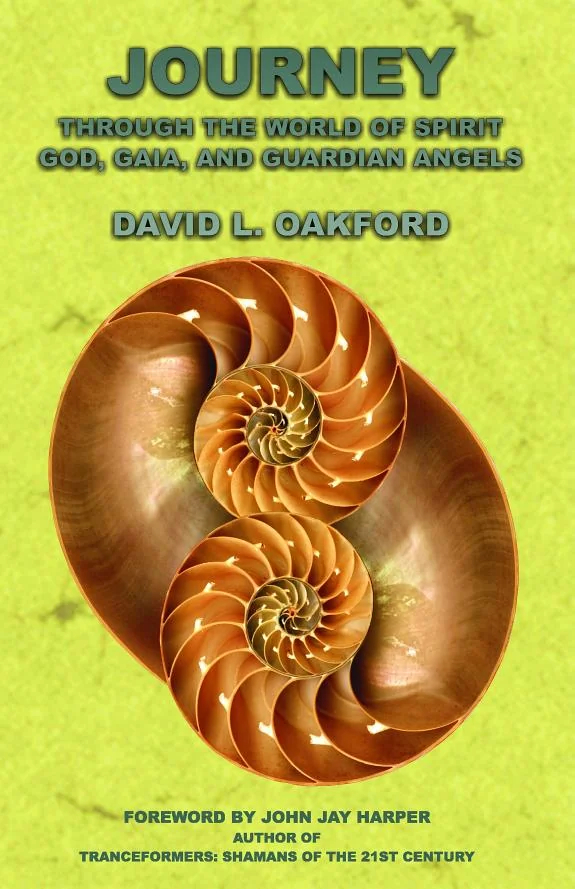
Journey Through the World of Spirit
 80
80

Journey Through the World of Spirit
David L. Oakford's "Journey Through the World of Spirit" offers a crucial, unvarnished perspective on the afterlife experience, particularly the often-difficult integration period. The book’s strength lies in its stark honesty; Oakford does not shy away from the psychic turmoil and subsequent depression that plagued him after his NDE, a stark contrast to the often-sanitized accounts found elsewhere. He rightly challenges the simplistic notion that NDEs automatically create saints or pure beings. A particularly impactful section details the lingering detachment from physical reality, a common yet rarely discussed NDE sequela. However, the narrative occasionally feels repetitive in its exploration of despair, and the initial drug-induced catalyst, while important for context, sometimes overshadows the subsequent spiritual unfolding. Despite these minor drawbacks, the work is a valuable addition to the literature on consciousness, demonstrating that profound spiritual encounters can initiate arduous personal journeys. Oakford's candor makes this a vital read for anyone studying the human psyche's response to the extraordinary.
📝 Description
80
### What It Is
David L. Oakford's "Journey Through the World of Spirit," first published in July 2007, chronicles a profound Near-Death Experience (NDE). Far from a simple account of an encounter with the divine, the book offers a raw and unflinching look at the aftermath. It documents the spiritual awakening that followed an initial drug-induced state, detailing the subsequent psychic struggles and the pervasive depression that marked the author's return to ordinary consciousness.
### Who It's For
This work is suited for individuals interested in the less-glamorized aspects of spiritual emergence. It appeals to those who question the notion of NDEs as instant spiritual purification or the creation of saints. Readers seeking an honest portrayal of the challenging psychological and emotional terrain that can accompany profound altered states of consciousness will find resonance here. It’s for those who believe spiritual breakthroughs often come with significant personal cost.
### Historical Context
Published in 2007, the book emerged during a period of sustained academic and popular interest in NDE research, building on decades of work by figures like Raymond Moody and Stanislav Grof. The scientific community was increasingly exploring consciousness studies, while the New Age movement continued to popularize concepts of spiritual enlightenment. Oakford's candid depiction of post-NDE depression challenged prevailing, often idealized, narratives surrounding such events, offering a counterpoint to more optimistic interpretations prevalent in certain spiritual circles.
### Key Concepts
The central theme revolves around the concept of an "ascended state of consciousness" initiated by extraordinary circumstances, not necessarily a divine intervention. The book scrutinizes the idea that NDEs are inherently transformative in a purely positive, saint-making manner. It highlights the often-overlooked "psychic struggles" and "depression" that can follow such intense experiences, proposing that spiritual awakening can be a complex, disorienting process rather than a simple ascension to bliss. The narrative emphasizes the reality of these challenges, grounding the spiritual in the psychological.
💡 Why Read This Book?
• Understand the challenging aftermath of spiritual awakenings, particularly the documented "psychic struggles" and "depression" following an NDE, offering a more realistic perspective than idealized narratives. • Explore the concept of an "ascended state of consciousness" as potentially drug-induced, challenging the purely divine origin often attributed to NDEs, as detailed in the book's 2007 publication. • Gain insight into how spiritual experiences, even those that seem profound, do not necessarily bypass human psychological difficulties, as evidenced by Oakford's personal account of integration.
⭐ Reader Reviews
Honest opinions from readers who have explored this book.
❓ Frequently Asked Questions
What is the primary focus of David L. Oakford's "Journey Through the World of Spirit"?
The book primarily focuses on the author's personal Near-Death Experience (NDE) and, more significantly, the difficult psychological and spiritual integration that followed, challenging idealized notions of NDEs.
When was "Journey Through the World of Spirit" first published?
The book was first published in July 2007, placing it within a period of increased interest in consciousness studies and NDE research.
Does the book present Near-Death Experiences as purely positive events?
No, a central theme is that NDEs do not automatically create saints and can be followed by significant "psychic struggles" and "depression," as documented by Oakford.
What is the initial catalyst for the author's experience?
The book indicates that street drugs were the initial catalyst for the author's profound altered state, leading to what is described as a "full-blown ascended state of consciousness."
Who is David L. Oakford?
David L. Oakford is the author of "Journey Through the World of Spirit," sharing his personal, and often challenging, account of a Near-Death Experience and its aftermath.
What distinguishes this book from other NDE accounts?
Its distinction lies in its raw portrayal of the post-NDE psychological difficulties, such as depression and psychic struggles, moving beyond the typical narrative of instant enlightenment.
🔮 Key Themes & Symbolism
The Challenging Integration of NDEs
The work moves beyond the common portrayal of Near-Death Experiences as solely blissful encounters. Oakford details the often-overlooked "psychic struggles" and "depression" that can ensue, highlighting that spiritual awakening can be a disorienting and painful process. This theme challenges the simplistic idea that profound spiritual events automatically lead to sainthood or perpetual euphoria, emphasizing the arduous journey of reintegrating into ordinary consciousness.
Consciousness Beyond Ordinary Perception
The book explores an "ascended state of consciousness" that, while profound, is presented not as a divine gift but as an experience initiated by external factors, in this case, street drugs. This perspective prompts a re-evaluation of the origins of altered states, suggesting that extraordinary consciousness can arise from diverse, even mundane, catalysts, and that its subsequent exploration is deeply personal and complex.
Spirituality vs. Psychological Well-being
A core theme is the tension between profound spiritual experiences and psychological stability. Oakford's narrative underscores that a transcendent experience does not negate or resolve underlying psychological vulnerabilities. Instead, it can exacerbate them, leading to significant mental health challenges. The book serves as a reminder that the spiritual path is not always a smooth ascent but can involve confronting and navigating deep personal distress.
Skepticism Towards Spiritual Idealization
Oakford's account actively debunks the myth that Near-Death Experiences inherently produce saints or perfect beings. By baring his soul about his struggles, he presents a more realistic, human perspective on spiritual encounters. This theme encourages a critical examination of spiritual narratives, urging readers to consider the full spectrum of human response to transformative events, including doubt, pain, and continued earthly struggles.
💬 Memorable Quotes
“Although street drugs were clearly the initial for this NDE, what happened next was a full-blown ascended state of consciousness.”
— This statement establishes the book's unique premise: that profound spiritual experiences, often attributed solely to divine or supernatural causes, can have complex origins, including physiological factors, and lead to states beyond normal perception.
“This book is once again revealing that NDE's are not magic, nor do they produce saints.”
— This highlights the author's intent to demythologize Near-Death Experiences, presenting them as potentially challenging human events rather than guaranteed pathways to immediate spiritual perfection or sainthood.
“David for baring his soul as to the psychic struggles and the depression that followed his awakening.”
— This emphasizes the book's raw honesty and the author's vulnerability in detailing the difficult emotional and psychological aftermath of his spiritual experience, a crucial counterpoint to more idealized accounts.
“Because ultimately there emerged a tr”
— This fragmented quote suggests a difficult but ultimately emergent truth or transformation arising from the author's profound experiences and subsequent struggles, hinting at a hard-won understanding.
“The work explores the difficult transition from an 'ascended state of consciousness' back to earthly reality.”
— This interpretation points to the core narrative arc: the challenge of integrating an extraordinary, perhaps drug-induced, state of expanded awareness with the mundane demands and perceptions of everyday life.
🌙 Esoteric Significance
Tradition
While not strictly adhering to a single esoteric lineage like Hermeticism or Gnosticism, Oakford's work engages with universal themes of consciousness expansion found across many esoteric traditions. It touches upon the idea of accessing higher realms or states of awareness, a concept present in mystical branches of various religions and philosophies. The book departs from traditional esoteric frameworks by emphasizing the psychological difficulties and the non-divine origin (in this case, drug-induced) of such states, grounding the transcendent in the earthly struggles of the individual psyche.
Symbolism
The primary symbolic motif is the "ascended state of consciousness" itself, representing a departure from the ordinary ego-bound self. The "psychic struggles" and "depression" function as symbols of the soul's difficult integration back into the physical world, representing the shadow side of spiritual attainment. The initial catalyst of "street drugs" can be seen as a symbolic Pandora's Box, opening a path to profound experience that carries both revelation and a heavy burden, challenging the purity often associated with spiritual gateways.
Modern Relevance
Oakford's work remains relevant in contemporary discussions surrounding psychedelic-assisted therapy and the exploration of consciousness. As practices involving substances like psilocybin gain traction for therapeutic purposes, his honest account of the challenges following altered states provides a critical perspective. Thinkers in consciousness studies and those exploring non-ordinary states of awareness, particularly within fields like transpersonal psychology, can draw on his narrative to understand the full spectrum of integration, not just the peak experience.
👥 Who Should Read This Book
• Individuals exploring the psychological impact of altered states of consciousness, including those interested in NDE research or psychedelic experiences. • Skeptics or critical thinkers who question idealized spiritual narratives and seek grounded, personal accounts of profound experiences. • Researchers or practitioners in transpersonal psychology and consciousness studies looking for case studies on the difficult integration of non-ordinary states of awareness.
📜 Historical Context
Published in July 2007, "Journey Through the World of Spirit" emerged into a landscape shaped by ongoing scientific and popular fascination with Near-Death Experiences (NDEs). Decades of research by figures like Dr. Raymond Moody had popularized the phenomenon, often framing it within spiritual or religious paradigms. The New Age movement, influential throughout the late 20th century and into the 2000s, frequently presented spiritual awakenings as inherently blissful and transformative. Oakford's work offered a counter-narrative. In contrast to the prevailing optimistic tones, his unflinching account of post-NDE depression and "psychic struggles" provided a grounded, psychological perspective. While scholars like Stanislav Grof explored transpersonal psychology and altered states, Oakford's focus was intensely personal and introspective, challenging the notion that NDEs were universally positive or guaranteed pathways to sainthood. The book's reception likely appealed to those seeking a more realistic, less romanticized understanding of profound consciousness shifts, diverging from the purely esoteric or mystical interpretations common at the time.
📔 Journal Prompts
The author's "psychic struggles" following his awakening—how might these manifest in daily life?
Reflect on the concept of an "ascended state of consciousness" initiated by non-divine means.
Consider the tension between spiritual revelation and psychological depression presented in the book.
What does Oakford's experience suggest about the process of spiritual integration?
Analyze the statement: 'NDE's are not magic, nor do they produce saints.'
🗂️ Glossary
Near-Death Experience (NDE)
A profound personal experience associated with death or dying, often involving altered perceptions, feelings of peace, and encounters with spiritual beings or light.
Ascended State of Consciousness
A state of heightened awareness or expanded consciousness, often perceived as transcending ordinary reality, which the book suggests can be induced by various means.
Psychic Struggles
Difficulties and challenges related to one's mental, emotional, or spiritual state following a profound experience, often involving disorientation or perceived psychic disturbances.
Integration
The process of incorporating a profound or altered state of consciousness experience into one's everyday life and understanding of reality.
Spiritual Awakening
A process of gaining deeper insight or awareness into spiritual or existential matters, often leading to significant personal transformation.
Depression
A mood disorder characterized by persistent feelings of sadness, loss of interest, and difficulty functioning in daily life, which the book notes can follow intense spiritual experiences.
Catalyst
An event or substance that causes or accelerates a significant change or action; in this context, the initial trigger for the author's profound experience.