Journey of awakening
 74
74

Journey of awakening
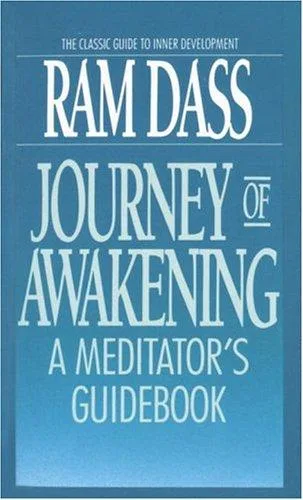
Ram Dass's "Journey of Awakening" is an earnest, if sometimes meandering, account of his spiritual tutelage under Neem Karoli Baba. What distinguishes it from countless other spiritual memoirs is its raw honesty and the palpable presence of Maharajji, the Indian guru who serves as its radiant center. Ram Dass doesn't shy away from his own confusion or the cultural dissonance he experienced, making his eventual surrender to the path of love feel earned. A particularly striking element is the depiction of Maharajji's seemingly effortless miracles and his profound, simple teachings, like the repeated emphasis on 'love everyone.' However, the narrative can occasionally feel repetitive, cycling through similar anecdotes of devotion and divine intervention. The book's strength lies in its portrayal of a unique master-disciple relationship; its limitation is that without Maharajji's physical presence, the reader must take much of the transformative power on faith. It remains a compelling document of a specific spiritual lineage and its impact on a Western consciousness.
📝 Description
74
Ram Dass published "Journey of Awakening" in 1978, detailing his spiritual transformation in India.
Ram Dass's 1978 book chronicles his personal spiritual transformation, moving from his academic career as Richard Alpert, a Harvard psychology professor, to becoming a disciple of the Indian guru Neem Karoli Baba. The book recounts his experiences traveling through India, meeting various spiritual teachers, and the significant shifts in his consciousness that resulted from these encounters. It aims to translate Eastern spiritual ideas and practices into terms understandable for a Western audience, addressing common existential concerns.
The narrative is less of a structured academic work and more a personal account of devotion, surrender, and the experience of the divine through an unconventional spiritual guide. It is especially suited for readers interested in how Eastern spirituality and Western psychology intersect, and for those curious about the impact of Indian gurus on Western seekers. The book appeals to those who appreciate autobiographical stories of spiritual change and are open to paths of devotion and service as routes to spiritual realization. It offers embodied wisdom and relational spirituality rather than abstract philosophical arguments, guiding the seeker who ponders the experience of letting go.
Published in 1978, "Journey of Awakening" arrived during a period of heightened Western interest in Eastern religions, following the counterculture movements. Ram Dass, formerly Richard Alpert, brought his academic background in psychology to his experiences with Indian spiritual traditions, particularly his devotion to Neem Karoli Baba. This work is part of a lineage of Westerners documenting their encounters with Eastern masters and integrating these teachings into a personal spiritual practice, often bridging the gap between Eastern devotional paths and Western psychological frameworks.
💡 Why Read This Book?
• Understand the practice of bhakti yoga through Ram Dass's personal narrative, learning how devotion to Neem Karoli Baba in the 1970s became a path to shedding ego. • Gain insight into the concept of the guru as a conduit for divine energy, as Ram Dass describes his encounters with Maharajji and his teachings on unconditional love. • Explore the transformative power of service (seva) as depicted in the book, recognizing how acts of devotion can lead to spiritual awakening and a shift in consciousness.
⭐ Reader Reviews
Honest opinions from readers who have explored this book.
❓ Frequently Asked Questions
When was Ram Dass's "Journey of Awakening" first published?
Ram Dass's "Journey of Awakening" was first published in 1978, marking a significant moment in the popularization of Eastern spirituality in the West.
Who is the primary spiritual teacher featured in "Journey of Awakening"?
The primary spiritual teacher featured is Neem Karoli Baba, an Indian saint and mystic, whom Ram Dass affectionately called Maharajji.
What is the central theme of "Journey of Awakening"?
The central theme is Ram Dass's personal spiritual journey, focusing on his experiences in India, his devotion to Neem Karoli Baba, and the unfolding of his own awakening through love and service.
What does the book say about surrender?
The book emphasizes surrender as a key to spiritual growth, illustrating how Ram Dass learned to relinquish his ego and intellectual constructs to embrace the path of devotion guided by Maharajji.
Is "Journey of Awakening" a practical guide to meditation?
No, it is not a systematic guide to meditation. Instead, it offers a narrative exploration of spiritual transformation, focusing on devotion, service, and the direct experience of a guru's grace.
What was Ram Dass's background before writing this book?
Before "Journey of Awakening," Ram Dass was Richard Alpert, a psychologist who taught at Harvard University and conducted experiments with psychedelics before turning his focus to Eastern spiritual traditions.
🔮 Key Themes & Symbolism
The Guru-Devotee Relationship
Central to "Journey of Awakening" is the profound connection Ram Dass forged with his guru, Neem Karoli Baba (Maharajji). The book illustrates how this relationship served as the crucible for Ram Dass's transformation, moving him from intellectual pursuit to embodied spiritual realization. Maharajji's presence, characterized by unconditional love and seemingly effortless wisdom, acts as a divine mirror, reflecting Ram Dass's own potential for awakening. The narrative details interactions that highlight Maharajji's unique methods of teaching, often through action and presence rather than explicit instruction, emphasizing the guru's role as a living embodiment of spiritual truth.
Bhakti Yoga and Unconditional Love
Ram Dass's journey is deeply rooted in the practice of Bhakti Yoga, the path of devotion. "Journey of Awakening" showcases how embracing unconditional love, as exemplified by Maharajji, becomes the primary vehicle for spiritual liberation. The book explores the surrender of the ego and the letting go of personal desires in favor of a selfless devotion to the divine. This emphasis on love is presented not as an emotional indulgence but as a potent spiritual practice that dissolves karmic bonds and opens the heart to a universal consciousness, transforming everyday actions into acts of worship.
Service as Spiritual Practice
The concept of 'seva,' or selfless service, is presented as an integral component of spiritual awakening in "Journey of Awakening." Ram Dass recounts numerous instances where serving others, particularly under Maharajji's guidance, became a direct means of purifying the mind and expanding consciousness. This service is depicted not as a chore or an obligation, but as a natural expression of an awakened heart, a way to recognize the divine in all beings. The book suggests that through dedicated action and compassion, one can move beyond self-centeredness towards a state of egoless awareness.
The Nature of Consciousness and Reality
Through his experiences in India and his interactions with Neem Karoli Baba, Ram Dass probes the nature of consciousness and the underlying reality of existence. The book challenges conventional Western perceptions of self and the material world, suggesting a deeper, interconnected consciousness pervades all. Maharajji's teachings and actions often served to shatter Ram Dass's ingrained dualistic thinking, revealing the divine presence in all phenomena. "Journey of Awakening" explores the shift from an ego-bound perspective to one of universal awareness, where the boundaries between self and other dissolve.
💬 Memorable Quotes
Direct passages from the work, attributed to the author.
“The game is to live in the world fully, with full attention, and still know that you are God.”
— This captures the essence of the spiritual path as presented by Ram Dass: not an escape from worldly life, but an integration of spiritual awareness into every moment. It speaks to the realization of one's true nature amidst the complexities of daily existence.
“Love everyone, serve everyone, remember God.”
— This simple directive, a recurring theme from Maharajji, expresses the core tenets of Bhakti Yoga as Ram Dass experienced it. It prioritizes universal compassion, selfless action, and constant remembrance of the divine as the path to spiritual realization.
“You are just a vehicle. You are not the driver.”
— This reflects the concept of surrender and detachment from the ego. It suggests that true spiritual progress involves recognizing one's role as an instrument of a higher power, rather than the sole agent of one's actions and destiny.
💡 Key Ideas
Editorial paraphrase of the work's core concepts — not direct quotes.
I can do it if you can do it.
This quote, attributed to Neem Karoli Baba, reflects his belief in the inherent spiritual capacity of all beings. It's an encouragement to the devotee, implying that the divine potential within the teacher is also accessible to the student, fostering a sense of shared divinity and possibility.
It is important to have faith. Faith is the most important thing.
Maharajji's emphasis on faith underscores its critical role in spiritual practice, especially on the path of devotion. This quote highlights faith not merely as belief, but as the foundational trust required to work through the uncertainties of the spiritual journey.
🌙 Esoteric Significance
Tradition
This work fits within the broad lineage of Neo-Vedanta and Bhakti traditions that gained traction in the West during the 20th century. While drawing from Hindu devotionalism, Ram Dass translates its essence for a modern, Western audience. It departs from strictly academic or philosophical presentations of Vedanta by foregrounding the embodied experience of a living guru and the relational dynamics of devotion. It aligns with the Theosophical movement's interest in Eastern masters but offers a more personal, less dogmatic interpretation, focusing on love and service as universal spiritual principles.
Symbolism
The figure of Neem Karoli Baba, or Maharajji, serves as a potent symbol of divine presence and unconditional love. His simple ashram, often depicted as humble and welcoming, symbolizes a sanctuary from the ego's demands. The act of 'darshan' (seeing the guru) itself becomes symbolic, representing the reception of grace and spiritual transmission. Maharajji's Hanuman-like devotion is also a key symbolic element, representing selfless service and unwavering faith in the divine.
Modern Relevance
Ram Dass's narrative continues to influence contemporary spiritual seekers, particularly those drawn to devotional practices and the role of a guru. His work is frequently cited by mindfulness practitioners seeking to integrate compassion into their lives and by those exploring comparative religion. Modern spiritual teachers and communities often reference his accessible explanations of Eastern concepts. The emphasis on love, service, and recognizing the divine in everyday interactions remains relevant to various contemplative and humanistic movements.
👥 Who Should Read This Book
• Seekers interested in devotional spirituality (Bhakti Yoga) who wish to understand its practice through a relatable Western perspective. • Students of comparative religion or psychology of religion exploring the guru-disciple dynamic and cross-cultural spiritual transmission. • Individuals grappling with existential questions who are open to narratives of personal transformation and the recognition of divine presence in everyday life.
📜 Historical Context
Ram Dass's "Journey of Awakening," published in 1978, arrived during a central era for Western engagement with Eastern spirituality. Following the countercultural wave of the 1960s, there was a burgeoning appetite for alternative philosophies and practices. Ram Dass himself, formerly Richard Alpert, was already a known figure from his controversial work with Timothy Leary at Harvard, lending his spiritual explorations a unique public profile. The book tapped into this widespread interest, offering a deeply personal account of his time in India with Neem Karoli Baba. This period saw figures like Fritjof Capra exploring physics and consciousness, and authors such as Carlos Castaneda exploring shamanism, reflecting a broader cultural search for deeper meaning beyond material pursuits. Ram Dass's focus on a specific, loving guru like Maharajji offered a distinct devotional path, contrasting with the more philosophical or yogic traditions previously introduced. The reception was largely positive among those interested in spirituality, though it also drew skepticism from more secular or orthodox circles.
📔 Journal Prompts
Maharajji's emphasis on 'love everyone' as a spiritual practice.
The experience of surrender to a higher will, as depicted in the book's narrative.
Recognizing the divine in everyday service (seva).
The transformation from Richard Alpert to Ram Dass.
The concept of the guru as a channel for divine wisdom.
🗂️ Glossary
Maharajji
An affectionate name used by Ram Dass and his devotees for Neem Karoli Baba, signifying reverence and deep personal connection to the guru.
Bhakti Yoga
The spiritual path of devotion, characterized by love, surrender, and service to the divine, often embodied through a guru.
Seva
Sanskrit term for selfless service, considered a spiritual practice that purifies the mind and fosters compassion and egolessness.
Guru
A spiritual teacher, often seen as a conduit for divine wisdom and grace, guiding disciples on their path to enlightenment.
Darshan
The act of seeing a sacred person or object, especially a holy guru or deity; the spiritual benefit received from such a sight.
Karma
The principle of cause and effect, where actions in this life influence future circumstances, a concept explored through lived experience in the book.
Ashram
A spiritual hermitage or monastery, often serving as a place of communal living, spiritual practice, and devotion, like Neem Karoli Baba's.
🔮 Readers Also Liked
Browse all →









More by Ram Dass., Ram Dass
All books →
More Free Occult Philosophy Books
View all →