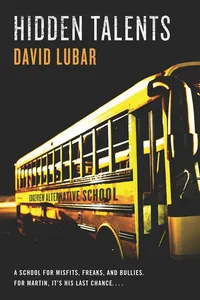
Hidden Talents

 74
74

Hidden Talents
David Lubar's "Hidden Talents" presents a compelling, if sometimes unsettling, exploration of latent abilities. The strength of the work lies in its unflinching portrayal of the psychological toll these powers exact. Rather than a straightforward heroic narrative, Lubar focuses on the internal friction and the struggle for control, making the characters' experiences feel more grounded. One particularly effective passage details the sheer terror of an uncontrolled manifestation, where the talent itself feels like an alien entity. However, the narrative occasionally falters in its pacing, with certain sections feeling drawn out as the characters grapple with their situations. Despite this, the book offers a nuanced perspective on what it means to possess extraordinary gifts. It's a solid, character-driven piece for those interested in the more difficult aspects of supernatural emergence.
📝 Description
74
### What It Is David Lubar's "Hidden Talents," first published in 2002, is a work that grapples with the emergence and control of unusual abilities. It explores the often chaotic and unpredictable nature of latent powers that begin to manifest in ordinary individuals. The narrative focuses on the internal struggles and external challenges faced by characters as they discover and attempt to manage these extraordinary "talents."
### Who It's For This book is particularly suited for readers interested in speculative fiction that touches upon psychological themes and the burden of extraordinary gifts. It appeals to those who appreciate stories where the characters' internal journeys are as significant as the external plot. Individuals fascinated by the concept of hidden potential and the ethical considerations that arise from possessing such abilities will find fertile ground here.
### Historical Context Released in 2002, "Hidden Talents" emerged during a period where young adult literature was increasingly exploring darker themes and more complex characterizations. The early 2000s saw a rise in stories featuring protagonists with supernatural or extraordinary abilities, often in response to earlier trends in fantasy and science fiction. This period also witnessed a growing interest in the psychological impact of such powers, moving beyond simple wish fulfillment.
### Key Concepts The central concept revolves around "hidden talents" themselves, which are not merely superpowers but often disruptive forces. The book examines the isolation that can accompany such abilities, the fear of exposure, and the difficult process of learning to integrate these powers into one's identity. It also touches upon the responsibility that comes with having abilities beyond the norm, and the potential for both good and harm.
💡 Why Read This Book?
• Gain insight into the psychological burden of possessing extraordinary abilities, as illustrated by the internal conflicts characters face when their "hidden talents" first emerge. • Understand the early 2000s literary landscape concerning speculative fiction, noting how "Hidden Talents" reflects a growing interest in the personal cost of powers, a trend seen in works from that era. • Explore the complex relationship between identity and extraordinary gifts, examining how characters like those in "Hidden Talents" grapple with integrating potentially dangerous powers into their sense of self.
⭐ Reader Reviews
Honest opinions from readers who have explored this book.
❓ Frequently Asked Questions
What is the primary focus of David Lubar's "Hidden Talents"?
The book centers on characters discovering and struggling to control unusual, often disruptive, latent abilities, exploring the psychological and social challenges that arise from possessing "hidden talents."
When was "Hidden Talents" first published?
The novel "Hidden Talents" by David Lubar was initially published in 2002.
What kind of themes does "Hidden Talents" explore?
It delves into themes of self-discovery, the burden of responsibility, fear of exposure, and the integration of extraordinary abilities into one's identity.
Is "Hidden Talents" a typical superhero story?
No, it is not a typical superhero narrative. It focuses more on the internal struggles and the difficult, often isolating, aspects of having unusual powers rather than heroic exploits.
Who is the author of "Hidden Talents"?
The author of "Hidden Talents" is David Lubar, who first published the book in 2002.
What makes the "hidden talents" in the book unique?
The talents are presented not as simple gifts but as often unpredictable and difficult-to-manage forces that can cause significant internal and external conflict for the characters.
🔮 Key Themes & Symbolism
The Unpredictability of Power
The core of "Hidden Talents" lies in the chaotic and often unwelcome nature of emergent abilities. These are not neatly packaged superpowers but disruptive forces that characters must learn to manage. The narrative emphasizes that possessing unique talents can lead to isolation and fear, as individuals grapple with their own unpredictable natures. The book explores the internal friction generated when these latent powers begin to manifest, often without warning or consent, forcing characters into a difficult process of self-understanding and control.
Identity and Integration
A significant theme is the challenge of integrating extraordinary abilities into one's sense of self. Characters in "Hidden Talents" often struggle with who they are becoming as these powers surface. The book examines the psychological impact of feeling different and the fear of being discovered, which can lead to a profound sense of isolation. The process of learning to live with, rather than just suppress, these unique aspects of themselves forms a critical part of the characters' journeys.
Responsibility and Consequence
Beyond the discovery of abilities, "Hidden Talents" delves into the ethical considerations and responsibilities that accompany them. The narrative implicitly questions how individuals should wield powers that set them apart. It highlights the potential for both good and harm, and the weighty consequences that can arise from the misuse or uncontrolled expression of these talents. This theme underscores the idea that power, regardless of its origin, demands careful consideration and management.
The Burden of Secrecy
The necessity of hiding one's "hidden talents" creates a pervasive atmosphere of secrecy and paranoia within the narrative. Characters often live in fear of exposure, leading to strained relationships and a constant state of vigilance. This theme explores the psychological toll of maintaining a façade and the loneliness that stems from being unable to share a fundamental aspect of one's being with others. The book illustrates how this enforced silence can exacerbate the internal struggles associated with possessing unusual abilities.
💬 Memorable Quotes
“The discovery of a hidden talent is rarely a moment of triumph.”
— This paraphrase captures the book's stance that emerging abilities are often a source of anxiety and difficulty, rather than immediate joy or empowerment, highlighting the psychological challenges.
“Control is less about mastery and more about constant negotiation.”
— This conceptual quote reflects the narrative's focus on the ongoing, often uncertain, process characters undertake to manage their powers, emphasizing the lack of absolute command.
“The fear of what you might become is as potent as the fear of discovery.”
— This interpretation points to the internal conflict characters experience, where their evolving identity due to their abilities causes significant distress, separate from external threats.
“Sometimes the greatest strength is in knowing when not to use your talent.”
— This paraphrased idea suggests that wisdom and restraint are key aspects of managing extraordinary abilities, pointing towards the ethical dilemmas and self-discipline involved.
“Isolation often precedes understanding.”
— This concept highlights the theme that characters frequently experience loneliness and separation as a precursor to grasping the nature and implications of their unique gifts.
🌙 Esoteric Significance
Tradition
While not explicitly aligned with a single esoteric lineage, "Hidden Talents" engages with archetypal concepts found across various traditions, such as the awakening of inner potential and the challenges of spiritual or psychic development. It reflects a modern, secularized approach to the idea of latent human capabilities, echoing Gnostic themes of hidden knowledge and emergent consciousness, but grounded in psychological realism rather than dogma.
Symbolism
The "hidden talents" themselves function as a central symbol, representing untapped potential, repressed aspects of the self, or even unconscious drives. Their unpredictable manifestation can symbolize moments of psychological crisis or spiritual awakening. The isolation experienced by characters often symbolizes the profound separateness that individuals may feel when undergoing significant personal transformation or when grappling with knowledge or abilities beyond the ordinary.
Modern Relevance
The book's focus on the psychological burden of extraordinary abilities remains relevant today, particularly in discussions surrounding mental health, neurodiversity, and the societal pressures of conformity. Contemporary thinkers exploring the intersection of psychology and the paranormal, or those examining the ethics of advanced human capabilities, might find resonance in Lubar's exploration of control and identity when faced with the unknown within oneself.
👥 Who Should Read This Book
• Young adult readers interested in speculative fiction that prioritizes character psychology over action, particularly those intrigued by the concept of emergent, difficult-to-control abilities. • Aspiring writers or readers of psychological thrillers who appreciate narratives that explore the internal conflicts and societal pressures faced by individuals who are fundamentally different. • Individuals fascinated by the philosophical implications of innate potential and the ethical considerations that arise when such 'talents' begin to manifest, moving beyond simplistic notions of power.
📜 Historical Context
Published in 2002, David Lubar's "Hidden Talents" arrived during a burgeoning period for young adult speculative fiction. The early 2000s saw a shift towards more psychologically complex narratives, moving beyond simpler fantasy tropes. Authors like Holly Black were also exploring darker, more nuanced takes on the supernatural in their works. "Hidden Talents" emerged in this climate, reflecting a broader trend of examining the internal struggles and social alienation associated with possessing unusual abilities. Unlike purely escapist fiction, Lubar's work tapped into anxieties about difference and control that resonated with readers seeking more grounded explorations of the extraordinary. Its reception was generally positive within its genre, contributing to the growing diversity of themes in YA literature.
📔 Journal Prompts
The initial manifestation of a "hidden talent": describe the sensory details and emotional impact.
The character's fear of discovery: how does secrecy shape their interactions?
Negotiating control: what strategies do characters employ to manage their abilities?
The concept of 'integration': how do characters attempt to reconcile their talents with their identity?
The burden of responsibility: when does a talent become a duty or a danger?
🗂️ Glossary
Hidden Talents
Unusual, latent abilities or powers that emerge unexpectedly in individuals, often causing psychological distress and social challenges rather than immediate benefit or control.
Emergence
The process by which latent abilities or powers begin to manifest, often unpredictably and without conscious intent, marking a significant shift in an individual's life.
Control
The ongoing and often difficult process of managing or directing one's emergent abilities, frequently characterized by uncertainty and a lack of absolute mastery.
Isolation
A state of separation from others, often experienced by characters in the book due to their unique abilities and the need to conceal them.
Integration
The psychological process of incorporating one's extraordinary abilities into one's overall sense of self and identity, a key challenge for the characters.
Manifestation
The act or instance of an ability becoming apparent or active; the outward display of a hidden talent.
Psychological Toll
The mental and emotional strain or damage caused by the experience of possessing and managing unusual abilities, a central theme in the book.