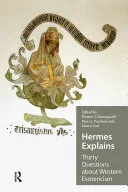
Hermes Explains
 72
72

Hermes Explains
The academic rigor evident in Hermes Explains is commendable, particularly in its detailed dismantling of common misconceptions about Western esotericism. The authors, affiliated with the esteemed Centre for History of Hermetic Philosophy, present a clear argument for treating these traditions as legitimate historical and cultural phenomena. A standout aspect is their nuanced discussion of the reception of Hermetic texts, highlighting how interpretations have shifted across centuries and cultures, often influenced by prevailing religious or political climates. For instance, their analysis of Renaissance Neoplatonism's engagement with the Corpus Hermeticum offers a concrete example of scholarly re-evaluation. However, the book occasionally leans towards dense academic prose, which might present a barrier for readers entirely new to the subject matter. While the intention is to clarify, the specialized language, though precise, could benefit from more introductory framing in certain sections. Despite this, Hermes Explains provides a vital corrective to popular, often reductionist, views of esoteric history.
📝 Description
72
### What It Is Hermes Explains is a scholarly examination of Western esotericism, presented by the Centre for History of Hermetic Philosophy and Related Currents at the University of Amsterdam. Published in 2025, it addresses common misunderstandings surrounding this field. The volume offers a critical perspective on how esoteric traditions are studied and perceived, both within academia and by the general public. It aims to clarify the academic approach to subjects often clouded by myth and prejudice.
### Who It's For This work is designed for academics, students of history and religious studies, and anyone interested in a more nuanced understanding of Western esoteric movements. It is particularly relevant for those who have encountered popular but often inaccurate portrayals of figures like Hermes Trismegistus or alchemical practices. The book provides a foundation for those seeking to engage with esoteric history on a rigorous, evidence-based level, moving beyond sensationalism.
### Historical Context The study of Western esotericism has seen significant academic development, particularly from the late 20th century onwards. Institutions like the University of Amsterdam's Centre have been pivotal in establishing this field as a legitimate area of historical inquiry, distinct from occult practice or New Age spirituality. Hermes Explains emerges from this context, seeking to bridge the gap between specialized scholarship and broader public comprehension, addressing a legacy of misconceptions dating back centuries.
### Key Concepts The book likely explores the definition and scope of 'Western esotericism' itself, questioning its boundaries and historical evolution. It probably discusses the challenges in sourcing and interpreting esoteric texts, the role of secrecy and initiation in these traditions, and the relationship between esotericism and mainstream religious or philosophical movements. The figure of Hermes Trismegistus, a syncretic deity central to Hermeticism, is a probable focus, examining his historical and symbolic significance.
💡 Why Read This Book?
• Gain a critical understanding of how academic research approaches Western esotericism, moving beyond popular myths concerning figures like Hermes Trismegistus, as discussed in the book's exploration of historical reception. • Learn about the specific challenges in studying esoteric traditions, including textual interpretation and the influence of historical biases, as detailed in sections addressing the Centre's twenty years of scholarship. • Understand the intellectual lineage of Hermetic philosophy and its place within broader Western thought, as the work contextualizes these currents against established philosophical and religious movements.
⭐ Reader Reviews
Honest opinions from readers who have explored this book.
❓ Frequently Asked Questions
What is the primary goal of Hermes Explains?
The book aims to demystify the academic study of Western esotericism, addressing and correcting widespread misunderstandings and biases that often surround these historical and philosophical traditions.
Who are the authors of Hermes Explains?
The authors are Wouter Hanegraaff, Peter Forshaw, and Marco Pasi, scholars associated with the Centre for History of Hermetic Philosophy and Related Currents at the University of Amsterdam.
When was Hermes Explains first published?
Hermes Explains was first published on October 1, 2025.
What academic institution is behind this book?
The book originates from the Centre for History of Hermetic Philosophy and Related Currents at the University of Amsterdam, a leading institution in the field.
Is this book for occult practitioners or academics?
While valuable for practitioners seeking historical context, the book is primarily written for an academic audience and those interested in the scholarly analysis of esoteric history and philosophy.
What does 'Western esotericism' refer to in this book?
In this context, 'Western esotericism' encompasses a range of mystical, philosophical, and magical traditions originating in Europe and the Mediterranean, including Hermeticism, Gnosticism, Kabbalah, and alchemy.
🔮 Key Themes & Symbolism
Academic Study of Esotericism
This theme focuses on establishing the legitimacy and methodology of studying Western esotericism as an academic discipline. It critiques popular misconceptions and biases that have historically plagued the field, advocating for a rigorous, evidence-based approach. The work highlights the twenty-year contributions of the University of Amsterdam's Centre, emphasizing how scholarly inquiry can illuminate traditions often obscured by myth and prejudice, moving beyond mere occult fascination to historical analysis.
Hermeticism and its Legacy
Central to the book is the figure of Hermes Trismegistus and the Hermetic tradition. It examines the historical evolution of Hermetic thought, from its ancient roots to its influence on Renaissance Neoplatonism and later esoteric movements. The work likely dissects key Hermetic texts, such as the Corpus Hermeticum, analyzing their philosophical content and exploring how they have been interpreted and reinterpreted across different eras and cultural contexts.
Misconceptions and Prejudice
A significant portion of Hermes Explains is dedicated to confronting and dismantling common misunderstandings and prejudices surrounding Western esotericism. This includes addressing sensationalized portrayals in popular culture, the conflation of academic study with occult practice, and historical biases that have led to the marginalization of these traditions. The book seeks to provide clarity and promote a more informed public discourse on esoteric subjects.
Historical Reception of Esoteric Texts
This theme explores how esoteric writings and ideas have been received, understood, and utilized throughout history. It likely investigates specific periods, such as the Renaissance or the Enlightenment, detailing how figures like Marsilio Ficino engaged with Hermetic texts, and how these ideas interacted with prevailing religious, philosophical, and scientific paradigms of their time.
💬 Memorable Quotes
“The academic study of Western esotericism faces persistent challenges from popular sensationalism.”
— This statement highlights the core problem the book addresses: the gap between rigorous scholarly analysis and widespread, often inaccurate, public perceptions of esoteric traditions.
“Misconceptions surrounding figures like Hermes Trismegistus obscure their historical significance.”
— This points to how legendary or mythologized aspects of esoteric figures can overshadow a critical understanding of their actual historical context and philosophical contributions.
“The Centre for History of Hermetic Philosophy has worked for twenty years to establish rigorous scholarship.”
— This emphasizes the long-term commitment and institutional effort involved in developing Western esotericism as a respected academic field.
“Renaissance Neoplatonism's engagement with the Corpus Hermeticum marked a pivotal moment.”
— This references a specific historical period and intellectual movement crucial to the transmission and reinterpretation of ancient Hermetic texts in Europe.
“Distinguishing historical inquiry from occult practice is essential for understanding esoteric traditions.”
— This underscores the book's critical stance, advocating for a clear separation between academic research and the practical application or belief in esoteric systems.
🌙 Esoteric Significance
Tradition
Hermes Explains sits firmly within the academic study of Western Esotericism, a field that has increasingly focused on Hermeticism, Gnosticism, Kabbalah, and alchemy. It acknowledges the historical lineage of these traditions, tracing their influence from Hellenistic Egypt through the Renaissance and into modern occultism. The work positions itself not as a practitioner's guide but as a critical historical analysis, seeking to understand these traditions on their own terms and within their historical contexts, departing from earlier hagiographic or purely polemical approaches.
Symbolism
While the book is primarily analytical, it would likely reference core Hermetic symbols. The Caduceus of Hermes Trismegistus, representing mediation, communication, and the reconciliation of opposites, is a probable motif. The concept of the 'Emerald Tablet' and its enigmatic text, 'As above, so below,' would also be significant, symbolizing the interconnectedness of the macrocosm and microcosm, a fundamental Hermetic principle guiding alchemical and astrological thought.
Modern Relevance
Contemporary thinkers and practitioners within fields like comparative mythology, religious studies, and even certain strands of modern spirituality draw upon the rigorous scholarship concerning Western esotericism. The work's emphasis on historical context and critical analysis provides a necessary corrective to New Age appropriations or simplistic interpretations of ancient wisdom traditions. Scholars and students seeking to understand the roots of modern esoteric movements, or the philosophical underpinnings of figures like Carl Jung's engagement with alchemy, find essential grounding in this type of academic research.
👥 Who Should Read This Book
• Students of Religious Studies and History: Gain a foundational understanding of how academic institutions approach the complex subject of Western esotericism, moving beyond popular myths. • Researchers of Hermeticism: Access a scholarly perspective on the historical development and interpretation of Hermetic texts and figures, such as Hermes Trismegistus. • Curious Readers encountering esoteric topics: Find a clear, critical, and evidence-based introduction that debunks common misconceptions and prejudices surrounding mystical and occult traditions.
📜 Historical Context
The study of Western esotericism gained significant academic traction in the late 20th century, moving from niche philosophical inquiry to a recognized field within religious studies and history. Institutions like the University of Amsterdam's Centre for History of Hermetic Philosophy and Related Currents, established in the early 2000s, became central to this development. Hermes Explains emerges from this context, aiming to clarify the academic approach for a broader audience. This period saw scholars like Antoine Faivre championing the field, while also confronting historical biases. For instance, the Enlightenment era often dismissed esoteric traditions as superstition, a prejudice the modern academic study actively seeks to overcome. The book likely engages with the reception of Hermetic texts, particularly the Corpus Hermeticum, noting how figures like Marsilio Ficino in the 15th century were instrumental in their rediscovery and integration into Renaissance thought, a process far removed from later, more critical, or dismissive attitudes.
📔 Journal Prompts
Reflect on the Centre's twenty-year effort to establish rigorous scholarship in Western esotericism.
Consider the historical reception of Hermetic texts like the Corpus Hermeticum.
Analyze the role of misconceptions in shaping public understanding of esoteric traditions.
Explore the symbolic meaning of the Caduceus in Hermetic philosophy.
Examine the distinction between academic study and occult practice in esoteric research.
🗂️ Glossary
Western Esotericism
A broad category encompassing diverse mystical, philosophical, and magical traditions that originated in or developed within European and Mediterranean cultures, often characterized by a focus on hidden knowledge and spiritual transformation.
Hermeticism
A philosophical and religious tradition based primarily upon writings attributed to Hermes Trismegistus, a syncretic Greco-Egyptian deity. It emphasizes divine wisdom, cosmology, and the interconnectedness of the universe.
Hermes Trismegistus
A legendary, syncretic figure, a blend of the Greek god Hermes and the Egyptian god Thoth. He is considered the author of the Hermetic Corpus and the Emerald Tablet, central texts in Hermeticism.
Corpus Hermeticum
A collection of ancient Greek philosophical and religious writings attributed to Hermes Trismegistus. It forms the core textual basis for the Hermetic tradition and significantly influenced Renaissance thought.
Neoplatonism
A school of philosophy founded by Plotinus in the 3rd century CE, heavily influenced by Plato. It emphasizes a mystical ascent to the divine, and significantly impacted the interpretation of Hermetic texts during the Renaissance.
Emerald Tablet
A short, cryptic text attributed to Hermes Trismegistus, famous for the maxim 'As above, so below.' It is considered a foundational document in alchemy and Hermetic philosophy, symbolizing cosmic unity.
Esoteric
Relating to or accessible only by a select group of initiated individuals. It implies hidden meanings or knowledge not readily available to the uninitiated.