Heart of Obsidian

 84
84

Heart of Obsidian
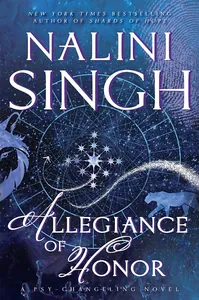
Nalini Singh's *Heart of Obsidian* presents a compelling narrative framework for exploring complex spiritual concepts, rather than a dry academic text. Its strength lies in its ability to embed metaphysical principles within a character-driven plot, making abstract ideas accessible through relatable struggles. The protagonist's journey through personal darkness to self-mastery is particularly well-rendered, offering a tangible representation of spiritual growth. However, at times, the sheer density of exposition regarding the book's unique metaphysical system can feel slightly overwhelming, occasionally slowing the pacing. A passage detailing the Obsidian Accord's energetic binding, for instance, is both crucial to the plot and a dense explanation of interdimensional contracts. Despite this, the novel succeeds as a work of spiritual fiction, offering a unique blend of story and teaching.
📝 Description
84
### What It Is
*Heart of Obsidian*, published in 2013 by Nalini Singh, is a seminal work within contemporary esoteric fiction. It operates as a novel that deeply integrates metaphysical concepts, spiritual journeys, and complex character arcs. The narrative is not merely a story but an exploration of internal landscapes and the manifestation of will. It serves as a fictionalized treatise on the nature of consciousness and its power to shape reality.
### Who It's For
This book is intended for readers who seek more than simple entertainment from their fiction. It appeals to those interested in the intersection of spirituality and narrative, particularly individuals familiar with or curious about concepts like soul retrieval, energetic healing, and the psychological underpinnings of magical practice. It is for the discerning reader who appreciates intricate world-building married with profound thematic exploration.
### Historical Context
Released in 2013, *Heart of Obsidian* emerged during a period of increased mainstream interest in spirituality and self-help, often framed through New Age and neo-pagan lenses. This era saw a proliferation of books blending narrative with esoteric teachings, a trend Singh masterfully engages with. The work follows in the lineage of authors like Dion Fortune and Marion Zimmer Bradley, who similarly used fiction to explore occult principles and personal transformation, though Singh's approach is distinctly modern.
### Key Concepts
The novel centers on several core esoteric ideas. The concept of 'soul fragmentation' and its subsequent healing is central, illustrating how trauma can scatter one's essence and the arduous process of reintegration. It also delves into the power of intention and belief as active forces in the physical world, and the interconnectedness of all beings through energetic fields. The narrative explores the idea that external realities are often reflections of internal states, a common theme in Hermetic philosophy.
💡 Why Read This Book?
• Gain a narrative understanding of soul fragmentation and reintegration, as depicted through the protagonist's specific journey to reclaim lost parts of herself, offering a fictional lens on energetic healing. • Explore the tangible effects of focused intention and belief on reality, as demonstrated by how characters' inner states manifest external challenges and resolutions, drawing parallels to Hermetic principles. • Grasp the symbolic significance of obsidian within the narrative's unique metaphysical system, understanding its role as a conduit for both shadow work and powerful transformation.
⭐ Reader Reviews
Honest opinions from readers who have explored this book.
❓ Frequently Asked Questions
What esoteric traditions does Heart of Obsidian draw from?
The work integrates elements reminiscent of Hermeticism, particularly the concept of 'as above, so below,' and shamanic traditions concerning soul retrieval. It also touches upon Gnostic ideas of fragmented consciousness and the path to wholeness.
Is Heart of Obsidian part of a series?
Yes, *Heart of Obsidian* is part of Nalini Singh's Psy-Changeling series, specifically a sub-arc focusing on the DarkRiver leopards. It is the tenth book in the main series.
What is the significance of obsidian in the book?
Obsidian, in the context of *Heart of Obsidian*, is depicted as a powerful volcanic glass associated with grounding, protection, and the confrontation of shadow aspects. It acts as a conduit for intense energy and transformation.
Who are the main characters in Heart of Obsidian?
The central figures are Sascha Duncan, a powerful Psy, and Kaleb Krychek, a formidable DarkRiver leopard whose past holds significant secrets. Their complex relationship drives much of the narrative.
When was Heart of Obsidian first published?
Nalini Singh's *Heart of Obsidian* was first published in 2013, marking a significant entry in the Psy-Changeling series' exploration of darker themes and character depths.
What are the Psy and Changelings in this universe?
The Psy are a genetically engineered race with powerful psychic abilities, often detached emotionally. Changelings are shapeshifters, deeply connected to their animal instincts and pack dynamics. The book explores their intertwined existence.
🔮 Key Themes & Symbolism
Soul Fragmentation and Healing
The novel posits that profound trauma can cause the soul to fragment, scattering essential aspects of one's being. This concept is explored through Kaleb Krychek's arduous internal journey to confront and reintegrate these lost pieces. The process is depicted not as a passive event but an active, often painful, undertaking requiring immense courage and self-awareness, mirroring real-world therapeutic and spiritual practices focused on wholeness.
The Power of Psy and Shifter Dynamics
Singh delineates the distinct yet interconnected natures of Psy and Changelings. The Psy, with their psychic abilities, represent a more cerebral, controlled existence, often struggling with emotional depth. Changelings, grounded in their animalistic instincts and loyalty, offer a counterpoint of primal connection. The narrative explores the tensions and synergies between these groups, particularly how their inherent natures influence their approach to conflict and healing.
Obsidian as a Metaphysical Catalyst
The titular 'Heart of Obsidian' is more than just a plot device; it symbolizes the core of the book's metaphysical explorations. Obsidian, a volcanic glass, is presented as a material deeply connected to the earth's energies, capable of absorbing negativity and facilitating profound transformation. Its use signifies a confrontation with the 'shadow self' and the potential for radical rebirth through embracing one's darkest aspects.
Consciousness Shaping Reality
A central tenet explored is the idea that consciousness is not merely a passive observer but an active architect of reality. The characters' internal states—their beliefs, fears, and intentions—are shown to directly influence their external circumstances. This aligns with metaphysical concepts where focused mental energy and emotional clarity are understood to manifest desired outcomes or navigate challenging situations.
💬 Memorable Quotes
“The heart is a lonely hunter.”
— This line, referencing the profound isolation that can accompany deep emotional or spiritual wounds, speaks to the core struggle of characters seeking connection and wholeness amidst their internal battles.
“Darkness is simply light that has not yet been understood.”
— This quote reframes negative experiences or 'shadow' aspects not as inherently evil, but as misunderstood forces that, with awareness and integration, can become sources of power and illumination.
“The world outside is a mirror to the world within.”
— This aphorism emphasizes the esoteric principle that external circumstances and relationships often reflect an individual's inner landscape, suggesting that true change begins with internal transformation.
“To heal is to reclaim the scattered pieces.”
— This concept encapsulates the book's exploration of soul fragmentation, presenting healing not as forgetting or erasing pain, but as the active process of gathering and integrating all parts of the self.
“Loyalty is not a choice, but a current.”
— This highlights the deep, instinctual bonds that define the Changelings, suggesting that their allegiances are a fundamental aspect of their being, akin to a natural force rather than a conscious decision.
🌙 Esoteric Significance
Tradition
The work draws heavily from modern esoteric thought, particularly concepts found in New Age spirituality and certain interpretations of Hermeticism and Gnosticism. It explores themes of consciousness, energetic healing, and the interconnectedness of all beings. While not strictly adhering to a single historical lineage like Kabbalah or Theosophy, it synthesizes accessible versions of these ideas, presenting them through a contemporary fictional lens focused on psychological and spiritual wholeness.
Symbolism
Obsidian, the central symbol, represents the confrontation with shadow and the transformative power of embracing difficult truths. The Psy's reliance on psychic energy and emotional suppression can be seen as a metaphor for spiritual detachment or intellectualism devoid of heart. Conversely, the Changelings' deep connection to their animal nature symbolizes primal instinct, grounding, and unconditional loyalty, representing a different path to authentic being.
Modern Relevance
Contemporary spiritual practitioners and authors exploring mind-body-spirit connections often reference Nalini Singh's ability to weave complex metaphysical concepts into engaging narratives. Thinkers in fields like consciousness studies and integrative psychology might find the book's exploration of trauma's impact on the psyche and the potential for energetic healing to be illustrative of theoretical concepts in a relatable format.
👥 Who Should Read This Book
• Readers interested in contemporary esoteric narratives that blend supernatural elements with profound psychological and spiritual exploration. • Individuals seeking fictional examples of soul retrieval, energetic healing, and the impact of consciousness on reality, particularly those familiar with New Age concepts. • Fans of the Psy-Changeling series looking to delve deeper into the lore surrounding the Psy and DarkRiver leopards, exploring themes of trauma and redemption.
📜 Historical Context
Published in 2013, *Heart of Obsidian* arrived amidst a burgeoning interest in paranormal romance and urban fantasy that increasingly incorporated deeper metaphysical and spiritual themes. This period saw authors like Laurell K. Hamilton and Patricia Briggs pushing boundaries in genre fiction, often exploring complex mythologies and character psychologies. Singh's work sits within this lineage, particularly its engagement with concepts of psychic abilities (Psy) and shapeshifting (Changelings), which echo elements found in earlier speculative fiction but are here infused with a distinct focus on soul fragmentation and energetic healing. Unlike purely action-oriented fantasy, Singh's 2013 novel engaged with a growing readership seeking narratives that addressed personal growth and spiritual development through fictional means, a trend also seen in contemporary New Age literature. The reception of the Psy-Changeling series generally praised its intricate world-building and character depth, positioning it as a significant contribution to the evolution of supernatural fiction.
📔 Journal Prompts
Kaleb Krychek's fragmented past and the Obsidian Accord.
Sascha Duncan's journey toward emotional authenticity.
The symbolic weight of obsidian in personal transformation.
Reconciling primal instinct with psychic discipline.
Manifestation through focused intention and belief.
🗂️ Glossary
Psy
A genetically engineered race possessing powerful psychic abilities, often characterized by emotional detachment and a reliance on mental discipline to control their powers.
Changelings
Shapeshifters who can transform into their animal alter-egos. They are deeply connected to instinct, pack loyalty, and the natural world.
DarkRiver
A specific pack of Changelings, known for their leopard lineage and their history of operating in the shadows, often as enforcers or assassins.
Obsidian
A volcanic glass used symbolically in the book to represent grounding, protection, and the confrontation and integration of shadow aspects of the self.
Soul Fragmentation
The concept that severe trauma can cause an individual's soul or essence to break apart, leading to psychological and energetic disunity.
The Obsidian Accord
A binding agreement, often involving dark magic or intense energetic exchange, that has profound and lasting consequences for those involved.
Empath
An individual, often a Psy in this universe, capable of sensing and experiencing the emotions of others, which can be both a gift and a burden.