Gumdrop and the Martians
 74
74

Gumdrop and the Martians
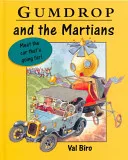
Val Biro's "Gumdrop and the Martians" presents a fascinating paradox: a children's book that, upon closer examination, hums with a peculiar, almost alchemical, resonance. The true strength lies in its understated visual storytelling; Biro’s illustrations are not merely decorative but integral to the narrative's subtle layering. The depiction of the Martians, for instance, manages to be both alien and oddly familiar, inviting a reading beyond the surface. A limitation, however, is the very subtlety that makes it intriguing; readers seeking explicit esoteric doctrine will find none. The concept of Gumdrop's almost passive acceptance of the Martians, a quiet observation of their strange ways, is particularly noteworthy – it suggests a form of inner stillness that is itself a Hermetic ideal. The book's verdict? A charming enigma, rewarding those who look past the nursery rhymes.
📝 Description
74
Val Biro's 1998 book, Gumdrop and the Martians, appears to be a children's story but contains hidden symbolic layers.
First published in 1998, Val Biro's "Gumdrop and the Martians" presents itself as a children's book. The story follows the adventures of a character named Gumdrop. However, the narrative and illustrations, while accessible to young readers, invite deeper analysis for those interested in esoteric symbolism. The book's structure allows for themes that go beyond typical juvenile fiction.
This work appeals not only to children but also to adults who appreciate symbolic interpretation within children's literature. It is of particular interest to collectors of unique or overlooked books and readers seeking allegorical stories with multiple readings. Those familiar with mid-20th century British illustrators and authors may find additional layers of meaning.
Published in 1998, "Gumdrop and the Martians" fits within a tradition of fantastical stories that carry cultural commentary or explore the unknown. While not overtly occult, it emerged after the peak of the New Age movement but reflects a continuing interest in esoteric concepts entering popular culture. The book's narrative, where Gumdrop encounters Martians, can be read as an encounter with archetypal forces or the 'Other,' prompting a reaction that transcends a simple children's tale.
💡 Why Read This Book?
• Gain a unique perspective on archetypal encounters by examining Gumdrop's interactions with the Martians, reflecting how the unknown is integrated into the familiar. • Understand how seemingly simple narratives, like those found in "Gumdrop and the Martians" from 1998, can serve as vehicles for symbolic exploration. • Appreciate the subtle power of visual allegory, as Val Biro's illustrations in "Gumdrop and the Martians" contribute to a deeper, unspoken narrative layer.
⭐ Reader Reviews
Honest opinions from readers who have explored this book.
❓ Frequently Asked Questions
What is the primary character's name in "Gumdrop and the Martians"?
The primary character is named Gumdrop. This character serves as the central figure through whose experiences the narrative unfolds and the encounter with the Martians takes place.
When was "Gumdrop and the Martians" first published?
The book "Gumdrop and the Martians" was first published in 1998, placing it within the late 20th-century landscape of children's literature and illustration.
Who is the author and illustrator of "Gumdrop and the Martians"?
The author and illustrator of "Gumdrop and the Martians" is Val Biro, known for his distinctive artistic style.
What is the main theme of "Gumdrop and the Martians"?
While appearing as a children's story, the book explores themes of encountering the 'Other' and the integration of the unknown, framed by Gumdrop's interactions with Martian visitors.
Does "Gumdrop and the Martians" contain explicit occult teachings?
No, "Gumdrop and the Martians" does not contain explicit occult teachings. Its esoteric appeal lies in symbolic interpretation and allegorical readings of its narrative and illustrations.
What makes "Gumdrop and the Martians" interesting to esoteric readers?
Esoteric readers find "Gumdrop and the Martians" interesting for its potential symbolic layers, viewing the Martians as archetypal figures and Gumdrop's encounters as allegories for engaging with the unknown or higher consciousness.
🔮 Key Themes & Symbolism
The Archetype of the Alien
In "Gumdrop and the Martians," the Martians function as potent archetypes of the unknown or the 'Other.' Their presence disrupts Gumdrop's ordinary existence, prompting an interaction that can be interpreted through an esoteric lens as an encounter with forces beyond conventional understanding. This theme mirrors alchemical processes of transformation through the introduction of foreign elements, challenging the established order and inviting assimilation or integration of new perspectives. The narrative explores how a character responds to the profoundly unfamiliar without panic, suggesting a model for confronting the numinous or the higher self.
Subtle Narrative Layers
Val Biro's work, particularly "Gumdrop and the Martians," is characterized by its ability to embed deeper meanings within a seemingly simple framework. The book's publication in 1998 aligns with a continued appreciation for children's literature that offers multiple levels of interpretation. For the esoteric reader, the narrative acts as a cipher, where Gumdrop's actions and the Martians' characteristics are not literal but symbolic. This approach aligns with Hermetic principles of correspondence, where the microcosm (the story) reflects the macrocosm (universal truths or spiritual laws).
Visual Allegory
The illustrations in "Gumdrop and the Martians" are as crucial as the text in conveying its potential esoteric significance. Val Biro’s distinctive style creates an atmosphere that is both charming and subtly disquieting, allowing the visual elements to carry symbolic weight. The depiction of the Martians' form, their technology, and their interaction with Gumdrop's world can be read allegorically, much like ancient hieroglyphs or mandalas. This visual storytelling invites contemplation on themes of creation, other dimensions, or the subtle energies that govern existence.
The Quest for Understanding
At its core, "Gumdrop and the Martians" can be seen as a narrative about the quest for understanding. Gumdrop's journey, however brief or understated, involves encountering and coexisting with beings from a different world. This mirrors the esoteric seeker's journey to comprehend phenomena that defy rational explanation. The book implies that understanding does not always require aggressive investigation but can arise from patient observation and a willingness to accept the presence of the inexplicable, a concept central to mystical traditions seeking gnosis.
💬 Memorable Quotes
“Gumdrop met the Martians.”
— This simple declarative sentence marks the pivotal moment of encounter. Esoterically, it signifies the intersection of the mundane with the extraordinary, the terrestrial with the extraterrestrial, or the conscious self with the subconscious or higher spiritual realms.
“They looked very strange.”
— This observation points to the alien nature of the Martians, but can be interpreted as a reflection of how unfamiliar spiritual concepts or divine manifestations appear to the uninitiated mind. The 'strangeness' is a measure of the observer's limited frame of reference.
“Gumdrop watched them carefully.”
— This highlights a non-confrontational, observational approach to the unknown. In esoteric traditions, patient, mindful observation is often a precursor to true understanding and integration, rather than immediate judgment or action.
“The Martians did peculiar things.”
— This suggests actions or phenomena that defy conventional logic or earthly understanding. Esoterically, it can represent the workings of unseen forces, synchronicity, or divine interventions that operate according to principles beyond human grasp.
“Gumdrop was not afraid.”
— This portrays a state of inner equilibrium and acceptance. Esoterically, this lack of fear signifies spiritual maturity, trust in the unfolding of events, or a recognition of the interconnectedness of all beings, even the alien.
🌙 Esoteric Significance
Tradition
While "Gumdrop and the Martians" does not align with a specific esoteric lineage like Hermeticism or Gnosticism, it engages with universal archetypal themes found across many mystical traditions. The encounter with the 'Martians' can be interpreted as a metaphor for encountering the divine, the subconscious, or forces from other planes of existence, a concept explored in Shamanism and certain schools of Theosophy. The book’s subtle approach suggests an initiation into understanding the unknown through gentle observation, a principle echoed in contemplative practices across various spiritual paths.
Symbolism
The Martians themselves are potent symbols. They represent the 'Other,' the alien consciousness, or perhaps even projections of the subconscious mind. Their 'peculiar things' could symbolize synchronicity, miracles, or the workings of higher laws that defy mundane logic. Gumdrop’s non-fearful reaction symbolizes spiritual maturity and the capacity to integrate the unfamiliar without egoic resistance, a state often sought in mystical disciplines aiming for inner peace and expanded consciousness.
Modern Relevance
In contemporary esoteric thought, "Gumdrop and the Martians" offers a refreshingly subtle approach to the theme of contact and the unknown. It resonates with modern discussions on consciousness, interspecies communication, and the exploration of non-ordinary realities, particularly within more introspective or allegorical branches of occult study. Thinkers exploring archetypal psychology or the semiotics of children's literature for hidden meanings might find value in its understated symbolic language.
👥 Who Should Read This Book
• Students of comparative mythology and symbolism seeking archetypal representations of the 'Other' in unexpected places. • Illustrators and authors interested in how visual narrative can convey deeper, allegorical meanings beyond the literal text. • Adult readers who appreciate children's literature as a medium for philosophical and psychological exploration, looking for works with subtle, interpretable layers.
📜 Historical Context
Val Biro’s "Gumdrop and the Martians," published in 1998, emerged in a cultural landscape still processing the late 20th century's fascination with the extraterrestrial, a theme that had permeated science fiction and popular consciousness since the mid-20th century. While not overtly occult, its publication year places it after the New Age movement's zenith but within a continued cultural interest in alternative cosmologies and symbolic narratives. Biro, an established illustrator known for his work in children's literature since the 1950s, brought a sophisticated visual sensibility to this work. "Gumdrop and the Martians" can be seen as a late echo of a tradition where children's literature, exemplified by authors like Lewis Carroll, employed fantastical elements to explore philosophical and psychological themes, often with allegorical underpinnings. The book’s understated approach contrasts with more dogmatic or explicit esoteric texts of the era, offering instead a subtle invitation to symbolic interpretation.
📔 Journal Prompts
Gumdrop's encounter with the Martians: Reflect on a time you encountered something entirely unfamiliar.
The peculiar actions of the Martians: How do seemingly illogical events in your life offer opportunities for insight?
Gumdrop's lack of fear: Explore the nature of courage when facing the unknown.
The visual narrative of Val Biro: Consider how illustrations can convey messages separate from text.
The concept of 'strange' Martians: What does the perception of 'strangeness' reveal about one's own perspective?
🗂️ Glossary
Gumdrop
The central character of the book, serving as the point-of-view through which the narrative unfolds and the encounter with extraterrestrial beings occurs.
Martians
The extraterrestrial visitors in the book. They are depicted as 'strange' and perform 'peculiar things,' serving as archetypal representations of the unknown or the 'Other.'
Archetype
A recurring symbol, character type, or motif that is part of the collective unconscious. In this context, the Martians can be seen as an archetype of the alien or the unknown.
Allegory
A story, poem, or picture that can be interpreted to reveal a hidden meaning, typically a moral or political one. "Gumdrop and the Martians" invites allegorical readings of its narrative.
Symbolism
The use of symbols to represent ideas or qualities. The book's characters, actions, and setting are rich with potential symbolic interpretations for esoteric readers.
Esoteric
Intended for or likely to be understood by only a small number of people with a specialized knowledge or interest. This book is considered esoteric due to its potential for symbolic interpretation.
Narrative
The story or account of events, presented in a particular sequence. The narrative structure of "Gumdrop and the Martians" is simple but serves to frame deeper thematic explorations.