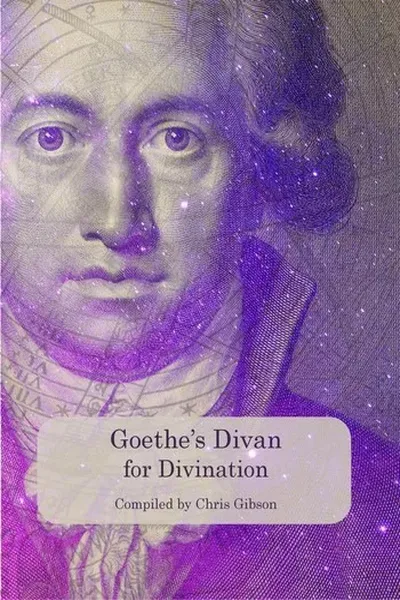
Goethe's Divan for Divination

 83
83

Goethe's Divan for Divination
Chris Gibson's "Goethe's Divan for Divination" presents a compelling argument for the literary "West-Eastern Divan" as a sophisticated oracle. Gibson’s strength lies in his meticulous attention to the symbolic architecture of Goethe's verse, particularly in the sections concerning "Hatem" and "Suleika." He effectively demonstrates how poetic imagery can be recontextualized for divinatory purposes, moving beyond superficial interpretations. However, the work could benefit from a more explicit methodology section detailing how a novice might initiate a divinatory session with the "Divan." The analysis of Goethe's engagement with Hafiz offers a particularly insightful window into the cross-cultural spiritual dialogue of the early 19th century. Gibson's exploration of the "Annals" and "Notices" sections, usually considered supplementary, as integral to the divinatory practice is a novel approach. The book offers a unique lens for appreciating literary works as living oracles.
Verdict: A scholarly yet practical guide for literary diviners seeking to expand their bibliomantic repertoire.
📝 Description
83
### What It Is Goethe's Divan for Divination is a work that examines the esoteric dimensions of Johann Wolfgang von Goethe's "West-Eastern Divan," a collection of lyric poems inspired by Persian poetry. Chris Gibson’s analysis seeks to unlock the Divan's potential as a tool for divination and spiritual insight.
### Who It's For This text is intended for readers interested in the intersection of literature, mysticism, and practical divination. It appeals to those who seek deeper meaning in poetry and desire to use literary works as oracles. Scholars of comparative literature and Western esotericism will find it a unique perspective.
### Historical Context Goethe's "West-Eastern Divan" was published in 1819, a period of significant interest in Eastern cultures and philosophies within Europe, fueled by early translations of Persian and Arabic texts. This era saw a burgeoning of Romanticism, which often embraced the exotic and the spiritual, making Goethe's engagement with Hafiz and Persian forms part of a broader intellectual current. The work itself emerged from Goethe's fascination with Persian poet Hafiz, whom he considered a spiritual peer.
### Key Concepts The book explores the concept of the "Divan" not merely as a literary anthology but as a living text capable of communication. It delves into the use of poetic verse as a means of receiving guidance, akin to classical oracles or bibliomancy. Gibson highlights the symbolic language within Goethe's poems, interpreting them as keys to unlocking hidden meanings and personal revelations.
💡 Why Read This Book?
• You will learn to interpret literary texts as divinatory tools, drawing on specific concepts like "Hatem" and "Suleika" as presented by Chris Gibson, a method distinct from standard bibliomancy guides. • You will gain a deeper appreciation for Johann Wolfgang von Goethe's "West-Eastern Divan" (1819) by understanding its symbolic layers and potential for practical spiritual guidance, as explored in Gibson's unique analysis. • You will discover how to engage with poetic verse for personal insight, a practice grounded in the historical context of 19th-century European interest in Eastern mysticism, as detailed in the book's historical sections.
⭐ Reader Reviews
Honest opinions from readers who have explored this book.
❓ Frequently Asked Questions
What is the primary purpose of 'Goethe's Divan for Divination'?
The book's main goal is to present Goethe's "West-Eastern Divan" as a sophisticated system for divination and spiritual insight, moving beyond its purely literary appreciation.
Who is Chris Gibson and what is his background in relation to this work?
Chris Gibson is the author who meticulously analyzed Goethe's "West-Eastern Divan" for its divinatory potential. His work draws on literary scholarship and esoteric traditions to interpret the poems.
When was Goethe's 'West-Eastern Divan' originally published?
Johann Wolfgang von Goethe's "West-Eastern Divan" was first published in 1819, a period marked by significant European engagement with Eastern literature and philosophy.
What is 'bibliomancy' and how does this book relate to it?
Bibliomancy is the practice of seeking guidance from a book, often by randomly opening to a passage. This book applies that concept to Goethe's "West-Eastern Divan," arguing for its specific divinatory applications.
Are there specific characters or figures from Goethe's Divan discussed for divination?
Yes, the work likely discusses figures and concepts within Goethe's "West-Eastern Divan," such as "Hatem" and "Suleika," reinterpreting their symbolic roles for divinatory purposes.
Does the book provide practical steps for using Goethe's Divan for divination?
While it offers an analytical framework, the extent to which it provides step-by-step instructions for practical divination sessions would need to be confirmed by examining the book's content directly.
🔮 Key Themes & Symbolism
Literary Divination Practice
This theme centers on the innovative concept of employing Goethe's "West-Eastern Divan" as a functional oracle. It moves beyond traditional literary analysis to explore how the poetic structures and symbolic language within the 1819 collection can serve as a conduit for direct spiritual or divinatory messages. The work investigates the inherent oracular potential within verse, suggesting that specific passages, when approached with intent, can offer guidance or reveal hidden truths to the seeker.
Symbolic Interpretation of Verse
The core of this theme lies in deciphering the rich symbolic landscape of Goethe's poetry. Gibson's approach focuses on identifying recurring motifs, character archetypes like "Hatem" and "Suleika," and metaphorical expressions within the "West-Eastern Divan." These elements are not viewed in isolation but are analyzed for their layered meanings, which are purported to unlock deeper spiritual or psychological insights when used for divination.
Goethe and Persian Mysticism
This theme explores the profound influence of Persian poets, particularly Hafiz, on Johann Wolfgang von Goethe's "West-Eastern Divan." It examines how Goethe synthesized Eastern poetic forms and mystical sensibilities with his own philosophical outlook, creating a work that bridges cultural and spiritual traditions. The book delves into how this cross-cultural dialogue contributes to the Divan's potential as a source of esoteric wisdom.
The Divan as a Living Text
This theme posits the "West-Eastern Divan" not as a static literary artifact but as a dynamic, living text capable of interacting with the reader. Gibson's analysis emphasizes the active role of the seeker in co-creating meaning through the divinatory process. The book suggests that the poems retain a potency that can be accessed and activated for contemporary spiritual or personal development.
💬 Memorable Quotes
“The "West-Eastern Divan" offers more than poetry; it provides a framework for dialogue with the unseen.”
— This interpretation suggests that Goethe's collection of poems from 1819 is not merely an artistic achievement but a functional tool for spiritual communication, capable of yielding insights beyond its literal text.
“Hafiz's spirit breathes through Goethe's lines, imbuing them with oracular power.”
— This highlights the perceived mystical connection between Persian poet Hafiz and Goethe, positing that this influence grants the "West-Eastern Divan" a unique capacity to act as a source of prophecy or guidance.
“Each verse in the Divan is a potential key, waiting for the right question.”
— This emphasizes the active role of the seeker in bibliomancy, suggesting that the efficacy of Goethe's poems as an oracle depends on the user's intention and the specific queries posed.
“Goethe's "Annals" and "Notices" are integral, not incidental, to its divinatory function.”
— This points to a specific analytical approach within the book, arguing that sections often considered secondary or academic in Goethe's "West-Eastern Divan" actually hold crucial importance for its use as a divinatory text.
“The journey through the Divan is a mirror reflecting the seeker's inner landscape.”
— This interpretation frames the divinatory process using Goethe's work as a form of self-reflection, suggesting that the insights gained are deeply personal and tied to the individual's own consciousness.
🌙 Esoteric Significance
Tradition
This work engages with the Western Esoteric tradition, specifically drawing from Hermetic and Neoplatonic concepts of correspondence and the idea of the universe as a living text. It aligns with the tradition of bibliomancy, but adapts it to a specific literary corpus. While not strictly Kabbalistic or Gnostic, it shares the Hermetic principle of "As Above, So Below" by seeking macrocosmic wisdom within the micro-text of the Divan, reflecting a poetic interpretation of divine immanence.
Symbolism
Key symbols include the "Divan" itself, representing a collected wisdom or oracle. Figures like "Hatem" and "Suleika" function as archetypes within the poetic narrative, offering roles or perspectives for the diviner to embody or consult. The interplay of East and West symbolizes the integration of diverse spiritual knowledge, a recurring motif in esoteric thought aiming for universal understanding.
Modern Relevance
Contemporary practitioners of literary divination and bibliomancy draw inspiration from this approach. Thinkers in comparative literature and esoteric studies who explore the intersection of art and spirituality find value in Gibson's work. It also resonates with modern movements emphasizing the use of accessible texts for personal growth and intuitive development, bridging classical literature with contemporary psychological and spiritual practices.
👥 Who Should Read This Book
['• Students of Western Esotericism: Those interested in how literary works can be integrated into esoteric practices, particularly bibliomancy, will find a unique case study.', '• Literary Enthusiasts with Spiritual Inclinations: Readers who appreciate poetry and seek deeper, perhaps divinatory, meanings in literature will discover a novel way to engage with Goethe.', '• Comparative Literature Scholars: Researchers examining the cross-cultural exchange of ideas, especially between European and Eastern mystical traditions in the 19th century, will find valuable context.']
📜 Historical Context
The publication of Johann Wolfgang von Goethe's "West-Eastern Divan" in 1819 occurred during a vibrant period of European Romanticism and burgeoning Orientalism. Scholars and poets were increasingly fascinated by Eastern cultures, fueled by early translations of Persian and Arabic literature. Goethe himself was deeply inspired by the works of the 14th-century Persian poet Hafiz, viewing him as a spiritual peer. This engagement placed Goethe within a broader intellectual current that sought inspiration beyond Western European traditions, a trend also seen in figures like Sir Richard Burton later in the century. While Goethe's work was celebrated for its literary merit, its esoteric or divinatory potential was not widely recognized or explored by contemporaries. Compared to the more formalized occult systems developing concurrently, such as early Masonic or Rosicrucian revivals, Goethe's approach was more intuitive and literary, less systematized. The reception focused primarily on its poetic artistry and its synthesis of German and Persian sensibilities.
📔 Journal Prompts
Goethe's "West-Eastern Divan" as an oracle: What question arises from your current life situation?
The symbolic role of "Hatem" in the context of seeking guidance.
How does the fusion of Eastern and Western poetic styles in the Divan mirror your own inner dualities?
Reflect on the concept of the "Divan" as a living text for personal revelation.
Interpreting a random passage from the "West-Eastern Divan" using Gibson's framework.
🗂️ Glossary
West-Eastern Divan
A collection of lyric poems by Johann Wolfgang von Goethe, published in 1819, inspired by Persian poetry and Sufi mysticism, particularly the works of Hafiz.
Bibliomancy
A form of divination that involves using a book, typically the Bible or a collection of poetry, to seek guidance by randomly opening to a passage.
Hatem
A character or persona within Goethe's "West-Eastern Divan," often representing the poet's engagement with Persian poetic traditions and themes.
Suleika
A significant female persona in Goethe's "West-Eastern Divan," often associated with themes of love, longing, and spiritual connection within the poetic dialogues.
Oracular Potential
The inherent capacity of a text, object, or phenomenon to provide insights, prophecies, or guidance, as interpreted within divinatory or mystical frameworks.
Symbolic Language
The use of symbols, metaphors, and allegories within a text to convey deeper, often spiritual or psychological, meanings beyond their literal interpretation.
Orientalism
A term describing the Western fascination with and often stereotypical representation of Eastern cultures, particularly prevalent in the 19th century, influencing art, literature, and scholarship.