Far Out Adventures
 81
81

Far Out Adventures
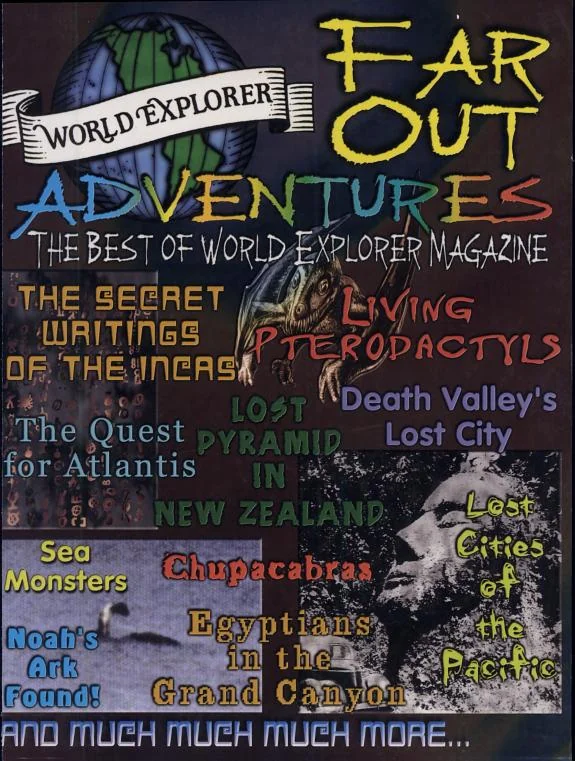
David Hatcher Childress's *Far Out Adventures* presents a compelling, if uneven, collection of explorations into the unexplained. The strength lies in the sheer breadth of topics covered, from the purported 'Smithsonian Gate' anomaly to the persistent search for living pterodactyls. Childress’s curation of the early *World Explorer* issues offers a direct window into the speculative currents of the late 20th and early 21st centuries. However, the compilation format means that the depth of investigation varies significantly between articles. The piece on 'Secret Writings of the Incas,' for instance, offers intriguing possibilities but remains speculative, lacking the rigorous scholarly approach some readers might desire. While the book champions open inquiry, it occasionally sacrifices critical distance for sensationalism. Nevertheless, it serves as a valuable archive for those tracking the evolution of fringe investigation in print.
📝 Description
81
### What It Is Far Out Adventures is a compilation of the first nine issues of the *World Explorer* magazine, presented in a large-format paperback edition. This collection gathers articles from a diverse group of authors who investigate anomalous phenomena, ancient mysteries, and unexplored territories. The content spans a wide range of subjects, offering readers a glimpse into the more unconventional corners of research and exploration.
### Who It's For This volume is intended for readers interested in fringe archaeology, cryptozoology, ancient civilizations, and unexplained phenomena. It will appeal to those who question mainstream narratives and seek evidence or theories outside established academic discourse. Enthusiasts of adventure, exploration, and historical enigmas will find material that challenges conventional understanding.
### Historical Context Published in 2001, *Far Out Adventures* emerged during a period of increased public interest in alternative histories and conspiracy theories, fueled by early internet forums and independent publishing. The *World Explorer* magazine itself was part of a lineage of publications dedicated to exploring subjects often marginalized by mainstream science and history. Authors like David Hatcher Childress were already known for their work in these fields, contributing to a growing community seeking answers beyond the orthodox.
### Key Concepts The collection touches upon numerous enigmatic topics, including alleged dinosaur encounters in the Congo, the decipherment of cryptic Inca writings, and the persistent legend of the Yeti. It also explores theories surrounding the Sphinx's origins and the possibility of living Pterodactyls, alongside the enduring quest for lost civilizations like Atlantis. The book presents these subjects as open investigations, inviting reader engagement with complex and often controversial ideas.
💡 Why Read This Book?
• Gain exposure to specific historical accounts of anomalous zoology, such as the 'Living Pterodactyls' mentioned in the book, offering alternative perspectives on natural history. • Explore theories concerning lost civilizations like Atlantis, as presented in the 'Quest for Atlantis' section, providing a different lens on ancient geography and mythology. • Examine detailed explorations of enigmatic archaeological sites and phenomena, including the 'Smithsonian Gate,' which challenges conventional interpretations of historical artifacts and locations.
⭐ Reader Reviews
Honest opinions from readers who have explored this book.
❓ Frequently Asked Questions
What is the origin of the content in Far Out Adventures?
The book is a compilation of the first nine issues of the *World Explorer* magazine, originally published between 2001 and subsequent years. It features articles by various authors curated by David Hatcher Childress.
Who are some of the notable authors featured in Far Out Adventures?
Authors contributing to this collection include David Hatcher Childress himself, Joseph Jochmans, John Major Jenkins, Deanna Emerson, Katherine Routledge, Alexander Horvat, Greg Deyermenjian, and Dr. Marc Miller, among others.
What specific topics are covered in the book?
Topics range widely, including 'Dinosaur Hunting in the Congo,' 'Secret Writings of the Incas,' 'On the Trail of the Yeti,' 'Secrets of the Sphinx,' 'Living Pterodactyls,' 'Quest for Atlantis,' and 'What Happened to the Great Lakes?'
Is Far Out Adventures a scholarly work or more of a popular exploration of mysteries?
It is primarily a collection of popular explorations into mysteries and fringe theories. While some articles may reference research, the overall tone is geared towards adventurous inquiry rather than strict academic documentation.
What is the significance of the 'Smithsonian Gate' mentioned in the book?
The 'Smithsonian Gate' refers to an alleged anomaly or hidden collection within the Smithsonian Institution, suggesting undisclosed discoveries or artifacts that challenge conventional history. The book explores theories surrounding this concept.
What is the publication history of Far Out Adventures?
The book was first published in 2001, consolidating earlier content from the *World Explorer* magazine into a single, large-format paperback volume.
🔮 Key Themes & Symbolism
Unexplained Archaeological Sites
The book delves into numerous sites and artifacts that defy conventional archaeological explanations. This includes speculative discussions around the 'Smithsonian Gate,' theories about the true age and purpose of the Sphinx, and the enduring mystery of Atlantis. It presents these topics not as settled history but as ongoing investigations, encouraging readers to consider alternative interpretations of ancient structures and their builders.
Cryptozoological Pursuits
A significant portion of the collection focuses on creatures and phenomena that exist outside mainstream zoology. Articles on 'Dinosaur Hunting in the Congo' and the ongoing search for 'Living Pterodactyls' highlight the persistent belief in undiscovered or surviving ancient species. The legendary Yeti also receives attention, framing these pursuits as quests for biological truths hidden from public view.
Lost Civilizations and Ancient Knowledge
The compilation explores theories about advanced ancient civilizations and their hidden knowledge. This theme is evident in discussions about the 'Secret Writings of the Incas,' suggesting complex communication systems and histories lost to time. The quest for Atlantis further underscores the idea that sophisticated societies once existed, leaving behind enigmatic legacies and potential lessons for the present.
Frontier Exploration and Anomaly Hunting
The spirit of adventure and the pursuit of anomalies are central. Whether tracking the Yeti or investigating legends of hidden artifacts, the authors embody the role of the intrepid explorer. This theme positions the book as a record of daring investigations into the fringes of the known world, both geographically and intellectually.
💬 Memorable Quotes
“The Smithsonian Gate represents a potential gateway to hidden historical truths.”
— This concept suggests that a significant institution may hold undisclosed artifacts or knowledge that could dramatically alter our understanding of the past, hinting at a cover-up or overlooked discoveries.
“The quest for Atlantis continues to intrigue those who believe in advanced ancient societies.”
— This reflects the enduring fascination with Plato's lost continent, positioning the search for Atlantis as a key element in understanding pre-history and the potential for forgotten technological or cultural achievements.
“Reports of living pterodactyls challenge established paleontological timelines.”
— This highlights the controversial idea that creatures thought extinct for millions of years might still exist, questioning the completeness of the fossil record and the certainty of evolutionary timelines.
“Investigating the Yeti involves tracking elusive evidence in remote mountain ranges.”
— This captures the essence of cryptozoological fieldwork, focusing on the challenges of finding proof for legendary creatures in challenging, unexplored environments.
“Inca writings may hold secrets yet to be fully deciphered.”
— This points to the potential for lost knowledge within ancient Andean cultures, suggesting that incomplete understanding of their communication systems leaves significant historical narratives undiscovered.
🌙 Esoteric Significance
Tradition
While not strictly tied to a single esoteric lineage, *Far Out Adventures* aligns with the broader Hermetic and Gnostic impulses towards seeking hidden knowledge and questioning orthodoxies. It shares the Hermetic principle of 'As Above, So Below' by seeking connections between ancient myths, extraterrestrial possibilities, and terrestrial anomalies. It departs from more structured traditions by embracing a wide array of unsubstantiated claims and focusing on adventurous exploration over systematic doctrine.
Symbolism
The book engages with symbols of the unknown and the ancient. The Sphinx, for instance, represents enigmatic wisdom and the challenge of deciphering deep time. The quest for Atlantis symbolizes a lost golden age and the potential for advanced, forgotten civilizations. Cryptic writings, like those attributed to the Incas, symbolize lost languages and hidden historical records waiting to be unlocked.
Modern Relevance
Contemporary thinkers and communities interested in ufology, ancient astronaut theories, and alternative archaeology often draw upon the kinds of speculative investigations featured in this book. It serves as a historical marker for the popularization of these ideas, influencing online forums, independent documentary production, and individuals seeking knowledge beyond conventional historical and scientific narratives.
👥 Who Should Read This Book
['• Enthusiasts of cryptozoology and anomalous zoology seeking accounts of creatures like Yetis and potential living pterodactyls.', '• Readers interested in speculative archaeology and lost civilizations, particularly those intrigued by theories surrounding Atlantis and enigmatic ancient sites.', '• Individuals curious about fringe historical narratives and unexplained phenomena, who enjoy exploratory journalism that questions established timelines and discoveries.']
📜 Historical Context
When *Far Out Adventures* was compiled and published in 2001, the internet was rapidly democratizing the dissemination of fringe theories and alternative historical narratives. Publications like the *World Explorer* magazine, which formed the basis of this book, catered to a growing audience skeptical of mainstream explanations. This era saw a surge in interest in topics like ancient aliens, lost continents, and cryptozoology, partly fueled by figures like Erich von Däniken and the popularity of shows like *Ancient Aliens* (though the latter debuted later, the groundwork was laid). The book's content reflects the intellectual currents of the late 20th century, where speculative research often blended with adventure journalism. While established academic circles largely ignored these pursuits, the work found a significant readership among independent researchers and enthusiasts, positioning itself outside the discourse dominated by figures like mainstream archaeologists or historians who adhered to established chronologies and evidence standards.
📔 Journal Prompts
The concept of the 'Smithsonian Gate' and its implications for hidden history.
Reflecting on the evidence presented for 'Living Pterodactyls' and its challenge to paleontology.
Investigating the possibility of undiscovered civilizations, as explored in the 'Quest for Atlantis' section.
The enduring appeal of the Yeti legend across different cultures and eras.
Considering the potential meaning behind the 'Secret Writings of the Incas.'
🗂️ Glossary
World Explorer
A magazine that published articles on exploration, mysteries, and anomalous phenomena. *Far Out Adventures* compiles its early issues.
Smithsonian Gate
A term referring to alleged hidden or undisclosed collections within the Smithsonian Institution, suggesting potential cover-ups of anomalous artifacts or historical information.
Yeti
A legendary ape-like creature said to inhabit the Himalayan region of Nepal and Tibet, often studied in the field of cryptozoology.
Pterodactyls
Extinct flying reptiles from the order Pterosauria. The book explores theories and alleged sightings suggesting some may still exist.
Atlantis
A legendary island or continent mentioned in Plato's dialogues, often depicted as an advanced civilization that sank into the ocean.
Incas
The dominant civilization in the Andean region of South America prior to the Spanish conquest, known for their complex society and engineering.
Cryptozoology
The study of and search for animals whose existence is unproven, such as Bigfoot or the Loch Ness Monster, often referred to as 'hidden animals'.