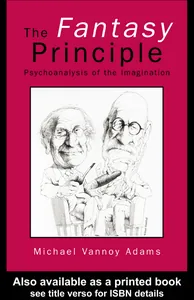
Fantasy Principle

 82
82

Fantasy Principle
Michael Vannoy Adams's 'Fantasy Principle' offers a rigorous, if at times dense, dissection of how esoteric traditions construct and maintain their realities. Adams’s strength lies in his unwavering focus on the psychological underpinnings of belief, treating 'fantasy' not as a pejorative but as a core engine of spiritual meaning-making. He compellingly argues, particularly in his analysis of figures like Helena Blavatsky, that the power of esoteric systems resides in their ability to generate a potent psychic reality for their adherents. A limitation, however, is the book's academic tone, which can occasionally obscure the more visceral aspects of the experiences it describes. The exploration of Jung's concept of the 'anima' and 'animus' within these frameworks is particularly illuminating, showing how personal psychological dynamics map onto collective symbolic narratives. It’s a challenging but rewarding read for those seeking to understand the architecture of esoteric belief.
📝 Description
82
### What It Is Fantasy Principle is a critical examination of the concept of 'fantasy' as it operates within esoteric traditions, particularly those influenced by Carl Jung and his analytical psychology. Michael Vannoy Adams approaches fantasy not as mere escapism but as a fundamental psychological process and a vital component of spiritual exploration. The book scrutinizes how individuals and groups construct and engage with imagined realities, questioning the boundaries between subjective experience and objective truth within these frameworks.
### Who It's For This work is intended for readers interested in the intersection of psychology, mythology, and esoteric thought. It will appeal to students of Jungian psychology, comparative religion, and those who study historical occult movements. Individuals who are curious about the nature of belief, the construction of meaning in spiritual practices, and the role of imagination in shaping human experience will find fertile ground here. It is for the serious inquirer, not the casual dabbler.
### Historical Context Published in 2004, Fantasy Principle emerged during a period of renewed academic and popular interest in Jungian thought and esoteric studies. The early 21st century saw a growing critique of purely materialistic worldviews, leading many to explore alternative frameworks for understanding consciousness and reality. Adams's work engages with a lineage of thought that includes not only Jung but also figures like Mircea Eliade and Joseph Campbell, who explored the universality of myth and symbol. It arrives in a scholarly landscape where the study of religion and psychology began to more fluidly integrate previously separated disciplines.
### Key Concepts The book delves into the Jungian concept of the 'collective unconscious' and its manifestation through archetypal imagery. It explores the idea of 'psychic reality' – the notion that inner experiences possess a validity and power independent of external, material confirmation. Adams also examines the historical development of esoteric concepts, tracing how certain fantasies become codified into doctrines and traditions. The text considers the potential for both liberation and delusion inherent in deeply held imaginative beliefs.
💡 Why Read This Book?
• Gain insight into Jung's concept of 'psychic reality', understanding how subjective experiences within esoteric traditions possess a distinct form of validity and power, moving beyond simple notions of 'belief' or 'imagination'. • Analyze the historical construction of esoteric doctrines by examining how figures like Helena Blavatsky utilized and codified imaginative elements into foundational texts and movements, offering a critical lens on tradition formation. • Explore the psychological mechanisms behind archetypal imagery, learning how universal symbols from the collective unconscious manifest in diverse spiritual paths and personal quests for meaning.
⭐ Reader Reviews
Honest opinions from readers who have explored this book.
❓ Frequently Asked Questions
What is the primary focus of Michael Vannoy Adams's 'Fantasy Principle'?
The book primarily examines 'fantasy' not as mere escapism, but as a fundamental psychological process and a crucial element in the construction and sustenance of esoteric traditions and spiritual beliefs.
Which psychological framework heavily influences 'Fantasy Principle'?
The work is significantly influenced by Carl Jung's analytical psychology, particularly his concepts of the collective unconscious, archetypes, and psychic reality.
Who would benefit most from reading 'Fantasy Principle'?
Students of Jungian psychology, comparative religion, mythology, and those interested in the historical development and psychological underpinnings of esoteric movements will find this book valuable.
Does the book present a negative view of esoteric beliefs?
No, Adams treats 'fantasy' as a neutral, powerful psychological force that builds meaning and reality within spiritual contexts, rather than dismissing esoteric beliefs as mere delusion.
When was 'Fantasy Principle' originally published?
Michael Vannoy Adams's 'Fantasy Principle' was first published in 2004.
What does the book suggest about the relationship between fantasy and reality in esoteric traditions?
It proposes that esoteric traditions create a potent 'psychic reality' through shared fantasies, which holds significant psychological and existential meaning for their adherents, distinct from but powerful alongside material reality.
🔮 Key Themes & Symbolism
Psychic Reality Construction
Adams explores how esoteric traditions build and sustain a potent 'psychic reality' through shared imaginative frameworks. This concept, rooted in Jungian psychology, posits that inner experiences and collective beliefs possess a validity and power that shapes adherents' understanding of the world. The book examines how figures like Helena Blavatsky, through her extensive writings, helped codify such realities, demonstrating how elaborate symbolic systems can become the lived experience for followers, offering a compelling alternative to purely materialist explanations of consciousness and meaning.
Archetypal Imagination
The work delves into how archetypal imagery, drawn from the Jungian collective unconscious, functions within esoteric thought. Adams illustrates how universal symbols and mythic patterns are not merely decorative but serve as the very architecture of spiritual understanding. He analyzes how these archetypes provide a framework for comprehending the human condition and facilitate encounters with the numinous, acting as potent conduits for psychological transformation and the creation of sacred narratives within diverse traditions.
Fantasy as Process
Adams reframes 'fantasy' from a simple act of imagination or escapism into a dynamic psychological process essential for spiritual development and the formation of esoteric systems. The book argues that engaging with these imagined realms allows individuals to explore profound questions of existence, consciousness, and the divine. This process is depicted as vital for creating meaning, navigating existential challenges, and fostering a sense of connection to something larger than the individual self, inherent in many spiritual quests.
Historical Codification of Belief
A significant aspect of the book involves tracing how imaginative concepts within esoteric circles become formalized into doctrines, rituals, and established traditions. Adams examines the role of key figures and texts in this process, showing how subjective experiences and collective fantasies are systematically organized and transmitted across generations. This codification solidifies the 'psychic reality' for adherents and establishes the boundaries and identity of specific esoteric movements, turning fluid imagination into structured belief systems.
💬 Memorable Quotes
“The power of a psychic reality is not dependent on its correspondence with the outer, physical world.”
— This statement captures the core argument that the validity and impact of esoteric beliefs lie in their internal coherence and the psychological reality they create for adherents, regardless of empirical verification.
“Fantasy, in this context, is the engine of spiritual meaning.”
— Adams positions 'fantasy' not as a triviality but as a fundamental creative force within spiritual and esoteric traditions, responsible for generating purpose, understanding, and a sense of the sacred.
“Archetypes provide the fundamental structure for the construction of psychic worlds.”
— This highlights the Jungian influence, suggesting that universal, inherited patterns of thought and imagery are the building blocks upon which individuals and groups construct their subjective spiritual realities.
“The history of esoteric movements is, in part, the history of how certain fantasies became institutionalized.”
— This interpretation emphasizes the sociological and historical dimension, showing how the imaginative creations of individuals or small groups can evolve into established doctrines and organized traditions over time.
“We must understand the 'as if' nature of much esoteric practice.”
— This suggests a way to approach esoteric traditions, acknowledging their imaginative or symbolic basis without necessarily requiring literal belief, focusing instead on the psychological effects and meaning derived from operating 'as if' they were true.
🌙 Esoteric Significance
Tradition
Adams's work is firmly rooted in Jungian analytical psychology, interpreting esoteric traditions through its lens. It departs from traditional esoteric scholarship by prioritizing psychological function and psychic reality over historical accuracy or metaphysical claims. While not aligning with a single esoteric lineage like Hermeticism or Gnosticism, it provides a framework for understanding the psychological architecture common to many such paths, viewing them as expressions of the collective unconscious and archetypal patterns.
Symbolism
Key symbols Adams engages with include archetypes like the Shadow, Anima/Animus, and the Self, which he shows manifesting within the narratives and practices of esoteric groups. He also explores motifs related to initiation and spiritual transformation, often depicted through symbolic journeys or encounters with mythical figures. These symbols are interpreted not just as external representations but as internal psychological structures that adherents work with to achieve personal and spiritual integration.
Modern Relevance
Contemporary thinkers and practitioners in fields like depth psychology, archetypal astrology, and modern paganism often draw upon Adams's insights. His work informs discussions on the role of myth and symbol in contemporary spirituality and the psychological validity of non-ordinary states of consciousness. Practices that emphasize inner work, dream analysis, and the integration of psychological complexes into spiritual life find resonance with Adams's analytical framework.
👥 Who Should Read This Book
• Students of Jungian psychology: Those seeking to understand the application of Jung's theories, particularly the collective unconscious and archetypes, to the formation and function of belief systems. • Researchers of comparative religion and mythology: Individuals interested in how shared psychological patterns and symbolic narratives underpin diverse spiritual traditions and their historical development. • Practitioners of esoteric arts: Those who wish to critically examine the psychological underpinnings of their own or other esoteric paths, gaining a deeper understanding of the 'why' behind symbolic practices and doctrines.
📜 Historical Context
Michael Vannoy Adams's 'Fantasy Principle,' published in 2004, emerged during a significant resurgence of interest in depth psychology and esoteric studies. The early 21st century witnessed a growing academic and popular engagement with Jungian concepts, mythology, and comparative religion, often challenging the dominance of purely materialistic paradigms. Adams's work engages with intellectual currents established by figures like Mircea Eliade, who explored the phenomenology of religion, and Joseph Campbell, known for his cross-cultural analyses of myth. In the field of esoteric studies, Adams's critical psychological approach offered a counterpoint to purely historical or philosophical analyses. While figures like Helena Blavatsky and Rudolf Steiner were central to the Theosophical and Anthroposophical movements respectively in the late 19th and early 20th centuries, Adams revisits their impact through a Jungian lens, examining how their imaginative constructs shaped enduring traditions. The reception of such works often navigates between academic validation and skepticism regarding the nature of esoteric claims.
📔 Journal Prompts
The construction of psychic reality: Analyze a personal belief system using Adams's framework.
Archetypal manifestations: Identify an archetype's presence in a contemporary esoteric narrative or symbol.
Fantasy as creative force: Reflect on how a personal 'fantasy' has shaped a significant life choice.
The institutionalization of imagination: Consider how a spiritual concept evolved from personal insight to doctrine.
Evaluating 'as if': Assess the psychological utility of approaching a belief 'as if' it were true.
🗂️ Glossary
Psychic Reality
A concept from Jungian psychology, referring to the subjective experience and internal world of an individual or group that possesses its own validity and power, independent of external, material confirmation.
Collective Unconscious
In Jungian theory, a universal layer of the unconscious mind containing archetypes and inherited predispositions shared by all humanity, manifesting in myths, symbols, and dreams across cultures.
Archetype
Universal, archaic patterns and images that derive from the collective unconscious and are the psychic counterpart of a biological instinct; they are the fundamental forms on which psychic life is built.
Fantasy Principle
The core concept of Adams's work, suggesting that 'fantasy' (in the sense of imaginative construction and psychic reality) is a fundamental engine driving the formation, meaning, and persistence of esoteric traditions.
Codification
The process by which imaginative concepts, beliefs, or practices within a group are systematically organized, formalized, and written down, leading to the establishment of doctrines and traditions.
Esoteric Tradition
A system of thought, belief, or practice characterized by its hidden or inner meanings, often accessible only to initiated members or those with specialized knowledge, typically focusing on spiritual or mystical development.
Anima/Animus
Jungian archetypes representing the unconscious feminine aspect in men (anima) and the unconscious masculine aspect in women (animus), which play significant roles in psychological development and relationships.