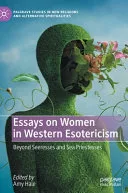
Essays on Women in Western Esotericism
 79
79

Essays on Women in Western Esotericism
Amy Hale's edited collection, *Essays on Women in Western Esotericism*, arrives as a crucial intervention in a field long overdue for critical re-evaluation. The strength of this volume lies in its commitment to showcasing women's scholarship alongside histories of women practitioners and thinkers. While the essays span a broad range of topics, the section on early modern alchemists, for instance, offers a particularly sharp critique of how certain figures like Nicolas Flamel have been canonized while their female contemporaries remain obscured. A minor limitation might be the sheer breadth, which, while ambitious, means some essays offer only a brief glimpse into complex subjects. However, the overall contribution is undeniable; the work challenges the very boundaries of what constitutes "Western Esotericism" by consistently centering previously marginalized voices and scholarly perspectives. This collection is essential for anyone wishing to understand the complete, unvarnished history of esoteric thought and practice.
📝 Description
79
Amy Hale's 2022 collection examines women's roles and scholarship in Western Esotericism.
This volume gathers fifteen essays that critically assess the place of women in Western Esotericism. Published in 2022, the collection addresses both the historical neglect of female figures and the methods scholars use to study esoteric traditions. The essays are arranged into four thematic sections, intended to contribute to current academic discussions on the subject.
Academics, researchers, and dedicated students of Western Esotericism will find this work valuable. It is especially relevant for those interested in gender studies, the history of magic, alchemy, occultism, and alternative spiritualities. The book suits readers who want a scholarly examination that moves beyond popular occult narratives.
The collection discusses how esoteric knowledge has been gendered, the difficulties in uncovering suppressed histories, and how occultism connects with social movements. It reconsiders figures whose contributions have been ignored and re-evaluates existing accounts by highlighting female agency and intellectual work across various esoteric traditions, from Renaissance hermeticism to 20th-century occultism.
This collection emerges from recent scholarly efforts to revise the history of Western Esotericism, a field long dominated by male figures and perspectives. It engages with feminist critical theory and ongoing reassessments of occult history that aim to bring marginalized groups into focus. The essays question how the established canon of Western Esotericism was formed and propose a revised understanding that accounts for women's intellectual contributions and experiences.
💡 Why Read This Book?
• Learn about under-researched female figures in Western Esotericism, such as the alchemist featured in the early modern section, gaining a more complete historical perspective. • Understand current academic debates concerning the study of esotericism itself, as highlighted by the collection's thematic organization and its critique of established methodologies. • Discover how feminist scholarship is actively reshaping the understanding of occult traditions, moving beyond male-centric narratives to include diverse voices from the 20th century and earlier.
⭐ Reader Reviews
Honest opinions from readers who have explored this book.
❓ Frequently Asked Questions
What specific historical periods does 'Essays on Women in Western Esotericism' cover?
The book explores women's roles across various periods of Western Esotericism, from Renaissance alchemy to 20th-century occult movements, addressing figures and concepts relevant to each era.
Are the essays in this book accessible to beginners in esoteric studies?
While scholarly, the essays aim to be accessible to serious students. The collection provides critical examinations of figures and concepts that may be new to readers, encouraging deeper engagement with the field.
What is the significance of the 2022 publication date for this book?
Published in 2022, the book reflects contemporary scholarship and addresses recent debates within the study of Western Esotericism, particularly concerning gender and methodology.
Does the book focus on specific esoteric traditions like Hermeticism or Kabbalah?
The collection examines women's contributions across multiple esoteric traditions within the Western lineage, including but not limited to Hermeticism, alchemy, and various forms of occultism.
Who is Amy Hale, the author credited with the book's first publication?
Amy Hale is the editor of this collection. She is recognized for her work in bringing together diverse scholarly perspectives on women within esoteric traditions.
What kind of 'critical examination' is offered in the essays?
The essays offer critical examinations by re-evaluating the historical significance of women in esotericism, questioning established narratives, and analyzing the methodologies used in studying these traditions.
🔮 Key Themes & Symbolism
Recovering Suppressed Histories
This volume directly confronts the historical erasure of women within esoteric traditions. It highlights how patriarchal structures and biases have led to the marginalization or outright omission of female practitioners, theorists, and mystics. The essays employ rigorous research to unearth forgotten archives and re-contextualize known figures, challenging the male-dominated narrative that has long defined the study of Western Esotericism. By foregrounding these recovered histories, the collection seeks to provide a more accurate and inclusive understanding of esoteric movements from the Renaissance onward.
Methodologies in Esotericism Studies
Beyond individual biographies, the collection engages with fundamental questions about the academic study of esotericism itself. Several essays scrutinize the analytical frameworks and theoretical approaches used to understand these complex traditions. They explore how gender influences interpretation, how to identify and analyze esoteric concepts when presented through a female lens, and the challenges of defining the boundaries of 'Western Esotericism.' This self-reflexive approach aims to advance the field's disciplinary rigor and inclusivity.
The Gendering of Occult Knowledge
A central theme is how esoteric knowledge has been historically gendered, often associating certain practices or insights with masculine principles and relegating others to the feminine, sometimes pejoratively. The essays investigate how women navigated these gendered expectations, whether by adopting male pseudonyms, operating within domestic spaces, or challenging patriarchal interpretations directly. This exploration reveals the nuanced ways gender shaped access to, and expression of, esoteric traditions across centuries.
Female Agency in Practice
This theme focuses on the active participation and intellectual contributions of women within various esoteric currents. It moves beyond simply documenting their existence to analyzing their agency, creativity, and impact. Whether through magical practice, philosophical inquiry, or the creation of spiritual communities, the essays demonstrate that women were not passive recipients but dynamic agents who shaped the development and dissemination of esoteric ideas and practices from the Renaissance to the modern era.
💬 Memorable Quotes
“The collection scrutinizes the very nature of the field of Western Esotericism.”
— This highlights the book's academic rigor, indicating it doesn't just present histories but also questions the established frameworks and boundaries of esoteric studies.
“Fifteen essays critically examine important and under-researched figures.”
— This emphasizes the book's focus on uncovering hidden or overlooked historical personalities within esoteric traditions, promising new insights into previously obscure contributions.
“The volume features histories of women in Western Esotericism while also highlighting women’s scholarship.”
— This points to a dual focus: documenting the lives of women involved in esotericism and showcasing the academic work produced by female scholars in the field.
“Chapters are divided into four thematic sections.”
— This organizational detail suggests a structured and coherent approach to exploring diverse topics, making complex information more digestible for the reader.
“Addresses current debates in the study of esotericism.”
— This indicates the book is relevant to contemporary academic discussions and contributes to the evolving understanding and discourse surrounding esoteric traditions.
🌙 Esoteric Significance
Tradition
This work engages broadly with the Western Esoteric Tradition, encompassing Hermeticism, alchemy, magic, Rosicrucianism, and various occult movements from the Renaissance to the 20th century. It situates itself within contemporary academic discourse, aiming to correct historical oversights and biases that have shaped the understanding of these traditions. By foregrounding women's scholarship and experiences, it offers a revised perspective that challenges the often male-centric narratives previously dominant in the field.
Symbolism
While specific symbols are explored within individual essays, the overarching symbolism concerns the recovery of the 'hidden feminine' within esoteric traditions. This includes reinterpreting established symbols through a gendered lens, understanding how women utilized or subverted symbolic language, and recognizing the symbolic weight of women's presence in spaces previously considered exclusively male domains. The collection implicitly highlights the symbolic power of reclaiming narratives and challenging symbolic patriarchal structures.
Modern Relevance
Contemporary scholars of gender and esotericism, as well as those interested in feminist philosophy and critical occult studies, draw significantly on the work presented here. Thinkers exploring digital humanities approaches to esoteric texts or engaging with queer theory in occult studies find valuable frameworks and case studies within this volume. Its emphasis on methodological critique also resonates with current academic trends prioritizing decolonization and inclusivity in historical research across disciplines.
👥 Who Should Read This Book
• Scholars and students of Western Esotericism seeking a comprehensive overview of women's roles and contributions, moving beyond traditional male-centric histories. • Gender studies researchers interested in how patriarchal structures have influenced the development and reception of spiritual and occult traditions throughout history. • Anyone curious about the intellectual and practical lives of women in fields like alchemy, magic, and mysticism, particularly those seeking detailed historical analysis rather than popular accounts.
📜 Historical Context
Published in 2022, *Essays on Women in Western Esotericism* emerges at a critical juncture in the academic study of the occult. The field has seen significant growth since the 1980s, with scholars like Frances Yates having previously illuminated figures like John Dee and Giordano Bruno. However, a persistent challenge has been the underrepresentation of women's voices and contributions. This collection directly addresses that imbalance, building upon feminist historiography and critical theory to interrogate established canons. It arrives in an era where scholars are increasingly focused on deconstructing traditional narratives and recovering marginalized perspectives. Unlike earlier works that might have focused on a single tradition or era, this volume's strength lies in its breadth and its explicit engagement with methodological debates, pushing the conversation beyond simply adding names to a roster and towards a fundamental re-evaluation of the field's construction.
📔 Journal Prompts
The recovery of under-researched figures within Western Esotericism.
Critically examining the methodologies used to study esoteric traditions.
The gendering of occult knowledge across different historical periods.
Analyzing the concept of female agency in historical magical practices.
Reflecting on the four thematic sections presented in the book.
🗂️ Glossary
Western Esotericism
A broad category encompassing diverse spiritual, mystical, and magical traditions originating in Europe and the Mediterranean, often including Hermeticism, Kabbalah, alchemy, astrology, and ceremonial magic, typically distinct from mainstream religion.
Alchemy
An ancient practice involving the transformation of matter, often associated with the search for the elixir of life or the transmutation of base metals into gold, but also encompassing spiritual and philosophical dimensions.
Hermeticism
A philosophical and religious tradition based primarily upon writings attributed to Hermes Trismegistus, emphasizing divine wisdom, the correspondence between the macrocosm and microcosm, and the pursuit of spiritual enlightenment.
Occultism
A general term for secret or hidden knowledge, often referring to supernatural, paranormal, or magical beliefs and practices that emerged prominently in the 19th century, drawing from earlier esoteric traditions.
Gnosticism
A diverse set of religious movements in the early centuries CE that emphasized personal spiritual knowledge (gnosis) for salvation, often positing a dualistic cosmology and a flawed creator deity.
Theosophy
A syncretic spiritual movement founded in the late 19th century by Helena Blavatsky, seeking to reconcile Eastern and Western esoteric traditions and promote universal brotherhood.
Methodology
The systematic, theoretical analysis of the methods applied to a field of study. In this context, it refers to the approaches and techniques scholars use to research and interpret women's roles in Western Esotericism.






![Tales of Mystery and Imagination [25 stories]](/img/thumb/tales-of-mystery-and-imagination-25-stories-edgar-allan-poe-202357.webp)