Egypt -- 'Image of Heaven'
 71
71

Egypt -- 'Image of Heaven'
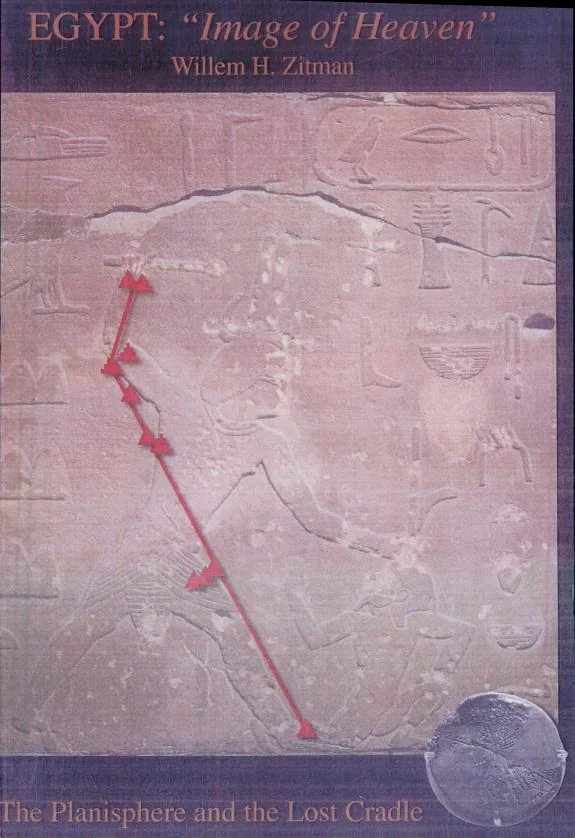
Willem H. Zitman’s "Egypt -- 'Image of Heaven'" offers a compelling, albeit challenging, reinterpretation of the Giza pyramid complex. Zitman’s central thesis—that the pyramids were intentionally laid out to mirror the constellation of Horus—is meticulously argued, drawing on extensive spatial analysis. His ability to connect the architectural arrangement to the deity of power is particularly striking. However, the book's dense academic prose can sometimes obscure its more captivating theories, demanding considerable reader focus. A notable strength lies in Zitman's systematic rejection of arbitrary selections of pyramids, instead presenting a comprehensive vision for the entire field. The work, while potentially polarizing for Egyptologists, provides a rich foundation for those interested in archaeoastronomy and ancient symbolic landscapes. Zitman presents a coherent, if unconventional, argument for a deliberate celestial cartography in stone.
📝 Description
71
### The Celestial Blueprint of Giza This work posits that the ancient Egyptian civilization, particularly during the Old Kingdom, engaged in sophisticated geographical planning, aiming to replicate celestial arrangements on the Giza plateau. Willem H. Zitman’s research centers on the Pyramid Field as a deliberate depiction of the constellation associated with Horus, a deity symbolizing power and divine authority.
### Decoding the Pyramid Field Rather than treating individual monuments in isolation, Zitman’s approach synthesizes the entire era of pyramid construction. The book investigates how the spatial relationships between the pyramids align with astronomical patterns, specifically the constellation of Horus. This alignment is presented not as coincidence, but as a foundational element of Egyptian cosmology and statecraft.
### Horus and the Divine Mandate The constellation of Horus served as a potent symbol for the pharaoh, representing invincibility and the divine right to rule. Zitman explores how this symbolic connection was physically manifested in the landscape architecture of the pyramid complexes, linking earthly power structures to cosmic order.
### An Inherited Vision The book suggests that this ambitious project of mapping the heavens onto the earth may represent an inherited knowledge or a cultural mandate passed down through generations. It challenges conventional interpretations by presenting a unified theory for the arrangement of the major pyramids, proposing a conscious effort to manifest a divine realm on the Nile.
💡 Why Read This Book?
• Understand the astronomical alignment of the Giza pyramids specifically with the constellation of Horus, a concept central to the book's argument about 'Heaven on Earth'. • Grasp Willem H. Zitman's unique methodology for analyzing the entire pyramid field as a unified celestial map, rather than individual structures. • Explore the symbolic significance of Horus as a deity of power and invincibility, and how this was allegedly encoded into the landscape architecture of ancient Egypt.
⭐ Reader Reviews
Honest opinions from readers who have explored this book.
❓ Frequently Asked Questions
What is the primary argument of Willem H. Zitman's 'Egypt -- 'Image of Heaven''?
The book argues that the ancient Egyptians intentionally designed the Giza pyramid complex to represent the constellation of Horus, thereby creating a physical manifestation of the divine realm on Earth.
When was 'Egypt -- 'Image of Heaven'' first published?
The book was first published in 2006, presenting the culmination of extensive research into the spatial and symbolic arrangements of the pyramids.
What deity is central to the astronomical interpretation in the book?
The deity central to the interpretation is Horus, who represents power and invincibility and is linked to the constellation that the book claims the pyramids depict.
How does Zitman's approach differ from previous studies of the pyramids?
Zitman's approach is unique in that he attempts to make sense of the entire pyramid-building era and the spatial relationships of all major pyramids, rather than focusing on isolated monuments or specific theories.
What does 'Image of Heaven' refer to in the context of the book?
It refers to the ancient Egyptian concept of establishing a terrestrial representation of the celestial order, specifically by aligning the Giza pyramids with the constellation of Horus.
Who is Willem H. Zitman?
Willem H. Zitman is the author of 'Egypt -- 'Image of Heaven'', a researcher who dedicated ten years to studying the astronomical and geographical planning of the ancient Egyptian pyramid fields.
🔮 Key Themes & Symbolism
Celestial Cartography on Giza
The core of Zitman's thesis is that the Giza pyramid field was deliberately constructed as a terrestrial map of the constellation associated with Horus. This involved precise astronomical calculations and geographical placement to mirror the heavens, aiming to create a sacred landscape that reflected divine order. The work investigates how the spatial arrangement of the Great Pyramid, Khafre's pyramid, and Menkaure's pyramid, along with subsidiary structures, corresponds to specific stars or star groups within the Horus constellation.
Horus as Divine Authority
Horus, the falcon-headed deity, embodies power, protection, and kingship in ancient Egyptian religion. Zitman connects the physical layout of the pyramids to this symbolic representation, suggesting that the pharaohs sought to solidify their divine mandate by physically manifesting Horus's celestial presence on Earth. The constellation of Horus served as a powerful symbol of invincibility, and its depiction through the pyramids reinforced the pharaoh's role as the earthly embodiment of this divine power.
The Legacy of the Pyramid Builders
The book explores the possibility that this sophisticated understanding of celestial geography and its application in monumental architecture was an inherited tradition. Zitman suggests that the architects and planners of the Old Kingdom possessed advanced knowledge that allowed them to undertake such an ambitious project. The 'Image of Heaven' concept implies a grand cosmological vision that aimed to integrate the earthly kingdom with the divine cosmos, potentially influencing subsequent architectural and religious practices.
Reinterpreting Pyramid Function
Challenging conventional views that focus solely on tombs or religious sites, Zitman proposes a functional interpretation of the pyramids as instruments of cosmic alignment and sacred geography. The entire pyramid field, in this view, functions as a vast symbolic artifact, a testament to the Egyptians' desire to bridge the earthly and divine realms. This perspective invites a re-evaluation of the purpose and meaning behind these iconic structures.
💬 Memorable Quotes
“The Pyramid Field depicts The Constellation of Horus.”
— This central assertion frames the entire book, proposing that the spatial arrangement of the major Giza pyramids is not accidental but a deliberate astronomical map of a specific celestial formation tied to the deity Horus.
“Zitman is the first scholar able to make sense of the entire era of pyramid building.”
— This highlights the author's claim to a unique, comprehensive approach that synthesizes the construction period, suggesting previous scholarship was fragmented or incomplete in its understanding of the Giza complex.
“The ancient Egyptians were the first geographical planners to develop a system establishing an image of heaven on earth.”
— This statement positions ancient Egypt as a pioneer in cosmic urbanism, asserting their unique achievement in translating celestial order into terrestrial landscape design, a concept central to the book's thesis.
“Horus, the deity who bore the meaning of power and invincibility.”
— This defines the symbolic role of Horus, linking the constellation and the deity to core concepts of pharaonic authority and divine protection, which the book argues is physically represented by the pyramids.
“Rather than randomly pick certain pyramids...”
— This phrase emphasizes the systematic and intentional nature of the pyramid placement according to Zitman's theory, contrasting it with interpretations that might select monuments arbitrarily to fit a hypothesis.
🌙 Esoteric Significance
Tradition
This work engages with esoteric traditions by interpreting ancient Egyptian cosmology through a lens of symbolic geography and celestial mapping. It draws implicitly from Hermetic principles of 'As Above, So Below,' suggesting a deliberate mirroring of the heavens on Earth. While not explicitly aligning with a single lineage like Theosophy or Gnosticism, it taps into a perennialist interest in ancient wisdom and the potential for hidden, coded meanings within monumental architecture, resonating with a broader esoteric quest for lost knowledge.
Symbolism
The primary symbols explored are the constellation of Horus and the pyramids themselves. Horus, representing divine power and kingship, is interpreted as being physically depicted by the spatial arrangement of the Giza pyramids. The pyramids, beyond their function as tombs, become symbols of cosmic order, divine authority, and the pharaoh's connection to the celestial realm, embodying the concept of 'heaven on earth'.
Modern Relevance
Zitman's work continues to be relevant for contemporary researchers and practitioners interested in archaeoastronomy, sacred geometry, and ancient Egyptian esoteric traditions. Thinkers exploring the symbolic landscape of ancient sites and those seeking to understand the deeper cosmological implications of monumental architecture can find fertile ground in his analysis. It informs discussions within communities focused on consciousness studies and the potential for ancient civilizations to encode complex philosophical and spiritual ideas into their physical environment.
👥 Who Should Read This Book
• Students of archaeoastronomy interested in detailed theories about celestial alignments in ancient sites, particularly the Giza plateau. • Researchers of comparative religion and ancient cosmologies seeking alternative interpretations of Egyptian mythology and its connection to earthly structures. • Enthusiasts of esoteric history and symbolism who are drawn to the idea of ancient civilizations encoding profound knowledge in their architecture.
📜 Historical Context
Willem H. Zitman's "Egypt -- 'Image of Heaven'" emerged in 2006, a period where alternative interpretations of ancient Egypt, particularly those focusing on archaeoastronomy and esoteric symbolism, continued to gain traction outside mainstream Egyptology. The book's approach aligns with a broader interest in ancient cosmologies and the potential for sophisticated astronomical knowledge in early civilizations, a field influenced by scholars like Giorgio de Santillana and Hertha von Dechend with their work 'Hamlet's Mill'. While academic Egyptology largely focused on dynastic history, religious texts, and archaeology, Zitman's work engaged with theories suggesting intentional celestial alignments in monumental architecture. This approach often faced skepticism from traditionalists who prioritized textual evidence and conventional archaeological findings. The book's reception within the academic community was likely muted, as its core thesis diverged significantly from established paradigms. It offered a specific interpretation of the Fourth Dynasty pyramid construction, a period marked by figures like Khufu and Khafre, proposing a unified design principle.
📔 Journal Prompts
The Pyramid Field as a map of the Constellation of Horus: what celestial patterns might have been most significant to its creators?
Horus's meaning of power and invincibility: how might this concept have informed the daily lives and governance of the Old Kingdom Egyptians?
Reflect on the idea of 'heaven on earth' as a planning principle for ancient civilizations.
Consider the challenges and rewards of interpreting ancient monumental architecture as a form of symbolic communication.
The role of the Pharaoh as a divine intermediary: how does this concept shape the understanding of Egyptian statecraft?
🗂️ Glossary
Constellation of Horus
A specific star pattern in the night sky that the author posits is intentionally depicted by the layout of the Giza pyramids, representing the falcon-headed deity associated with power and kingship.
Image of Heaven on Earth
The concept that ancient Egyptians sought to create a terrestrial replica of the divine celestial order, using geographical and architectural planning to manifest cosmic principles on the Giza plateau.
Pyramid Field
Refers specifically to the area containing the major pyramids at Giza, which the author analyzes as a unified, deliberate arrangement rather than a collection of individual monuments.
Deity of Power and Invincibility
Describes Horus, highlighting his symbolic attributes as a divine protector and embodiment of supreme authority, which the author connects to the pharaonic role and the pyramids' celestial representation.
Geographical Planners
A term used to describe the ancient Egyptians, emphasizing their sophisticated understanding and application of spatial and astronomical knowledge in the design and construction of monumental sites like Giza.
Era of Pyramid Building
The specific historical period, primarily the Old Kingdom of Egypt, during which the major pyramids, particularly those at Giza, were constructed, viewed by the author as a cohesive phase of architectural and cosmological planning.
Pharaoh
The ruler of ancient Egypt, considered a divine or semi-divine figure. The book links the pharaoh's authority directly to the celestial symbolism represented by the pyramids.