Diloggún tales of the natural world

 84
84

Diloggún tales of the natural world
Ócha'ni Lele's "Diloggún Tales of the Natural World" offers a rare and valuable portal into the animistic cosmology embedded within the Ifá divination system. The strength of this collection lies in its direct presentation of narratives that connect specific animals and plants to the foundational Odù verses, providing a tangible link between the spiritual and the ecological. The work illuminates how the Yoruba worldview, as expressed through Ifá, perceives the natural world not as a backdrop, but as a living embodiment of divine principles and ancestral wisdom. A particular strength is the way specific Odù are linked to detailed descriptions of animal behaviors and plant properties, grounding abstract divination in observable reality. However, the book's primary limitation is its density; for readers unfamiliar with Ifá's intricate structure, the sheer volume of Odù-specific lore can be overwhelming without extensive prior knowledge or guidance. The passage detailing the association of the tortoise with the Odù Eji Ogbe, and its symbolic representation of steadfastness and ancient wisdom, exemplifies the book's unique contribution. "Diloggún Tales of the Natural World" is an indispensable, if challenging, resource for understanding Ifá's ecological consciousness.
📝 Description
84
Ócha'ni Lele's 2011 collection connects Ifá divination verses to the natural world.
This book presents narratives from the Ifá divination system, focusing on the stories linked to the Odù that describe Earth's flora and fauna. These tales are fundamental to Ifá, a system of divination and spiritual knowledge from West Africa, particularly the Yoruba people. The book provides access to stories that explain the origins and traits of animals, plants, and natural events through divine revelation.
It is aimed at Ifá and Santería practitioners wanting to understand the Odù's relationship with nature more deeply. Scholars of comparative mythology, religious studies, and African diaspora religions will also find it valuable. Anyone interested in animistic views, the spiritual meaning of the environment, and West African oral traditions will benefit. The work connects abstract spiritual ideas to their physical manifestations.
The stories originate from an oral tradition predating written records, passed down by Babalawos. Ifá is recognized by UNESCO as a Masterpiece of the Oral and Intangible Heritage of Humanity. The 2011 publication codifies and shares these stories, making them available beyond oral transmission and ritual use. This act of writing down sacred stories reflects a wider effort in esoteric traditions to preserve and share knowledge.
This work belongs to the tradition of African diaspora religions, specifically Ifá, a system of divination and spiritual knowledge originating with the Yoruba people. Ifá is a complex practice involving divination verses known as Odù, which are central to understanding the Yoruba worldview. The book's focus on the natural world through these Odù highlights an animistic perspective common in many esoteric traditions, where the environment is seen as imbued with spiritual significance. Its codification in 2011 represents a modern effort to preserve and disseminate vital oral traditions, making ancient wisdom accessible to a wider audience.
💡 Why Read This Book?
• Understand the foundational narratives linking specific Odù, like Ogbe, to natural elements, offering a unique perspective on Ifá's ecological worldview. • Gain insight into the animistic belief that plants and animals carry divine messages, a concept central to Yoruba spirituality and distinct from Western ecological thought. • Explore the cultural significance of the Odù as codified in 2011, appreciating the effort to preserve oral traditions and their connection to the natural world.
⭐ Reader Reviews
Honest opinions from readers who have explored this book.
❓ Frequently Asked Questions
What is the Diloggún and how does it relate to Ifá?
The Diloggún refers to the system of divination using cowrie shells, which is a component of the larger Ifá divination complex. While Ifá utilizes an opelè (divining chain) and the ikin (sacred palm nuts), the Diloggún is often employed by priests, particularly in Afro-Cuban traditions like Santería, to interpret the Odù.
Who is Ócha'ni Lele and what is their background?
Ócha'ni Lele is a Babalawo (Ifá priest) and an authority on Ifá traditions. Their work aims to share the profound wisdom contained within the Ifá corpus, making it accessible to a wider audience while maintaining its integrity and spiritual depth.
What are Odù in the context of Ifá?
Odù are the principal verses, chapters, or sacred texts within the Ifá divination system. They contain a vast body of wisdom, including myths, proverbs, laws, and prophecies, which are revealed through divination to guide individuals and communities.
How do these tales connect to nature?
The tales directly link specific Odù to the origins, characteristics, and spiritual significance of various plants, animals, and natural phenomena. This illustrates an understanding of the natural world as a manifestation of divine forces and a source of spiritual knowledge.
Is this book suitable for beginners in Ifá?
While valuable, the book is best approached by those with some foundational understanding of Ifá or related Afro-Cuban religions. Its depth and specificity regarding Odù may be challenging for absolute beginners without additional context or guidance.
What is the significance of the 2011 publication date?
The 2011 publication marks a significant step in the preservation and dissemination of Ifá's oral traditions. It represents a modern effort to codify and share these sacred narratives, particularly those concerning the natural world, in a written format accessible globally.
🔮 Key Themes & Symbolism
Animism in Ifá
The narratives presented in 'Diloggún Tales of the Natural World' are deeply rooted in an animistic worldview, where natural elements—plants, animals, and even geographical features—are imbued with consciousness and spiritual significance. The book illustrates how, within the Ifá tradition, these entities are not passive components of the environment but active participants in the cosmic order, often serving as messengers or manifestations of divine will and ancestral power. This perspective challenges secular or purely materialist views of nature, positioning the natural world as a living library of sacred knowledge accessible through divination and careful observation of its patterns and behaviors. The tales reveal the intricate web of relationships between human destiny and the Earth's living systems.
Odù as Ecological Scripture
Central to this work is the concept of the Odù as not merely divinatory verses but as a form of ecological scripture. Each Odù, a complex matrix of myths, proverbs, and prescriptions, contains within it narratives that explain the origins and roles of various species and natural phenomena. The book meticulously details these connections, showing how the stories associated with specific Odù, such as Ogbe or Eji Ogbe, provide insights into the behavior of animals like the tortoise or the medicinal properties of plants. This framing suggests that the natural world is a direct expression of the divine intelligence codified in the Odù, offering guidance and understanding pertinent to human life and spiritual development.
Oral Tradition and Modern Codification
Published in 2011, 'Diloggún Tales of the Natural World' represents a crucial moment in the preservation of Ifá's rich oral tradition. For centuries, these intricate stories and their ecological connections were passed down verbally from Babalawo to disciple. The act of writing them down, as undertaken by Ócha'ni Lele, serves to safeguard this invaluable knowledge from potential erosion and to make it accessible to a broader audience, including scholars and practitioners worldwide. This codification is vital for understanding the depth of traditional ecological knowledge embedded within cultural and religious systems, highlighting the tension and synergy between ancient oral practices and contemporary methods of knowledge dissemination.
💬 Memorable Quotes
Direct passages from the work, attributed to the author.
“The tortoise, through its connection to Eji Ogbe, embodies ancient wisdom and steadfastness in the face of change.”
— This interpretation highlights the symbolic weight given to animals within Ifá. The tortoise, linked to a specific Odù, is seen not just as a creature but as a repository of deep-seated knowledge and resilience, reflecting the spiritual guidance available through divination.
“Nature's patterns are divine messages waiting to be deciphered through the Odù.”
— This statement underscores the book's central theme: the belief that the natural world is a living text. It suggests that observing and understanding the behaviors of plants and animals offers direct insight into spiritual truths and guidance relevant to human life.
“Each plant and animal possesses a story that explains its place in the cosmos as revealed by Ifá.”
— This emphasizes the narrative function of Ifá concerning the natural world. It implies that every element of nature has a divinely ordained origin and purpose, which can be understood through the sacred stories passed down within the tradition.
“The Diloggún allows priests to access the wisdom of the Odù concerning the earth's living inhabitants.”
— This points to the practical application of the knowledge within the book. It explains how the divination tools, specifically the Diloggún, serve as a bridge for priests to connect with the spiritual insights regarding nature contained within the Odù verses.
“Understanding the tales of the natural world enriches one's practice of Ifá and Santería.”
— This interpretation speaks to the benefit for practitioners. It suggests that a deeper knowledge of these specific narratives enhances one's ability to engage with and interpret the broader spiritual system, leading to a more profound spiritual connection.
🌙 Esoteric Significance
Tradition
This work is firmly rooted in the Ifá divination system, a core component of Yoruba spirituality and its diasporic expressions such as Santería and Candomblé. Ifá is not strictly categorized within Western esoteric lineages like Hermeticism or Kabbalah but represents a distinct, ancient spiritual technology and philosophical framework originating in Africa. Its esoteric nature lies in its complex cosmology, intricate divination methods (like the Diloggún and opelè), and the profound spiritual insights derived from its vast corpus of sacred texts, the Odù. This work fits within the tradition by clear how the foundational principles of Ifá are directly interwoven with the natural world, offering a holistic spiritual perspective.
Symbolism
The book looks at the symbolism of numerous creatures and plants, linking them directly to the Odù. For instance, the tortoise is frequently associated with longevity, wisdom, and the Earth itself, often appearing in narratives explaining creation or the establishment of order. Birds, depending on the specific species and the associated Odù, can symbolize messages from the spirit world, freedom, or divine intervention. Trees and plants are similarly rich in meaning, representing life, healing, spiritual connection (as with the Ori tree), or specific divine energies and offerings prescribed in rituals. These symbols are not arbitrary but are understood as manifestations of deeper cosmic forces and principles.
Modern Relevance
Contemporary thinkers and practitioners in fields ranging from comparative religion and mythology to ecopsychology and indigenous studies draw upon the wisdom contained within Ifá. Modern Ifá practitioners continue to use the Odù and their associated tales for guidance, healing, and spiritual development. The work's focus on the natural world speaks to contemporary concerns about environmentalism and humanity's relationship with the planet, offering an alternative, spiritually grounded perspective. Furthermore, scholars examining African diaspora religions and folklore find this text important for understanding the intricate worldview that informs these vibrant traditions and their enduring cultural impact.
👥 Who Should Read This Book
• Practitioners of Ifá and Santería seeking to deepen their understanding of the Odù's connection to the natural world and enhance their divinatory practice. • Scholars of African religions, comparative mythology, and folklore interested in the rich oral traditions and animistic cosmologies of the Yoruba and their diaspora. • Individuals drawn to the spiritual significance of nature and seeking to explore worldviews where the environment is understood as a living source of divine wisdom and guidance.
📜 Historical Context
The narratives within 'Diloggún Tales of the Natural World' draw from the rich oral traditions of Ifá, a system recognized by UNESCO as a Masterpiece of the Oral and Intangible Heritage of Humanity. Ifá's origins are deeply embedded in West African cosmology, particularly among the Yoruba people, dating back centuries before its codification. The first publication of this specific collection in 2011 marks a significant point in the modern dissemination of these sacred stories. This era saw a growing global interest in African diasporic religions and indigenous knowledge systems, often in contrast to dominant Western scientific paradigms. While competing schools of thought might view such narratives as folklore, scholars like Henry Louis Gates Jr. have extensively documented the complexity and significance of African oral traditions. The book's emergence reflects a broader effort to preserve and share esoteric knowledge that was traditionally transmitted orally within specific lineages, making it accessible to a wider, international audience interested in comparative mythology and religious studies.
📔 Journal Prompts
Reflect on the symbolic meaning of the tortoise as presented in the tales linked to Eji Ogbe.
Consider the concept of nature's patterns as divine messages, as explored within the Odù.
Analyze how a specific plant or animal's narrative from the book informs your understanding of cosmic order.
Explore the role of oral tradition in preserving spiritual knowledge, as exemplified by the Ifá narratives.
Contemplate the interconnectedness of human destiny and the natural world as described in the Diloggún tales.
🗂️ Glossary
Ifá
A complex system of divination, philosophy, and worldview originating with the Yoruba people of West Africa. It encompasses a vast body of knowledge known as the Odù, transmitted orally and through divination practices.
Odù
The sacred verses, chapters, or texts within the Ifá system. Each Odù contains myths, proverbs, laws, and prophecies that offer guidance and cosmological understanding.
Diloggún
A specific method of Ifá divination using cowrie shells, commonly practiced in Afro-Cuban traditions like Santería. It is one of the primary ways to consult the spiritual realm through the Odù.
Babalawos
High-ranking priests in the Ifá tradition, also known as 'Fathers of Secrets.' They are initiated practitioners responsible for interpreting the Odù and performing complex divinatory rituals.
Egun
The term for ancestors in Yoruba and related traditions. Ancestors are venerated and believed to play a significant role in guiding and influencing the lives of the living.
Animism
The belief that natural objects, phenomena, and the universe itself possess an independent spiritual or sentient reality. In this context, it refers to the belief that plants and animals have spiritual essence.
Santería
An Afro-Cuban religion that developed from Yoruba traditions brought to the Caribbean by enslaved Africans. It syncretizes Yoruba deities (Orishas) with Catholic saints and incorporates Ifá divination.
🔮 Readers Also Liked
Browse all →







More by Ócha'ni Lele
All books →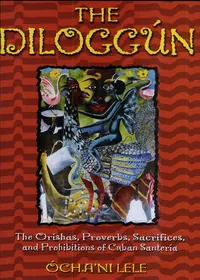





More Free Occult Philosophy Books
View all →