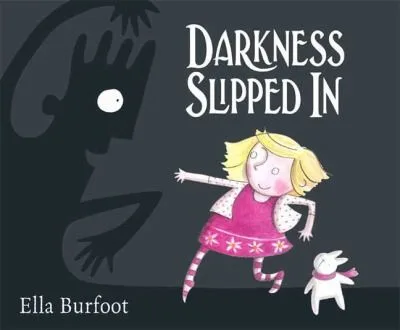
Darkness Slipped In
 77
77

Darkness Slipped In
Ella Burfoot's *Darkness Slipped In* does not offer comfort; it offers a stark, sometimes unsettling, confrontation with the architecture of the unseen. The strength of this collection lies in its refusal to simplify the often-abyssal nature of esoteric inquiry. Burfoot’s prose, particularly in the section detailing the "Echoing Chambers," avoids the common pitfall of academic detachment by imbuing abstract concepts with a palpable sense of presence. A limitation, however, is the dense theoretical layering, which can occasionally obscure the practical implications for the uninitiated. The work’s exploration of "unseen architecture" feels particularly vital, challenging conventional notions of spiritual progress. Ultimately, *Darkness Slipped In* is a potent, if demanding, addition to the literature of advanced occult philosophy.
📝 Description
77
### What It Is Darkness Slipped In is a collection of writings that explores the liminal spaces between the known and the unknown. It does not present a singular doctrine but rather a series of contemplations on the nature of esoteric experience and the forces that operate beyond conventional perception. The text emerged from a period of intense personal and intellectual exploration for Ella Burfoot, first published in 2008.
### Who It's For This work is intended for serious students of occult philosophy and comparative mysticism who are prepared to engage with challenging ideas. It will appeal to those who find existing frameworks incomplete and seek explorations into less-charted territories of consciousness and spiritual inquiry. Readers should possess a foundational understanding of esoteric concepts and a willingness to grapple with ambiguity.
### Historical Context The early 21st century saw a resurgence of interest in esoteric traditions, often filtered through new media and academic lenses. Burfoot’s work, appearing in 2008, arrived during this time, offering a counterpoint to more generalized New Age philosophies. It engaged with earlier currents of thought, such as those found in the writings of Helena Blavatsky and the Theosophical Society, while forging a distinct path. The book’s reception was primarily within niche academic and practitioner circles, bypassing mainstream attention.
### Key Concepts Central to Darkness Slipped In is the exploration of "shadow territories" – aspects of reality and consciousness that resist easy categorization or rationalization. The text examines the "thinning of the veil" not as a singular event but as a continuous process influenced by inner states and external alignments. It also touches upon the concept of "resonant frequencies" in relation to spiritual awakening, suggesting that certain inner states can attune individuals to subtle energies.
💡 Why Read This Book?
• Gain insight into "shadow territories," a concept that moves beyond conventional psychological archetypes, as explored in Burfoot's 2008 publication, offering a unique framework for understanding the subconscious. • Understand the idea of "resonant frequencies" as applied to spiritual attunement, providing a specific, non-dogmatic approach to energetic alignment not commonly found in introductory texts. • Explore the notion of the "thinning of the veil" as a dynamic, ongoing process, challenging static interpretations and offering a more nuanced perspective on liminal states of consciousness.
⭐ Reader Reviews
Honest opinions from readers who have explored this book.
❓ Frequently Asked Questions
What is the primary focus of Ella Burfoot's 'Darkness Slipped In'?
The book primarily explores liminal states of consciousness and the nature of esoteric experience, investigating forces beyond conventional perception and the concept of 'shadow territories'.
When was 'Darkness Slipped In' first published?
The work by Ella Burfoot was first published in 2008, positioning it within a period of renewed interest in esoteric studies.
Is 'Darkness Slipped In' suitable for beginners in occult philosophy?
While it offers profound explorations, the book is best suited for serious students with a foundational understanding of esoteric concepts due to its dense theoretical nature.
What esoteric tradition does 'Darkness Slipped In' draw from?
The work engages with currents found in Western Esotericism and comparative mysticism, particularly resonating with explorations of consciousness and subtle energies.
Does the book offer practical exercises for spiritual development?
While not a manual of practical exercises, the book's conceptual framework, particularly regarding 'resonant frequencies,' provides a theoretical basis that practitioners can adapt.
What makes the concept of 'shadow territories' in this book unique?
Burfoot's 'shadow territories' extend beyond typical psychological shadow work, delving into existential and metaphysical dimensions that resist easy rationalization.
🔮 Key Themes & Symbolism
The Nature of Shadow Territories
Burfoot's 'shadow territories' represent not merely psychological darkness but existential spaces that lie beyond the grasp of ordinary consciousness and language. These are realms where conventional logic falters and perception shifts. The text suggests these territories are not external but intrinsic aspects of reality, accessible through altered states of awareness. Understanding them is presented as crucial for a more complete apprehension of existence, moving beyond the limitations of a purely rational worldview. The exploration is framed as a necessary confrontation with the undefined aspects of being.
Resonant Frequencies and Attunement
The book posits that spiritual awakening and connection to subtle energies are not solely about effort but about achieving specific "resonant frequencies." This concept implies that individuals can attune themselves to higher or deeper levels of consciousness by adjusting their inner state, akin to tuning a musical instrument. This isn't about forcing an outcome but about creating the internal conditions for energetic alignment. The work implies that by cultivating certain internal vibrations, one can become receptive to unseen influences and deeper truths, moving beyond mere intellectual understanding.
The Thinning of the Veil
Rather than a singular, dramatic event, Burfoot describes the "thinning of the veil" as a fluid and continuous process. This thinning occurs when the boundaries between the material and the subtle, the conscious and the subconscious, become permeable. It is influenced by internal psychological states, energetic alignments, and potentially external celestial or terrestrial factors. The text suggests that moments of "thinning" offer glimpses into deeper realities, providing opportunities for insight but also demanding careful discernment and groundedness to avoid disorientation.
Unseen Architecture of Reality
Central to Burfoot's thesis is the idea of an "unseen architecture" that underpins the manifest world. This is not a physical structure but an energetic and conceptual framework that governs the interplay of forces, consciousness, and form. The book challenges readers to perceive this underlying structure, which operates according to principles distinct from those of empirical science. Recognizing this architecture is presented as key to understanding the deeper dynamics of existence and one's place within the cosmic order.
💬 Memorable Quotes
“The edges of knowing are where the true work begins.”
— This statement emphasizes that genuine spiritual or philosophical progress often occurs at the boundaries of current understanding, in the ambiguous spaces where certainty dissolves.
“Consciousness does not merely perceive reality; it actively shapes its resonant frequencies.”
— This concept suggests a dynamic interaction between the observer and the observed, positing that our internal state influences the energetic qualities of the reality we experience.
“Shadow territories are not voids, but landscapes of unarticulated potential.”
— This redefines the 'shadow' not as an absence but as a realm rich with latent possibilities, a source of power and transformation if approached with awareness.
“The veil thins most readily when the self forgets its own boundaries.”
— This highlights the role of ego dissolution or transcendence in facilitating access to subtler states of perception, suggesting humility and openness are key.
“We seek structure, but the most profound truths reside in the interplay of formlessness.”
— This points to the limitations of rigid systems and encourages an appreciation for the fluid, dynamic, and often paradoxical nature of ultimate reality.
🌙 Esoteric Significance
Tradition
The work engages deeply with the broad tradition of Western Esotericism, particularly its contemplative and philosophical branches. It departs from more ritualistic or ceremonial approaches by focusing on the internal architecture of consciousness and perception. While it echoes Gnostic concerns with hidden knowledge and Theosophical explorations of subtle planes, Burfoot carves out a unique space by emphasizing the subjective experience of these realms and the active role of consciousness in shaping them.
Symbolism
Key symbols include the "veil" itself, representing the boundary between ordinary perception and deeper realities, which is presented as permeable and dynamic. "Shadow territories" function symbolically as archetypal spaces of the unknown, the unmanifest, and the potential that exists beyond rational comprehension. The concept of "resonant frequencies" acts symbolically, drawing an analogy from physics to describe the attunement of consciousness to subtle energetic states.
Modern Relevance
Modern practitioners and thinkers in fields like consciousness studies, transpersonal psychology, and contemporary occultism find value in Burfoot's conceptualizations. Her ideas on the active role of consciousness and the nature of "shadow territories" inform contemporary discussions about subjective reality and the limits of empirical knowledge. The emphasis on resonant frequencies also finds echoes in modern energetic healing modalities and mindfulness practices that focus on cultivating specific internal states.
👥 Who Should Read This Book
• Students of comparative mysticism and esoteric philosophy seeking to expand their theoretical frameworks beyond established schools. • Advanced practitioners of inner work who are exploring the nature of consciousness and perception at its limits. • Researchers interested in the development of esoteric thought in the early 21st century and its departure from earlier 20th-century movements.
📜 Historical Context
Ella Burfoot's *Darkness Slipped In*, published in 2008, emerged during a period of eclectic spiritual exploration. The early 21st century saw a diffusion of esoteric ideas, often mediated through the internet, which sometimes led to a homogenization of complex traditions. Burfoot's work, however, maintained a rigorous, philosophical tone, drawing from but not strictly adhering to established Western esoteric lineages like Hermeticism or Theosophy. It stood in contrast to more popular, accessible New Age literature, offering a challenging, textually dense engagement with consciousness. While specific public reception data is scarce, its circulation was primarily within dedicated circles studying advanced occult philosophy. Contemporaries exploring similar themes in more academic veins included scholars like Wouter J. Hanegraaff, though Burfoot’s approach remained distinctly practitioner-oriented.
📔 Journal Prompts
Reflect on your personal experience of "shadow territories" and their perceived influence.
Consider the "resonant frequencies" you currently embody and their potential effects.
Describe a time when the "veil" felt thinnest for you.
Analyze the "unseen architecture" that seems to govern a situation in your life.
How does the concept of "articulated potential" in shadow territories challenge your current views?
🗂️ Glossary
Shadow Territories
Conceptual spaces or realms of consciousness that exist beyond conventional perception and rational understanding, representing unarticulated potential and the unknown.
Resonant Frequencies
The idea that consciousness, or aspects thereof, can operate at specific energetic vibrations, allowing for attunement with corresponding subtle energies or states of being.
Thinning of the Veil
A state or process wherein the perceived boundary between the material world and subtler, non-physical realities becomes permeable, allowing for glimpses or direct experience of the latter.
Unseen Architecture
The underlying, non-physical framework or energetic structure that governs the manifest world and its phenomena, operating according to principles distinct from empirical laws.
Liminal Spaces
Transitional or in-between states or places, often characterized by ambiguity and the dissolution of normal boundaries, where new forms or understandings can emerge.
Articulated Potential
The latent possibilities within a given situation or entity that are not yet manifest but hold the capacity for expression or realization.
Confrontation
In this context, a direct and often challenging engagement with difficult or unknown aspects of reality, consciousness, or the self, necessary for growth.