Dark Night, Early Dawn
 73
73

Dark Night, Early Dawn
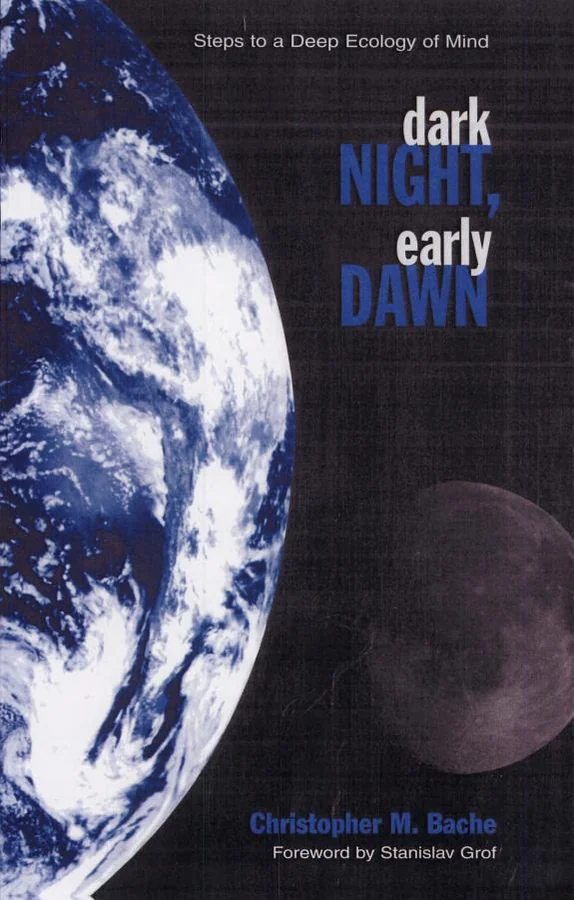
Christopher M. Bache’s *Dark Night, Early Dawn* offers a compelling argument for the interconnectedness of individual and collective psychic healing. Bache grounds his ambitious thesis in twenty years of engagement with nonordinary states, a considerable experiential foundation. He deftly illustrates how profound personal catharsis, particularly when accessed via Grofian methods, can breach the boundaries of the individual ego to touch the broader human unconscious. One particularly striking concept is the idea that hyper-stimulation of the deep psyche can unlock not just personal trauma but archetypal patterns of suffering and redemption shared by all humanity. However, the sheer scope of the claim—collective healing—occasionally strains credulity, and the dense philosophical reflections might prove challenging for readers unaccustomed to this level of abstract thought. Despite this, the book is a vital contribution for those exploring the outer limits of consciousness and the potential for shared spiritual evolution. It serves as a potent reminder that our deepest struggles and highest potentials may be far more communal than we typically assume.
📝 Description
73
### What It Is Dark Night, Early Dawn by Christopher M. Bache, first published in 2000, is a significant exploration of consciousness and transformation. It approaches the ancient mystery of death and rebirth not through traditional dogma or individual psychology alone, but through the lens of collective unconscious healing. The work is rooted in the author’s extensive experience with nonordinary states of consciousness, particularly those induced by specific therapeutic methodologies.
### Who It's For This book is suited for individuals interested in the intersection of psychology, spirituality, and consciousness studies. It will appeal to those who are curious about the potential for healing that extends beyond the personal self, touching upon the shared psychic life of humanity. Readers seeking a philosophical framework for understanding profound psychological experiences, especially those encountered in altered states, will find substantial material here.
### Historical Context Emerging at the turn of the millennium, Bache's work arrives in a period of increasing interest in transpersonal psychology and the exploration of consciousness. It directly engages with the legacy of researchers like Stanislav Grof, whose work on holotropic breathwork and LSD psychotherapy in the latter half of the 20th century laid crucial groundwork for understanding nonordinary states. The book’s emphasis on collective transformation also aligns with broader cultural shifts questioning individualistic paradigms.
### Key Concepts The central argument posits that intense psychological experiences, facilitated by techniques like those developed by Grof, can access and heal not just the individual psyche but also the collective unconscious. This implies a shared human psyche susceptible to trauma and healing, mirroring the personal journey on a grander scale. The book examines the patterns and archetypes that emerge in these deep states, suggesting they are not merely personal regressions but echoes of shared human experience and potential.
💡 Why Read This Book?
• Understand the potential for consciousness-altering techniques to facilitate healing that transcends the individual, as explored through Bache's engagement with Stanislav Grof's methods. • Gain insight into the concept of the collective unconscious as a shared psychic entity that can be accessed and potentially healed, a core theme rooted in Bache's twenty years of research. • Explore philosophical reflections on death and rebirth that connect personal transformation to broader human evolution, drawing parallels between ancient mysteries and modern psychological exploration.
⭐ Reader Reviews
Honest opinions from readers who have explored this book.
❓ Frequently Asked Questions
What is the primary focus of Christopher M. Bache's *Dark Night, Early Dawn*?
The book focuses on the ancient mystery of death and rebirth, proposing that profound psychological experiences, particularly those from nonordinary states, can lead to collective rather than solely individual healing of humanity's unconscious.
What therapeutic methods does the book reference?
The work heavily references the therapeutic methods developed by Stanislav Grof, particularly those involving the hyper-stimulation of the deep psyche to facilitate healing and access nonordinary states of consciousness.
What is the significance of the title 'Dark Night, Early Dawn'?
The title likely alludes to the process of profound personal and collective transformation, suggesting a period of intense difficulty or dissolution ('Dark Night') that precedes a new phase of awareness or renewal ('Early Dawn').
Does the book argue for individual or collective transformation?
While acknowledging individual healing, the book's unique emphasis is on collective transformation, suggesting that healing experienced in nonordinary states can extend to the collective unconscious of humanity itself.
What is the author's background mentioned in the book?
Christopher M. Bache brings twenty years of experience working with nonordinary states of consciousness to his analysis, providing a substantial foundation for his theories on collective psychic healing.
When was Dark Night, Early Dawn first published?
The book was first published on May 26, 2000, placing it at the cusp of the 21st century and reflecting contemporary explorations in consciousness studies.
🔮 Key Themes & Symbolism
Collective Unconscious Healing
The book posits that deep psychological work, particularly using nonordinary states, can unlock healing not just for individuals but for the shared psychic substrate of humanity. This challenges the notion of isolated psychological experience, suggesting archetypal patterns of suffering and renewal are universally accessible and potentially remediable through shared consciousness breakthroughs.
Death and Rebirth Archetypes
Bache revisits the ancient mystery of death and rebirth, framing it not as a solely spiritual or mythological concept but as a psychological process that can be activated and understood through intense consciousness states. The 'death' signifies the dissolution of the ego or old patterns, while 'rebirth' represents a profound renewal extending to the collective.
Nonordinary States of Consciousness
Central to Bache's thesis is the exploration of nonordinary states, often accessed through specific therapeutic techniques like those pioneered by Stanislav Grof. These states are presented as crucial pathways for accessing the deep psyche and facilitating the profound individual and collective transformations the book discusses.
Hyper-Simulation of the Psyche
The concept of 'hyper-simulation' refers to the intense, sometimes overwhelming, stimulation of the deep psyche achieved through specific methodologies. Bache argues this intense engagement is key to breaking through personal defenses and accessing the deeper, collective layers of consciousness for healing and transformation.
💬 Memorable Quotes
“When the deep psyche is hyper-simulated, the healing that results sometimes extends beyond the individual to the collective unconscious of humanity itself.”
— This core assertion highlights the book's central thesis: that profound personal psychological experiences can have a ripple effect, impacting the shared psychic field of all humans, suggesting a radical interconnectedness.
“The ancient mystery of death and rebirth is explored through deep self-exploration and philosophical reflection.”
— This paraphrased concept emphasizes the book's dual approach, combining introspective psychological work with intellectual contemplation to grapple with fundamental questions of existence and renewal.
“The work emphasizes collective rather than individual transformation.”
— This statement underscores the unique perspective of the book, prioritizing the idea that significant healing and change occur on a broader, shared human level, rather than focusing solely on personal psychological adjustment.
“Drawing upon twenty years of experience working with nonordinary states.”
— This factual statement establishes the author's extensive practical background in exploring altered states of consciousness, lending credibility to his theories on psychic healing and transformation.
“The healing sometimes extends beyond the individual.”
— This concise interpretation points to the extraordinary claim of the book: that the therapeutic benefits of certain profound psychological experiences can breach personal boundaries and impact the wider human consciousness.
🌙 Esoteric Significance
Tradition
The work draws heavily from Jungian psychology, particularly its concepts of the collective unconscious and archetypes, and intersects with Gnostic ideas concerning spiritual rebirth and the overcoming of material limitations. It can be situated within the broader Hermetic and alchemical traditions that explore inner transformation as a process of death and resurrection, offering a modern psychological interpretation of these ancient themes.
Symbolism
The title itself, 'Dark Night, Early Dawn,' symbolizes the alchemical process of dissolution and regeneration, a core motif in many esoteric traditions. The 'dark night' represents the descent into the chaotic depths of the unconscious, a necessary breakdown before the 'early dawn' of a new, integrated consciousness can emerge, reflecting cycles of purification and illumination.
Modern Relevance
Bache's exploration of collective consciousness and its potential for healing resonates with contemporary movements in social psychology, collective trauma studies, and even certain branches of network theory that explore emergent properties of interconnected systems. Thinkers and practitioners interested in non-local consciousness, global consciousness projects, and integral theory find his work a significant precursor.
👥 Who Should Read This Book
• Researchers of transpersonal psychology and consciousness studies seeking empirical accounts and theoretical frameworks for profound psychological states. • Individuals engaged in deep self-exploration or therapeutic work, particularly those interested in how personal crises might reflect or impact larger human patterns. • Students of comparative religion and mythology interested in modern psychological interpretations of ancient death and rebirth narratives.
📜 Historical Context
Published in 2000, *Dark Night, Early Dawn* emerged during a period of burgeoning interest in transpersonal psychology and consciousness studies, a field significantly shaped by figures like Stanislav Grof. Grof's pioneering work with LSD psychotherapy and holotropic breathwork in the latter half of the 20th century provided much of the theoretical and practical framework Bache engages with. The book's emphasis on collective healing can be seen as a counterpoint to the more individualistic therapeutic models that dominated earlier decades, aligning with a growing cultural search for meaning beyond the personal. At this time, academic psychology was largely skeptical of phenomena related to the collective unconscious, favoring empirical, materialist explanations. Bache’s work, therefore, positioned itself within a more esoteric or fringe intellectual current, drawing on Jungian archetypes and Gnostic ideas while grounding them in contemporary psychotherapeutic practice.
📔 Journal Prompts
The hyper-simulation of the deep psyche: what personal experiences mirror this intense activation?
Collective unconscious patterns: reflect on archetypal themes in your own life and society.
The dark night leading to early dawn: identify a past dissolution and subsequent renewal.
Bache's concept of collective healing: how might individual catharsis contribute to a larger human awakening?
Grofian methods and nonordinary states: what personal or observed experiences align with their described effects?
🗂️ Glossary
Nonordinary states of consciousness
States of awareness that deviate significantly from the usual waking consciousness, often characterized by altered perceptions, intensified emotions, and profound insights, typically accessed through meditation, psychedelics, or specific therapeutic techniques.
Collective unconscious
A concept, primarily from Carl Jung, referring to a layer of the unconscious mind shared by all humans, containing archetypes and inherited predispositions that influence behavior and experience.
Death and rebirth
A symbolic and psychological process involving the dissolution of old structures, beliefs, or ego-identities (death) followed by the emergence of new awareness, understanding, or being (rebirth).
Hyper-simulation
The intense and overwhelming stimulation of the deep psyche, often achieved through specific therapeutic or consciousness-altering methods, designed to break through defenses and access profound psychological material.
Stanislav Grof
A pioneer in the field of transpersonal psychology and a co-founder of the field, known for his research on the therapeutic potential of psychedelic drugs and later for developing holotropic breathwork.
Archetypes
Universal, archaic patterns and images that derive from the collective unconscious and are the psychic counterpart of instincts. They manifest in myths, fairy tales, and dreams.
Holotropic Breathwork
A powerful experiential technique developed by Stanislav and Christina Grof, using breathing, music, and focused attention to facilitate nonordinary states of consciousness for healing and self-exploration.