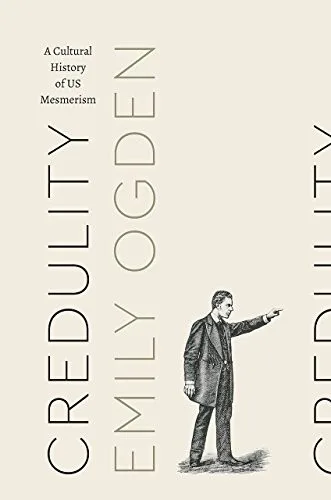
Credulity
 77
77

Credulity
Emily Ogden’s "Credulity" offers a sharp, albeit at times dry, dissection of why humans believe what they believe. The book moves beyond simplistic explanations of gullibility, instead tracing the historical and philosophical frameworks that have shaped our understanding of acceptance and faith. Ogden's examination of how figures like the Comte de Saint-Germain were received, for instance, highlights the complex interplay between charisma, societal need, and the suspension of disbelief. While the academic rigor is commendable, the prose occasionally becomes dense, demanding sustained reader attention. A particular strength lies in its nuanced portrayal of how seemingly irrational beliefs can possess internal logic and social utility. The work explores the historical acceptance of alchemical claims, demonstrating that credulity is not merely a deficit but a dynamic force in cultural evolution. "Credulity" is a valuable, if demanding, study for those interested in the epistemology of the unusual.
📝 Description
77
### What It Is
Emily Ogden's "Credulity," first published in 2018, examines the historical and philosophical underpinnings of belief systems, particularly as they intersect with esoteric and occult traditions. The work probes the very nature of what it means to accept an idea, a doctrine, or a narrative as true, especially when those narratives lie outside the purview of conventional empirical validation. Ogden’s research traces the evolution of credulity from its early philosophical considerations to its manifestation in various spiritual and intellectual movements.
### Who It's For
This book is intended for readers interested in the sociology of knowledge, the history of ideas, and the psychological dimensions of belief. It will particularly appeal to those who study esotericism, religious studies, and philosophy of religion, offering a critical lens through which to understand why certain beliefs persist and gain traction. Individuals seeking to understand the mechanics behind faith, dogma, and the acceptance of the unproven will find substantial material here.
### Historical Context
Ogden's work engages with a long intellectual lineage stretching back at least to the Enlightenment's critique of superstition and its subsequent engagement with emergent spiritualisms. The 20th century, with its proliferation of new religious movements and the academic study of them, forms a significant backdrop. "Credulity" implicitly situates itself within contemporary discussions about epistemology, cognitive biases, and the cultural construction of reality, offering a historical perspective on these modern concerns.
### Key Concepts
The core of "Credulity" revolves around the analysis of how societies and individuals come to accept propositions that lack definitive proof. This involves exploring concepts like faith, dogma, revelation, and the social mechanisms that reinforce belief. Ogden investigates how rationalism and irrationalism have historically contended with each other, and how the boundaries between them have often been fluid, especially within esoteric circles where subjective experience frequently takes precedence over objective verification.
💡 Why Read This Book?
• Gain a nuanced understanding of how belief systems, especially esoteric ones, are constructed and maintained, drawing on Ogden’s analysis of historical acceptance of figures like the Comte de Saint-Germain. • Examine the philosophical evolution of 'credulity' itself, moving beyond simplistic notions of gullibility to appreciate its role in knowledge formation and societal development, as explored through Enlightenment critiques. • Appreciate the intellectual scaffolding behind the acceptance of unverified claims, informed by Ogden's exploration of how rationalism and spiritualism have historically interacted.
⭐ Reader Reviews
Honest opinions from readers who have explored this book.
❓ Frequently Asked Questions
When was Emily Ogden's "Credulity" first published?
Emily Ogden's "Credulity" was first published in 2018, offering a contemporary examination of historical belief systems.
What is the primary focus of "Credulity"?
The book primarily focuses on the historical and philosophical underpinnings of belief, particularly concerning how and why individuals and societies accept ideas that lack empirical proof, especially within esoteric contexts.
Does "Credulity" discuss specific esoteric figures?
Yes, the work explores the historical reception of various figures, such as the Comte de Saint-Germain, to illustrate the dynamics of belief and acceptance in esoteric circles.
What intellectual traditions does "Credulity" engage with?
"Credulity" engages with traditions ranging from Enlightenment philosophy and its critiques of superstition to the study of new religious movements and the sociology of knowledge.
Is "Credulity" suitable for beginners in esoteric studies?
While informative, the book's academic style and dense prose may be more suited to readers with some background in philosophy, history of ideas, or religious studies, rather than absolute beginners.
What is the author's approach to the concept of 'credulity'?
Ogden approaches 'credulity' not as a simple failing, but as a complex, historically situated phenomenon that plays a crucial role in the formation and transmission of knowledge and belief.
🔮 Key Themes & Symbolism
The Mechanics of Acceptance
Ogden's "Credulity" systematically unpacks the cognitive and social processes that lead individuals to accept claims, particularly those that lie beyond empirical verification. The work scrutinizes how narratives gain traction, exploring the interplay between charisma, societal conditions, and the inherent human capacity for faith. It moves beyond labeling such acceptance as mere gullibility, instead investigating the underlying frameworks that lend legitimacy to unconventional ideas, as seen in historical instances of belief in alchemy or miraculous claims.
Rationalism vs. Esotericism
The book charts the historical tension and occasional convergence between rationalist thought and esoteric traditions. Ogden examines how periods of intense rational inquiry, such as the Enlightenment, paradoxically often gave rise to or intensified interest in occultism and spiritualism. This section explores how the boundaries of what is considered 'believable' have shifted, demonstrating that esoteric claims often possess their own internal logic and appeal, challenging purely empirical modes of understanding existence.
Historical Figures and Belief
"Credulity" frequently uses the reception of specific historical figures to illustrate its arguments about belief. The book may touch upon individuals who cultivated significant followings through claims of occult knowledge or spiritual authority. By analyzing how these figures were perceived and their doctrines accepted or rejected, Ogden provides concrete case studies that illuminate the broader social and psychological dynamics of credulity and its role in shaping intellectual and spiritual movements across centuries.
The Evolution of Epistemology
This work contributes to an understanding of how our very definition of knowledge, or epistemology, has evolved. Ogden traces how different eras and intellectual currents have defined what constitutes valid knowledge and acceptable belief. By examining the historical treatment of esoteric doctrines, the book highlights that what is considered 'knowledge' is often culturally and historically contingent, influenced by prevailing philosophical paradigms and societal needs for explanation and meaning.
💬 Memorable Quotes
“The acceptance of extraordinary claims often hinges on more than evidence; it involves social context and psychological resonance.”
— This paraphrased concept suggests that belief in the unusual isn't solely about proof, but is deeply influenced by the social environment and the internal psychological landscape of the believer.
“Historical movements show that the line between esoteric fervor and intellectual pursuit is frequently blurred.”
— This interpretation highlights how historical spiritual or occult movements often shared common ground with scholarly inquiry, challenging a strict separation between the mystical and the intellectual.
“Societies develop frameworks for validating beliefs, even those outside empirical science.”
— This concept points to the idea that communities establish their own criteria for what constitutes truth or valid knowledge, extending beyond scientific methodology to encompass faith, tradition, or revelation.
“The appeal of certain doctrines lies not in their provability, but in their capacity to offer meaning or structure.”
— This paraphrased idea suggests that the power of some belief systems stems from their ability to provide answers, order, or purpose to adherents, rather than from empirical verification.
“Understanding credulity requires examining the needs and contexts that make certain beliefs compelling.”
— This interpretation emphasizes that to grasp why people believe, one must consider the specific societal and individual circumstances that render particular ideas attractive or necessary.
🌙 Esoteric Significance
Tradition
While not strictly adhering to a single esoteric lineage, "Credulity" operates within the broader tradition of critical inquiry into spiritual and occult phenomena that gained academic traction in the late 20th century. It draws from the history of ideas and religious studies, fields that often examine Hermetic, Gnostic, or Theosophical currents from an external, analytical perspective. The work departs from internal esoteric methodologies by focusing on the *mechanisms* of belief rather than the validity of esoteric claims themselves, offering a meta-analysis.
Symbolism
The book's focus is less on specific esoteric symbols and more on the symbolic *power* of narratives and doctrines. For instance, the concept of 'revelation' itself functions symbolically, representing a direct, unmediated access to truth that bypasses conventional epistemology. Similarly, historical figures like the Comte de Saint-Germain can become symbolic archetypes representing hidden knowledge or enduring spiritual authority, demonstrating how belief structures form around potent, often ambiguous, figures.
Modern Relevance
Contemporary thinkers in fields such as cognitive science of religion, digital culture studies, and the sociology of conspiracy theories find "Credulity" relevant. Ogden's work provides historical grounding for understanding why alternative belief systems, including those found online or within fringe communities, gain traction. Scholars examining the spread of misinformation and the psychology of faith-based communities can draw upon its analysis of historical acceptance patterns.
👥 Who Should Read This Book
• Students of the history of Western esotericism seeking to understand the socio-historical factors behind the acceptance of occult doctrines. • Academics in philosophy and religious studies interested in epistemological frameworks and the sociology of belief systems. • Critical thinkers and general readers curious about the psychological and cultural underpinnings of why people believe what they do, particularly when it deviates from mainstream thought.
📜 Historical Context
Published in 2018, Emily Ogden's "Credulity" emerges within a contemporary academic landscape increasingly interested in the history of emotions, the sociology of belief, and the critical study of esotericism. This era saw a flourishing of research into new religious movements and alternative spiritualities, often building upon earlier work by scholars like Mircea Eliade and Joscelyn Godwin. Ogden’s book implicitly engages with the intellectual currents that questioned Enlightenment rationalism's sufficiency, particularly the rise of interest in subjective experience and non-Western thought that gained momentum in the latter half of the 20th century. While not directly engaging in polemics, the work offers a historical counterpoint to the often dismissive attitudes towards esoteric beliefs prevalent in some academic circles, situating them within broader patterns of human intellectual and social history. The reception of the book has been primarily within scholarly circles focused on history of ideas and religious studies.
📔 Journal Prompts
The historical reception of the Comte de Saint-Germain as a lens for understanding credulity.
Belief frameworks outside empirical science: examining their internal coherence.
The role of charisma in the propagation of esoteric ideas.
How societal needs shape the acceptance of particular doctrines.
The evolving definition of 'knowledge' across different historical periods.
🗂️ Glossary
Credulity
The tendency to be overly willing to believe or accept something as true, often without sufficient evidence. In Ogden's work, it is examined historically and philosophically.
Esotericism
Systems of thought and practice concerned with hidden or secret knowledge, often involving spiritual, mystical, or occult traditions, typically accessible only to initiates.
Epistemology
The philosophical study of knowledge, including its nature, scope, methods, and validity. It questions what we can know and how we know it.
Rationalism
A philosophical stance emphasizing reason as the primary source and test of knowledge, often contrasting with empiricism or faith-based belief systems.
Enlightenment
An 18th-century intellectual and cultural movement emphasizing reason, individualism, and skepticism towards traditional authority, which paradoxically also spurred interest in certain non-rational phenomena.
Sociology of Knowledge
A field of study examining the relationship between human thought and the social conditions that shape it, exploring how social structures influence the production and acceptance of knowledge.
Comte de Saint-Germain
An 18th-century European adventurer and courtier who claimed vast knowledge, immortality, and involvement in alchemy, becoming a figure of legend and esoteric interest.





![The Dark Night of the Soul [microform]](/img/thumb/the-dark-night-of-the-soul-microform-saint-1542-1591-john-of-the-cross-359215.webp)