Confucianism
 78
78

Confucianism
The Chais’ introduction to Confucianism offers a commendable clarity, a significant achievement given the subject's inherent complexity. The book excels in detailing the historical trajectory of Confucian thought, effectively situating Confucius himself within the Spring and Autumn period (771–476 BCE). A notable strength is its systematic explanation of key virtues like *ren* and *li*, rendering them comprehensible to the uninitiated. However, the work, by its nature as a 1973 publication, occasionally feels like a product of its era, with a descriptive rather than deeply critical stance on certain social implications. The analysis of the *junzi* ideal, while informative, could benefit from a more nuanced exploration of its practical application beyond idealized pronouncements. Nevertheless, for readers seeking a solid, foundational grasp of Confucian philosophy's structure and historical roots, this remains a valuable resource. It provides a stable platform for further inquiry into this influential tradition.
📝 Description
78
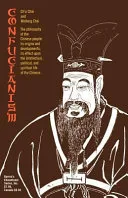
### What It Is Confucianism, by Chu Chai and Winberg Chai, presents a clear, non-technical exposition of a philosophy that has profoundly influenced Chinese civilization. The book traces the historical development of Confucian thought from its origins, analyzing its societal impact and core tenets. It serves as an accessible entry point for understanding the foundational principles that have shaped East Asian culture for centuries.
### Who It's For This work is intended for individuals seeking a foundational understanding of Confucianism without requiring prior academic background in philosophy or religious studies. It is suitable for students of comparative religion, world history enthusiasts, and anyone curious about the ethical and social frameworks that have guided a significant portion of the global population. Those interested in the interplay between philosophy and governance will find it particularly relevant.
### Historical Context Originally published in 1973, this introduction emerged during a period of renewed global interest in Eastern philosophies, often as a counterpoint to Western secularism and materialism. The Chais' work aimed to demystify Confucianism for a Western audience, presenting it as a coherent system of thought. Its appearance predates the widespread availability of digital resources, making it a crucial academic and popular resource for its time, offering a structured analysis of a tradition frequently misunderstood.
### Key Concepts The book systematically breaks down the essential concepts of Confucianism. It explores the foundational ideas of benevolence (ren), righteousness (yi), propriety (li), wisdom (zhi), and trustworthiness (xin). The analysis extends to the role of the junzi (superior person) and the importance of filial piety (xiao) in establishing social harmony. Understanding these core elements is presented as key to grasping the philosophy's enduring influence.
💡 Why Read This Book?
• Gain a clear understanding of *ren* (benevolence) and *li* (propriety), core ethical concepts that underpin social harmony, as analyzed within the historical context of ancient China. • Appreciate the development of Confucian thought from its origins, understanding how figures like Confucius established principles that shaped Chinese governance and society for over two millennia. • Identify the ideal of the *junzi* (superior person) and its role in personal cultivation and societal order, providing a concrete framework for ethical self-improvement discussed in the text.
⭐ Reader Reviews
Honest opinions from readers who have explored this book.
❓ Frequently Asked Questions
When was Confucianism first published and by whom?
The book "Confucianism" was first published in 1973. It was authored by Chu Chai and Winberg Chai, providing an accessible introduction to the philosophy.
What are the main virtues discussed in the book 'Confucianism'?
The book details key Confucian virtues such as benevolence (ren), righteousness (yi), propriety (li), wisdom (zhi), and trustworthiness (xin), explaining their significance in personal conduct and social order.
Who is considered the central figure in the philosophy introduced in this book?
The central figure is Confucius (Kong Fuzi), whose teachings and philosophy form the bedrock of Confucianism. The book explores his life and the development of his ideas.
What is the concept of 'junzi' as presented in the Chai's book?
The 'junzi' is presented as the ideal of the superior person or gentleman, embodying Confucian virtues and serving as a model for ethical behavior and leadership in society.
Does the book discuss the influence of Confucianism on Chinese society?
Yes, a primary focus of the book is analyzing the development of Confucianism and discussing its profound significance and influence on the structure and values of Chinese society throughout history.
Is this book suitable for beginners in philosophy?
Absolutely. The authors designed the book as a readable, non-technical introduction, making it ideal for individuals new to Confucian philosophy or comparative religion studies.
🔮 Key Themes & Symbolism
The Superior Person (Junzi)
The concept of the 'junzi' is central to Confucian ethics, representing the ideal individual who embodies virtues such as benevolence (*ren*) and propriety (*li*). The book details how this ideal is cultivated through education and self-reflection, serving as a model for rulers and citizens alike. It emphasizes that achieving the *junzi* status is a lifelong pursuit, integral to fostering social harmony and ethical governance, a goal that has shaped East Asian societal aspirations for centuries.
Social Harmony Through Ritual (Li)
Ritual (*li*) is presented not merely as ceremony but as the practical application of social propriety and ethical conduct. The Chais explain how *li* governs interactions from familial relationships to state affairs, providing a structured framework for social order. This emphasis on ritual as a means to cultivate virtue and maintain societal balance is a distinctive feature of Confucianism, aiming to prevent conflict through adherence to established norms and respectful conduct.
Filial Piety (Xiao)
Filial piety (*xiao*), the respect and obedience owed to one's parents and elders, is portrayed as the root of all virtue. The book illustrates how this fundamental principle extends outwards, forming the basis for loyalty to superiors and responsible citizenship. Understanding *xiao* is crucial to grasping the hierarchical yet reciprocal nature of Confucian social philosophy, which prioritizes familial bonds as the microcosm of a well-ordered state.
Benevolence (Ren)
Benevolence (*ren*), often translated as humaneness or goodness, is the paramount virtue in Confucian thought. The work explores *ren* as the underlying principle of empathy and compassion that should guide all human interactions. It is depicted as the source from which other virtues spring, essential for creating a just and harmonious society. Cultivating *ren* is presented as a continuous effort, vital for personal development and collective well-being.
💬 Memorable Quotes
“The philosophy of Confucius is essentially a philosophy of life.”
— This statement highlights that Confucianism is not solely a theoretical or metaphysical system, but a practical guide focused on ethical conduct, social relationships, and the cultivation of virtue in everyday life.
“The development of Confucianism is analyzed, and its significance is discussed.”
— This accurately reflects the book's core objective: to provide a historical account of how Confucian ideas evolved and to critically examine their impact on Chinese civilization and governance.
“Confucianism has served as a basis for Chinese education and culture.”
— This interpretation underscores the pervasive influence of Confucian principles, indicating its role in shaping educational curricula, cultural values, and societal norms throughout much of Chinese history.
“The ideal of the superior man (junzi) is central to Confucian ethics.”
— This points to the importance of personal cultivation and the pursuit of moral excellence as envisioned by Confucius, framing the 'junzi' as the aspirational model for individuals within the Confucian framework.
“Propriety (li) provides the structure for social interactions.”
— This emphasizes the functional role of ritual and etiquette in Confucianism, suggesting that adherence to *li* creates predictable and respectful relationships, thereby contributing to social stability.
🌙 Esoteric Significance
Tradition
While Confucianism is primarily recognized as a socio-ethical philosophy and a religion, its emphasis on self-cultivation, harmony with the cosmos, and the virtuous ruler positions it adjacent to esoteric traditions. It shares with Hermeticism a focus on understanding universal principles to guide human action and achieve a balanced existence. Its structured approach to ethics and social order can be seen as a method for aligning the individual and the collective with a perceived cosmic or natural order, a common thread in many esoteric lineages.
Symbolism
The concept of the *junzi* (superior person) functions symbolically, representing the ideal cultivated human being who achieves harmony between the inner self and the external world. The five constant virtues (*ren, yi, li, zhi, xin*) can be viewed as symbolic pillars supporting a stable ethical universe. Furthermore, the emphasis on balance and order in society mirrors cosmological ideals found in various esoteric systems, suggesting that social harmony is a reflection of a deeper, universal equilibrium.
Modern Relevance
Contemporary thinkers and practitioners in fields like positive psychology, leadership studies, and comparative ethics draw upon Confucian principles, particularly the emphasis on virtues like benevolence and trustworthiness. Its focus on filial piety and social responsibility continues to inform discussions on family structures and community engagement in East Asia and among diaspora communities. Furthermore, the pursuit of self-cultivation and ethical governance remains a relevant aspiration in a world grappling with social fragmentation and moral uncertainty.
👥 Who Should Read This Book
• Students of comparative religion and philosophy seeking foundational texts on Eastern thought, offering a clear entry into Confucianism's core tenets and historical context. • Individuals interested in ethical leadership and social order, providing insights into a system that has guided governance and societal structure for centuries. • Readers exploring the cultural and historical development of China, gaining an understanding of a philosophy that has profoundly shaped its civilization.
📜 Historical Context
Published in 1973, "Confucianism" by Chu Chai and Winberg Chai emerged during a period when Western academic and popular interest in Eastern philosophies was steadily growing, partly as a reaction to the perceived spiritual void in modern industrial societies. The book aimed to present a clear, accessible overview of a tradition that had profoundly shaped East Asian culture for over two millennia, often misunderstood or oversimplified in Western discourse. Its publication predates the digital age, making it a significant resource for students and general readers seeking structured knowledge. It arrived in a scholarly landscape where comparative philosophy was gaining traction, offering a counterpoint to dominant Western philosophical traditions like existentialism or logical positivism. The work contextualizes Confucianism within the broader sweep of Chinese history, implicitly positioning it against other schools of thought such as Taoism or Legalism which also vied for influence during China's classical period.
📔 Journal Prompts
The concept of *ren* (benevolence) as the root of virtue.
Filial piety (*xiao*) as the foundation of social order.
The ideal of the *junzi* in contemporary life.
The role of *li* (propriety) in maintaining societal harmony.
Confucius's vision of a well-ordered state.
🗂️ Glossary
Ren (仁)
Often translated as benevolence, humaneness, or goodness. It is considered the paramount Confucian virtue, embodying empathy, compassion, and a deep concern for the well-being of others.
Li (礼)
Encompasses ritual, propriety, etiquette, and social norms. It provides the framework for proper conduct in all social interactions, aiming to cultivate virtue and maintain social harmony.
Junzi (君子)
Literally 'son of a ruler,' it refers to the ideal Confucian gentleman or superior person. The *junzi* embodies moral excellence and cultivates virtues through self-reflection and education.
Xiao (孝)
Filial piety, the virtue of respect, obedience, and care for one's parents and elders. It is considered the root of all other virtues in Confucianism.
Yi (义)
Righteousness or justice. It refers to acting in accordance with what is morally right and appropriate, often involving a sense of duty and fairness.
Zhi (智)
Wisdom or knowledge. In Confucianism, this refers to the ability to discern right from wrong and to understand the principles of ethical conduct.
Xin (信)
Trustworthiness or faithfulness. It emphasizes honesty, sincerity, and reliability in one's words and actions.