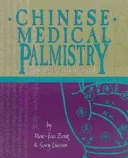
Chinese Medical Palmistry
 75
75

Chinese Medical Palmistry
Zong Xiao-Fan's Chinese Medical Palmistry offers a fascinating, albeit dense, exposition on a less-traveled path within diagnostic arts. The strength of this work lies in its rigorous application of Traditional Chinese Medicine (TCM) principles to the palm, moving beyond the more common Western astrological interpretations. The detailed correlations between hand features and organ systems, such as the relationship between the Heart Line and the circulatory system or the thumb's connection to the spleen, are particularly illuminating. However, the text's primary limitation is its academic dryness; it reads less like an introductory guide and more like a reference manual for those already conversant with TCM terminology. A passage detailing the 'palace of the Liver' and its corresponding skin texture, for instance, requires significant prior knowledge of the Liver's energetic functions within the Five Element theory. Despite this, the book serves as a valuable, if specialized, resource for serious students of esoteric diagnostics and TCM.
📝 Description
75
### What It Is
Chinese Medical Palmistry presents an approach to understanding human health and disposition through the analysis of the palm. It bridges traditional Chinese medical diagnostics with the practice of palm reading, offering a unique lens through which to view the body's internal state as reflected on the external hand. The work details how specific lines, shapes, and markings on the palm correspond to the condition of internal organs and energetic pathways within the body, as understood in classical Chinese medicine.
### Who It's For
This book is intended for practitioners of Traditional Chinese Medicine (TCM) seeking to integrate a diagnostic modality that offers insights beyond conventional palpation and observation. It will also appeal to students and enthusiasts of esoteric arts, comparative diagnostics, and those interested in the intersection of physiognomy and holistic health. Individuals curious about non-invasive methods for assessing well-being and understanding predispositions will find value here.
### Historical Context
The practice of physiognomy, including palmistry, has ancient roots across various cultures. Chinese Medical Palmistry draws upon the diagnostic framework developed over millennia within China, particularly its emphasis on Qi (vital energy) and the interconnectedness of bodily systems. While Western palmistry often focuses on destiny and personality, this Chinese approach centers on the physical and energetic health of the individual, aligning with the core principles of ancient Chinese medical philosophy that were codified and refined through dynasties.
### Key Concepts
The text explores the concept of the Five Elements (Wu Xing) as they relate to hand analysis. Each element—Wood, Fire, Earth, Metal, and Water—is associated with specific organs, emotions, and physiological characteristics that can be observed in the hand. The book details how the 'palace' of each organ on the palm, the coloration of the skin, and the texture of the hand can indicate imbalances or strengths within that organ system. It also examines the significance of major lines like the Heart Line, Head Line, and Life Line not just for longevity or character, but for their connection to the circulatory, nervous, and overall vital energy systems.
💡 Why Read This Book?
• Learn to correlate specific palm lines, like the Life Line, with the vitality and energetic state of the Kidney system, a core concept in Chinese medicine. • Understand how the Five Elements (Wu Xing) manifest on the palm, providing a framework to assess the balance of Wood, Fire, Earth, Metal, and Water within the body. • Discover how the texture and color of the skin on different areas of the palm can act as indicators for the health of specific internal organs, as detailed in the 1995 publication.
⭐ Reader Reviews
Honest opinions from readers who have explored this book.
❓ Frequently Asked Questions
What is the primary difference between Chinese Medical Palmistry and Western palmistry?
Chinese Medical Palmistry focuses on diagnosing the physical and energetic health of internal organs based on Traditional Chinese Medicine principles, whereas Western palmistry often emphasizes personality traits and future predictions.
Which internal organs are associated with different parts of the palm?
The book details specific 'palaces' on the palm corresponding to organs. For example, the thumb area is often linked to the spleen and stomach, while the base of the fingers can reflect the lungs and heart.
What role do the Five Elements play in this diagnostic system?
The Five Elements (Wu Xing) are central, linking specific organ systems, emotions, and physical characteristics observable on the hand to a broader cosmological framework used in Chinese medicine.
Is this book suitable for complete beginners to Chinese Medicine?
While it introduces the concepts, the book assumes some familiarity with Traditional Chinese Medicine terminology and diagnostic principles for a full understanding.
When was Chinese Medical Palmistry first published?
The original publication of Chinese Medical Palmistry by Zong Xiao-Fan, translated and adapted by Gary Liscum, was in 1995.
What is the significance of hand lines in this context?
Lines like the Heart, Head, and Life lines are interpreted not just for personal destiny but for their correlation with the state of the circulatory, nervous, and vital energy systems as understood in TCM.
🔮 Key Themes & Symbolism
Organ Correlation via Palm Analysis
The central tenet of Chinese Medical Palmistry is the direct correlation between specific features of the hand and the state of internal organs. Unlike Western palmistry, which often focuses on personality or destiny, this approach views the palm as a diagnostic map reflecting the body's energetic and physical well-being according to Traditional Chinese Medicine (TCM). The book meticulously details how the size, shape, color, and texture of different palm areas, or 'palaces,' correspond to organs like the Liver, Lungs, Kidneys, and Heart. For instance, a pale complexion on the 'palace' associated with the Lungs might indicate a deficiency in that organ system's Qi. This theme underscores the holistic view within TCM, where the external body is seen as a reflection of internal conditions.
The Five Elements Framework
Central to understanding Chinese Medical Palmistry is the application of the Five Element theory (Wu Xing). This ancient Chinese philosophical concept describes the dynamic relationships and cycles between Wood, Fire, Earth, Metal, and Water. In the context of the hand, each element is associated with specific organs, emotional states, and physiological functions. The book explains how to identify the dominant element present in an individual's palm – through hand shape, finger proportions, or skin characteristics – and how this relates to their overall health constitution and potential imbalances. This framework provides a systematic way to interpret the complex interplay of energies within the body as read through the hand.
Energetic Pathways and Qi Flow
Chinese Medical Palmistry interprets the lines and markings on the palm not merely as static indicators, but as reflections of the flow of Qi (vital energy) and blood through the body's meridians. The major lines—such as the Life Line, Head Line, and Heart Line—are examined in relation to the energetic pathways they are believed to influence or represent. For example, the clarity and depth of the Life Line might be associated with the strength of the Kidney's essence and overall vitality. Disruptions or particular formations on these lines can suggest blockages or imbalances in the flow of Qi, offering insights into potential health issues before they manifest overtly, aligning with TCM's emphasis on preventative care.
Physiognomy as a Diagnostic Tool
This work positions palmistry as a legitimate diagnostic tool within the broader field of Chinese physiognomy. It moves beyond fortune-telling to offer a practical method for health assessment. The book details how to observe subtle signs such as the color of the palm (e.g., redness might indicate excess heat, blueness could suggest blood stasis), the texture of the skin (e.g., dryness linked to Yin deficiency), and the shape of the fingers. By integrating these observations with established TCM diagnostic principles, practitioners can gain a more comprehensive understanding of a patient's condition, thereby enhancing their ability to provide targeted treatments.
💬 Memorable Quotes
“The lines of the hand are not merely lines, but pathways reflecting the internal rivers of Qi.”
— This highlights the book's core premise: that the palm is a micro-representation of the body's macro energetic system, with lines indicating the state and flow of vital energy.
“A pale thenar mound suggests a deficiency within the Spleen's energetic function.”
— This exemplifies the specific diagnostic correlations made, linking a visible external feature (palm color/shape) to an internal organ system's condition according to TCM theory.
“The clarity of the Heart Line speaks to the state of the circulatory system and emotional equilibrium.”
— This demonstrates how common palmistry features are reinterpreted through a TCM lens, connecting physical health (circulation) with emotional well-being.
“Observe the fingers for signs related to the upper Jiao, and the palm base for the lower Jiao.”
— This illustrates the anatomical mapping principle within the text, dividing the hand to reflect different functional regions (Jiao) of the body in TCM.
“The Five Elements provide the fundamental pattern for all physiological and pathological processes.”
— This emphasizes the foundational importance of the Wu Xing theory in interpreting any health condition or characteristic observed through the practice.
🌙 Esoteric Significance
Tradition
This work firmly belongs within the esoteric tradition of Chinese Medicine, specifically its application through physiognomy. While TCM itself is a complex medical system, its integration with palmistry places it within a broader category of esoteric diagnostic arts that seek correspondences between the microcosm (the hand) and the macrocosm (the body and its energetic systems). It draws upon the ancient Hermetic principle of 'As Above, So Below,' interpreting the hand as a reflection of the internal energetic landscape, governed by the principles of Qi, Yin/Yang, and the Five Elements.
Symbolism
Key symbols include the 'palaces' of the organs on the palm, which act as symbolic representations of the internal organs themselves. For instance, the area beneath the index finger might symbolize the Liver. The lines of the hand—Heart, Head, Life—are also potent symbols, representing not just fate or character but the flow of vital energy and blood. The color and texture of the skin are symbolic indicators: a healthy rosy hue signifies balanced Qi and blood, while a pale or sallow complexion suggests deficiency or stagnation.
Modern Relevance
Contemporary practitioners of TCM, particularly those interested in integrating subtle diagnostic methods, find value in Zong Xiao-Fan's work. It informs modern approaches to integrative medicine and holistic health, where practitioners seek multi-faceted diagnostic tools. Thinkers in the fields of somatic psychology and body-mind medicine may also draw parallels, exploring how physical manifestations on the body, including the hands, can offer insights into psychological and energetic states.
👥 Who Should Read This Book
• Students of Traditional Chinese Medicine seeking to expand their diagnostic repertoire beyond pulse and tongue diagnosis. • Practitioners of esoteric arts interested in comparative physiognomy and the application of Chinese medical principles to divination or self-assessment. • Health enthusiasts curious about holistic diagnostic methods that link external physical characteristics to internal organ health and energetic balance.
📜 Historical Context
Published in 1995, Zong Xiao-Fan's Chinese Medical Palmistry emerged during a period of increasing global interest in complementary and alternative medicine, including Traditional Chinese Medicine (TCM). While TCM was gaining traction in the West, its diagnostic methods were often limited to pulse and tongue examination. This book offered a unique bridge, applying TCM principles to a practice with existing, albeit different, Western associations – palmistry. It presented a systematic, organ-focused interpretation of the hand, differentiating itself sharply from the more esoteric or personality-driven Western traditions. Contemporaries in the TCM education sphere were primarily focused on establishing the efficacy of acupuncture and herbal medicine through more conventional channels, making this integration with physiognomy a distinct approach. The work did not face significant censorship but rather entered a niche academic and practitioner community interested in expanding diagnostic horizons within the framework of classical Chinese medical theory.
📔 Journal Prompts
The Liver Palace's skin texture and its relation to emotional states.
Reflect on the energetic correlation between the Heart Line and cardiovascular vitality.
Analyze the connection between finger length and the elemental balance of the upper body.
Consider the significance of palm color variations as indicators of Qi and blood status.
Map the Kidney's energetic indicators on the palm according to the Five Elements framework.
🗂️ Glossary
Qi (Chi)
The fundamental concept of vital life force or energy that flows through all living things and the universe, central to Traditional Chinese Medicine.
Five Elements (Wu Xing)
A classical Chinese philosophical concept describing the dynamic interactions and relationships between five fundamental elements: Wood, Fire, Earth, Metal, and Water, used to categorize phenomena in nature and the body.
Palace (Gong)
In physiognomy and Chinese medical palmistry, specific areas or regions on the palm designated to correspond with particular internal organs or body parts.
Jiao (San Jiao)
The 'Triple Burner' or 'Triple Warmer,' a concept in TCM referring to three distinct functional regions of the torso (upper, middle, and lower) that govern various physiological processes.
Meridians
Specific pathways or channels through which Qi and blood are believed to circulate within the body in Traditional Chinese Medicine.
Thenar Eminence
The fleshy mound at the base of the thumb, often associated with the Spleen and Stomach in Chinese medical palmistry.
Physiognomy
The assessment of character or personality from outward appearance, especially the face, but also extending to the hands and body.