Broken Vows
 78
78

Broken Vows
Cory Daniells opens "Broken Vows" with a stark image of a world violently undone. The plight of Imoshen, last of the T'En, is immediate and visceral, immediately establishing the stakes of this conflict-ridden fantasy. Daniells excels at painting the T'En as a race steeped in myth and potent gifts, their six-century rule over Fair Isle providing a rich backdrop for the unfolding tragedy. However, the narrative's initial momentum falters slightly as the focus shifts, sometimes diluting the potent mystery surrounding the T'En's demise. The author's exploration of desire as a 'treacherous magic' is a compelling angle, though its full integration into the plot feels less developed than the overarching war narrative. Despite these points, the depiction of Imoshen's internal conflict and the remnants of his people's legacy offers a solid foundation for the saga. "Broken Vows" is a promising, if uneven, commencement to a grander narrative.
📝 Description
78
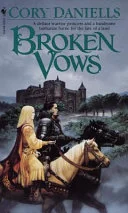
<p>### What It Is</p><p>Cory Daniells's "Broken Vows," first published in 1999, plunges readers into a world where ancient races, devastating conflict, and forbidden desire intertwine. It follows Imoshen, one of the last of the T'En, an extraordinary lineage possessing potent healing abilities and a history of ruling Fair Isle for six centuries. The narrative ignites when this civilization is shattered by invading forces and their ruthless general.</p><p></p><p>### Who It's For</p><p>This work is suited for individuals drawn to epic fantasy narratives infused with elements of esoteric lore and ancient mysteries. Readers who appreciate complex character arcs, particularly those exploring themes of loss, duty, and the burden of heritage, will find "Broken Vows" compelling. It appeals to those who enjoy exploring the dynamics of power, the consequences of war on unique cultures, and the internal struggles of protagonists facing overwhelming odds.</p><p></p><p>### Historical Context</p><p>Published at the cusp of the new millennium, "Broken Vows" emerged during a period of prolific fantasy literature. While not directly tied to a specific esoteric movement of 1999, it taps into the enduring interest in ancient civilizations and magical lineages that characterized much of the genre. Authors like J.R.R. Tolkien had previously established a precedent for world-building with deep historical and mythological underpinnings, a path Daniells appears to follow with the T'En. The work reflects a broader trend of exploring 'lost races' and their societal structures within speculative fiction.</p><p></p><p>### Key Concepts</p><p>The novel centers on the concept of the T'En, an ancient, powerful race with inherent healing gifts, whose dominance over Fair Isle spans six centuries. Their downfall at the hands of invading soldiers introduces themes of cultural annihilation and the loss of ancient knowledge. The narrative also explores the potent and often destructive force of desire, particularly in the context of war and enchantment, suggesting that internal passions can be as treacherous as external enemies. The protagonist, Imoshen, embodies the struggle to maintain identity and purpose amidst profound destruction.</p>
⭐ Reader Reviews
Honest opinions from readers who have explored this book.
❓ Frequently Asked Questions
When was Cory Daniells's 'Broken Vows' first published?
Cory Daniells's 'Broken Vows' was first published in 1999, placing it within the vibrant fantasy literature landscape of the late 20th century.
What are the unique abilities of the T'En race in 'Broken Vows'?
The T'En, an ancient race featured in 'Broken Vows,' possess extraordinary healing gifts and historically ruled Fair Isle for six centuries.
Who is the main protagonist of 'Broken Vows'?
The central protagonist is Imoshen, one of the last of the T'En, who must confront the destruction of his world and people.
What is the primary conflict driving the plot of 'Broken Vows'?
The primary conflict stems from an invasion of Fair Isle by foreign soldiers led by a relentless general, leading to the downfall of the T'En civilization.
What does the blurb suggest about the role of desire in 'Broken Vows'?
The original blurb suggests that desire is presented as a form of 'dark enchantment' and the most 'treacherous magic' within the world of 'Broken Vows'.
Where is the story of 'Broken Vows' set?
The story of 'Broken Vows' is set on Fair Isle, the ancient domain of the T'En race.
🔮 Key Themes & Symbolism
Legacy of Ancient Races
The narrative deeply explores the concept of the T'En, an ancient lineage whose six-century dominion over Fair Isle is shattered. Their unique healing gifts and historical significance position them as custodians of lost knowledge and a fading era. Imoshen, as one of the last T'En, embodies the struggle to preserve the legacy of his people against overwhelming destructive forces, highlighting themes of cultural survival and the weight of ancestral heritage.
Desire as Treacherous Magic
Beyond physical conflict, 'Broken Vows' posits desire as a potent and perilous force, akin to dark enchantment. This internal magic is presented as a significant threat, capable of undermining individuals and societies as much as any invading army. The book examines how personal desires, when unchecked or manipulated, can lead to ruin, adding a layer of psychological and esoteric conflict to the external war narrative.
Consequences of War and Invasion
The story critically examines the impact of military invasion on a unique civilization. The ruthless general and his soldiers represent an external force bent on conquest, leading to the immediate destruction of the T'En's world. This theme focuses on the loss of culture, displacement, and the profound trauma inflicted upon survivors, using the T'En's downfall as a stark illustration of the devastating effects of war on ancient societies.
Protagonist's Burden
Imoshen's character arc is defined by the immense burden he carries as one of the last T'En. Possessing extraordinary healing gifts, he is thrust into a role of survival and potential resistance against overwhelming odds. His internal struggle reflects the profound loss of his people and the challenge of finding purpose and identity in a world irrevocably changed by invasion and destruction.
💬 Memorable Quotes
“In a world of danger and dark enchantment, the most treacherous magic is desire.”
— This statement frames desire not merely as an emotion but as a powerful, potentially destructive force akin to supernatural influence, central to the book's esoteric themes.
“Imoshen was one of the last of the legendary T'En, an ancient race who'd ruled Fair Isle for six centuries.”
— This establishes Imoshen's unique lineage and the historical significance of the T'En, highlighting their long-standing power and the precariousness of their existence as the story begins.
“All that Imoshen holds dear is gone...lost to invading soldiers and the relentless general who led them.”
— This powerfully conveys the immediate devastation and loss experienced by the protagonist, setting the stage for his journey through grief and potential vengeance.
“Tulkhan had heard tales of the T'En...of exotic women whose wine-dark eyes coul”
— This snippet hints at the allure and mystery surrounding the T'En from an outsider's perspective, suggesting a rich cultural lore that fuels legend and perhaps envy.
“Trained in the arts of war and possessed of extraordinary healing gifts.”
— This duality in Imoshen's character—both a warrior and a healer—suggests internal conflict and a complex skillset vital for navigating the dangers he faces.
🌙 Esoteric Significance
Tradition
While "Broken Vows" does not explicitly align with a single esoteric tradition, it draws upon archetypal themes common in Western esotericism, particularly concerning ancient, powerful races and the concept of hidden knowledge. The T'En's extraordinary healing gifts and their long-standing rule suggest a connection to primordial powers or a forgotten golden age, reminiscent of certain Gnostic or Hermetic ideas about ancient, pure lineages that have fallen from grace. The narrative's focus on internal 'magic' like desire also echoes mystical traditions that emphasize self-mastery and the control of inner forces.
Symbolism
The T'En themselves can be interpreted as symbols of ancient wisdom, lost purity, and a connection to primal forces, whose decline represents the fall from a more enlightened state. Fair Isle, their domain, symbolizes a sacred or protected land, a microcosm of a world order that is now threatened. The 'wine-dark eyes' mentioned in the blurb might symbolize depth, mystery, and a connection to potent, perhaps dangerous, emotions or ancient knowledge, hinting at a sensuous and powerful aspect of the T'En.
Modern Relevance
Contemporary fantasy authors and readers interested in exploring the dynamics of ancient civilizations and their potential demise continue to find resonance in works like "Broken Vows." The novel's exploration of internal struggles, particularly desire as a destructive force, aligns with modern psychological and spiritual discussions on self-awareness and emotional regulation. Its themes of cultural survival and the burden of heritage also speak to ongoing global conversations about identity and the preservation of traditions in the face of modernization and conflict.
👥 Who Should Read This Book
["• Fantasy enthusiasts seeking narratives with deep lore about ancient races and their history, particularly those intrigued by the T'En's unique healing gifts and six-century rule.", "• Readers interested in exploring the esoteric concept of desire as a destructive force, presented as 'dark enchantment' within a world of conflict and magic.", '• Individuals drawn to stories of survival and resilience in the face of catastrophic invasion, focusing on the personal impact of war on protagonists like Imoshen.']
📜 Historical Context
Published in 1999, "Broken Vows" emerged during a period where epic fantasy was experiencing a resurgence, building on the foundations laid by authors like J.R.R. Tolkien. The late 90s saw a growing interest in complex world-building, ancient lore, and the exploration of 'lost races' or hidden civilizations within speculative fiction. While not directly aligned with a specific esoteric movement like Theosophy or Hermeticism, the novel taps into a broader cultural fascination with ancient powers and forgotten histories. It appeared in a landscape that also included authors like Robert Jordan and George R.R. Martin, who were crafting vast, intricate sagas. There is no widely documented specific reception event or major censorship controversy surrounding "Broken Vows" upon its initial release, suggesting it found its niche within the existing fantasy readership rather than igniting widespread debate or critical acclaim from established literary circles.
📔 Journal Prompts
Imoshen's dual nature as trained in war and possessing healing gifts.
The concept of desire as the most treacherous magic.
The six centuries of T'En rule over Fair Isle.
The immediate loss of all Imoshen holds dear.
The relentless general leading the invading soldiers.
🗂️ Glossary
T'En
An ancient, legendary race possessing extraordinary healing gifts, who historically ruled Fair Isle for six centuries before their civilization was destroyed.
Fair Isle
The primary setting for 'Broken Vows,' serving as the ancient domain of the T'En race for a period of six centuries.
Dark Enchantment
A concept within 'Broken Vows' suggesting magic that is not only powerful but also morally corrupting or dangerous, particularly associated with desire.
Healing Gifts
Extraordinary innate abilities possessed by the T'En, notably Imoshen, which suggest a connection to life-force manipulation or restorative powers.
Relentless General
The antagonist leading the invading forces responsible for the destruction of the T'En civilization and the loss Imoshen experiences.
Arts of War
Refers to the combat training and strategic knowledge possessed by Imoshen, indicating a capacity for conflict alongside his healing abilities.
Treacherous Magic
A description of desire within the novel, implying it functions as a potent, dangerous, and potentially self-destructive force.