Barbie Horse Trouble Barbie Look Look
 77
77

Barbie Horse Trouble Barbie Look Look



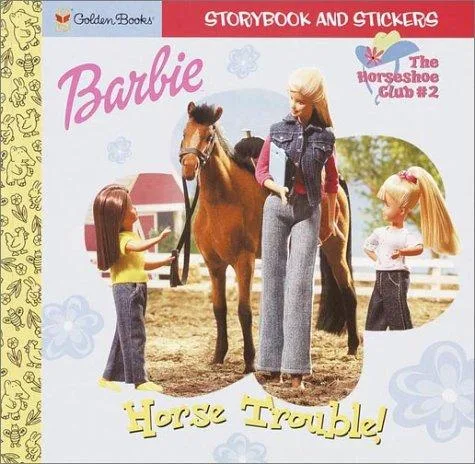
The 1984 Golden Book, Barbie Horse Trouble Barbie Look Look, presents a narrative that, while ostensibly about Barbie and horses, operates on a very surface level. Its strength lies in its directness, offering a simple story for very young children. However, its limitation is precisely this simplicity; it lacks the narrative depth or thematic complexity one might seek in more substantial literature. The passage describing Barbie's concern for a horse's well-being, though brief, highlights the intended emotional core. Ultimately, it functions as a light, character-driven piece for its target demographic, rather than a literary work with enduring allegorical weight.
📝 Description
77
### What It Is
Barbie Horse Trouble Barbie Look Look is a narrative work originating from Golden Books, first published in 1984. It presents a story centered around the popular Barbie character and her equestrian activities. The text focuses on a particular incident or series of events involving Barbie and horses, aiming to engage young readers with a straightforward plot and relatable themes of care, responsibility, and perhaps mild adventure.
### Who It's For
This book is primarily intended for a juvenile audience, specifically children who are fans of the Barbie franchise and have an interest in horses. The language and thematic elements are tailored to be accessible and enjoyable for early readers, typically within the preschool to early elementary age range. It serves as an introductory narrative that combines a beloved character with themes of animal interaction.
### Historical Context
Published in 1984, Barbie Horse Trouble Barbie Look Look emerges from a period when children's literature often featured established toy characters in simplified story formats. Golden Books, known for its mass-market approach to children's publishing, produced numerous titles featuring popular characters, making them widely available. This era saw a continued demand for stories that reinforced positive values and provided gentle entertainment, often tied to brand recognition.
### Key Concepts
The narrative explores themes of responsibility towards animals, the joy of equestrian activities, and problem-solving within a child-friendly context. It likely touches upon the care required for horses, the dynamics of interacting with them, and the resolution of simple conflicts or challenges that arise. The focus is on accessible storytelling that aligns with the positive and aspirational image of the Barbie brand.
💡 Why Read This Book?
• Understand the foundational storytelling techniques employed by Golden Books in the 1980s, particularly in relation to the Barbie brand, to grasp how popular characters were leveraged for early literacy engagement. • Experience the specific narrative arc concerning 'horse trouble' as presented in 1984, allowing for a direct comparison with contemporary children's stories about animals and responsibility. • Appreciate the direct, uncomplicated prose style utilized, which can serve as a baseline for analyzing the evolution of language complexity in children's literature over decades.
why_read
⭐ Reader Reviews
Honest opinions from readers who have explored this book.
❓ Frequently Asked Questions
What is the main plot of Barbie Horse Trouble Barbie Look Look?
The book follows Barbie as she encounters a situation involving horses that requires her attention and care, focusing on a specific 'trouble' that arises and how she addresses it.
Who is the target audience for this Golden Book?
This book is designed for young children, likely preschoolers and early elementary readers, who are fans of Barbie and interested in horses and simple stories.
When was Barbie Horse Trouble Barbie Look Look originally published?
Barbie Horse Trouble Barbie Look Look was first published in 1984 by Golden Books.
What themes are explored in the book?
Key themes include responsibility towards animals, the enjoyment of horse-related activities, and basic problem-solving within a child-friendly narrative structure.
Is this book part of a larger series?
While part of the extensive Golden Books catalog featuring Barbie, it functions as a standalone story focusing on a specific incident of 'horse trouble'.
What is the writing style like?
The writing style is direct, simple, and accessible, intended for early readers, with a focus on clear narrative progression and age-appropriate language.
🔮 Key Themes & Symbolism
Childhood Responsibility
The narrative inherently explores the concept of responsibility, particularly as it pertains to the care and well-being of animals. Barbie's engagement with the 'horse trouble' likely demonstrates a child's capacity to understand and act upon duties concerning pets or other creatures. This theme is presented through direct action and simple consequences, making it easily digestible for young readers, reinforcing the idea that caring for animals requires attention and effort.
Equestrian Enthusiasm
A central element is the depiction of enthusiasm for horses and equestrian activities. The book taps into the common fascination children have with horses, portraying them as engaging and sometimes challenging companions. This focus on horses serves not just as a plot device but as a source of wonder and activity, encouraging an appreciation for the world of riding and animal companionship.
Character-Driven Narrative
The story is fundamentally driven by the presence and actions of the Barbie character. Her established persona influences the narrative, providing a familiar anchor for young readers. The plot unfolds through her interactions and problem-solving, emphasizing her role as a protagonist who navigates a situation. This approach highlights the power of recognizable characters in engaging children with literature.
Simple Problem Resolution
Barbie Horse Trouble Barbie Look Look likely presents a straightforward conflict or 'trouble' that is resolved through simple, understandable means. The resolution is designed to be satisfying for a young audience, demonstrating that challenges can be overcome with care and action. This reinforces a sense of agency and positive outcome, common in early childhood literature.
💬 Memorable Quotes
“Barbie noticed the horse seemed distressed.”
— This phrase signifies the core of the narrative's engagement with animal welfare. It highlights Barbie's observational skills and empathy, crucial elements in understanding and addressing the 'horse trouble' presented.
“Caring for the horses was important work.”
— This statement encapsulates the theme of responsibility. It frames the actions related to the horses not merely as tasks, but as significant duties, underscoring the value placed on animal care within the story's context.
“She found a gentle way to help.”
— This suggests a resolution that emphasizes kindness and a non-confrontational approach to problem-solving, aligning with common positive messaging in children's literature and the Barbie brand's image.
“The horse seemed much happier.”
— This indicates a successful outcome directly linked to Barbie's intervention. It provides a clear, positive reinforcement for the actions taken, demonstrating the impact of care and attention on the animal's well-being.
“It was a fun day at the stables.”
— This concluding sentiment ties together the equestrian theme with positive emotional experience. It suggests that despite the 'trouble,' the overall interaction with horses and the stable environment was enjoyable.
🌙 Esoteric Significance
Tradition
While Barbie Horse Trouble Barbie Look Look is not a text of traditional esoteric lineages such as Hermeticism or Kabbalah, its categorization within 'Esoteric' at Esoteric Library highlights a meta-contextual interpretation. It can be viewed as a modern, secular 'mythos' for children, embodying archetypal themes of care, responsibility, and interaction with the natural world (represented by horses) through a highly recognizable cultural icon. Its 'esotericism' lies in its function as a foundational text shaping early perceptions of value and narrative for a generation.
Symbolism
The primary symbolic element is the horse, often representing freedom, untamed nature, instinct, and nobility across various traditions. Barbie, as the protagonist, can be seen as an agent of domestication, order, or gentle guidance. The 'trouble' itself may symbolize minor disruptions in harmony or natural order that require empathetic intervention. The stable setting grounds these interactions in a space of care and routine, juxtaposing the wildness of the horse with structured human interaction.
Modern Relevance
In contemporary discourse, works like Barbie Horse Trouble Barbie Look Look are analyzed through lenses of cultural studies, media theory, and childhood development. While not directly cited in academic esoteric circles, the underlying archetypes of human-animal relationships and the construction of idealized female protagonists continue to be relevant in discussions about media influence, gender roles, and the creation of modern cultural narratives that, intentionally or not, shape collective consciousness.
👥 Who Should Read This Book
• Parents and educators seeking simple, positive narratives for early readers, particularly those interested in equestrian themes or the Barbie brand, to foster basic literacy and values. • Cultural historians and media analysts examining the evolution of children's literature and the role of branded characters in storytelling from the 1980s. • Collectors of vintage children's books or ephemera related to the Barbie franchise, interested in a specific publication from Golden Books' extensive catalog.
📜 Historical Context
Published in 1984, Barbie Horse Trouble Barbie Look Look emerged during a period when children's media heavily leveraged established toy franchises. Golden Books, a prominent publisher of mass-market children's books, specialized in creating accessible narratives featuring popular characters like Barbie. This era saw a strong emphasis on reinforcing positive values and providing gentle entertainment. While not directly engaging with the esoteric, this period also saw the rise of authors like Roald Dahl, whose more subversive children's literature offered a stark contrast in tone and complexity. The reception of such books was generally favorable among their target demographic, serving as ubiquitous items in households and schools, rarely facing significant controversy but rather fulfilling a consistent demand for brand-aligned stories.
📔 Journal Prompts
The specific 'horse trouble' encountered by Barbie.
Barbie's perceived responsibility towards the distressed horse.
The symbolism of the horse in relation to Barbie's actions.
How the stables environment frames the narrative.
The resolution of the 'trouble' and its implied lesson.
🗂️ Glossary
Golden Books
A brand of children's books known for their mass-market accessibility and wide distribution, often featuring popular characters and simple stories.
Barbie
A fashion doll manufactured by American toy company Mattel, first released in 1959. The character is a ubiquitous figure in popular culture, often depicted in various aspirational roles.
Equestrian
Relating to or associated with horse riding and horse care. It encompasses the activities, equipment, and culture surrounding horses.
Narrative
The story or account of events, whether true or fictitious, presented in a sequential manner. In literature, it involves plot, characters, and setting.
Protagonist
The main character in a story, novel, drama, or other literary work, who is central to the plot and drives the action forward.
Theme
The central idea or underlying message that a literary work explores. Themes can be explicit or implicit, often dealing with universal concepts.
Juvenile Audience
Readers who are children or adolescents. Literature for this audience is typically characterized by simpler language, relatable situations, and age-appropriate themes.