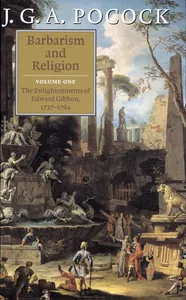
Barbarism and religion

 77
77

Barbarism and religion
Pocock's "Barbarism and Religion" offers a formidable intellectual challenge, dissecting the Enlightenment's self-conception with surgical precision. The book's greatest strength lies in its granular analysis of how seemingly distinct concepts like "barbarism" and "religion" were instrumentalized to forge European identity. Pocock demonstrates, for instance, how the condemnation of "barbarian" practices abroad often served to legitimize the very "religious" fervor of Enlightenment reason at home. A limitation, however, is the sheer density of the prose, which at times can obscure the central arguments for readers less steeped in 18th-century political philosophy. The extended discussion of figures like David Hume and Edward Gibbon, while illuminating, requires sustained concentration. A particularly striking passage examines the "philosophical history" of the 18th century, revealing its dual role as both a tool for progress and a means of reinforcing existing hierarchies. Ultimately, it is a work of immense scholarly value, though demanding in its execution.
📝 Description
77
### What It Is
J. G. A. Pocock's "Barbarism and Religion" is a monumental scholarly examination of the Enlightenment's intellectual underpinnings, specifically its complex and often contradictory relationship with religious thought and practice. The work probes how concepts of "barbarism" and "religion" were constructed and deployed during this period, influencing political theory, historical narratives, and cultural attitudes. Pocock meticulously traces the evolution of these ideas, demonstrating their profound impact on shaping Western self-perception and its understanding of "other" societies. The book is less a narrative and more a deep analytical dive into the philosophical and historical currents that defined an era.
### Who It's For
This text is primarily aimed at advanced scholars and graduate students in history, political theory, and religious studies. Those with a robust background in 18th-century intellectual history and a keen interest in the historiography of the Enlightenment will find the most value. It is also suitable for independent researchers and critics of Western thought who seek to understand the deep roots of contemporary debates about secularism, cultural difference, and the legacy of colonialism. Readers should be prepared for dense argumentation and a reliance on primary source analysis.
### Historical Context
Published in 1999, "Barbarism and Religion" emerged during a period of intense re-evaluation of Enlightenment ideals and their subsequent historical impact. Pocock engaged with ongoing scholarly debates, particularly those concerning the nature of "civilization" and the critique of "progress." His work implicitly challenged earlier, more celebratory accounts of the Enlightenment by highlighting its internal tensions and its role in constructing categories that justified colonial expansion. The intellectual climate was influenced by post-structuralist critiques and a growing awareness of post-colonial perspectives, prompting scholars to reconsider foundational concepts in Western thought.
### Key Concepts
Pocock explores the concept of "barbarism" not as a fixed descriptor but as a fluid rhetorical tool used to delineate "civilized" European identity against perceived "savagery" or "superstition." The "religion" discussed is not solely theological doctrine but also encompasses the emerging secular "religions" of reason and progress that often displaced traditional faiths. The work examines the "philosophical history" approach, where historical understanding is employed to critique present-day assumptions. Pocock analyzes how thinkers grappled with the "historical" nature of human societies, recognizing that concepts and practices evolve rather than being static.
💡 Why Read This Book?
• Gain a nuanced understanding of how "barbarism" and "religion" were defined and weaponized during the Enlightenment, influencing colonial discourse and the construction of European identity, as detailed in the analysis of 18th-century thinkers. • Appreciate the critical methodology of "philosophical history" as practiced by figures like Gibbon, learning how historical narratives were shaped to serve specific intellectual and political ends. • Grasp the intricate intellectual landscape of the 1700s, moving beyond simplistic notions of "progress" to see the inherent contradictions and anxieties within Enlightenment thought.
⭐ Reader Reviews
Honest opinions from readers who have explored this book.
❓ Frequently Asked Questions
What is J. G. A. Pocock's primary argument in "Barbarism and Religion" regarding the Enlightenment?
Pocock argues that the Enlightenment's self-definition relied heavily on constructing "barbarism" as an "other" and that "religion" itself became a flexible concept, often used to critique traditional faiths or even to describe secular ideologies of progress.
Which historical figures does Pocock extensively analyze in "Barbarism and Religion"?
The work extensively analyzes key figures of the Enlightenment and its intellectual precursors, including David Hume, Edward Gibbon, and others who shaped the discourse on civilization, history, and religion.
How does "Barbarism and Religion" relate to the concept of "philosophical history"?
Pocock examines "philosophical history" as a genre and intellectual practice prevalent in the 18th century, showing how it was used to interpret human progress, critique existing institutions, and establish normative standards for civilization.
What is the significance of "barbarism" as a concept in Pocock's analysis?
Pocock illustrates that "barbarism" was not a fixed category but a rhetorical device used to legitimize European superiority and to distinguish the "civilized" self from perceived "primitive" or "superstitious" others.
When was "Barbarism and Religion" first published?
The first volume of J. G. A. Pocock's "Barbarism and Religion" was first published in 1999.
Does the book discuss the role of Christianity within the Enlightenment?
Yes, the book delves into the complex and often critical stance Enlightenment thinkers took towards Christianity, examining how it was viewed in relation to reason, superstition, and the historical development of societies.
🔮 Key Themes & Symbolism
Constructing "The Other"
Pocock meticulously details how the Enlightenment, while espousing universal reason, actively constructed "barbarism" as its antithesis. This involved defining external cultures and societies as primitive, superstitious, or lacking in "civilized" virtues. This process of othering was not merely descriptive but served a crucial function in solidifying the identity of the enlightened European subject. The work explores how notions of "savagery" were applied to non-European peoples and even to internal dissenters, demonstrating the rhetorical power of "barbarism" in shaping political and social hierarchies during the 18th century.
The Evolving Concept of "Religion"
The book analyzes "religion" not just as a set of theological doctrines but as a dynamic concept within Enlightenment discourse. Pocock shows how thinkers like Hume questioned traditional religious authority, while others developed "secular religions" of progress or reason. This included examining how "superstition" became a label for perceived irrational faith, contrasting it with the "enlightened" approach. The work traces the shift from viewing religion as a primary social force to seeing it as a historical phenomenon or a psychological disposition, influencing societal development.
Philosophical History's Dual Nature
Pocock examines "philosophical history" as a key Enlightenment genre, exemplified by writers like Gibbon. This approach sought to understand the sweep of human events through reason and to derive lessons for contemporary society. However, Pocock reveals its inherent tension: while aiming for critical progress, it often reinforced existing prejudices and power structures. The book demonstrates how these historical narratives were used to legitimize European dominance and to create a teleological view of civilization, where "barbarism" represented earlier stages of development.
Enlightenment Self-Definition
At its core, "Barbarism and Religion" is about how the Enlightenment defined itself. Pocock illustrates that this self-definition was achieved through a dialectical process, contrasting its own "rational" principles with what it deemed "barbaric" or "superstitious" religious practices. The work highlights the anxieties and internal contradictions within this project, showing that the Enlightenment was not a monolithic movement but a complex intellectual field rife with debate and self-critique, particularly concerning its relationship with historical traditions.
💬 Memorable Quotes
“The Enlightenment was a discourse in which the term 'barbarism' served to articulate a concept of "civilization" that was European and Christian.”
— This highlights Pocock's argument that "civilization" was not a neutral descriptor but a self-serving construct, defined in opposition to perceived "barbaric" traits often associated with non-European or non-Christian cultures by Enlightenment thinkers.
“The philosophical historian of the 18th century was often also a critic of religion.”
— This points to the close relationship between historical analysis and critiques of traditional religious beliefs during the Enlightenment. Many scholars used history to question dogma and establish reason as a superior guide.
“The concept of "progress" itself could become a form of "religion."”
— This suggests that the Enlightenment's faith in human advancement and reason could function with a similar intensity and dogma to traditional religious belief systems, offering a new framework for understanding the world.
“To understand the "historical" nature of man was to understand his capacity for change and development.”
— This reflects the Enlightenment's growing emphasis on historical consciousness, recognizing that human societies, ideas, and institutions are not static but evolve over time, a key insight for "philosophical history."
“Edward Gibbon's work represents a pinnacle of "philosophical history" in its critique of "barbarism" and "superstition."”
— This emphasizes Gibbon's role as a key figure in Pocock's analysis, showcasing how his monumental historical works exemplified the Enlightenment's method of using historical narrative to critique religious influence and define civilization.
🌙 Esoteric Significance
Tradition
While not explicitly aligned with a specific esoteric tradition like Hermeticism or Gnosticism, Pocock's work is crucial for understanding the historical roots of Western esotericism's marginalization. The Enlightenment's emphasis on rationalism and its critique of "superstition" often led to the dismissal or condemnation of mystical and occult traditions. Pocock's analysis of how "religion" was redefined and how "barbarism" was used to label perceived irrationality provides context for understanding why esoteric philosophies were often relegated to the fringes of intellectual discourse during this pivotal era.
Symbolism
The primary "symbolism" explored is not of magical sigils but of conceptual frameworks. "Barbarism" functions as a symbolic representation of the irrational, the untamed, and the "other," used to demarcate the boundaries of "civilized" thought. "Religion," in Pocock's analysis, becomes a symbol for deeply held beliefs, whether traditional theological ones or the new "religions" of reason and progress. The Enlightenment itself is symbolized by the quest for light and knowledge, yet this light casts shadows, revealing the "barbaric" elements it sought to suppress or rationalize.
Modern Relevance
Pocock's work remains highly relevant for contemporary esoteric practitioners and scholars who grapple with the legacy of secularization and the Enlightenment's impact on Western culture. His analysis of how "rationality" was privileged over other forms of knowing helps explain the ongoing tension between esoteric traditions and mainstream academia or society. Modern thinkers exploring the resurgence of interest in mysticism, alternative spiritualities, and critiques of scientism can draw on Pocock's historical dissection of how these debates originated in the 18th century, informing their understanding of current cultural dynamics.
👥 Who Should Read This Book
• Students of intellectual history and the Enlightenment: Gain a sophisticated understanding of how "barbarism" and "religion" were conceptualized, moving beyond simplistic narratives of progress. • Comparative religion scholars: Learn how Enlightenment thinkers redefined "religion" and "superstition," providing context for the historical treatment of diverse belief systems. • Critical theorists and cultural critics: Understand the historical construction of "civilization" and "otherness," informing contemporary analyses of power, identity, and discourse.
📜 Historical Context
Published in 1999, J. G. A. Pocock's "Barbarism and Religion" emerged during a period of intense scholarly re-evaluation of the Enlightenment's legacy. The late 20th century saw a surge in post-colonial theory and critical engagement with Western narratives of progress, prompting a closer look at the categories used to define "civilization." Pocock's work engaged with contemporary debates surrounding multiculturalism and the critique of Eurocentrism, implicitly challenging earlier, more celebratory accounts of Enlightenment universalism. Key contemporaries whose work informed or paralleled this re-examination include thinkers like Michel Foucault, who analyzed systems of power and knowledge, and Edward Said, whose "Orientalism" (1978) critiqued the construction of the East as a Western "other." Pocock's nuanced approach, focusing on the intellectual history of concepts like "barbarism" and "religion," offered a vital counterpoint to more sweeping critiques, emphasizing the internal complexities and contradictions within Enlightenment thought itself.
📔 Journal Prompts
The Enlightenment's critique of "religion" as "superstition."
Edward Gibbon's use of "philosophical history."
The rhetorical function of "barbarism" in defining European identity.
Secular "religions" of reason and progress.
The Enlightenment's paradoxical relationship with "barbarism."
🗂️ Glossary
Philosophical History
An 18th-century genre of historical writing that sought to interpret human events through reason, often aiming to derive moral or political lessons for contemporary society and to explain the development of civilization.
Barbarism
In the context of the Enlightenment, a term used to denote perceived lack of civilization, reason, or refinement, often applied to non-European cultures or pre-modern societies to establish a contrast with European "enlightenment."
Superstition
A label applied by Enlightenment thinkers to traditional religious beliefs, practices, or folklore that were deemed irrational, unfounded, or hindrances to progress and reason.
Enlightenment
An 18th-century intellectual and cultural movement emphasizing reason, individualism, skepticism towards traditional authority, and the pursuit of knowledge and progress.
Civilization
A concept central to Enlightenment discourse, representing a state of societal development characterized by reason, order, law, and cultural refinement, often defined in opposition to "barbarism."
Secular Religion
A belief system or ideology, often arising during the Enlightenment, that replaces or rivals traditional religious faith, typically centered on concepts like reason, progress, humanity, or the state.
Historical Consciousness
An awareness of the past as distinct from the present, and an understanding that societies, ideas, and institutions change and develop over time.