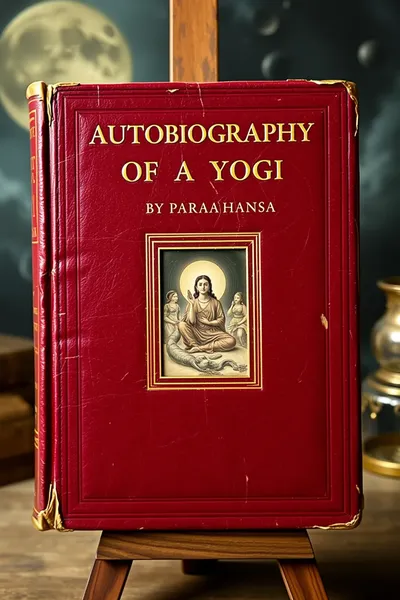
Autobiography of a Yogi
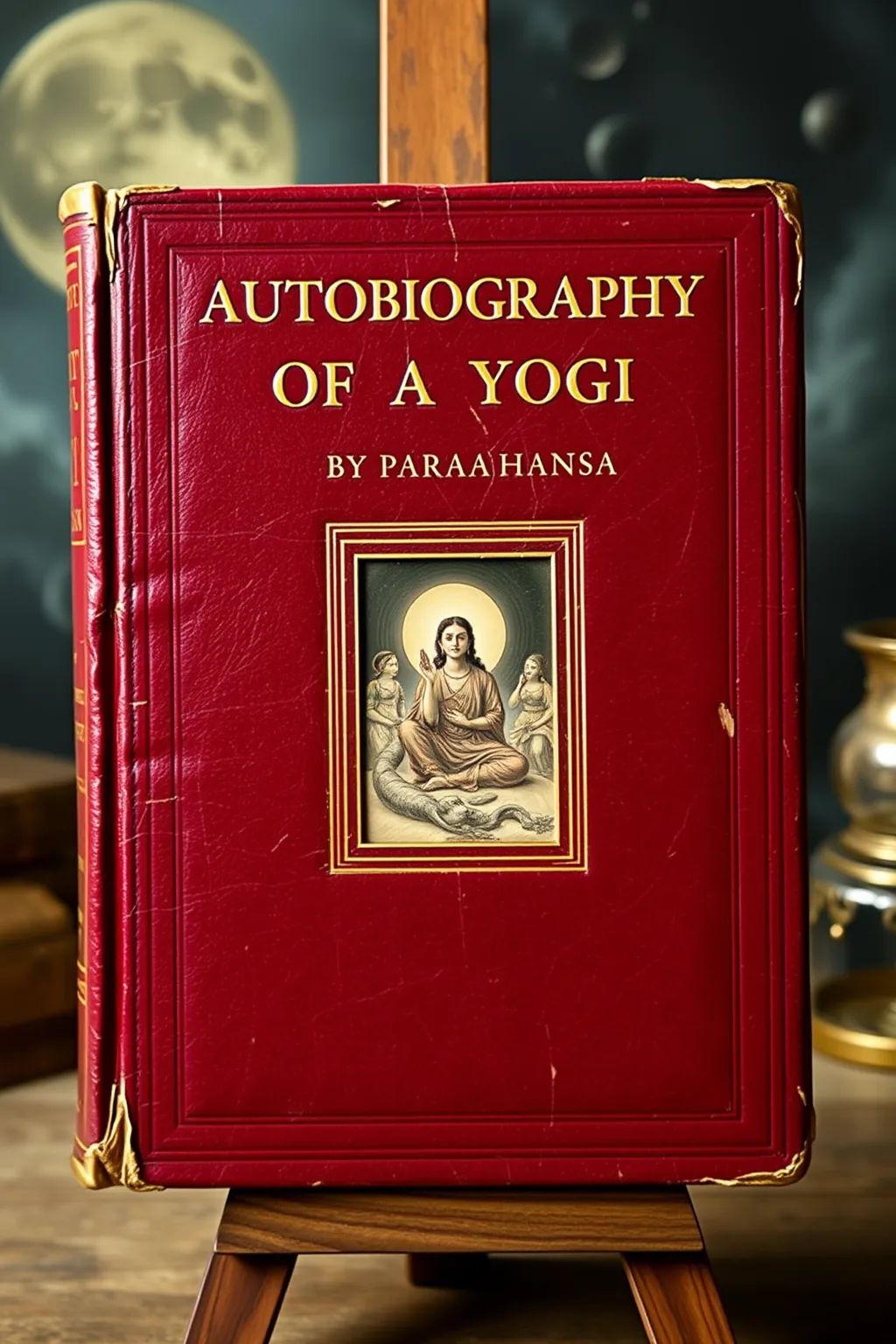
 71
71

Autobiography of a Yogi
Yogananda’s autobiography is more than a mere recounting of a life; it is an initiation into a spiritual cosmology. The sheer breadth of encounters, from the enigmatic Mahavatar Babaji to the scientific skepticism of his Western disciples, forms the narrative's backbone. A particular strength lies in the vivid descriptions of yogic feats, presented not as mere parlor tricks but as manifestations of deep spiritual attainment. However, the narrative occasionally treads a line where extraordinary claims might, for some readers, overshadow the philosophical underpinnings. The passage detailing Lahiri Mahasaya’s transmission of Kriya Yoga is particularly illuminating for understanding the lineage. It remains a foundational text for many exploring the guru-disciple dynamic.
Verdict: A foundational spiritual memoir that bridges East and West with compelling personal narrative.
📝 Description
71
### What It Is Autobiography of a Yogi is the life story of Paramahansa Yogananda, a Hindu monk and guru. First published in 1946, it chronicles his spiritual quest from his childhood in Gorakhpur, India, through his encounters with various saints and yogis, to his eventual journey to the United States in 1920 to spread the teachings of Kriya Yoga.
### Who It's For This work appeals to seekers of spiritual knowledge, practitioners of yoga and meditation, and those interested in the intersection of Eastern philosophy and Western life. It offers a narrative account of one individual's deep immersion in spiritual disciplines and his efforts to bridge Eastern and Western thought.
### Historical Context Published in the mid-20th century, the autobiography emerged during a period of increasing Western interest in Eastern religions and philosophies, partly fueled by movements like Theosophy and the Vedanta Societies. Yogananda's work provided a personal and accessible entry point into the complex world of Indian spirituality for a global audience.
### Key Concepts The book introduces readers to core tenets of Yoga and Vedanta philosophy, including the concept of Self-Realization (union with the divine), the role of a guru, the practice of Kriya Yoga as a specific meditation technique, and the interconnectedness of all life. It presents a worldview where miracles and spiritual phenomena are understood within a larger cosmic order.
💡 Why Read This Book?
• Understand the principles of Kriya Yoga, a specific meditation technique transmitted through a lineage of gurus, as explained through Yogananda's personal experiences. • Gain insight into the guru-disciple relationship, a central aspect of Indian spiritual traditions, exemplified by Yogananda's interactions with his master, Sri Yukteswar Giri. • Explore the concept of Self-Realization, the book's ultimate aim, and witness its portrayal through accounts of spiritual masters and their extraordinary abilities.
⭐ Reader Reviews
Honest opinions from readers who have explored this book.
❓ Frequently Asked Questions
When was Autobiography of a Yogi first published?
Autobiography of a Yogi was first published in 1946 by the Philosophical Library in New York City.
What is Kriya Yoga as described in the book?
Kriya Yoga is presented as an ancient meditation technique, a key to spiritual evolution, which Yogananda learned from his guru and introduced to the West.
Who is Sri Yukteswar Giri?
Sri Yukteswar Giri was Paramahansa Yogananda's guru, a prominent yogi and spiritual teacher who guided Yogananda on his path to Self-Realization.
Does the book discuss miracles?
Yes, the autobiography recounts numerous accounts of seemingly miraculous events and abilities displayed by saints and yogis, explaining them within a spiritual framework.
What is the main goal of the Autobiography of a Yogi?
The book's primary aim is to introduce the spiritual science of Yoga and the concept of Self-Realization to a Western audience.
Is Yogananda's autobiography available online for free?
Yes, the Autobiography of a Yogi is available to read for free online through various spiritual organizations, often provided as a public service.
🔮 Key Themes & Symbolism
The Guru-Disciple Bond
The narrative deeply explores the sacred relationship between the guru and disciple, central to Indian spiritual traditions. Yogananda's accounts of his unwavering devotion to Sri Yukteswar Giri illustrate how this profound connection serves as a conduit for spiritual transmission and guidance. The guru is not merely a teacher but a spiritual guide, essential for navigating the complexities of spiritual development and achieving Self-Realization.
Kriya Yoga and Spiritual Evolution
Central to the book is the introduction of Kriya Yoga, presented as an ancient science of meditation designed to accelerate spiritual evolution. Yogananda details its transmission through an unbroken lineage from Mahavatar Babaji to Lahiri Mahasaya and Sri Yukteswar. The practice is described as a method to harmonize the body's subtle energies and expand consciousness, leading to direct experience of the divine.
Self-Realization as the Ultimate Goal
The autobiography consistently points towards Self-Realization—the direct, experiential understanding of one's true divine nature—as the highest human attainment. Yogananda's life story is a testament to this pursuit, showcasing how through dedicated practice, devotion, and the grace of a guru, one can achieve union with the Infinite.
The Interconnectedness of Existence
The work presents a worldview where the material and spiritual realms are not separate but interconnected. Yogananda describes phenomena and encounters that suggest a cosmic order governed by spiritual laws, where consciousness is primary and the perceived reality is a manifestation of a greater divine intelligence.
💬 Memorable Quotes
“The soul is eternally pure and immortal.”
— This statement underscores the Vedantic principle that the true self, the soul, is untouched by material conditions or the cycle of birth and death, existing in a state of inherent divinity.
“I want to live in America, where the spiritual light of the East can gradually illumine the West.”
— This expresses Yogananda's core mission: to act as a bridge between Eastern spiritual wisdom and Western material culture, believing in the potential for mutual enrichment.
“The shortest path to enlightenment is through devotion.”
— An interpretation highlighting the importance of Bhakti Yoga, or the yoga of devotion, suggesting that heartfelt surrender and love for the Divine can be a direct and potent path to spiritual realization.
“The mind is a force, and by thinking, we can shape our destiny.”
— This paraphrased concept points to the power of thought and affirmation in influencing one's life, a principle often discussed in spiritual psychology and yogic philosophy.
“Miracles are a natural outcome of spiritual development.”
— This interpretation suggests that extraordinary phenomena are not supernatural but rather logical extensions of a highly developed consciousness and mastery over the laws of nature.
🌙 Esoteric Significance
Tradition
Autobiography of a Yogi is deeply rooted in the Hindu yogic and Vedantic traditions, particularly the lineage of Kriya Yoga as passed down from Mahavatar Babaji. It synthesizes elements of Jnana Yoga (path of knowledge), Bhakti Yoga (path of devotion), and Raja Yoga (path of meditation), presenting them as interconnected facets of the ultimate goal of Self-Realization. It departs from purely monastic or ascetic interpretations by emphasizing the possibility of spiritual attainment within the context of worldly life and by actively engaging with Western culture.
Symbolism
The figure of Mahavatar Babaji, the immortal yogi, symbolizes the enduring spiritual wisdom and the potential for transcending ordinary human limitations. The concept of Lahiri Mahasaya represents the transmission of this ancient knowledge to a new era, bridging the gap between the mystical past and the modern world. The lotus flower, a recurring symbol in Indian spirituality, often represents purity, spiritual awakening, and the unfolding of consciousness, mirroring the journey of the soul towards divine realization described in the book.
Modern Relevance
Yogananda's work continues to influence contemporary spiritual seekers, meditation practitioners, and yoga instructors globally. Modern mindfulness movements and self-help philosophies often echo themes of consciousness expansion and stress reduction that Yogananda championed. Thinkers and authors in the fields of consciousness studies, comparative religion, and personal development frequently cite his autobiography as a foundational text for understanding Eastern spirituality and its practical application in modern life.
👥 Who Should Read This Book
• Individuals exploring the path of yoga and meditation seeking a personal account of spiritual discipline and its potential outcomes. • Students of comparative religion and philosophy interested in understanding the nuances of Hindu spiritual traditions from an insider's perspective. • Seekers of spiritual guidance looking for narratives that explore the guru-disciple dynamic and the pursuit of Self-Realization.
📜 Historical Context
The 1946 publication of Autobiography of a Yogi arrived at a pivotal moment for global spiritual discourse. Following World War II, there was a palpable hunger for meaning and solace, a desire that found expression in burgeoning interest in Eastern philosophies. Movements like Theosophy had already paved the way, introducing concepts like karma and reincarnation to Western audiences. Yogananda’s work, however, offered a more personal, narrative-driven approach. It stood apart from more academic or abstract philosophical texts by grounding its teachings in the lived experience of a practicing yogi. Its reception was largely positive, though it also drew attention from those skeptical of spiritual claims. It gained significant traction within the burgeoning New Age movement and among yoga practitioners, contrasting with the more established, often Western-centric, religious and philosophical traditions of the time.
📔 Journal Prompts
The guru-disciple relationship as depicted with Sri Yukteswar Giri, reflect on its core dynamics.
The concept of Kriya Yoga, consider its potential role in your own spiritual practice.
Yogananda's early life in Gorakhpur, India, explore the seeds of his spiritual quest.
Encounters with saints and sages, what qualities do they represent to you?
The journey to America in 1920, consider the challenges of cultural and spiritual transmission.
🗂️ Glossary
Self-Realization
The ultimate goal in Yoga and Vedanta, referring to the direct, experiential knowledge of one's true divine nature and unity with the Infinite Consciousness.
Kriya Yoga
An ancient yogic technique of meditation taught by Yogananda, designed to accelerate spiritual evolution by purifying the mind and body and increasing life force.
Guru
A spiritual teacher in Hinduism and other Indian religions, revered for their wisdom and guidance, essential for leading disciples on the spiritual path.
Yogi
An individual who practices yoga, a spiritual discipline aimed at achieving union of the individual consciousness with the Universal Consciousness. Often implies mastery over mind and body.
Mahavatar
A great avatar or divine incarnation in human form, often understood as a being who appears in times of great need to guide humanity spiritually.
Ashram
A spiritual hermitage or monastery in India, typically serving as a residential center for spiritual practice, study, and community living under a guru.
Saints
Individuals recognized for their exceptional spiritual purity, devotion, and often, for performing miracles, seen as embodiments of divine grace and wisdom.