Atlantis
 78
78

Atlantis
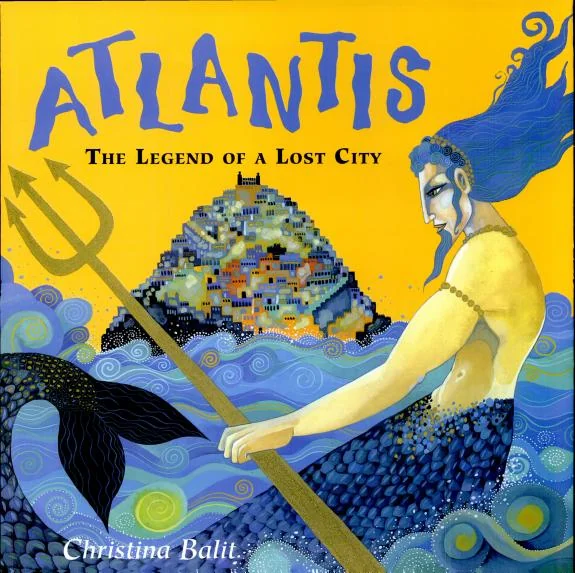
Christina Balit’s *Atlantis* eschews the dry academic tone often applied to Plato’s legend, opting instead for a visually arresting and philosophically suggestive approach. The book’s strength lies in its evocative illustrations, which imbue the lost continent with a palpable sense of wonder and advanced civilization. Balit doesn't merely retell the myth; she reconstructs a possible world, focusing on its imagined spiritual and technological achievements. A particular passage detailing the city’s crystalline architecture offers a glimpse into the author's imaginative reconstruction. However, the narrative’s brevity sometimes leaves the reader wishing for more detailed exposition on the esoteric philosophies it alludes to. While the visual element is dominant, a deeper dive into the philosophical underpinnings, perhaps referencing specific Platonic dialogues beyond the obvious, would have enhanced its intellectual weight. Despite this, *Atlantis* serves as a compelling visual and conceptual primer on the legend.
📝 Description
78
### What It Is Atlantis is a visual and textual exploration of the legendary lost continent, drawing upon ancient myths, esoteric philosophies, and speculative history. Published in 2000, this work by Christina Balit presents a reimagined vision of Atlantean civilization, its advanced knowledge, and its cataclysmic end. It functions as both an artistic interpretation and a historical inquiry into one of the West's most enduring archetypes.
### Who It's For This book is intended for readers interested in mythology, alternative history, and the philosophical underpinnings of Western esotericism. It appeals to those who appreciate richly illustrated narratives and seek to understand the perennial fascination with Atlantis. Individuals exploring ancient civilizations, lost knowledge, and symbolic landscapes will find its content engaging.
### Historical Context The concept of Atlantis, first introduced by Plato in his dialogues *Timaeus* and *Critias* around 360 BCE, has captivated thinkers for centuries. The late 20th and early 21st centuries saw a resurgence of interest in Atlantean lore, influenced by figures like Helena Blavatsky and the Theosophical movement, as well as popular culture. Balit's 2000 publication emerges within this ongoing dialogue, offering a contemporary artistic perspective on a myth that has been continuously reinterpreted since antiquity.
### Key Concepts The work engages with several recurring themes associated with Atlantis: its advanced technology and spiritual wisdom, its societal structure, and the philosophical implications of its demise. It touches upon concepts of cosmic cycles, the cyclical nature of civilizations, and the idea of a primordial, enlightened human epoch. The narrative explores how such a civilization might have functioned and the lessons its disappearance offers for present-day understanding.
💡 Why Read This Book?
• Understand the visual language of Atlantean myth: Gain insight into how Balit uses imagery to depict Atlantean society and its imagined spiritual technology, moving beyond mere textual description. • Explore the philosophical legacy of Plato's Atlantis: Learn about the enduring concepts of advanced, lost civilizations and their potential lessons, as presented in the context of the myth's reinterpretation since its 360 BCE introduction. • Connect with esoteric interpretations of lost worlds: Discover how the legend of Atlantis, as presented here, serves as a touchstone for ideas about primordial wisdom and cataclysmic cycles, relevant to modern esoteric thought.
⭐ Reader Reviews
Honest opinions from readers who have explored this book.
❓ Frequently Asked Questions
When was Christina Balit's book 'Atlantis' first published?
Christina Balit's 'Atlantis' was first published in the year 2000, marking a contemporary contribution to the long-standing fascination with the lost continent.
What is the primary source material for the Atlantis legend?
The primary source for the Atlantis legend is Plato's dialogues, specifically 'Timaeus' and 'Critias,' written around 360 BCE, which first described the island and its civilization.
Does the book focus on historical evidence or mythological interpretation?
The book primarily focuses on mythological interpretation and artistic reconstruction, drawing inspiration from ancient myths and esoteric philosophies rather than empirical historical evidence.
What kind of art style can be expected in 'Atlantis'?
The book features richly illustrated, evocative artwork designed to convey a sense of wonder, advanced civilization, and the mystique associated with the Atlantean legend.
Is 'Atlantis' by Christina Balit part of the Theosophical tradition?
While not exclusively Theosophical, the book engages with themes popular in esoteric circles since the rise of Theosophy in the late 19th century, such as lost continents and ancient wisdom.
What does the book suggest about Atlantean technology?
The book suggests Atlantean technology was highly advanced, often depicted as integrated with spiritual or natural forces, particularly through imagery of crystalline structures and advanced energy systems.
🔮 Key Themes & Symbolism
The Archetype of Lost Wisdom
Atlantis functions as a powerful archetype for lost knowledge and a golden age of civilization. Balit's work taps into the perennial human yearning for a sophisticated past, a time when humanity was supposedly more spiritually advanced and technologically adept. This theme resonates with esoteric traditions that posit cycles of descent and ascent for human consciousness and civilization, suggesting that the memory or essence of such advanced eras persists, waiting to be rediscovered.
Plato's Philosophical Legacy
The book engages directly with Plato's original account of Atlantis, first presented around 360 BCE in his dialogues. It explores not just the narrative elements but also the philosophical implications of Plato's story—the ideal state, hubris leading to downfall, and the cyclical nature of history. Balit's interpretation adds a visual dimension to these concepts, imagining the society and its eventual destruction in ways that prompt contemplation on societal values and cosmic justice.
Esoteric Geographies
Beyond a simple historical account, Atlantis represents an 'esoteric geography'—a conceptual landmass imbued with spiritual significance. This theme aligns with occult traditions that speak of hidden continents, parallel dimensions, or ancient mother cultures (like Lemuria or Hyperborea) holding primordial secrets. Balit's portrayal invites readers to consider landscapes not just as physical places but as symbolic terrains reflecting inner states or higher spiritual realities.
Cataclysm and Transformation
The dramatic end of Atlantis, depicted as a cataclysmic event, serves as a potent symbol for transformation through destruction. This resonates with alchemical principles of dissolution and reformation, and with Gnostic ideas of cosmic disruption and the potential for spiritual escape. The fall of Atlantis suggests that even the most advanced civilizations are subject to universal laws of change, offering a cautionary yet hopeful perspective on societal evolution and potential renewal.
💬 Memorable Quotes
“The city was built of alternating rings of land and water.”
— This describes the unique architectural layout of Atlantis as originally conceived by Plato. It symbolizes a harmonious integration of different elements—land and water, perhaps representing the material and the ethereal—a key characteristic of its imagined advanced civilization.
“Crystals were central to Atlantean power and technology.”
— This highlights a common esoteric trope: the use of crystals as conduits for energy and consciousness. In Balit's vision, these crystals likely represent a form of power source and communication technology far beyond modern understanding, deeply connected to natural forces.
“Their hubris ultimately led to their downfall.”
— A direct echo of Plato's narrative, this interpretation points to the moral and philosophical core of the Atlantis myth. It serves as a timeless warning about pride and the consequences of straying from divine or natural order.
“The continent sank beneath the waves in a single day and night.”
— This dramatic description of Atlantis's destruction emphasizes the suddenness and totality of the cataclysm. It symbolizes the fragility of even the greatest civilizations and the immense power of natural or cosmic forces.
“Atlantis held secrets of ancient, forgotten sciences.”
— This suggests that Atlantis represents a repository of lost knowledge, a pinnacle of human achievement before a great forgetting. It appeals to the idea that humanity has regressed and that ancient texts and myths hold keys to rediscovering this forgotten wisdom.
🌙 Esoteric Significance
Tradition
This work draws heavily from the Western Esoteric tradition, particularly its fascination with lost continents and primordial wisdom, a theme amplified by Theosophy and its successors. It aligns with the concept of a fallen golden age and the cyclical nature of civilization and consciousness, common in Hermetic and occult thought. Balit’s vision of Atlantis as a spiritually and technologically advanced society predating known history fits within narratives of hidden masters and ancient lineages possessing profound secrets.
Symbolism
Key symbols include the concentric rings of land and water, representing the integration of opposites and a perfectly ordered society. Crystalline structures are often depicted as focal points of Atlantean power, symbolizing pure energy, advanced consciousness, and a direct connection to cosmic forces, far removed from crude industrialization. The cataclysm itself symbolizes the destruction of a flawed utopia, representing a necessary, albeit tragic, cleansing before a new cycle can begin.
Modern Relevance
Contemporary esoteric practitioners and thinkers interested in ancient mysteries, consciousness studies, and alternative history continue to find resonance in the Atlantis myth as portrayed by Balit. It informs discussions on topics such as ley lines, earth energies, the Akashic records, and the potential for humanity to reclaim lost knowledge. The book’s visual language inspires modern artists and writers exploring utopian themes and the archetypal journey of civilization.
👥 Who Should Read This Book
• Students of Plato and classical philosophy: Readers seeking a visually interpretive companion to Plato's dialogues on Atlantis, offering imaginative reconstructions beyond the textual descriptions. • Enthusiasts of alternative history and mythology: Individuals fascinated by theories of lost civilizations, ancient advanced societies, and the enduring power of the Atlantis legend. • Art and design aficionados: Those who appreciate richly illustrated books and seek visually engaging explorations of mythic themes, appreciating how art can convey complex esoteric ideas.
📜 Historical Context
Christina Balit's *Atlantis*, published in 2000, emerged during a period of renewed popular and esoteric interest in lost civilizations. The concept of Atlantis itself was famously introduced by Plato in his dialogues *Timaeus* and *Critias* around 360 BCE, presenting it as a powerful naval empire that fell victim to divine punishment. Throughout history, thinkers from Ignatius Donnelly in the 19th century to Helena Blavatsky and the Theosophical Society in the late 19th and early 20th centuries, reinterpreted Atlantis as a literal, ancient super-civilization possessing advanced spiritual and technological knowledge. Balit’s work builds upon this latter tradition, offering a visual narrative that aligns with speculative histories and occult philosophies prevalent in the late 20th century. It can be seen as a contemporary artistic response to a myth that has consistently served as a canvas for utopian ideals and cautionary tales, distinct from purely academic archaeological or historical investigations.
📔 Journal Prompts
The concentric rings of Atlantis: Reflect on the symbolic meaning of integrating disparate elements into a unified whole.
Atlantean technology and spirituality: Consider the relationship between advanced knowledge and ethical application.
The cataclysm of Atlantis: Explore the concept of societal collapse as a catalyst for change.
Plato's original account: How does Balit's visual interpretation enhance or alter your understanding of the dialogues?
The legend of Atlantis today: What does its persistent appeal reveal about contemporary human aspirations?
🗂️ Glossary
Atlantis
A legendary island civilization, first described by Plato in his dialogues 'Timaeus' and 'Critias,' often depicted as highly advanced before its catastrophic destruction.
Plato
Ancient Greek philosopher (c. 428–348 BCE) credited with first introducing the story of Atlantis in his philosophical dialogues, using it as a narrative device.
Esotericism
Teachings or practices concerned with mystical or spiritual knowledge, often reserved for initiates, focusing on inner experience and hidden realities.
Archetype
A universal, inherited pattern of thought or imagery derived from the collective unconscious, which influences human behavior and artistic expression, such as the 'lost civilization' archetype.
Cataclysm
A violent natural event, such as a flood or earthquake, that causes great destruction; in the context of Atlantis, it signifies the continent's dramatic end.
Theosophy
A spiritual movement founded in the late 19th century, which sought to blend Eastern and Western mystical traditions and posited the existence of ancient, hidden wisdom and lost civilizations.
Hubris
Excessive pride or self-confidence; in Platonic philosophy and interpretations of Atlantis, it is often cited as the moral failing that led to the civilization's downfall.