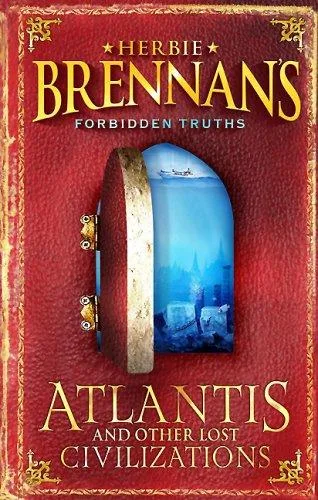
Atlantis and Other Lost Civilizations
 82
82

Atlantis and Other Lost Civilizations
Herbie Brennan’s "Atlantis and Other Lost Civilizations" offers a survey of speculative history that, while not breaking new ground, competently aggregates familiar narratives. Brennan excels at presenting the various theories surrounding sunken continents and forgotten peoples, drawing connections between different myths with a clear, accessible prose. A particular strength lies in his careful articulation of Ignatius Donnelly's foundational work on Atlantis, placing it within the broader discourse of lost civilizations. However, the book occasionally falters by presenting speculative claims with a degree of certainty that outstrips the evidence, particularly when discussing the precise nature of Atlantean technology or global societal structures. While it serves as a solid introduction to the subject for newcomers, seasoned researchers might find the analysis somewhat superficial.
Ultimately, Brennan provides a competent, if unadventurous, exploration of humanity's enduring fascination with lost worlds.
📝 Description
82
### What It Is Atlantis and Other Lost Civilizations by Herbie Brennan, first published in 2006, examines the enduring myths and potential historical underpinnings of vanished global societies. The work moves beyond simple recounting, seeking to analyze the recurring patterns and commonalities found across disparate tales of ancient, advanced cultures that have supposedly disappeared from the historical record.
### Who It's For This book appeals to readers interested in alternative histories, ancient mysteries, and the psychological or archetypal roots of civilization myths. It is suitable for those who enjoy speculative inquiry into subjects not typically covered by mainstream archaeology or history, particularly concerning prehistoric eras and lost continents.
### Historical Context Brennan's work emerges from a tradition of esoteric and speculative historical writing that gained traction in the late 19th and early 20th centuries, influenced by figures like Helena Blavatsky and Ignatius Donnelly. The initial publication in 2006 placed it within a contemporary resurgence of interest in ancient astronaut theories and pre-diluvian civilizations, engaging with ongoing debates about human origins and lost knowledge.
### Key Concepts The book explores the concept of a global cataclysm, often linked to the Atlantis legend, as a potential explanation for the sudden disappearance of advanced societies. It also touches upon theories of ancient global networks, lost technologies, and the possibility that certain myths are distorted echoes of real historical events or forgotten peoples, challenging conventional timelines of human development.
💡 Why Read This Book?
• Gain an overview of various theories on lost civilizations, understanding how myths of Atlantis and others, like Lemuria, share common archetypal elements explored in Brennan's analysis. • Understand the historical lineage of lost civilization theories, tracing their roots back to figures like Ignatius Donnelly and his 1882 work 'Atlantis: The Antediluvian World'. • Explore potential explanations for recurring global myths, considering how ancient cataclysms and forgotten peoples, as discussed by Brennan, might inform our understanding of prehistoric human history.
⭐ Reader Reviews
Honest opinions from readers who have explored this book.
❓ Frequently Asked Questions
What is the primary focus of Herbie Brennan's 'Atlantis and Other Lost Civilizations'?
The book primarily investigates the historical and mythological accounts of advanced, lost civilizations, with a strong emphasis on Atlantis, but also exploring other legendary societies and the possibility of global cataclysms.
When was 'Atlantis and Other Lost Civilizations' first published?
Herbie Brennan's book was first published in 2006, placing it within a contemporary wave of interest in alternative history and ancient mysteries.
Does the book offer concrete archaeological evidence for lost civilizations?
While the book discusses various theories and speculative evidence, it does not present definitive archaeological proof. Its strength lies in examining the myths and the historical context of their exploration.
Who might find 'Atlantis and Other Lost Civilizations' most interesting?
Readers interested in ancient mysteries, speculative history, mythology, and the theories surrounding prehistoric advanced cultures and lost continents will find this book engaging.
Are there specific ancient civilizations discussed besides Atlantis?
Yes, the book typically covers other legendary lands and civilizations that are often associated with myths of a global flood or a prehistoric golden age, exploring their commonalities.
What is Herbie Brennan's approach to the subject matter?
Brennan takes an analytical approach, examining the various theories and historical accounts of lost civilizations, seeking patterns and potential historical kernels within the myths.
🔮 Key Themes & Symbolism
The Atlantis Legend
The book extensively examines the myth of Atlantis, tracing its origins from Plato's dialogues and detailing how subsequent interpretations, notably by Ignatius Donnelly in his 1882 publication, have shaped modern understanding. It explores various proposed locations for Atlantis and the characteristics attributed to its civilization, often positing it as a technologically advanced precursor society that met a cataclysmic end.
Global Cataclysm Theories
A central theme is the concept of a worldwide cataclysm, often a flood, as the mechanism for the disappearance of advanced prehistoric cultures. Brennan investigates how this narrative appears across diverse mythologies and cultures, suggesting a possible shared historical memory or a recurring natural phenomenon that erased evidence of ancient civilizations.
Prehistoric Advanced Civilizations
The work delves into the idea that highly developed human societies existed long before accepted historical timelines. It considers the possibility of lost continents, forgotten technologies, and sophisticated societal structures that predated known historical periods, challenging conventional views on human progress and origins.
Mythology and Historical Memory
Brennan explores the relationship between enduring myths and potential historical events. The book suggests that many ancient legends, particularly those concerning lost lands and golden ages, might be distorted recollections of actual historical occurrences, lost knowledge, or interactions with precursor civilizations.
💬 Memorable Quotes
“Plato's dialogues remain the primary source for the Atlantis narrative.”
— This statement highlights the foundational importance of Plato's 'Timaeus' and 'Critias' as the origin point for the Atlantis myth, underscoring that much of our modern conception stems from these ancient philosophical texts.
“Ignatius Donnelly's 'Atlantis: The Antediluvian World' (1882) popularized the idea of Atlantis as a real, advanced civilization.”
— This emphasizes Donnelly's pivotal role in transforming Plato's philosophical allegory into a widely accepted theory of a lost, technologically sophisticated continent, significantly influencing subsequent esoteric and speculative literature.
“Many ancient flood myths share striking similarities.”
— This observation points to a recurring motif across global mythologies, suggesting a potential common source or shared human experience related to cataclysmic events that destroyed earlier civilizations.
“The possibility of lost continents predating known history is a recurring theme.”
— This paraphrased concept indicates Brennan's exploration of theories suggesting lands and civilizations existed long before current historical records, challenging established timelines of human development.
“The legend of Atlantis often implies a highly advanced, yet doomed, society.”
— This captures a core element of the Atlantis myth as presented in the book: the notion of a sophisticated civilization that ultimately fell due to its own hubris or external disaster.
🌙 Esoteric Significance
Tradition
This work aligns with the speculative and esoteric historical traditions that emerged in the late 19th century, particularly influenced by theosophy and the widespread fascination with forgotten continents and ancient wisdom. It draws upon a lineage that seeks hidden truths and alternative origins for human civilization, often operating outside mainstream academic discourse and engaging with archetypal concepts of lost paradises and cataclysmic endings.
Symbolism
Key symbols include the continent of Atlantis itself, representing a lost golden age or advanced precursor civilization; the Great Flood, symbolizing destruction and rebirth or the erasure of ancient knowledge; and recurring motifs of ancient technology and wisdom, signifying a lost human potential that modern society has yet to reclaim.
Modern Relevance
Contemporary thinkers and communities interested in ancient astronaut theories, alternative archaeology, and the psychological interpretation of myths often draw from the foundational texts and ideas explored in Brennan's book. It remains relevant for those seeking to understand the popular appeal of lost civilization narratives and their potential connection to Jungian archetypes or collective unconscious themes.
👥 Who Should Read This Book
• Enthusiasts of ancient mysteries and speculative history seeking an overview of theories surrounding lost civilizations like Atlantis and Lemuria. • Readers interested in the historical development of lost civilization narratives, particularly the influence of figures like Ignatius Donnelly and Plato's original account. • Individuals exploring the connections between global myths, cataclysmic events, and theories of advanced prehistoric human societies.
📜 Historical Context
Herbie Brennan's "Atlantis and Other Lost Civilizations," published in 2006, arrived during a period of renewed popular interest in ancient mysteries, fueled by television documentaries and internet forums discussing pre-diluvian cultures and extraterrestrial influence. The book situates itself within a long tradition of speculative history that began in earnest with Ignatius Donnelly's "Atlantis: The Antediluvian World" in 1882. Donnelly's work, heavily influenced by geological theories of his time and a literal interpretation of Plato, argued for Atlantis as a real continent and the origin of many ancient civilizations. Brennan engages with this legacy, also touching upon theosophical ideas about Lemuria and Mu, concepts popularized by figures like Helena Blavatsky and James Churchward in the late 19th and early 20th centuries. While mainstream archaeology and geology largely dismiss such theories, Brennan's work taps into a counter-narrative that questions established historical timelines and seeks to find factual grounding for widespread myths, often facing skepticism from academic circles.
📔 Journal Prompts
The concept of a global cataclysm and its mythical echoes.
Plato's dialogues as the origin of the Atlantis narrative.
Ignatius Donnelly's influence on lost civilization theories.
Recurring symbols in myths of lost continents.
The potential for historical memory within ancient flood stories.
🗂️ Glossary
Atlantis
A legendary island civilization first described by Plato, often depicted as an advanced society that sank beneath the ocean after a catastrophic event.
Lemuria
A hypothetical lost continent, primarily proposed in esoteric literature, often placed in the Indian or Pacific Ocean, considered by some to be the origin of ancient races.
Mu
Another hypothetical lost continent, often located in the Pacific Ocean, popularized by Augustus Le Plongeon and later James Churchward, believed by proponents to have been the cradle of civilization.
Cataclysm
A violent, natural upheaval or disaster, such as a great flood or earthquake, often invoked in theories of lost civilizations as the cause of their destruction.
Pre-diluvian
Referring to the time before a great flood, often used in the context of lost civilizations and ancient myths that describe a world before a catastrophic deluge.
Esoteric
Intended for or likely to be understood by only a small number of people with a specialized knowledge or interest; relating to or dealing with the occult.
Myth
A traditional story, especially one concerning the early history of a people or explaining some natural or social phenomenon, and typically involving supernatural beings or events.









![Maditations and Music for Sound Healing : Connect with Your Own Natural Source of Healing (sound Medicine) (2 Volume Set) [videorecording].](/img/thumb/maditations-and-music-for-sound-healing-connect-with-your-own-natural-source-of-healing-sound-medici-617284.webp)