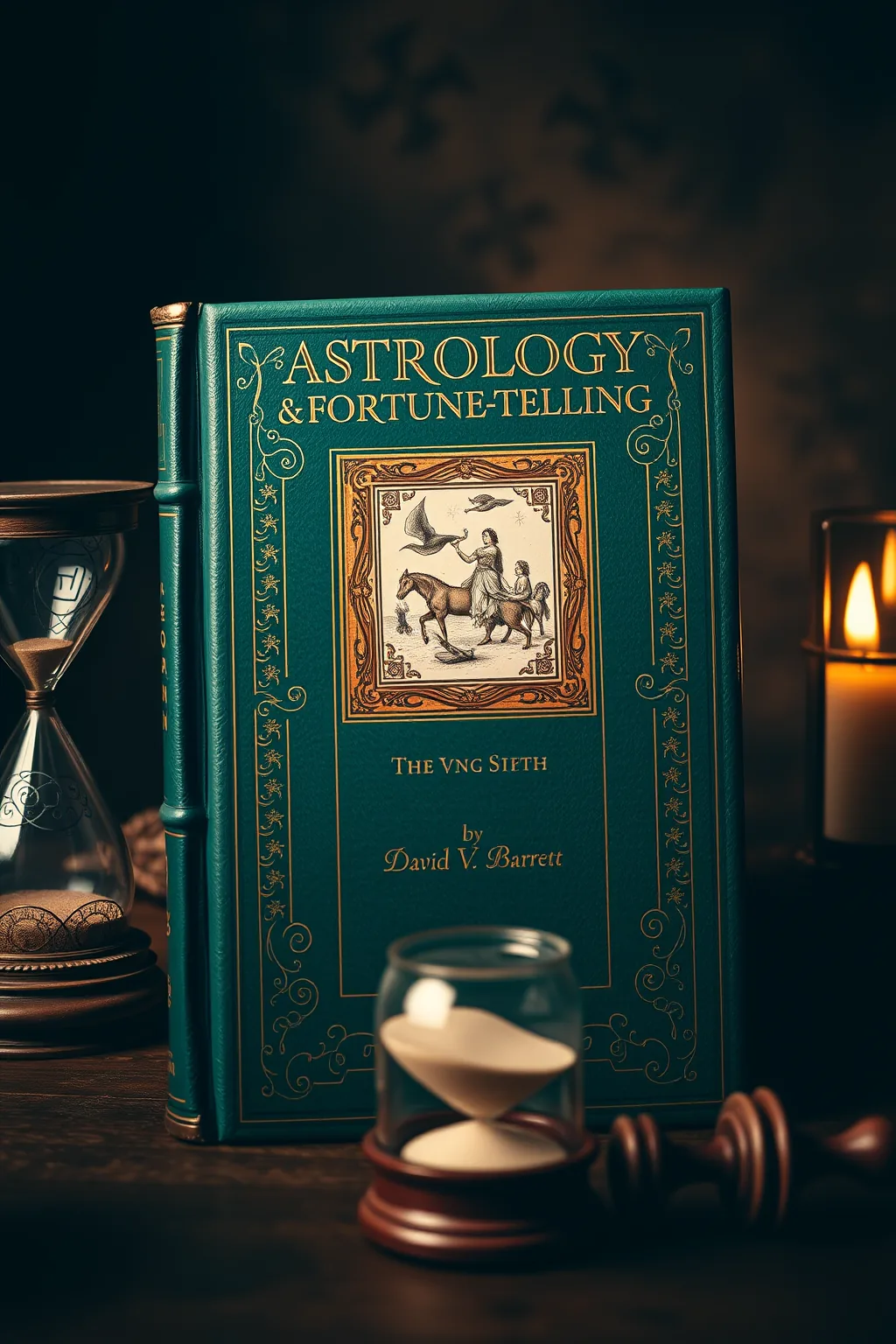
Astrology & fortune-telling
 71
71

Astrology & fortune-telling
David V. Barrett's Astrology & Fortune-Telling, published in 1994, offers a commendably straightforward survey of common divinatory arts. Its strength lies in its structured approach, presenting astrological principles, tarot symbolism, and palmistry techniques with a clarity that avoids unnecessary jargon. Barrett handles the subject matter with academic seriousness, which is a welcome contrast to more sensationalist treatments. A specific passage detailing the planetary rulerships within the zodiac is particularly well-explained, offering a solid foundation for understanding astrological charting. However, the book occasionally feels a bit dry, lacking the vibrant, experiential dimension that many practitioners seek. While informative, it doesn't always convey the deeper, intuitive currents that animate these ancient practices. Nonetheless, for a clear, factual introduction to the mechanics of fortune-telling, Barrett's work remains a solid choice.
📝 Description
71
### What It Is Astrology & Fortune-Telling by David V. Barrett, first published in 1994, offers a comprehensive examination of divination practices. It moves beyond superficial interpretations to explore the underlying principles and historical development of methods like astrology, tarot, and palmistry. The work serves as an accessible introduction for those unfamiliar with these subjects, while also providing depth for individuals with prior knowledge seeking a structured overview.
### Who It's For This book is principally for readers interested in understanding the foundational elements of various fortune-telling systems. It caters to those curious about how these practices developed and the logic, however esoteric, that informs them. Individuals exploring alternative belief systems or seeking to contextualize popular divination methods within a broader historical and cultural framework will find it particularly valuable. It’s suited for the novice seeking clarity and the more experienced practitioner looking for a consolidated reference.
### Historical Context Barrett's work emerged during a period of renewed interest in esotericism and occult studies in the late 20th century. Following a mid-century lull, the 1980s and 1990s saw a significant resurgence in popular and academic engagement with subjects previously relegated to the fringes. This book entered a landscape where authors like Nicholas Campion were also publishing influential works on astrology, contributing to a growing body of literature that sought to legitimize and explore these ancient arts. Barrett’s contribution sits within this milieu, aiming to demystify and present these practices in a coherent manner.
### Key Concepts The book systematically breaks down complex divinatory systems into understandable components. It details the astrological zodiac and its associated planetary influences, explores the symbolic language of tarot cards, and examines the lines and mounts of the palm. Barrett also touches upon other methods, providing a comparative view of different approaches to foretelling the future or understanding character. The emphasis is on the structure and historical evolution of these practices rather than solely on predictive outcomes.
💡 Why Read This Book?
• Gain a foundational understanding of astrological principles, including planetary influences and zodiacal signs, directly from Barrett's clear exposition, allowing you to interpret basic birth charts. • Learn the symbolic language of the tarot by exploring the archetypal meanings of major and minor arcana cards as presented in the book, enhancing your card readings. • Understand the historical development and basic techniques of palmistry, examining the significance of hand lines and mounts as outlined by Barrett, providing a new perspective on physiognomy.
⭐ Reader Reviews
Honest opinions from readers who have explored this book.
❓ Frequently Asked Questions
When was Astrology & Fortune-Telling by David V. Barrett first published?
Astrology & Fortune-Telling by David V. Barrett was first published in 1994, reflecting a period of renewed interest in esoteric subjects.
What are the main subjects covered in Barrett's book on fortune-telling?
The book covers major divinatory arts, including astrology, tarot card reading, and palmistry, examining their historical context and core principles.
Is David V. Barrett's book suitable for beginners in astrology?
Yes, the book is designed as an accessible introduction, providing clear explanations of astrological concepts for those new to the subject.
Does the book offer practical techniques for reading tarot cards?
Yes, it explores the symbolic language of tarot cards and provides insights into their interpretation, aiding in practical application.
What historical perspective does the book offer on fortune-telling practices?
It traces the historical development of various divination methods, placing them within broader cultural and intellectual movements that influenced their evolution.
What is the primary focus of the book regarding astrological concepts?
The primary focus is on explaining the foundational elements of astrology, such as the zodiac and planetary influences, rather than advanced predictive techniques.
🔮 Key Themes & Symbolism
Astrological Foundations
Barrett meticulously outlines the foundational elements of Western astrology, moving from the twelve signs of the zodiac to the significations of the planets. He explains how these components interact, providing a structured framework for understanding astrological charts. The work emphasizes the symbolic language and traditional interpretations that have governed astrological practice for centuries, offering readers a clear entry point into this complex system of celestial interpretation.
The Tarot's Symbolic Language
A significant portion of the book is dedicated to the tarot, exploring its archetypal imagery and divinatory applications. Barrett delves into the meanings of both the Major and Minor Arcana, illustrating how the cards function as a symbolic system for self-reflection and prediction. The text highlights the historical evolution of the tarot deck and its integration into esoteric traditions, presenting it as a tool for understanding psychological states and future possibilities.
Palmistry and Physiognomy
The book examines the practice of palmistry, detailing the interpretation of hand lines, mounts, and overall hand shape. Barrett connects these physical characteristics to personality traits and potential life paths, situating palmistry within the broader field of physiognomy. The discussion provides a systematic approach to reading the hand, grounded in traditional lore and observational analysis, offering insights into character assessment through physical form.
Comparative Divination
Beyond individual systems, Barrett offers a comparative perspective on various fortune-telling methods. By examining astrology, tarot, and palmistry side-by-side, the book illuminates commonalities and divergences in their approaches to divination. This comparative analysis helps readers appreciate the diverse strategies employed across different traditions to seek knowledge about the self and the future, fostering a broader understanding of divinatory practices.
💬 Memorable Quotes
“The zodiac is a map of human experience.”
— This statement encapsulates the astrological view of the zodiac not merely as astronomical divisions but as symbolic representations of psychological archetypes and life stages.
“Each tarot card carries a universe of meaning.”
— This highlights the symbolic richness of the tarot, suggesting that the images on each card are not static but contain layers of interpretation related to spiritual, psychological, and mundane matters.
“The lines of the palm are a narrative of life's journey.”
— This paraphrase points to the core tenet of palmistry, where the physical markings on the hand are seen as a script or story reflecting an individual's past, present, and potential future.
“Divination offers frameworks for understanding.”
— This interpretation suggests that practices like astrology and tarot are less about absolute prediction and more about providing structured ways to interpret events and personal circumstances.
“Planetary positions at birth are seen as influential.”
— This paraphrased concept reflects the fundamental astrological belief that the configuration of celestial bodies at the moment of birth carries symbolic weight and can correlate with an individual's character and life.
🌙 Esoteric Significance
Tradition
Barrett's work aligns with the Western Esoteric Tradition, particularly its branches concerned with divination and symbolic interpretation. While not strictly Hermetic or Kabbalistic, it draws upon the long history of applying celestial and symbolic correspondences to understand human affairs. It fits within the lineage of practical occultism that seeks to map the invisible influences on the material world, offering methods for interpretation and guidance.
Symbolism
Key symbols include the twelve signs of the zodiac, representing archetypal human experiences and energies, and the seven classical planets, each associated with specific qualities and influences. The tarot cards, particularly the archetypal figures of the Major Arcana, function as potent symbols for psychological states and spiritual journeys, while the lines on the palm are interpreted as symbolic representations of life's path and character.
Modern Relevance
Contemporary practices in modern astrology, tarot reading, and even psychological physiognomy often echo the foundational principles discussed by Barrett. While newer approaches might integrate psychological theories or different interpretive frameworks, the core concepts of planetary influence, zodiacal archetypes, and symbolic card meanings presented in his 1994 work remain relevant for understanding the bedrock of these popular divinatory systems.
👥 Who Should Read This Book
• Aspiring astrologers seeking a clear, factual introduction to the zodiac, planets, and houses before delving into complex chart interpretation. • Tarot enthusiasts looking to understand the historical context and archetypal symbolism behind the cards beyond simple keyword meanings. • Individuals curious about the history and methodology of various fortune-telling practices, wanting a consolidated overview from a scholarly perspective.
📜 Historical Context
Published in 1994, David V. Barrett's Astrology & Fortune-Telling emerged during a period of significant public interest in esoteric subjects, a trend that gained momentum throughout the late 20th century. Following decades where such topics were often dismissed or marginalized, the 1980s and 1990s witnessed a resurgence in popular and academic engagement. This book entered a field where authors like Liz Greene were exploring astrological psychology and Nicholas Campion was providing historical scholarship on astrology. Barrett's work aimed to provide a clear, structured overview of practices that were increasingly being sought out by a curious public. It served as an accessible entry point amidst a growing body of literature, offering a demystified perspective on traditions that had long been part of Western esotericism but were often poorly understood.
📔 Journal Prompts
The astrological significance of your Sun sign.
The archetypal meaning of The Fool card in tarot.
Interpreting the major lines on your own palm.
How planetary rulerships might influence personality.
The historical development of the Major Arcana.
🗂️ Glossary
Zodiac
The band of the heavens divided into twelve equal segments, each associated with specific constellations and symbolic meanings in astrology.
Ascendant
The zodiacal sign and degree rising on the eastern horizon at the moment of birth, considered highly significant in astrological personality analysis.
Major Arcana
The set of 22 trump cards in a tarot deck, representing significant life events, spiritual lessons, and archetypal figures.
Minor Arcana
The 56 cards in a tarot deck divided into four suits, typically representing everyday events, challenges, and experiences.
Mounts (Palmistry)
Fleshy pads on the palm, named after planets, which are believed to indicate specific character traits or potentials based on their prominence.
Physiognomy
A field that claims to assess character or personality traits from outward physical appearance, particularly the face.
Divination
The practice of seeking knowledge of the future or the unknown by supernatural means.