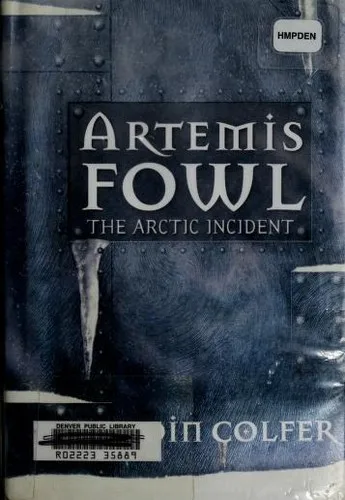
Artemis Fowl and the Arctic Incident
 76
76

Artemis Fowl and the Arctic Incident
Colfer’s Artemis Fowl series, particularly in its later installments like Arctic Incident, demonstrates a remarkable ability to maintain narrative momentum and character complexity. The portrayal of Artemis Fowl II’s evolving moral compass, moving from pure self-interest to a more nuanced understanding of responsibility, is a significant strength. A passage detailing the intricate workings of the LEP’s reconnaissance drones, for instance, showcases Colfer's knack for blending fantastical elements with plausible technological descriptions. However, the sheer density of plot points and character introductions can occasionally feel overwhelming, requiring a close read to fully appreciate the intricate web being spun. The book ultimately succeeds in pushing its protagonist into more challenging territory, both externally and internally.
📝 Description
76
Published in 2018, Artemis Fowl and the Arctic Incident continues the saga of a young criminal mastermind.
This installment of Eoin Colfer's series pits Artemis Fowl II against powerful adversaries, forcing him to reconsider his own motivations. The narrative maintains a brisk pace, merging high-stakes action with science fiction and fantasy elements. Readers familiar with the series will recognize the ongoing entanglement between the Fowl family and the technologically advanced, hidden fairy civilization. Artemis must navigate these complex relationships while confronting new threats.
The story centers on the clandestine operations of the Lower Elements Police and the Fowl family's continuing involvement. Advanced fairy technology, such as the centaur and sophisticated weaponry, plays a significant role. The inherent magical abilities of various fairy species are also key, alongside Artemis Fowl II's strategic thinking. Themes of loyalty, family, and the repercussions of past actions are woven throughout the plot.
Eoin Colfer's Artemis Fowl series, beginning in 2001, carved a unique niche in young adult literature. Unlike many contemporaries who focused on traditional heroes, Colfer centered his work on a morally ambiguous, intelligent young criminal. This approach distinguished the series within a literary landscape increasingly shaped by fantasy and science fiction. The 2018 publication date places "Arctic Incident" in an era where complex, serialized narratives were well-established, resonating with audiences accustomed to intricate plots and character development that challenged conventional notions of good and evil.
💡 Why Read This Book?
• Understand the sophisticated application of fairy technology, such as the LEP's advanced reconnaissance drones, and how it interacts with human-level ingenuity. • Explore the evolving ethical framework of Artemis Fowl II, moving beyond simple villainy to a more complex character grappling with unintended consequences. • Witness firsthand the intricate, multi-layered plotting that characterizes Colfer's approach to blending fantasy, technology, and high-stakes action.
⭐ Reader Reviews
Honest opinions from readers who have explored this book.
❓ Frequently Asked Questions
What is the primary conflict in Artemis Fowl and the Arctic Incident?
The central conflict involves Artemis Fowl II attempting to retrieve stolen fairy technology, which leads to dangerous confrontations with both the Lower Elements Police (LEP) and a formidable criminal element operating in the Arctic.
Who are the main fairy characters featured in this book?
Key fairy characters include Captain Holly Short of the LEP, Butler, and Foaly, the centaur technical advisor, whose interactions with Artemis drive much of the plot.
What makes Artemis Fowl II an unusual protagonist?
Artemis Fowl II is a young genius and criminal mastermind, often operating outside the law, which contrasts sharply with traditional heroic figures. His actions are driven by complex motives, often evolving throughout the series.
Does Eoin Colfer use humor in this book?
Yes, Colfer employs a distinctive blend of dry wit and situational humor, often delivered through character dialogue and the absurdities of the situations Artemis finds himself in.
What is the significance of the Arctic setting?
The Arctic serves as a crucial backdrop for the retrieval mission and a place where the hidden fairy world can maintain its secrecy, while also presenting unique environmental challenges for the characters.
🔮 Key Themes & Symbolism
Techno-Magic Synthesis
The narrative extensively explores the fusion of advanced technology and inherent fairy magic. This isn't merely magic as an abstract force; it's engineered, weaponized, and integrated into daily life by figures like Foaly the centaur. The book details specific technological marvels, such as the LEP's sophisticated surveillance equipment and weaponry, demonstrating how magic is harnessed and manipulated with near-scientific precision. This synthesis challenges the traditional dichotomy between the magical and the technological, presenting a world where both are inseparable components of power and survival.
Moral Ambiguity and Evolution
Artemis Fowl II is the quintessential anti-hero, a brilliant young criminal whose actions often tread a fine line between self-preservation and genuine malevolence. The Arctic Incident forces him to confront the direct consequences of his schemes, pushing him towards a more complex understanding of loyalty and responsibility. This evolution is central to the series, as Artemis grapples with his own intelligence and the ethical implications of wielding it in a world populated by both vulnerable fairies and dangerous human adversaries.
The Secret World
A core theme is the existence of a hidden, technologically advanced fairy civilization operating beneath the notice of the human world. The Lower Elements Police (LEP) are tasked with maintaining this secrecy, employing advanced tactics and technology to prevent exposure. The book highlights the constant tension between the need for the fairies to remain concealed and the ever-present threat posed by human curiosity, greed, and interference, particularly from figures like Artemis himself.
Strategic Ingenuity
The series, and this book in particular, is a showcase for intellectual prowess and strategic planning. Artemis Fowl II's brilliance lies not just in his intellect but in his ability to devise intricate, multi-layered plans to outwit his opponents. The narrative emphasizes strategic thinking, anticipating moves, and adapting to unforeseen circumstances. This theme extends to the fairy characters as well, particularly Foaly, whose technical genius often serves as a counterpoint to Artemis's more manipulative strategies.
💬 Memorable Quotes
Direct passages from the work, attributed to the author.
“The Lower Elements Police (LEP) are the best in the business.”
— This statement, often made with a degree of self-congratulation by LEP members, highlights their specialized role and advanced capabilities in maintaining the secrecy of the fairy world.
“Foaly had designed a suit that could withstand the intense pressure.”
— This refers to the practical application of fairy ingenuity, where advanced materials and design are used to overcome extreme environmental challenges, such as those found in the Arctic.
“Artemis was always two steps ahead.”
— This interpretation expresses Artemis Fowl II's defining characteristic: his exceptional foresight and strategic planning, which allows him to consistently outmaneuver his adversaries.
“The centaur was the brains behind the LEP’s technological operations.”
— This highlights Foaly's crucial role as the technical genius responsible for developing and maintaining the advanced technology used by the Lower Elements Police.
“Butler’s loyalty was unwavering.”
— This speaks to the steadfast devotion of Artemis's bodyguard, a critical element in the Fowl family's operations, providing a stable, protective force amidst the chaos.
🌙 Esoteric Significance
Tradition
While not overtly aligned with a specific esoteric tradition like Hermeticism or Kabbalah, the Artemis Fowl series exhibits a modern interpretation of hidden worlds and magical systems that appeals to Gnostic and alchemical principles. The concept of a concealed, advanced civilization (the fairies) operating parallel to the mundane human world echoes Gnostic ideas of a hidden spiritual realm. The intricate, almost scientific, manipulation of magical forces by figures like Foaly can be seen as a contemporary echo of alchemical processes, where natural forces are understood, controlled, and transformed through knowledge and technique.
Symbolism
The book is rich with symbolic elements, though often presented through a technological lens. The centaur, Foaly, symbolizes the fusion of intellect and nature, a bridge between the wild magic of the fairy world and the structured application of technology. Artemis Fowl II himself can be viewed as a symbol of corrupted or misapplied genius, a modern Faustian figure whose vast intellect is used for personal gain before a gradual moral awakening. The concept of the Lower Elements Police (LEP) represents an attempt to impose order and control on chaotic, powerful forces, akin to the alchemist's quest to refine base elements.
Modern Relevance
Contemporary thinkers and practitioners interested in the intersection of technology and consciousness, or the potential for 'magic' to be understood through advanced systems, might find relevance in the series' depiction of techno-magic. The exploration of artificial intelligence, advanced surveillance, and the ethics of powerful entities operating unseen appeals to current societal discussions. Furthermore, the anti-hero archetype, as embodied by Artemis, continues to be a compelling figure in modern storytelling, reflecting a fascination with complex characters who challenge conventional morality and explore the darker aspects of human (and non-human) potential.
👥 Who Should Read This Book
• Young adults and older readers who appreciate sophisticated, fast-paced adventure stories blending fantasy and science fiction elements. • Fans of complex protagonists and intricate plotting, particularly those intrigued by morally grey characters and unexpected twists. • Readers interested in modern interpretations of hidden worlds and magical systems, presented through a contemporary, technologically-infused narrative.
📜 Historical Context
Published in 2018, Eoin Colfer's Artemis Fowl and the Arctic Incident arrived in a literary landscape that had long been influenced by the speculative fiction boom. The series, which began in 2001, gained significant traction during the early 2000s, a period marked by the massive success of authors like J.K. Rowling and Philip Pullman, who were redefining young adult fantasy. Colfer, however, carved a unique niche by centering his narrative on a morally ambiguous, genius anti-hero rather than a traditional protagonist. This installment, appearing two decades after the series' inception, reflects an era where serialized narratives and complex world-building were highly valued by audiences. While the initial books were lauded for their blend of fantasy, technology, and humor, later works like Arctic Incident continued to explore these themes with a mature narrative voice. The book’s 2018 release predates the significant shift in publishing driven by AI, but it exists within a digital ecosystem where complex narratives are consumed rapidly across various media.
📔 Journal Prompts
The specific technological innovations employed by the LEP.
Artemis Fowl II's evolving definition of 'family' throughout the series.
Foaly the centaur's perspective on the limitations of magic versus technology.
Captain Holly Short's internal conflict between duty and personal ethics.
The strategic advantages gained by operating in the Arctic environment.
🗂️ Glossary
Lower Elements Police (LEP)
A highly advanced, technologically equipped law enforcement agency of the fairy civilization, tasked with maintaining order and secrecy from the human world.
Centaur
In the Artemis Fowl universe, a species of fairy known for their exceptional intelligence and expertise in technology, often serving as technical advisors or engineers.
Butler
Domovoi Butler, the fiercely loyal and highly skilled bodyguard and manservant to the Fowl family, particularly Artemis Fowl II.
Time Stop
A piece of advanced fairy technology that temporarily halts the passage of time within a localized area, used for tactical advantage or containment.
Reconnaissance Drones
Sophisticated aerial devices developed by the LEP, equipped with advanced sensors and cloaking technology for surveillance purposes.
Artemis Fowl II
The young, preternaturally intelligent, and often morally ambiguous protagonist and criminal mastermind of the series.
Fairy Technology
The advanced tools, weapons, and systems developed and utilized by the fairy civilization, often blending magical principles with sophisticated engineering.
🔮 Readers Also Liked
Browse all →









More by Eoin Colfer
All books →





More Free Occult Philosophy Books
View all →