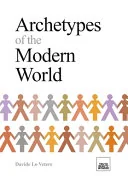
Archetypes of the Modern World
 82
82

Archetypes of the Modern World
Davide Lo Vetere's "Archetypes of the Modern World" attempts to bridge the gap between Jungian theory and contemporary lived experience, a task fraught with both potential and peril. The book's strength lies in its consistent focus on the practical application of archetypal concepts, urging readers to see these patterns not as academic curiosities but as active forces shaping their daily lives. Lo Vetere makes a compelling case for the persistent influence of mythic structures, even in what might seem like a demythologized era. However, the work sometimes struggles with depth, occasionally presenting complex psychological phenomena with a degree of simplification that might leave seasoned scholars wanting more. A particularly striking passage discusses the 'Shadow' archetype not just as repressed aspects of the self but as the source of projected anxieties onto societal 'others,' a notion that feels particularly relevant to current geopolitical tensions. Ultimately, "Archetypes of the Modern World" serves as a valuable primer, accessible and motivating, though it may not satisfy those seeking a comprehensive theoretical treatise.
📝 Description
82
### Understanding the Blueprint
Davide Lo Vetere's "Archetypes of the Modern World" offers a framework for understanding the fundamental psychological patterns that shape human experience. These archetypes, as identified by figures like Carl Jung, are not mere abstract concepts but potent forces that influence our perceptions, behaviors, and the narratives we construct for ourselves. The book charts how these universal patterns, present in ancient myths and legends across cultures, continue to operate beneath the surface of contemporary consciousness. It posits that recognizing and assimilating these archetypal messages is key to developing personal agency and crafting a unique life story, moving beyond unconscious replication of inherited scripts.
### The Individual's Role
This work is primarily for individuals seeking a deeper comprehension of their own motivations and the underlying currents that drive collective behavior. It appeals to those interested in Jungian psychology, mythology, and esoteric studies, particularly those who feel a disconnect between their lived reality and a sense of authentic self-creation. Readers who are engaged in personal development, therapy, or spiritual inquiry, and who wish to understand the symbolic language of their inner world, will find "Archetypes of the Modern World" particularly relevant. It is for those who are ready to examine the narratives they inhabit and explore the possibility of authoring their own.
### Mythic Echoes in a Secular Age
The book situates its exploration of archetypes within a historical lineage tracing back to early psychological theories. While Carl Jung extensively explored the concept of archetypes and the collective unconscious, "Archetypes of the Modern World" applies these ideas to the specific context of the 21st century. It acknowledges the enduring power of these primordial images, even in a world often perceived as increasingly secularized and rationalized. The work implicitly engages with the ongoing dialogue about the relevance of myth and symbolism in modern life, suggesting that these ancient structures continue to provide meaning and orientation, albeit in transformed guises.
### Core Archetypal Dynamics
"Archetypes of the Modern World" delves into the foundational concepts of archetypal psychology. It examines how these universal patterns manifest, influencing individual consciousness and collective behavior. The book explores the process of archetypal assimilation, where individuals move from unconsciously enacting these patterns to consciously integrating their messages. This integration is presented as a vital step in achieving self-awareness and the capacity to author one's personal narrative, thereby transcending the limitations imposed by inherited or culturally prescribed roles. The work focuses on the dynamic interplay between the archetypal blueprint and individual life.
💡 Why Read This Book?
• Understand the persistent influence of universal psychological patterns, drawing parallels between ancient myths and your own life choices, as discussed in the book's examination of archetypal assimilation. • Gain practical insights into how archetypes shape your personal narratives and relationships, empowering you to consciously author your life story rather than passively enact inherited scripts. • Explore the enduring relevance of mythic structures in a modern context, learning how these primordial images continue to provide meaning and orientation, even in a seemingly secularized world.
⭐ Reader Reviews
Honest opinions from readers who have explored this book.
❓ Frequently Asked Questions
What are archetypes according to Davide Lo Vetere's "Archetypes of the Modern World"?
Davide Lo Vetere defines archetypes as universal, primordial psychological patterns that influence human experience and behavior. These patterns, present in myths and legends across civilizations, shape our perceptions and the narratives we create for ourselves until we consciously assimilate their messages.
When was "Archetypes of the Modern World" first published?
The first publication of "Archetypes of the Modern World" by Davide Lo Vetere was in October 2019.
What is the primary goal of assimilating archetypal messages?
The primary goal, as explored in the book, is to move from unconsciously enacting archetypal patterns to consciously integrating their messages. This leads to greater self-awareness and the development of the ability to create one's own authentic life narrative.
Does the book discuss specific examples of archetypes?
While the book focuses on the overarching concept and process, it references the presence of archetypes throughout human history and civilization, implying their manifestation in various myths and legends as foundational to the human experience.
Who is Davide Lo Vetere?
Davide Lo Vetere is the author of "Archetypes of the Modern World." While specific biographical details beyond the book's publication are not extensively detailed in the provided context, his work centers on psychological and esoteric themes.
Is "Archetypes of the Modern World" related to Carl Jung's work?
Yes, the book draws heavily on the concept of archetypes, a central theme in the work of psychologist Carl Jung. Lo Vetere applies and explores these Jungian concepts within the context of the modern world and personal narrative creation.
🔮 Key Themes & Symbolism
Archetypal Influence
The book posits that universal psychological patterns, or archetypes, act as fundamental blueprints for human experience. These are not static concepts but dynamic forces present in the myths and legends of every civilization, from ancient Greece to indigenous storytelling. "Archetypes of the Modern World" argues that these patterns continue to unconsciously guide our perceptions and actions, shaping our understanding of ourselves and the world around us, even in contemporary society. Recognizing their pervasive influence is the first step toward conscious engagement.
Narrative Self-Creation
A central theme is the idea that individuals learn to create their life experiences through the narratives embedded within archetypes. The work explores the transition from unconsciously living out these archetypal stories to actively assimilating their messages. This assimilation is presented as crucial for developing personal agency and the capacity to author one's own life narrative, moving beyond the limitations of inherited or socially prescribed roles and stories.
Mythic Resonance Today
Despite the perceived rationality of the modern world, "Archetypes of the Modern World" emphasizes the enduring power of myth and symbolism. It suggests that these ancient structures continue to provide meaning, orientation, and a framework for understanding the human condition. The book implicitly engages with how these primordial patterns manifest in contemporary culture, relationships, and individual psychology, demonstrating their continued relevance in shaping our understanding of existence.
Assimilation and Agency
The process of archetypal assimilation is presented as a pathway to greater self-awareness and empowerment. By understanding and integrating the messages of these universal patterns, individuals can transcend unconscious programming. This leads to the development of personal agency, allowing one to consciously choose their responses and actively shape their life path. The book frames this as a journey from being a passive recipient of archetypal influence to becoming an active creator of one's personal mythology.
💬 Memorable Quotes
“Archetypes are universal psychological patterns that define the early stages of the human experience.”
— This foundational statement posits archetypes not as mere ideas, but as inherent structures shaping the very beginning of our conscious engagement with life and the world.
“We find them throughout the history of humanity in the myths and legends of every civilization.”
— This highlights the cross-cultural and enduring nature of archetypes, suggesting they are a fundamental aspect of the human psyche observable across diverse cultures and historical periods.
“We unconsciously learn to create our experience of life from the narratives of the archetypes.”
— This interpretation suggests that our daily reality and personal stories are often shaped by symbolic frameworks we absorb without conscious awareness, derived from these deep psychological patterns.
“We continue to do so until we fully assimilate their message and develop the ability to create our own life narrative.”
— This marks the transformative potential of engaging with archetypes: through conscious integration, one gains the power to move beyond pre-scripted roles and actively author their own destiny.
“The archetypes continue to operate beneath the surface of contemporary consciousness.”
— This emphasizes that despite modern advancements and secularization, these ancient psychological structures remain active, subtly influencing our thoughts, feelings, and behaviors in the present day.
🌙 Esoteric Significance
Tradition
The work aligns broadly with the tradition of analytical psychology, specifically drawing from Carl Jung's theories on the collective unconscious and archetypes. While not strictly an esoteric text in the vein of Hermeticism or Kabbalah, it engages with concepts often explored within esoteric circles: the idea of hidden symbolic structures influencing human consciousness and the potential for personal transformation through understanding these hidden forces.
Symbolism
The book's core symbolism revolves around the concept of the 'archetype' itself – a universal pattern or image. It implies the presence of symbolic figures and motifs found in global myths (e.g., the Hero, the Shadow, the Great Mother) as expressions of these deep psychological structures. These symbols are presented not merely as narrative devices but as potent psychic energies that require conscious recognition and integration for personal growth.
Modern Relevance
Contemporary thinkers and practitioners in fields like transpersonal psychology, Jungian analysis, and even certain self-help movements continue to draw upon the foundational ideas presented in Lo Vetere's work. The emphasis on archetypes as drivers of personal narrative creation resonates with modern therapeutic approaches seeking to empower individuals to reframe their life stories and understand the symbolic language of their inner world.
👥 Who Should Read This Book
• Individuals interested in Jungian psychology and the concept of the collective unconscious, seeking to understand how universal patterns manifest in personal lives. • Students of mythology and comparative religion looking for frameworks to interpret the symbolic narratives across different cultures and historical eras. • Those engaged in personal development and self-discovery, aiming to identify and transform unconscious patterns that may be limiting their potential.
📜 Historical Context
Published in October 2019, Davide Lo Vetere's "Archetypes of the Modern World" emerged during a period of renewed interest in depth psychology and esoteric studies, often fueled by online communities and accessible digital platforms. This era saw a continued engagement with the work of Carl Jung, who first extensively theorized archetypes and the collective unconscious in the mid-20th century. Lo Vetere's book implicitly enters a dialogue with contemporary thinkers who explore the intersection of mythology, psychology, and personal development, such as Jordan Peterson, who gained significant public attention around this time for his discussions on archetypal narratives in literature and culture. While Jung faced resistance from more orthodox psychoanalytic circles, Lo Vetere's work benefits from a post-internet landscape where such ideas can circulate more freely, often bypassing traditional academic gatekeepers. The book's reception is likely shaped by this broader cultural milieu, where Jungian concepts have become more mainstream, albeit sometimes simplified, in popular discourse.
📔 Journal Prompts
Reflect on the 'archetype of the Hero' and how its narrative structure appears in your own life challenges.
Consider the 'narratives of the archetypes' you have unconsciously adopted and how they shape your daily experience.
Examine the process of 'archetypal assimilation' and identify one pattern you wish to consciously integrate.
How do the 'myths and legends of every civilization' inform your understanding of your personal story?
What does it mean to 'create your own life narrative' beyond inherited archetypal influences?
🗂️ Glossary
Archetype
A universal, primordial pattern, image, or symbol that originates from the collective unconscious and influences human thought, behavior, and perception.
Collective Unconscious
A concept introduced by Carl Jung, referring to a deeper layer of the unconscious mind shared by all humanity, containing archetypes and inherited predispositions.
Archetypal Assimilation
The process by which an individual consciously recognizes, understands, and integrates the messages and energies of archetypes into their psyche.
Life Narrative
The personal story an individual constructs about their life, encompassing their experiences, identity, and sense of purpose, shaped by conscious and unconscious factors.
Psychological Patterns
Recurring ways of thinking, feeling, and behaving that are deeply ingrained in an individual's psyche, often stemming from archetypal influences or personal experiences.
Mythology
The collection of myths, legends, and stories belonging to a particular culture or tradition, often serving to explain natural phenomena, human behavior, and the origins of the world.
Personal Agency
The capacity of an individual to act independently and make their own free choices, particularly in shaping their life circumstances and future.