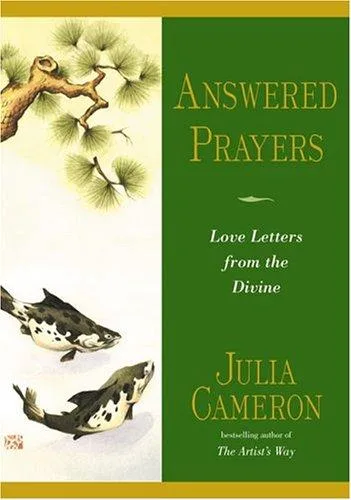
Answered prayers
 84
84

Answered prayers
Julia Cameron’s "Answered Prayers" offers a grounded approach to spiritual desire, moving beyond platitudes to practical articulation. The strength lies in its directness; Cameron doesn't shy away from the messy work of identifying what one truly wants, rather than what one *thinks* one should want. The exercises, particularly those focusing on naming specific desires, are potent. However, the book occasionally skirts the edge of oversimplification, particularly in its implicit promise of resolution. While it excels at the 'asking,' the 'receiving' aspect, crucial for a complete cycle of answered prayer, feels less thoroughly explored. A passage detailing the 'prayer of the unmade bed' serves as a potent example of Cameron's ability to find the sacred in the mundane, yet the subsequent steps to manifest such a prayer could benefit from more detailed exploration. It’s a valuable tool for initiating spiritual dialogue, though readers seeking comprehensive guidance on the reception and integration of answered prayers might need to supplement it.
📝 Description
84
### What It Is Julia Cameron's "Answered Prayers" is not a typical self-help manual but a collection of reflections and exercises aimed at fostering a deeper connection with one's spiritual life. First published in 2008, the work draws from Cameron's extensive experience in creative recovery and spiritual guidance. It presents a method for individuals to identify and articulate their deepest desires, framing them as prayers to be heard and answered. The book emphasizes the power of focused intention and consistent spiritual practice.
### Who It's For This book is intended for individuals seeking to move beyond superficial notions of prayer and engage in a more active, participatory spiritual dialogue. It appeals to those who feel their prayers have gone unheard or who struggle with formulating their desires in a way that feels authentic and powerful. Readers interested in the intersection of creativity, spirituality, and personal transformation will find particular value here. It is for anyone ready to explore the practical application of faith and intention in daily life.
### Historical Context Published in 2008, "Answered Prayers" emerged during a period of burgeoning interest in mindfulness, secular spirituality, and personal growth methodologies. While not strictly tied to a single esoteric tradition, it draws from broader currents of New Thought and positive psychology, which gained significant traction in the late 20th and early 21st centuries. Cameron’s work stands alongside popular figures like Eckhart Tolle and Marianne Williamson, who also explored accessible paths to spiritual fulfillment outside of traditional religious dogma. The era saw a greater public acceptance of practices focused on inner work and manifesting desires.
### Key Concepts The core of "Answered Prayers" revolves around the concept of 'conscious prayer'—a deliberate and focused articulation of one's deepest needs and aspirations. This method distinguishes itself from passive supplication by encouraging an active role in the spiritual process. Another key concept is the 'inner critic,' which Cameron, in her broader work, identifies as a significant obstacle to spiritual and creative expression. The book posits that by understanding and disarming this inner critic, individuals can more clearly hear their own spiritual guidance and express their prayers effectively. The focus is on aligning personal will with a perceived higher guidance.
💡 Why Read This Book?
• Understand the mechanics of 'conscious prayer' as distinct from passive supplication, a concept Cameron elaborates on throughout the text. • Learn practical techniques for identifying and articulating deeply held desires, a core focus of the book's exercises since its 2008 publication. • Develop a more direct and personal spiritual practice by learning to engage with your inner critic, a recurring theme in Cameron's work.
⭐ Reader Reviews
Honest opinions from readers who have explored this book.
❓ Frequently Asked Questions
What is Julia Cameron's "Answered Prayers" about?
"Answered Prayers" is a spiritual guide by Julia Cameron, first published in 2008. It focuses on teaching readers how to articulate their deepest desires as 'conscious prayers' to foster a more active and direct spiritual connection.
Is this book religious?
While the book discusses prayer and spiritual connection, it is not tied to a specific religious doctrine. Cameron's approach is broadly spiritual, focusing on personal intention and inner guidance rather than adherence to a particular faith.
What kind of exercises are in "Answered Prayers"?
The book includes exercises designed to help readers identify, articulate, and focus their desires. These often involve journaling, reflection, and specific practices aimed at overcoming internal obstacles to spiritual communication.
Who is Julia Cameron?
Julia Cameron is an author, artist, and teacher known for her work on creativity and spiritual recovery, most famously through her book 'The Artist's Way'. She first published 'Answered Prayers' in 2008.
How does 'conscious prayer' differ from regular prayer?
Cameron's 'conscious prayer' emphasizes active participation and clear articulation of desires, viewing prayer as a dialogue rather than a passive plea. It's about aligning one's will with a spiritual source.
Can this book help if I'm struggling with creative blocks?
Yes, as Cameron is known for her work on creativity. 'Answered Prayers' often intersects with creative blockages, suggesting that spiritual clarity is foundational to creative expression.
🔮 Key Themes & Symbolism
Conscious Articulation of Desire
The central theme is the deliberate and precise articulation of one's deepest wishes, framed as 'conscious prayers.' This moves beyond vague hopes to a focused, intentional communication with the spiritual realm. Cameron guides readers to move past societal expectations or learned desires to uncover what they truly long for. The process involves introspection and honest self-assessment, ensuring that the prayers offered are authentic expressions of the soul's true yearnings, distinguishing this work from more passive forms of spiritual seeking.
The Inner Critic as Obstacle
Cameron frequently addresses the role of the inner critic, identifying it as a primary impediment to spiritual growth and the effective practice of prayer. This internal voice of doubt and judgment can distort one's perception of desires and silence the inner promptings of guidance. The work suggests methods for recognizing, understanding, and ultimately disarming this critical faculty, thereby clearing the channel for clearer spiritual reception and expression. By addressing this internal barrier, readers are empowered to engage more fully.
Alignment with Spiritual Guidance
A core tenet is the pursuit of alignment between personal will and a perceived higher spiritual guidance. 'Answered Prayers' posits that when desires are consciously articulated and aligned with this guidance, they are more likely to manifest. This involves cultivating receptivity and trust in the unfolding of one's spiritual path. The book encourages a partnership with the divine or the universe, where focused intention acts as a catalyst for cooperative creation, fostering a sense of agency within a larger spiritual framework.
Spirituality in Daily Life
Cameron emphasizes that spiritual practice is not confined to specific times or places but is an integral part of everyday living. The book encourages readers to find the sacred in the mundane, integrating prayer and intention into routine activities. This perspective democratizes spiritual engagement, making it accessible and relevant to all aspects of life. By infusing daily existence with conscious awareness and purpose, individuals can transform ordinary moments into opportunities for spiritual connection and fulfillment.
💬 Memorable Quotes
“Prayer is not a plea, but a declaration.”
— This interpretation highlights Cameron's view that prayer should be an active and confident statement of one's needs and desires, rather than a passive or uncertain request. It suggests an empowered stance in spiritual communication.
“The universe responds to clarity.”
— This concept underscores the importance of precise intention and articulation in spiritual practice. It implies that vagueness or ambiguity can hinder the manifestation of desires, advocating for focused and well-defined spiritual communication.
“What you resist, persists.”
— This adage, often found in self-help and spiritual literature, suggests that focusing energy on what one *doesn't* want inadvertently strengthens its presence. The implication is to redirect focus towards what is desired.
“Your deepest desires are clues.”
— This suggests that the things we truly long for are not arbitrary but hold significant spiritual or personal meaning. They serve as indicators pointing towards our true path or purpose.
“The spiritual path requires courage.”
— This interpretation emphasizes that embarking on a journey of spiritual exploration and asking for what one truly desires can be daunting. It requires bravery to confront inner obstacles and external challenges.
🌙 Esoteric Significance
Tradition
While not explicitly adhering to a single esoteric lineage, "Answered Prayers" draws heavily from the principles of New Thought and the broader Western Esoteric tradition, particularly its emphasis on the power of mind and intention. It shares common ground with Hermeticism's 'as above, so below' principle by linking inner states to outer manifestation. The work departs from more rigid ceremonial traditions by offering accessible, psychologically informed practices for personal spiritual development, making esoteric concepts practical for a general audience.
Symbolism
The book utilizes the 'prayer' itself as a potent symbol, transforming it from a passive request into an active, directed force. The 'inner critic' functions symbolically as the shadow self or the lower mind, an archetype that must be understood and integrated for spiritual progress. Desires are symbolic of the soul's true calling, serving as navigational markers on the spiritual journey. The act of 'answering' symbolizes divine responsiveness and the co-creative potential inherent in aligned human intention.
Modern Relevance
Contemporary spiritual seekers, coaches, and therapists often reference Cameron's work, particularly 'The Artist's Way,' which shares thematic overlap with "Answered Prayers." Thinkers in the fields of positive psychology, mindfulness, and manifestation continue to explore similar concepts of intentionality and belief. The book's emphasis on practical, actionable steps for spiritual growth remains relevant for individuals seeking direct experience and personal agency in their spiritual lives, bridging the gap between esoteric theory and everyday practice.
👥 Who Should Read This Book
• Individuals seeking to deepen their spiritual practice beyond conventional prayer, particularly those interested in the New Thought movement. • Creative professionals and artists who find their work intertwined with their spiritual well-being and seek tools for inspiration and clarity. • Anyone feeling stuck or disconnected from their desires, looking for a structured approach to self-discovery and spiritual dialogue.
📜 Historical Context
Published in 2008, Julia Cameron's "Answered Prayers" arrived during a period where interest in accessible spirituality and personal development methodologies was high. The landscape was populated by figures like Eckhart Tolle, whose 'The Power of Now' (1997) had already shifted paradigms towards present-moment awareness, and Marianne Williamson, who brought New Thought principles to a wide audience. Cameron's work, while distinct, occupied a similar space, offering practical tools for spiritual engagement outside of traditional religious structures. It tapped into a growing secular spiritual movement that sought personal meaning and transformative practices. The book's focus on articulating desires resonated with the broader cultural embrace of positive psychology and manifestation techniques gaining traction in the early 21st century.
📔 Journal Prompts
The nature of your most persistent unspoken desire.
How your inner critic shapes your articulation of needs.
The spiritual guidance you perceive in moments of quiet.
A mundane activity you wish to infuse with conscious prayer.
The first concrete step toward aligning desire and action.
🗂️ Glossary
Conscious Prayer
A deliberate and focused articulation of one's deepest desires and intentions, viewed as an active dialogue with the spiritual realm rather than a passive plea.
Inner Critic
The internal voice of judgment, doubt, and negativity that can hinder spiritual growth, creative expression, and the clear articulation of desires. Cameron provides methods to identify and disarm this voice.
Spiritual Guidance
Intuitive insights, promptings, or a sense of direction perceived to come from a higher power, the universe, or one's deeper self, which becomes clearer when obstacles like the inner critic are addressed.
Desire
In Cameron's framework, deep-seated longings that serve as indicators of one's true path and purpose, requiring conscious articulation to be addressed effectively.
Spiritual Alignment
The state of harmony achieved when one's personal will and consciously articulated desires are in sync with perceived spiritual guidance or universal flow.
Manifestation
The process through which consciously articulated desires, aligned with spiritual guidance, are brought into physical reality. It's seen as a cooperative effort between the individual and the spiritual domain.
Creative Recovery
Cameron's broader concept referring to the process of healing and reclaiming one's innate creativity, often involving spiritual and psychological work.