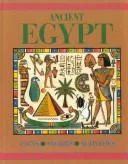
Ancient Egypt
 71
71

Ancient Egypt
Nicholson and Watts' "Ancient Egypt" presents a compelling case for understanding this civilization not merely through its monuments, but through its intricate spiritual framework. The authors adeptly navigate the complex mythology, particularly the Osiris myth and its implications for resurrection beliefs, offering a clear exposition of concepts like Ma'at. A notable strength lies in their detailed exploration of the funerary texts, revealing the Egyptians' sophisticated views on mortality and the eternal journey. However, the work occasionally leans towards a generalized esoteric interpretation, sometimes lacking the sharp critical edge needed to distinguish between historical belief and later occult appropriations. A passage detailing the rituals surrounding the Opening of the Mouth ceremony, for instance, is particularly vivid, illuminating the performative nature of Egyptian religious life. Despite this slight tendency toward the mystical, the book remains a valuable resource for grasping the symbolic language of the Nile Valley.
📝 Description
71
### What It Is Ancient Egypt by Robert Nicholson and Claire Watts offers an examination of the civilization's foundational myths, religious practices, and societal structures. The text focuses on the spiritual and cosmological underpinnings that shaped Egyptian daily life and their elaborate funerary customs. It explores the pantheon of deities, the concept of Ma'at, and the evolution of royal power.
### Who It's For This work is suited for individuals interested in a scholarly yet accessible introduction to the esoteric dimensions of ancient Egyptian culture. It appeals to those seeking to understand the deeper philosophical and religious currents beyond a purely historical account. Students of comparative religion and ancient spirituality will find its detailed analysis particularly beneficial.
### Historical Context First published in 1993, "Ancient Egypt" emerged during a period of renewed interest in ancient civilizations, fueled by archaeological discoveries and a growing public fascination with their mysteries. The book engages with ongoing scholarly debates regarding Egyptian cosmology and its influence. It situates itself within a broader field of Egyptology that often grappled with interpreting religious texts and symbols, sometimes in conversation with earlier esoteric interpretations.
### Key Concepts The book elucidates concepts such as the Egyptian understanding of the soul (Ba and Ka), the significance of the afterlife journey as depicted in texts like the Book of the Dead, and the role of the pharaoh as a divine intermediary. It also touches upon the cyclical nature of time and creation myths central to Egyptian belief systems, providing context for their rituals and monumental architecture.
💡 Why Read This Book?
• Gain a nuanced understanding of the Egyptian concept of Ma'at, exploring its role as cosmic order and justice, a core principle often referenced in discussions of ancient ethics and governance. • Discover the intricate cosmology of the Egyptian afterlife, detailing the journey of the soul as depicted in funerary texts like the Book of the Dead, providing a unique perspective on mortality. • Examine the symbolic significance of specific deities such as Osiris and Isis, and how their mythos informed Egyptian beliefs about death, rebirth, and kingship, offering insights into ancient religious practices.
⭐ Reader Reviews
Honest opinions from readers who have explored this book.
❓ Frequently Asked Questions
What is the primary focus of Robert Nicholson and Claire Watts' "Ancient Egypt"?
The book primarily focuses on the esoteric and spiritual dimensions of ancient Egyptian civilization, examining its myths, religious practices, and cosmological beliefs rather than a purely historical or archaeological account.
When was "Ancient Egypt" first published, and by whom?
"Ancient Egypt" was first published in 1993. The authors are Robert Nicholson and Claire Watts.
Does the book discuss Egyptian funerary practices?
Yes, the work extensively discusses Egyptian funerary practices, including the elaborate rituals, the significance of the afterlife journey, and the contents of key texts like the Book of the Dead.
What role does the concept of Ma'at play in the book?
Ma'at is presented as a central concept, representing cosmic order, truth, and justice. The book explores how this principle permeated Egyptian religious and societal structures.
Who would benefit most from reading "Ancient Egypt"?
Individuals interested in comparative religion, ancient spirituality, and the mystical aspects of historical civilizations, as well as students seeking a deeper understanding of Egyptian cosmology and symbolism, would find it beneficial.
Does the book cover the Egyptian pantheon?
Yes, the book examines the pantheon of Egyptian deities, discussing their roles, myths, and their importance in the daily lives and spiritual beliefs of the ancient Egyptians.
🔮 Key Themes & Symbolism
Cosmic Order and Ma'at
The work deeply explores Ma'at, not just as a goddess but as the fundamental principle of cosmic order, truth, and balance that governed ancient Egyptian thought. It details how this concept informed their understanding of kingship, justice, and the afterlife, illustrating its pervasive influence on societal and religious life. The book examines rituals and texts that sought to uphold Ma'at against chaos (Isfet).
The Afterlife Journey
A significant portion of the book is dedicated to the Egyptian conception of the afterlife. It meticulously analyzes funerary texts, such as the Book of the Dead, explaining the perilous journey the deceased's soul (Ba and Ka) was believed to undertake. The text deciphers the challenges, judgments, and transformations involved in achieving eternal life in the Field of Reeds.
Divine Kingship and Mythology
Nicholson and Watts investigate the divine status of the pharaoh, viewed as an intermediary between the gods and humanity. The book delves into key myths, particularly the story of Osiris, Isis, and Horus, explaining how these narratives reinforced the pharaoh's legitimacy and the cyclical nature of life, death, and rebirth within the Egyptian worldview.
Symbolism in Ritual and Art
The text highlights the rich symbolic language embedded in Egyptian art, architecture, and ritual. It interprets the meaning behind common motifs like the Ankh, the Eye of Horus, and scarab beetles, connecting them to broader themes of life, protection, regeneration, and divine power. The significance of temple rituals and daily offerings is also contextualized.
💬 Memorable Quotes
“The pharaoh was not merely a ruler, but a divine embodiment tasked with maintaining cosmic equilibrium.”
— This statement encapsulates the sacred nature of Egyptian kingship, positioning the ruler as a critical link between the celestial and terrestrial realms, responsible for upholding the divine order of Ma'at.
“Ma'at represented the fundamental truth and order that the Egyptians believed held the universe together.”
— This highlights Ma'at as more than an abstract concept; it was the essential cosmic law and ethical standard that permeated all aspects of Egyptian existence, from statecraft to personal conduct.
“The journey through the Duat was fraught with perils, requiring knowledge of spells and divine names for safe passage.”
— This paraphrase emphasizes the challenging nature of the Egyptian afterlife, where success depended on magical knowledge and appeasing various deities encountered in the underworld.
“The concept of the Ba and Ka illustrates a complex understanding of the soul's components and their post-mortem existence.”
— This points to the sophisticated Egyptian psychology, differentiating between aspects of the soul that continued to exist and interact with the living world after death.
“Funerary texts served as essential guides, equipping the deceased with the necessary wisdom for eternal life.”
— This interpretation underscores the practical and spiritual function of texts like the Book of the Dead, acting as a vital manual for navigating the afterlife and achieving rebirth.
🌙 Esoteric Significance
Tradition
This work aligns with the broader Hermetic and Gnostic traditions' fascination with ancient Egyptian mysteries, viewing them as repositories of primordial wisdom. It departs from purely historical accounts by emphasizing the symbolic and metaphysical dimensions of Egyptian belief systems, seeking underlying spiritual truths that transcend time and culture.
Symbolism
Key symbols explored include the Ankh, representing life and immortality, and the Eye of Horus (Udjat), a powerful symbol of protection, royal power, and good health. The book interprets these not merely as artistic motifs but as potent emblems of cosmic forces and divine energies central to Egyptian esoteric practice.
Modern Relevance
Contemporary practitioners of Western esotericism, particularly those within Hermetic orders or studying comparative mythology, continue to draw inspiration from ancient Egypt. The work's exploration of concepts like the soul's journey and divine order informs modern magical and meditative practices focused on spiritual evolution and cosmic alignment.
👥 Who Should Read This Book
• Students of comparative religion and mythology seeking to understand the spiritual underpinnings of one of the world's most enduring civilizations. • Individuals interested in the esoteric traditions of the ancient world, particularly those drawn to Egyptian cosmology and funerary beliefs. • Readers aiming to grasp the symbolic language and philosophical depth behind Egyptian art, hieroglyphs, and religious practices beyond a surface-level historical overview.
📜 Historical Context
Published in 1993, "Ancient Egypt" by Nicholson and Watts emerged in an era where Egyptology was increasingly professionalized, with ongoing debates between traditional historical interpretations and more esoteric or psychological readings of ancient Egyptian religion. Contemporary scholars like Jan Assmann were actively shaping discourse on Egyptian cosmology and memory culture, often engaging with the symbolic depth of Egyptian texts. While not directly a product of the Theosophical movement of the late 19th and early 20th centuries, the book taps into a persistent stream of Western interest in Egyptian mysticism that had been significantly influenced by figures like Helena Blavatsky and early occultists. The reception of such works often involves navigating the tension between rigorous academic standards and the allure of ancient mystery traditions.
📔 Journal Prompts
The Egyptian concept of Ma'at and its influence on daily life.
Reflections on the soul's components, Ba and Ka, in Egyptian belief.
The symbolism of Osiris and the cycle of death and rebirth.
Interpreting the journey through the Duat as depicted in funerary texts.
The pharaoh's role as a divine intermediary.
🗂️ Glossary
Ma'at
The ancient Egyptian concept representing cosmic order, truth, justice, and balance. It was personified as a goddess and was central to Egyptian religious and societal ideology.
Ba
In ancient Egyptian belief, one of the aspects of the soul, often depicted as a human-headed bird, representing personality and consciousness that could travel between the tomb and the world.
Ka
Another aspect of the Egyptian soul, often translated as 'life force' or 'spiritual double,' which required sustenance and a dwelling place (the body or statue) after death.
Duat
The ancient Egyptian underworld or realm of the dead, through which the sun god Ra and the souls of the deceased journeyed during the night.
Book of the Dead
A collection of ancient Egyptian spells, prayers, and hymns intended to guide and protect the deceased on their journey through the underworld and into the afterlife.
Isfet
The ancient Egyptian concept representing chaos, injustice, and disorder, considered the antithesis of Ma'at and a force to be constantly combated.
Ankh
A hieroglyphic symbol representing 'life,' often carried by deities or used in rituals, symbolizing eternal life and divine power.