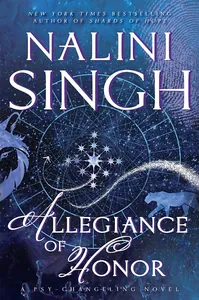
Allegiance of honor

 82
82

Allegiance of honor
Nalini Singh’s Allegiance of Honor presents a compelling, if at times familiar, examination of duty’s crucible. The narrative’s strength lies in its intricate world-building, particularly the established hierarchy and the unspoken rules that govern its characters. One particularly effective sequence involves a protagonist grappling with a self-imposed vow that directly conflicts with an urgent need for action, highlighting the personal cost of their society's code. However, the book occasionally falters by relying on archetypal character arcs that feel predictable, especially for seasoned readers of the genre. The resolution, while satisfying in its own right, could have benefited from a more unexpected turn or a deeper exploration of the moral ambiguities it introduces. It is a solid entry for its intended audience, offering a competent exploration of its central themes.
📝 Description
82
### What It Is
Allegiance of Honor, published in 2016 by Nalini Singh, is a work situated within the expansive domain of esoteric literature. It is not a historical account or a philosophical treatise in the conventional sense, but rather a narrative that engages with themes of loyalty, power, and the supernatural. The book presents a world where individuals possess unique abilities and are bound by intricate codes of conduct and allegiance. These elements suggest a fictional exploration of societal structures and personal ethics, viewed through a lens that incorporates mystical or paranormal phenomena.
### Who It's For
This book is intended for readers who appreciate genre fiction that goes beyond simple plot mechanics to explore deeper thematic concerns. Specifically, it appeals to those interested in character-driven narratives that examine the consequences of choices made under duress, particularly within a structured, often hierarchical, social or organizational context. Readers who enjoy exploring the dynamics of duty, sacrifice, and the internal conflicts that arise from deeply held loyalties will find material for consideration here.
### Historical Context
Published in 2016, Allegiance of Honor emerged during a period of continued popular interest in paranormal romance and urban fantasy subgenres, which frequently incorporate elements of the esoteric. While not a direct engagement with historical esoteric movements, its publication year places it within a literary landscape influenced by decades of occult revival and speculative fiction that often borrows from or alludes to established mystical traditions. The increasing accessibility of such works online also shaped their reception and readership.
### Key Concepts
The core concepts revolve around the nature of honor as a binding force, often superseding personal desire or even self-preservation. The narrative explores the weight of oaths and the ramifications of betrayal within a community or order that relies on strict adherence to established principles. It also touches upon the idea of inherent power or destiny, suggesting that certain individuals are predisposed to roles of leadership or significant influence, and how this predetermination interacts with free will and personal choice.
💡 Why Read This Book?
• Understand the compelling interplay between sworn duty and personal sacrifice, as depicted through the protagonist's struggle with their vows concerning the year 2016's evolving genre landscape. • Experience a narrative that scrutinizes the burden of leadership within a rigidly structured society, examining how established rules impact individual agency. • Grasp the nuanced portrayal of loyalty, where allegiance becomes a potent force shaping character and driving plot, offering a unique perspective on interpersonal dynamics.
⭐ Reader Reviews
Honest opinions from readers who have explored this book.
❓ Frequently Asked Questions
When was Allegiance of Honor first published?
Allegiance of Honor by Nalini Singh was first published in 2016. This places it within a period of significant engagement with genre fiction exploring paranormal and fantastical elements.
What genre does Allegiance of Honor belong to?
Allegiance of Honor is primarily categorized within esoteric and speculative fiction, often overlapping with paranormal romance and urban fantasy, focusing on themes of honor and supernatural elements.
Does the book explore specific magical systems?
While the book features characters with unique abilities and a structured supernatural world, it focuses more on the ethical and social implications of these powers rather than detailing intricate magical systems.
What are the central themes in Allegiance of Honor?
The central themes include the nature of honor, the weight of allegiance, the consequences of duty, and the internal conflicts arising from deeply held loyalties and societal codes.
Is this book part of a series?
Allegiance of Honor is part of Nalini Singh's broader body of work, often sharing thematic and tonal similarities with her other series, but it functions as a standalone narrative within its specific focus on honor.
What kind of character arcs can readers expect?
Readers can expect character arcs that involve protagonists facing significant moral dilemmas, testing the boundaries of their loyalty and personal beliefs within a defined societal structure.
🔮 Key Themes & Symbolism
The Binding Force of Honor
Honor in Allegiance of Honor functions as a palpable, almost metaphysical, construct that dictates behavior and shapes destinies. It is not merely a social convention but a deep-seated principle that individuals are bound to uphold, often at great personal cost. The narrative explores how this concept influences decisions, creates internal conflict, and defines the very fabric of the society depicted. The adherence to honor, even when inconvenient or dangerous, is presented as a defining characteristic of the characters and their world, suggesting a philosophical exploration of ethical imperatives.
Allegiance and Societal Structure
The book delves into the intricate web of allegiances that form the backbone of its world. These loyalties are not limited to simple friendships or romantic bonds but extend to sworn oaths, duty-bound service, and ingrained societal roles. The narrative examines how these structures of allegiance create both stability and tension, providing characters with a sense of belonging while simultaneously imposing constraints. The consequences of breaking these allegiances are shown to be severe, highlighting the power dynamics inherent in a society built upon such commitments.
The Nature of Power and Destiny
Within Allegiance of Honor, power is intrinsically linked to one's place within the established order and the oaths they have sworn. The work probes the idea that certain individuals may be destined for specific roles or possess innate capabilities that set them apart. This concept of destiny interacts with free will, as characters must navigate their predetermined paths while making choices that test their resolve and their allegiances. The narrative questions whether power corrupts or refines, and how individuals wield their unique strengths within the confines of their sworn duties.
Personal Sacrifice for the Greater Good
A recurring motif is the necessity of personal sacrifice in service to a larger cause or collective. Characters are frequently faced with situations that demand they forgo personal happiness, safety, or even life itself for the sake of maintaining order, upholding their honor, or protecting those to whom they are bound. This theme explores the ethical considerations of such sacrifices, questioning where the line lies between noble selflessness and detrimental martyrdom, and how individuals reconcile their personal desires with their obligations.
💬 Memorable Quotes
“The weight of an oath is heavier than any chain.”
— This statement emphasizes the profound, almost inescapable, influence of sworn promises. It suggests that the commitment made through an oath carries a moral and psychological burden that can be more restrictive than any physical restraint.
“True allegiance is not demanded; it is earned.”
— This highlights the active and voluntary nature of genuine loyalty. It implies that respect and commitment are built through actions and character, rather than imposed through authority or coercion.
“Honor is the compass by which the worthy navigate.”
— This metaphorical quote positions honor as a guiding principle for ethical decision-making. It suggests that individuals who possess integrity use their sense of honor to direct their actions, particularly in complex or morally ambiguous situations.
“In service, self is the first sacrifice.”
— This encapsulates the idea that dedicated service requires the subjugation of personal needs and desires. It posits that the individual's will and comfort must be secondary to the objectives of the duty undertaken.
“A broken vow echoes through generations.”
— This speaks to the long-lasting and far-reaching consequences of betraying one's commitments. It suggests that the repercussions of dishonor can extend beyond the individual, impacting their lineage or community.
🌙 Esoteric Significance
Tradition
Allegiance of Honor does not strictly adhere to a single historical esoteric tradition like Hermeticism or Gnosticism. Instead, it draws broadly from archetypal themes prevalent in various mystical and occult narratives, particularly those focusing on codified systems of power, loyalty, and inherent abilities. It aligns with a modern esoteric sensibility that blends supernatural elements with explorations of personal ethics and societal constructs, often found in contemporary fantasy and paranormal fiction that borrows symbolic language from older traditions without being bound by their specific doctrines.
Symbolism
The primary symbolism revolves around the concept of the 'oath' or 'vow,' representing a binding contract that transcends the mundane, akin to magical pacts in grimoires or spiritual commitments in religious orders. The 'code of honor' itself acts as a symbolic representation of an internalized moral law, guiding characters' actions and defining their spiritual or existential integrity. The inherent 'abilities' of characters can also be seen as symbolic of latent spiritual potential or a predetermined destiny, a common motif in Gnostic and Neoplatonic thought.
Modern Relevance
Contemporary thinkers and practitioners in fields like narrative psychology and mythology studies might examine Singh's work for its modern portrayal of archetypal struggles between duty and desire, freedom and fate. While not directly cited by modern occultists, the book's exploration of how social structures and personal codes shape individual destiny echoes themes found in modern interpretations of Stoicism and virtue ethics, which are increasingly popular in self-help and personal development circles seeking frameworks for ethical living in a complex world.
👥 Who Should Read This Book
• Fans of Nalini Singh's previous works, particularly those who appreciate her intricate world-building and exploration of character relationships within structured supernatural societies. • Readers interested in narratives that examine the ethical weight of duty and honor, offering a fictional lens through which to consider personal codes of conduct. • Enthusiasts of paranormal romance and urban fantasy who enjoy character-driven stories with complex interpersonal dynamics and a focus on loyalty and sacrifice.
📜 Historical Context
Published in 2016, Allegiance of Honor arrived during a vibrant period for genre fiction, with authors like Sarah J. Maas and Brandon Sanderson achieving significant commercial success in fantasy and related speculative fields. Nalini Singh herself had already established a strong following with her Psy-Changeling series, which also explored complex societal structures and paranormal abilities. The literary landscape of 2016 was marked by a continued interest in intricate world-building and character-driven narratives within the paranormal romance and urban fantasy subgenres. While not directly engaging with historical esoteric movements, the book’s themes of sworn duty and honor can be loosely connected to older chivalric codes and even certain interpretations of Stoic philosophy, which experienced renewed academic and popular interest around this time. There were no significant public controversies or specific reception events like censorship or major awards directly tied to this particular work, but its publication contributed to the ongoing conversation about supernatural romance and its thematic depth.
📔 Journal Prompts
The protagonist's adherence to their sworn vows, even when facing personal hardship in 2016's evolving literary landscape.
The symbolic weight of honor as a guiding principle in challenging decisions.
The tension between predetermined destiny and individual choice within the narrative.
Reflecting on the balance between personal desire and sworn allegiance.
The consequences of broken vows within a structured community.
🗂️ Glossary
Allegiance
A sworn loyalty or commitment to a person, group, or cause. In the context of the book, it often carries significant weight, implying a binding duty that influences actions and decisions.
Honor
A code of ethics and behavior that dictates integrity, fairness, and adherence to principles. It is portrayed as a fundamental, often unyielding, aspect of character that guides actions.
Vow
A solemn promise, typically made as a commitment to fulfill a particular course of action or to remain faithful to a cause or person. Vows in the book carry profound consequences.
Destiny
The predetermined course of events, often suggesting that an individual's future is set. The book explores how characters grapple with or fulfill their perceived destinies.
Supernatural Abilities
Inherent powers or capacities possessed by certain characters that exceed normal human capabilities, often integral to the world's structure and conflicts.
Societal Code
An unwritten or established set of rules and expectations that govern behavior within a specific community or group, often tied to concepts of honor and allegiance.
Sacrifice
The act of giving up something valued for the sake of something else considered more important. Often depicted as necessary for upholding honor or fulfilling duty.