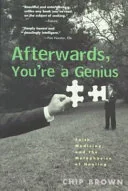
Afterwards, You're a Genius
 79
79

Afterwards, You're a Genius
Chip Brown’s "Afterwards, You're a Genius" is less a cohesive theory and more a collection of fascinating encounters. Brown, as a journalist, excels at capturing the voice and conviction of his subjects, from scientists exploring consciousness to individuals who claim direct communion with unseen forces. The book's strength lies in its unvarnished presentation of these disparate perspectives, allowing the reader to witness the often-uncomfortable dialogue between the empirical and the intuitive. A particularly arresting section details the author's own experiences with illness, grounding the more esoteric explorations in personal vulnerability. However, the book occasionally suffers from a lack of critical distance, sometimes presenting anecdotal accounts with an earnestness that borders on uncritical acceptance. The narrative momentum can falter as Brown moves between vastly different subjects without always establishing clear thematic bridges. Ultimately, it serves as a compelling, if sometimes uneven, reportage from the frontiers of belief and bodily experience.
📝 Description
79
### What It Is Chip Brown's "Afterwards, You're a Genius" is a journalistic expedition into the liminal spaces where physical and psychological well-being intersect. Published in 2000, the book chronicles Brown's engagement with a diverse cast of individuals who operate at the fringes of conventional medical and spiritual understanding. It’s an investigation into the subjective experience of illness, healing, and the myriad beliefs that shape our perceptions of both.
### Who It's For This work is for the curious mind that questions established paradigms of health and consciousness. It appeals to readers interested in the intersection of science and the seemingly unexplainable – those who seek to understand the subjective realities of healing, the role of belief, and the narratives we construct around our bodies. It’s for seekers of unconventional wisdom and empirical explorers of the mind-body connection.
### Historical Context Emerging at the turn of the millennium, "Afterwards, You're a Genius" arrived during a period of burgeoning interest in complementary and alternative medicine (CAM) and the burgeoning fields of psychoneuroimmunology. The late 20th century saw a growing, though often contentious, dialogue between Western medical establishments and alternative healing practices. Brown's work enters this conversation, positioning itself against the backdrop of established scientific materialism and the rising influence of New Age thought, while maintaining a journalistic rigor.
### Key Concepts The book explores concepts such as the placebo effect not as a mere anomaly but as a significant indicator of the mind's influence on physiology. It examines altered states of consciousness and their potential therapeutic applications, the role of personal narrative in chronic illness, and the diverse cultural and personal belief systems that inform an individual's healing journey. Brown investigates how individuals perceive and interact with phenomena often dismissed by mainstream science, including psychic abilities and spiritual guidance.
💡 Why Read This Book?
• Gain an appreciation for the breadth of human experience regarding health, understanding how figures like psychiatrist Stanislav Grof explored altered states to treat trauma, a concept detailed in the book. • Explore the profound impact of personal narrative on physical well-being by examining how individuals construct meaning around their ailments, similar to the case studies presented by Brown. • Witness the journalistic pursuit of phenomena beyond conventional science, learning how Brown approached interviews with psychics and healers in the early 2000s.
⭐ Reader Reviews
Honest opinions from readers who have explored this book.
❓ Frequently Asked Questions
What is the central theme of Chip Brown's 'Afterwards, You're a Genius'?
The book's central theme is the exploration of the complex relationship between the mind, body, and the subjective experience of health and illness, drawing on interviews with scientists, psychics, and individuals undergoing unconventional healing.
When was 'Afterwards, You're a Genius' first published?
Chip Brown's 'Afterwards, You're a Genius' was first published in the year 2000.
What kind of individuals does Chip Brown interview in the book?
Brown interviews a wide array of individuals, including scientists investigating consciousness, psychiatrists, psychics, gurus, spirit guides, and people experiencing unique health journeys, as detailed in the original blurb.
Does the book offer scientific explanations for psychic phenomena?
The book presents the perspectives of individuals who claim psychic abilities and scientists who study consciousness, but it focuses more on the subjective experience and the journalistic exploration rather than providing definitive scientific explanations.
What is the 'Esoteric' category for this book?
The 'Esoteric' category signifies the book's exploration of topics beyond mainstream scientific understanding, delving into consciousness, spirituality, and unconventional healing practices that engage with the mind-body connection on a metaphysical level.
Who is the author of 'Afterwards, You're a Genius'?
The author of 'Afterwards, You're a Genius' is Chip Brown, an American journalist known for his investigative and narrative non-fiction.
🔮 Key Themes & Symbolism
Mind-Body Interface
The work examines the intricate connections between mental states and physical health, moving beyond the Cartesian dualism that often separates them. It highlights how beliefs, perceptions, and psychological experiences can manifest as tangible physiological effects. Brown introduces readers to researchers and individuals who believe the mind possesses potent, often underestimated, capacities to influence bodily processes, challenging conventional medical models and exploring phenomena like spontaneous remission and psychosomatic illnesses with a journalistic eye.
The Nature of Consciousness
Central to the book is an inquiry into the nature of consciousness itself, particularly in relation to healing and perception. Brown engages with figures who explore altered states of consciousness, psychic phenomena, and spiritual experiences, presenting them not as fringe curiosities but as potential avenues for understanding human potential and well-being. The exploration touches upon the subjective reality of these experiences and their impact on an individual's sense of self and their interaction with the world.
Narratives of Illness and Healing
The book underscores the power of personal narratives in shaping an individual's experience of sickness and recovery. Brown presents diverse accounts of how people interpret their conditions, seek remedies, and construct meaning from their health journeys. This includes exploring how cultural beliefs, spiritual frameworks, and individual psychological landscapes interact with medical interventions and alternative healing modalities, revealing that healing is often as much a story as it is a biological process.
Belief and Reality
A recurring theme is the potent influence of belief systems on perceived reality, particularly in the context of health. Brown investigates how conviction, faith, and deeply held notions can affect outcomes, whether through the placebo effect, spiritual practices, or the conviction of psychics. The work probes the boundaries of what is considered real, suggesting that subjective experience and collective belief can create tangible effects, blurring the lines between the scientifically verifiable and the personally experienced.
💬 Memorable Quotes
“Journalist Chip Brown walks the uncharted border between mind and body...”
— This phrase encapsulates the book's investigative approach, positioning Brown as an explorer charting territories where conventional science meets subjective experience and belief.
“...introducing readers along the way to scientists and seekers, psychics and psychiatrists...”
— Highlights the diverse cast of characters encountered, representing the spectrum of approaches to understanding health, consciousness, and the unknown.
“...gurus, goddesses, and spirit guides.”
— Points to the inclusion of spiritual and metaphysical dimensions in the exploration of healing and consciousness, embracing non-materialistic perspectives.
“The work explores sickness and health as phenomena deeply intertwined with consciousness and belief.”
— This captures the core thesis that physical well-being is not solely a biological matter but is significantly shaped by psychological states and belief systems.
“Brown engages with individuals who challenge the established boundaries of medical and psychological understanding.”
— Emphasizes the book's focus on unconventional perspectives and individuals operating at the edges of mainstream thought regarding health and the human mind.
🌙 Esoteric Significance
Tradition
While not explicitly tied to a single esoteric lineage, "Afterwards, You're a Genius" engages with themes common in Hermeticism and Gnosticism, particularly the idea that subjective experience and inner knowledge hold keys to understanding reality and personal transformation. It reflects a modern, eclectic approach to esoteric thought, blending scientific inquiry with an openness to phenomena that transcend empirical measurement, echoing the Renaissance Hermetic emphasis on correspondence between the inner and outer worlds.
Symbolism
The book implicitly uses the 'border' or 'uncharted territory' as a potent symbol for the liminal spaces between the known and unknown, the physical and the metaphysical. The diverse cast of 'scientists and seekers, psychics and psychiatrists' can be seen as symbolic representations of different epistemological approaches—rational empiricism versus intuitive or spiritual knowing—navigating this borderland. The concept of 'genius' itself, as suggested by the title, symbolizes an awakened state of perception or understanding that transcends ordinary limitations.
Modern Relevance
Contemporary interest in consciousness studies, integrated medicine, and the science of well-being draws directly from the territory explored in Brown's book. Thinkers and practitioners in fields like neuroplasticity, quantum healing, and transpersonal psychology echo the book's exploration of the mind's influence on health. The growing acceptance of subjective experience as valid data in understanding human conditions aligns with the book's journalistic commitment to presenting diverse perspectives on healing and consciousness, making it relevant to current debates in holistic health and mind-body medicine.
👥 Who Should Read This Book
• Skeptics and open-minded individuals interested in the scientific study of consciousness and the placebo effect, who will find case studies challenging conventional medical paradigms. • Seekers of alternative healing modalities and those exploring the intersection of spirituality and well-being, who will encounter diverse approaches to health beyond the mainstream. • Readers fascinated by the power of belief and narrative, who will gain insight into how personal stories and convictions shape physical and psychological realities.
📜 Historical Context
Published in 2000, "Afterwards, You're a Genius" emerged at a pivotal moment when the discourse around alternative medicine and the mind-body connection was gaining significant traction, albeit often met with skepticism from the scientific establishment. This era saw the rise of fields like psychoneuroimmunology, which began to investigate the physiological impact of psychological states. Chip Brown's journalistic approach placed him in dialogue with both proponents of these burgeoning ideas and traditional medical practitioners. The book can be seen as a contemporary to works exploring consciousness and healing, existing alongside figures like psychiatrist Stanislav Grof, whose work on holotropic breathwork and transpersonal psychology explored altered states. While not a direct engagement, Brown's exploration of psychic phenomena and spiritual healing implicitly addressed the cultural currents influenced by New Age movements and a growing dissatisfaction with purely mechanistic views of the body, providing a ground-level reportage of these complex intellectual and cultural shifts.
📔 Journal Prompts
The concept of the mind-body interface as explored through the book's subjects.
Your personal narrative surrounding a past illness or healing experience.
The role of belief in your own perceptions of health and reality.
Encountering the 'uncharted border' between scientific explanation and personal experience.
The influence of 'spirit guides' or unseen forces on individual journeys.
🗂️ Glossary
Psychoneuroimmunology
A scientific field studying the interaction between psychological processes and the nervous and immune systems of the human body. It investigates how the mind can influence the body's health.
Placebo Effect
A phenomenon where a person experiences a real improvement in their condition after receiving a treatment that has no therapeutic effect, solely due to their belief in the treatment's efficacy.
Altered States of Consciousness
Any mental state significantly different from a normal waking state, often achieved through meditation, hypnosis, or psychoactive substances, explored for therapeutic or spiritual purposes.
Psychosomatic Illness
Physical diseases or symptoms that are believed to be caused or exacerbated by mental factors such as stress, anxiety, or emotional conflict.
Holotropic Breathwork
A powerful experiential psychotherapy developed by Stanislav and Christina Grof, intended to help individuals access their own inner healing wisdom and achieve non-ordinary states of consciousness.
Cartesian Dualism
Philosophical concept, largely attributed to René Descartes, that the mind (non-physical) and body (physical) are distinct and separable entities, a view challenged by many explored in the book.
Epistemology
The theory of knowledge, especially with regard to its methods, validity, and scope. Epistemology is the investigation of what distinguishes justified belief from opinion.