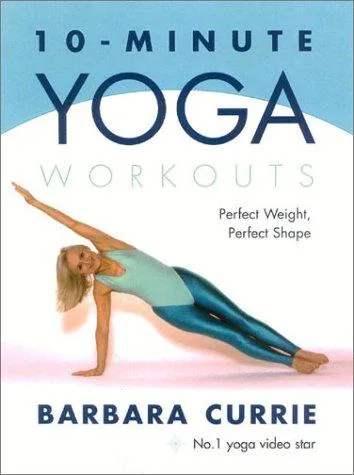
10 Minute Yoga Workouts
 81
81

10 Minute Yoga Workouts
Barbara Currie’s "10 Minute Yoga Workouts" offers a pragmatic solution to the perennial problem of finding time for self-care. Its strength lies in its directness; it doesn't promise spiritual enlightenment but delivers on its titular promise of quick, effective routines. The section detailing sequences for specific times of day, like a "Morning Energy Boost" or "Evening Relaxation," is particularly well-executed and actionable. However, the book's brevity, while its selling point, also means it offers little depth for those seeking a deeper understanding of yoga's philosophical underpinnings or advanced techniques. For the intended audience—the time-poor seeking physical and mental respite—it succeeds admirably. It is a useful tool, not a comprehensive guide.
📝 Description
81
Published in 2002, Barbara Currie's '10 Minute Yoga Workouts' offers brief routines for busy individuals.
Barbara Currie's '10 Minute Yoga Workouts,' first published in 2002, provides a collection of short yoga sequences designed for people with limited time. The book focuses on simple postures and flows that can easily fit into a daily schedule. Currie's approach emphasizes that consistent, brief practice can lead to both physical and mental improvements.
This book is suitable for individuals who struggle to find time for longer yoga classes or personal practice. It is particularly helpful for those with demanding jobs, family responsibilities, or student schedules, offering a practical way to maintain a yoga routine. Beginners to yoga, or experienced practitioners seeking to sustain their practice amidst a busy life, will find the book's structured format useful.
While yoga has deep roots in spiritual philosophy, this 2002 work emerged during a period when the practice was becoming widely adopted as a fitness and wellness regimen. Currie's book reflects this shift, prioritizing efficiency and practicality over the more complex spiritual or philosophical discussions found in older yoga texts. It aligns with a modern wellness movement that seeks accessible methods for mind-body balance, making yoga a more manageable part of everyday life for a broader audience.
💡 Why Read This Book?
• You will learn how to construct effective, short yoga sessions that fit into even the most demanding schedules, drawing from Currie's specific "Morning Energy Boost" sequence. • You will discover practical methods for integrating 'micro-practice' into your daily life, ensuring consistency and tangible benefits without requiring hours of dedication. • You will gain access to 'Accessible Asana' modifications, making yoga achievable regardless of your current fitness level or flexibility, as demonstrated in the book's pose descriptions.
⭐ Reader Reviews
Honest opinions from readers who have explored this book.
❓ Frequently Asked Questions
Is Barbara Currie's "10 Minute Yoga Workouts" suitable for absolute beginners?
Yes, the book is designed with beginners in mind. Currie focuses on 'Accessible Asana,' offering simplified poses and clear instructions to ensure that individuals new to yoga can safely and effectively follow the routines.
What is the main philosophy behind "10 Minute Yoga Workouts"?
The central philosophy is 'micro-practice' – the belief that short, consistent yoga sessions can deliver significant physical and mental benefits, making wellness accessible even for those with limited time.
When was "10 Minute Yoga Workouts" first published?
The book was first published in 2002, reflecting a growing interest in accessible wellness and mind-body practices during the early 2000s.
Does the book offer guidance for different times of the day?
Yes, it provides specific sequences tailored for different times, such as a 'Morning Energy Boost' and an 'Evening Relaxation' routine, helping users integrate yoga seamlessly into their daily rhythm.
What kind of yoga style does Barbara Currie primarily focus on?
Currie's approach emphasizes Hatha yoga principles adapted for brevity and accessibility. The focus is on foundational postures and mindful movement rather than complex or spiritually esoteric forms.
Can I achieve significant results with just 10 minutes of yoga daily?
According to Currie's 'micro-practice' philosophy, consistent 10-minute sessions can lead to noticeable improvements in flexibility, stress reduction, and overall well-being over time.
🔮 Key Themes & Symbolism
Micro-Practice Philosophy
The foundational concept of 'micro-practice' posits that short, concentrated bursts of yoga, even just ten minutes, are highly effective for physical and mental conditioning. This approach counters the notion that lengthy sessions are necessary for benefits, making yoga accessible to those with demanding schedules. Currie advocates for consistency over duration, suggesting that regular, brief engagements with asana can yield significant improvements in flexibility, strength, and stress management over time. This theme is central to the book's practical application.
Routine Integration
This theme focuses on the practical application of yoga within the existing structure of a person's day. 'Routine Integration' involves identifying specific moments—such as waking up, during a lunch break, or before sleep—and dedicating a short period to yoga. The book provides concrete examples and sequences for different times of day, demonstrating how to seamlessly tie these practices into daily life without disruption. The goal is to make yoga a sustainable habit rather than an occasional event.
Accessible Asana
Currie prioritizes 'Accessible Asana' by presenting yoga postures in a modified or simplified manner, ensuring they can be performed by individuals of varying physical abilities and experience levels. This theme emphasizes inclusivity and clarifies yoga, making it less intimidating for newcomers or those with physical limitations. The focus is on correct form and mindful execution of fundamental poses, rather than advanced or strenuous variations, promoting safety and steady progress.
Mind-Body Connection
While focusing on brevity, the book implicitly nurtures the mind-body connection. Each short workout encourages a conscious awareness of the physical sensations and breath, fostering a sense of presence. By dedicating even ten minutes to mindful movement, practitioners can begin to reduce mental clutter and cultivate a greater sense of calm and focus. This theme highlights how short practices can serve as accessible entry points to a more integrated state of being.
💬 Memorable Quotes
Direct passages from the work, attributed to the author.
“Ten minutes of focused practice can be more beneficial than an hour of distracted effort.”
— This statement captures the core 'micro-practice' philosophy, suggesting that the quality and intention behind a short yoga session outweigh the quantity of time spent, particularly for those seeking efficiency.
“Find the pockets in your day; yoga can fit.”
— This highlights the 'Routine Integration' theme, encouraging readers to actively seek out small windows of opportunity within their existing schedules to incorporate yoga practice.
“Start with the basics; mastery comes with repetition.”
— This speaks to the 'Accessible Asana' principle, advocating for a gradual approach to learning yoga postures, emphasizing consistent practice of fundamental poses over attempting complex ones prematurely.
“Your breath is your anchor in each pose.”
— This emphasizes the mind-body connection, reminding the practitioner that conscious breathing is crucial for maintaining focus and deepening the experience within each yoga posture.
💡 Key Ideas
Editorial paraphrase of the work's core concepts — not direct quotes.
Consistency is the key to unlocking yoga's benefits.
Reinforcing the 'micro-practice' idea, this quote stresses that regular, even brief, engagement with yoga is more effective for long-term well-being than sporadic, lengthy sessions.
🌙 Esoteric Significance
Tradition
While "10 Minute Yoga Workouts" is presented primarily as a fitness and wellness guide, its roots lie within the Hatha yoga tradition, which itself has esoteric underpinnings within broader yogic and Tantric philosophies. Hatha yoga, historically, was a path toward spiritual liberation through physical discipline. Currie's adaptation focuses on the physical (asana) and breath (pranayama) components, often seen as preparatory stages in more complex esoteric yogic systems aimed at energy manipulation and consciousness expansion.
Symbolism
The primary 'symbolism' at play is functional rather than purely iconographic. The 'ten-minute' structure itself symbolizes efficiency and accessibility in a fast-paced world. Individual poses, while presented functionally, can be seen as microcosms of broader yogic concepts: the stability of Tadasana (Mountain Pose) representing grounding, the openness of Bhujangasana (Cobra Pose) symbolizing the opening of the heart or energy channels, and the stillness of Savasana (Corpse Pose) representing the integration of practice and the return to consciousness.
Modern Relevance
Currie's work resonates strongly with contemporary trends in 'micro-habit' formation and the 'wellness industry.' Modern mindfulness apps, quick workout programs, and corporate wellness initiatives often echo her philosophy of integrating short, beneficial practices into busy lives. Thinkers and practitioners focused on habit psychology, productivity, and accessible self-care techniques, such as James Clear or those promoting digital detoxes, find a practical antecedent in Currie's approach to making yoga manageable.
👥 Who Should Read This Book
• Busy professionals seeking stress relief and improved physical well-being without a significant time investment. • Beginners intimidated by traditional yoga classes who want a gentle, accessible introduction to basic postures and sequences. • Individuals looking to maintain a consistent yoga practice amidst demanding personal or family responsibilities, focusing on short, effective routines.
📜 Historical Context
Published in 2002, Barbara Currie's "10 Minute Yoga Workouts" arrived during a significant cultural moment. Yoga, having gained traction in the West throughout the 20th century, was rapidly entering mainstream fitness and wellness culture. Books like Currie's reflected this shift, moving away from exclusively spiritual or complex philosophical texts towards practical, accessible guides. This period saw a proliferation of 'fitness yoga' aimed at a broader audience. Contemporaries like Rodney Yee were also popularizing accessible yoga through television and video. While not directly engaging with academic debates, Currie's work implicitly responded to a growing demand for time-efficient health solutions, contrasting with the more traditional, time-intensive approaches found in earlier yoga lineages.
📔 Journal Prompts
Reflect on the 'micro-practice' philosophy: how can ten minutes of focused effort truly make a difference in your day?
Consider the concept of 'Routine Integration': identify three specific moments in your typical day where a short yoga sequence could be realistically implemented.
Explore the 'Accessible Asana' principle: which basic yoga pose feels most challenging for you, and how might you approach it with greater ease?
Analyze the role of breath as an 'anchor' during your practice, particularly during a moment of physical strain.
How does the idea of 'consistency over duration' apply to other areas of your life beyond yoga?
🗂️ Glossary
Asana
A physical posture or pose in yoga, traditionally practiced to prepare the body for meditation and promote physical health.
Micro-practice
The concept of engaging in short, focused bursts of an activity, such as yoga, to achieve benefits efficiently, especially when time is limited.
Routine Integration
The strategy of embedding specific practices, like yoga sequences, into the existing daily schedule to ensure consistency and habit formation.
Accessible Asana
Yoga postures presented in modified or simplified forms to be easily and safely performed by individuals of varying fitness levels and flexibility.
Hatha Yoga
A branch of yoga that focuses on physical postures (asana) and breathing techniques (pranayama), often serving as a foundation for other yoga practices.
Pranayama
The practice of controlling breath, considered a vital component of yoga for regulating energy and calming the mind.
Mind-Body Connection
The interconnectedness of mental processes and physical functions, where practices like yoga aim to foster awareness and harmony between the two.
🔮 Readers Also Liked
Browse all →









More by Barbara Currie
All books →
More Free Occult Philosophy Books
View all →