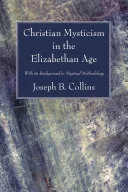
Christian Mysticism in the Elizabethan Age
 76
76

Christian Mysticism in the Elizabethan Age
Collins's "Christian Mysticism in the Elizabethan Age" provides a much-needed academic survey of a vibrant, often overlooked, spiritual undercurrent in Tudor England. The work excels in cataloging the diverse expressions of mystical experience, moving beyond simplistic Reformation narratives to reveal a more nuanced spiritual reality. Collins clearly delineates the various influences, from Neoplatonism to earlier Christian contemplative traditions, that shaped these figures. A particular strength lies in his careful examination of devotional literature, offering glimpses into the personal spiritual quests of individuals. However, the book occasionally feels more like an exhaustive inventory than a narrative, with the sheer volume of figures and ideas sometimes obscuring a central argument. The chapter discussing the influence of Pseudo-Dionysius the Areopagite offers a strong analytical point, demonstrating the deep roots of these practices. Ultimately, it serves as an indispensable reference for understanding the depth and variety of Elizabethan spiritual life.
📝 Description
76
Joseph B. Collins's 2008 study examines Christian mysticism in Elizabethan England.
Published in 2008, Joseph B. Collins's Christian Mysticism in the Elizabethan Age examines the expressions of Christian mystical thought that existed alongside established religious doctrines in England. The book details how individuals sought direct experience of the divine during a time of significant religious and intellectual change. It covers the period of the late 16th and early 17th centuries, a time when England was dealing with the aftermath of the Reformation.
The Elizabethan era was marked by the Church of England establishing its identity, while dissenting groups and individuals pursued varied theological paths. This environment fostered spiritual exploration, even amidst potential religious persecution. The study considers figures like John Dee and the continuing influence of earlier mystical traditions within this climate of intellectual curiosity.
This book places itself within the study of Western esotericism by examining how mystical currents flowed within a period of intense religious and intellectual transformation. It looks at individuals who sought direct experience of the divine, often on the edges of mainstream discourse. The work situates these practices against the backdrop of burgeoning scientific inquiry and the enduring appeal of contemplative methods, showing a complex spiritual life beyond official religious structures.
💡 Why Read This Book?
• Gain a structured understanding of the diverse mystical currents in Elizabethan England, learning about figures beyond the most prominent religious leaders, which offers a unique historical perspective on faith. • Explore the specific theological frameworks and contemplative techniques employed by Elizabethan mystics, providing concrete methods for personal spiritual inquiry that differ from modern approaches. • Understand the intellectual and religious pressures faced by mystics during the post-Reformation era, illuminating how spiritual practice adapted to or resisted prevailing doctrines.
⭐ Reader Reviews
Honest opinions from readers who have explored this book.
❓ Frequently Asked Questions
What was the religious climate like for Christian mystics in Elizabethan England?
The Elizabethan era (1558-1603) was marked by the consolidation of the Church of England after the Reformation. This created a complex environment where overt expressions of mysticism, particularly those deviating from Anglican doctrine, could face scrutiny, though a significant undercurrent of contemplative practice persisted.
Which philosophical traditions influenced Elizabethan Christian mysticism?
Elizabethan Christian mysticism drew heavily on Neoplatonism, the works of Pseudo-Dionysius the Areopagite, and earlier Christian contemplative masters like Bernard of Clairvaux. These traditions provided a framework for understanding divine ascent and direct spiritual experience.
Did Elizabethans have specific practices for achieving mystical union?
Yes, practices often included intense prayer, meditation on scripture, contemplative silence, and devotional exercises aimed at fostering a direct, personal encounter with God. The focus was on inner transformation and spiritual awareness.
How did the Reformation impact Christian mystical expression in England?
The Reformation led to a re-evaluation of religious practices. While some mystical traditions were suppressed or altered, others adapted, emphasizing inner experience and personal relationship with God, often finding expression in devotional literature and private contemplation.
Who were some key figures or movements associated with this period's mysticism?
While often less documented than mainstream figures, individuals engaged with contemplative prayer and sought direct divine experience. The book explores the broader intellectual currents that fostered these expressions, rather than focusing solely on widely known saints or reformers.
Is this book accessible to someone new to esoteric studies?
The book is primarily an academic study, offering detailed historical and theological analysis. While it provides a rich overview, readers new to esoteric studies might benefit from some familiarity with Reformation history and basic Christian theological concepts.
🔮 Key Themes & Symbolism
Inner Illumination
The concept of 'inner illumination' was central to many Elizabethan mystics, positing that direct knowledge of God or divine truth could be received through an internal, spiritual light rather than solely through external revelation or church hierarchy. This theme explores how individuals sought and validated this direct experience, often referencing biblical passages that spoke of God's spirit dwelling within believers. Collins examines the theological arguments that supported this view, distinguishing it from more institutionalized forms of religious authority and emphasizing the personal, subjective nature of mystical insight.
The Contemplative Life
This theme focuses on the practices and disciplines undertaken by Elizabethan Christians aiming for spiritual union. It delves into the methods of prayer, meditation, and self-denial that constituted the 'contemplative life'. The work details how these practices were understood as pathways to apprehending the divine presence, often drawing on ancient Christian traditions. Collins analyzes the literature and personal accounts that illustrate the commitment required for such a life, highlighting its role in fostering spiritual maturity and a deeper connection with the sacred.
Reformation Spirituality
Collins situates Christian mysticism within the turbulent context of the English Reformation. This theme investigates how mystical aspirations interacted with, or diverged from, the doctrines and structures of the newly established Protestant church and lingering Catholic influences. It addresses the challenges and opportunities faced by those pursuing direct spiritual experience in an era of intense religious debate and reform. The exploration reveals how personal faith and mystical seeking persisted and evolved amidst significant societal and ecclesiastical change.
Neoplatonic Influence
The pervasive influence of Neoplatonic thought on Christian mysticism, including during the Elizabethan age, is a key theme. This section examines how concepts such as the 'One,' emanation, and the ascent of the soul towards the divine provided a philosophical vocabulary for describing mystical experiences. Collins traces the transmission of these ideas, often through intermediaries like Pseudo-Dionysius, and analyzes how they were integrated into Christian theological frameworks to articulate the nature of God and the soul's journey towards Him.
💬 Memorable Quotes
“The quest for direct divine experience persisted despite shifting religious landscapes.”
— This highlights the enduring human drive for a personal connection with the sacred, even amidst the doctrinal upheavals of the Reformation era. It suggests that official religious structures did not entirely suppress the individual's spiritual yearning.
“Contemplative practices offered a path to apprehending the divine presence.”
— This emphasizes the active, disciplined nature of mysticism, positing that specific methods of prayer and meditation were understood as practical tools for achieving spiritual union, not merely passive states.
“Elizabethan mystics sought inner illumination distinct from external authority.”
— This points to a core tenet of mystical experience: the reliance on internal spiritual guidance and insight, which could sometimes stand apart from or challenge the pronouncements of established religious institutions.
“Neoplatonic ideas provided a framework for articulating the soul's journey.”
— This indicates the intellectual underpinnings of mystical thought, showing how philosophical concepts were adopted and adapted to explain the complex, often ineffable, process of ascending towards the divine.
“Devotional literature reveals the personal spiritual quests of the era.”
— This underscores the value of primary source materials in understanding historical mysticism, suggesting that private writings offer crucial insights into the lived religious experiences of individuals.
🌙 Esoteric Significance
Tradition
This work fits within the broad tradition of Western Esotericism, specifically examining Christian mystical branches that often operated alongside or within orthodox religious structures. It engages with the lineage of contemplative spirituality that traces back through medieval mystics to early Christian asceticism and incorporates influences from Neoplatonism. Collins's study highlights how these esoteric currents sought direct experience of the divine, often interpreting scripture and tradition through a lens of inner realization, thereby departing from purely dogmatic or institutionalized religious expression.
Symbolism
Key symbols explored include the 'divine light' representing immediate spiritual illumination and God's presence, often conceived as an inner fire or radiant essence. The 'ladder of ascent' or 'ladder of contemplation' symbolizes the soul's progressive journey towards union with God, a motif drawing heavily on Neoplatonic and Dionysian hierarchies. The concept of the 'cloud of unknowing,' derived from the anonymous 14th-century text, represents the paradoxical state where God is best approached through unknowing and transcending intellectual comprehension.
Modern Relevance
Contemporary spiritual seekers and scholars of Western Esotericism continue to draw on the study of Elizabethan Christian mysticism. Modern contemplative practices, often seeking direct experience of the sacred, find historical precedent in the methods described by Collins. Thinkers and practitioners interested in the intersection of psychology and spirituality, or those exploring the historical roots of non-dual awareness within a Western context, look to this period. The work informs contemporary discussions on the perennial nature of mystical experience across different historical and religious traditions.
👥 Who Should Read This Book
• Students of Western Esotericism: To understand the historical development and specific expressions of Christian mystical traditions within a pivotal European era. • Religious Historians: To gain a nuanced perspective on post-Reformation spirituality and the diverse ways faith was practiced beyond official church doctrines. • Contemplative Practitioners: To discover historical methods and theological underpinnings of seeking direct divine experience, offering context for contemporary spiritual disciplines.
📜 Historical Context
The Elizabethan era, spanning 1558 to 1603, was a period of profound religious and political transition in England. Following the volatile reigns of Henry VIII, Edward VI, and Mary I, Elizabeth I sought to establish a stable Church of England, navigating between Catholic traditions and emerging Protestant reforms. This created an environment where spiritual exploration was both constrained by official doctrine and, in some circles, intensely pursued. Figures like John Dee engaged in complex spiritual and intellectual pursuits, while various Puritan and Anabaptist groups sought more radical reform. The era also saw the continued influence of Renaissance humanism and the rediscovery of ancient philosophical texts, including Neoplatonic writings, which provided a conceptual language for mystical thought. While overt dissent could lead to persecution, a rich undercurrent of private devotion and mystical seeking flourished, often expressed through sermons, devotional manuals, and personal correspondence, subtly challenging the boundaries of religious conformity.
📔 Journal Prompts
Reflect on the concept of 'inner illumination' as presented in the Elizabethan context.
Consider the practicalities of the 'contemplative life' during the Reformation.
Analyze the influence of Neoplatonism on Elizabethan mystical thought.
Examine how religious authority was perceived by those seeking direct divine experience.
Explore the enduring relevance of devotional literature for understanding personal spirituality.
🗂️ Glossary
Inner Illumination
The concept that divine knowledge or spiritual insight is directly imparted to the individual's consciousness by God, independent of external mediators or established doctrine.
Contemplative Life
A way of life dedicated to prayer, meditation, and the cultivation of a direct, experiential relationship with the divine, often involving withdrawal from worldly distractions.
Neoplatonism
A philosophical system derived from Plato, emphasizing a transcendent 'One' from which all reality emanates, and a spiritual ascent of the soul back to this source.
Pseudo-Dionysius the Areopagite
A 5th or 6th-century Syrian monk whose writings, attributed to Dionysius (a convert of St. Paul), were highly influential in medieval and Renaissance Christian mysticism, particularly regarding apophatic theology and divine hierarchies.
Reformation
The 16th-century religious movement that led to the establishment of Protestant churches, challenging the authority and doctrines of the Roman Catholic Church.
Apophatic Theology
A theological approach that describes God by negation, emphasizing what God is not, rather than what God is, due to God's ineffable transcendence.
Devotional Literature
Writings focused on expressing religious faith, prayer, and meditation, often intended to inspire piety and guide spiritual practice among believers.