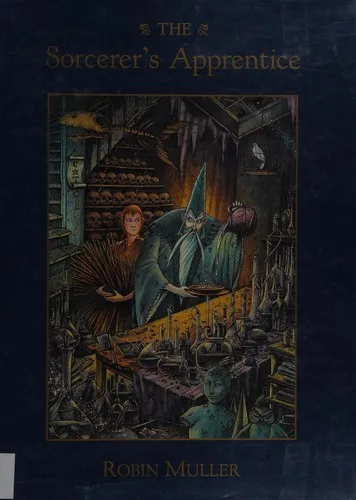
The sorcerer's apprentice
 76
76

The sorcerer's apprentice
Robin Muller’s The Sorcerer's Apprentice avoids the common pitfall of presenting magic as a mere tool for wish fulfillment. Instead, it grounds its narrative in the rigorous self-discipline and internal transformation that true arcane work necessitates. The strength of the book lies in its allegorical depth; it doesn't just describe magical processes, it embodies them through character and plot, making abstract principles palpable. A particular passage that stands out is the depiction of the apprentice's first successful invocation, which is less about raw power and more about the painstaking alignment of intent and inner state. Its limitation, however, is that the narrative sometimes becomes dense, requiring considerable reader engagement to fully unpack its layers of meaning. This isn't a casual read, but one that rewards close attention.
Muller’s work offers a vital perspective on the sorcerer's journey, emphasizing the internal over the external. It is a valuable addition for those seeking a more nuanced understanding of magical development.
📝 Description
76
Robin Muller's The Sorcerer's Apprentice, published in 1985, uses narrative to frame magical practice.
This book presents a story that illustrates the principles behind magical work, going beyond simple spells to address the psychological development of a practitioner. It uses allegorical tales to explain complex occult ideas, serving as both a story and a manual for understanding the inner workings of magic.
It is intended for readers interested in the philosophical foundations of magic, not just ritualistic instructions. Those who appreciate stories as a method for conveying knowledge will find it appealing. The text is especially relevant for students of Western esotericism who study how magical thought changed in the late 20th century. It speaks to practitioners who want to grasp the reasoning behind magical techniques.
Muller's book appeared during a time of revived interest in occultism, following the cultural shifts of the 1960s and 70s. While earlier authors like Aleister Crowley and Dion Fortune had written key texts, the 1980s saw a wider variety of esoteric publications. The Sorcerer's Apprentice is part of a trend where authors explained magical ideas through psychological or narrative approaches, differing from more rigid older methods. This work also relates to the growing academic study of esoteric subjects.
Emerging in 1985, The Sorcerer's Apprentice reflects a post-counterculture wave of esoteric interest, distinct from earlier occult revivalists. While figures like Aleister Crowley laid groundwork, Muller's approach aligns with a late 20th-century trend that favored psychological and narrative frameworks for understanding magic. This book engages with the developing academic study of esotericism, articulating magical principles in ways that are less dogmatic and more focused on personal development and the internal experience of power.
💡 Why Read This Book?
• Learn about the concept of the 'inner apprentice' and how to cultivate self-mastery, a crucial element often overlooked in superficial magical training. • Understand the ethical responsibilities inherent in wielding magical power, as depicted through the narrative's exploration of consequence and intent. • Gain insight into the 1985 esoteric landscape by examining how Muller approached magical theory during a period of renewed occult interest.
⭐ Reader Reviews
Honest opinions from readers who have explored this book.
❓ Frequently Asked Questions
When was The Sorcerer's Apprentice first published?
The Sorcerer's Apprentice by Robin Muller was first published in 1985, contributing to the wave of esoteric literature that gained prominence in the late 20th century.
What is the main focus of The Sorcerer's Apprentice?
The book focuses on the philosophical and psychological aspects of magical practice, exploring the sorcerer's development, the nature of will, and ethical considerations rather than just spellcasting.
Is The Sorcerer's Apprentice suitable for beginners in magic?
While accessible, it's best suited for those with an interest in the deeper, theoretical aspects of magic. Beginners might benefit from reading it alongside introductory texts on occult philosophy.
What kind of reader would most appreciate Robin Muller's work?
Readers interested in comparative occultism, narrative allegories of magical training, and the evolution of esoteric thought in the late 20th century would find this book particularly engaging.
Does the book contain practical spells or rituals?
The Sorcerer's Apprentice is primarily concerned with the underlying principles and inner work of magic, rather than providing a manual of practical spells or rituals.
What esoteric tradition does The Sorcerer's Apprentice draw upon?
It draws broadly from Western esoteric traditions, focusing on the internal discipline and psychological transformation central to the sorcerer's path, without strictly adhering to a single lineage.
🔮 Key Themes & Symbolism
The Cultivation of Will
The work emphasizes that true magical power is not an external force to be commanded, but an internal faculty developed through rigorous discipline. Muller explores how the sorcerer's will must be honed, refined, and precisely directed, akin to a sculptor shaping raw material. This isn't about forceful imposition but about a deep alignment of consciousness, a concept central to many Western magical traditions that prioritize inner transformation over external manipulation.
Inner Transformation as Foundation
A core tenet presented is that external magical operations are secondary to the internal changes within the practitioner. The 'apprentice' must first master aspects of their own psyche—desires, fears, and ego—before they can reliably engage with arcane forces. This perspective aligns with initiatory models where the student's evolution is paramount, suggesting that magical efficacy is directly proportional to self-awareness and ethical grounding.
Ethical Dimensions of Power
The narrative likely looks at the profound ethical considerations that accompany the pursuit and use of magical abilities. It suggests that wielding power, even for seemingly benign purposes, carries inherent responsibilities and potential consequences. This theme serves as a critical counterpoint to sensationalized depictions of magic, grounding the practice in a framework of accountability and wisdom.
The Master-Apprentice Dynamic
Beyond the literal student-teacher relationship, the book may explore the internal dialogue between the aspiring sorcerer and their higher self or guiding wisdom. This dynamic is crucial for reading through the challenges and pitfalls of magical training, representing the constant interplay between impulse and control, ignorance and understanding, that defines the initiatory path.
💬 Memorable Quotes
Direct passages from the work, attributed to the author.
“Will without understanding is but a storm in a teacup.”
— This interpretation underscores the necessity of knowledge and wisdom to accompany the exercise of magical will, warning against uncontrolled or misdirected intent.
“The apprentice’s greatest tool is not the wand, but the silence within.”
— This concept points to the importance of inner stillness and contemplation for magical practice, suggesting that true power arises from inner discipline rather than outward display.
“Every spell cast leaves an echo; the sorcerer must listen.”
— This phrase emphasizes the principle of consequence in magic, suggesting that actions have repercussions that the practitioner must be aware of and accountable for.
“The path of magic is the path of self-discovery, often through arduous trial.”
— This interpretation frames magical pursuit as fundamentally an introspective journey, one that demands perseverance and learning from difficult experiences.
💡 Key Ideas
Editorial paraphrase of the work's core concepts — not direct quotes.
The true sorcerer works not upon the world, but upon the self.
This paraphrased concept highlights the book's focus on internal transformation as the prerequisite for any effective external magical work, emphasizing self-mastery.
🌙 Esoteric Significance
Tradition
The work aligns with the broader Western esoteric tradition, particularly its Hermetic and Renaissance magical currents, which emphasize the power of the human will and the importance of self-knowledge. It departs from purely ritualistic or ceremonial magic by focusing on the internal, psychological transformation of the practitioner as the primary engine of magical effect. This speaks to traditions that view magic as a path of personal evolution and spiritual development.
Symbolism
Key symbolic motifs likely include the 'apprentice' figure, representing the neophyte or undeveloped aspect of the self; the 'master,' symbolizing higher wisdom or the perfected self; and the 'workshop' or 'laboratory,' representing the mind or inner space where magical work is conducted. The act of 'casting' or 'invoking' itself symbolizes the directed application of consciousness and will.
Modern Relevance
Contemporary practitioners of chaos magic and psychological occultism, who emphasize the malleable nature of belief and the power of focused intent, can find traces of Muller's approach. Thinkers exploring the intersection of psychology and spirituality, as well as writers focusing on personal development through esoteric frameworks, continue to draw on the core ideas of internal discipline and the ethical use of focused will.
👥 Who Should Read This Book
• Aspiring practitioners of Western esotericism seeking to understand the foundational principles of magical will and self-discipline. • Students of comparative religion and occult history interested in late 20th-century esoteric literature and its conceptual frameworks. • Readers who appreciate allegorical and philosophical narratives that explore themes of power, responsibility, and personal growth.
📜 Historical Context
Published in 1985, Robin Muller's *The Sorcerer's Apprentice* emerged during a period of significant resurgence in esoteric studies and occult publishing, following the counterculture movements of the preceding decades. While the foundations of modern Western magic had been laid by figures like Aleister Crowley and the Hermetic Order of the Golden Dawn in earlier eras, the 1980s saw a diversification of approaches. Muller’s work contributed to a trend of articulating magical principles through narrative and psychological frameworks, moving beyond the more ritualistic or dogmatic presentations common in earlier literature. It engaged with the growing academic interest in Western esotericism, offering a text that could be appreciated for its literary merit as well as its philosophical content, distinct from the more New Age-oriented material also prevalent at the time.
📔 Journal Prompts
The sorcerer's self-mastery: Where does your inner apprentice require further training?
Reflect on the concept of 'will without understanding.' How can you ensure your intentions are informed by wisdom?
Consider the 'echo' of magical actions. How can you become more attuned to the consequences of your will?
Analyze the dynamic between the apprentice and master within your own understanding of magical development.
Explore the idea of the mind as a 'workshop.' What elements are you currently shaping or refining?
🗂️ Glossary
Arcane Forces
Refers to occult or hidden energies and powers that are believed to be manipulable through magical practices. These are often conceptualized as fundamental energies of the universe or consciousness.
Will
In an esoteric context, 'will' is not merely desire but a focused, directed force of consciousness, often seen as the primary tool of the sorcerer for effecting change, both internally and externally.
Inner Apprentice
A metaphorical representation of the undeveloped or untrained aspect of the practitioner's psyche that must undergo discipline and refinement before engaging in advanced magical work.
Invocation
The act of calling upon or inviting a force, entity, or aspect of consciousness, often with the aim of integrating its qualities or directing its influence.
Self-Knowledge
A fundamental concept in many esoteric traditions, referring to a deep understanding of one's own psychological makeup, motivations, strengths, and weaknesses, essential for effective magical practice.
Allegory
A story, poem, or picture that can be interpreted to reveal a hidden meaning, typically a moral or political one. In this context, it refers to using narrative to convey complex esoteric principles.
Esotericism
Systems of thought and practice concerned with hidden or secret knowledge, often related to spiritual development, the nature of reality, and the occult, typically passed down through initiatory traditions.
🔮 Readers Also Liked
Browse all →








More Free Magic & Ritual Books
View all →