The Nutcracker
 83
83

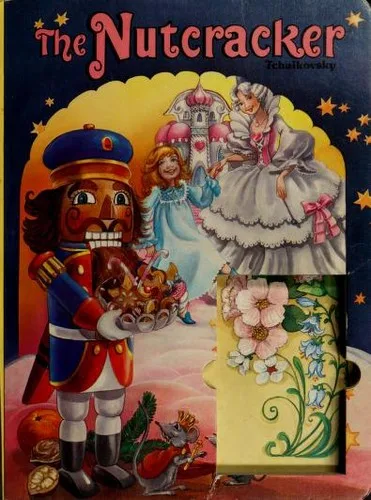
The Nutcracker
Hoffmann's "The Nutcracker" presents a peculiar, often unsettling, yet undeniably inventive exploration of a child's psyche. The initial Christmas setting, a common trope, is quickly subverted by the introduction of the titular, rather grotesque, nutcracker. Its transformation into a princely figure within Marie's dreams is where the work truly gains its peculiar momentum. The vivid, often nightmarish, descriptions of the battle against the seven-headed Mouse King are a particular strength, showcasing Hoffmann's ability to imbue the fantastical with a sense of genuine peril. However, the narrative can become somewhat convoluted, particularly in its later stages, as the transitions between Marie's dream states and perceived reality become increasingly fluid. The abrupt shift from the fantastical to a more didactic conclusion, focusing on the philosophical implications of imagination, feels slightly at odds with the earlier, more visceral, dream sequences. Nonetheless, for its audacious blend of the charming and the macabre, the work remains a singular achievement in early Romantic fantasy.
📝 Description
83
Published in 1816, E. T. A. Hoffmann's 'The Nutcracker' examines childhood perception and the uncanny.
The story begins on Christmas Eve when young Marie receives a wooden nutcracker. This gift quickly becomes central to her imaginative world as the narrative shifts into her dreams, blurring the lines between what is real and what is fantasy. Marie's experiences in this dreamscape involve a conflict between her nutcracker, who transforms into a prince, and the tyrannical Mouse King.
Her journey continues to the Land of Sweets, a place governed by the Sugar Plum Fairy. This fantastical realm serves as a backdrop for Marie's further encounters and reflections. The tale questions the nature of reality and the impact of belief on perception, weaving together elements of childhood wonder with darker, more unsettling undertones.
Emerging from the German Romantic period, Hoffmann's work aligns with a tradition that explored the irrational, the supernatural, and the psychological depths beneath the surface of everyday life. This era saw writers delve into the subconscious, the world of dreams, and the grotesque, often contrasting rational thought with magical or uncanny experiences. 'The Nutcracker' reflects this fascination with duality and the hidden life of things, placing it within a literary current that valued emotion and imagination over strict reason.
💡 Why Read This Book?
• You will experience the unsettling power of a child's imagination when confronted with the uncanny, particularly through the detailed dream sequences involving the Nutcracker and the Mouse King, as depicted in the original 1816 publication. • You will gain an understanding of how early 19th-century German Romanticism viewed the interplay between the rational and the irrational, as seen in Hoffmann's blurring of dream and reality. • You will encounter a seminal work that influenced later interpretations of fairy tales, offering a complex, psychological take on the Nutcracker story distinct from later, more sanitized versions.
⭐ Reader Reviews
Honest opinions from readers who have explored this book.
❓ Frequently Asked Questions
When was E. T. A. Hoffmann's "The Nutcracker" first published?
E. T. A. Hoffmann's "The Nutcracker," originally titled "Nussknacker und Mausekönig" (The Nutcracker and the Mouse King), was first published in 1816 as part of the collection "Kinder-Märchen" (Children's Fairy Tales).
What is the primary difference between Hoffmann's original story and the ballet adaptation?
Hoffmann's original story is significantly darker and more psychologically complex, featuring elements of the grotesque and horror, particularly in the battle against the seven-headed Mouse King, whereas the ballet often emphasizes the magical and festive aspects.
Who is the author of "The Nutcracker" and what literary movement is he associated with?
The author is E. T. A. Hoffmann, a key figure in German Romanticism, a literary and artistic movement that flourished in the early 19th century, characterized by its emphasis on emotion, imagination, and the supernatural.
What are some key themes explored in Hoffmann's "The Nutcracker"?
Key themes include the power of imagination, the uncanny, the transition from childhood innocence to a more complex understanding of the world, and the hidden life of inanimate objects, particularly the nutcracker itself.
Is "The Nutcracker" considered an esoteric text?
While not explicitly a grimoire or occult manual, "The Nutcracker" is often analyzed through an esoteric lens due to its deep symbolism, exploration of the subconscious, and its engagement with Romanticism's fascination with the hidden and the magical.
What is the significance of the Mouse King in the story?
The seven-headed Mouse King represents a primal, often fearful, aspect of the subconscious or a challenge to the established order within Marie's dream world, acting as the primary antagonist to the Nutcracker.
🔮 Key Themes & Symbolism
The Uncanny and the Inanimate
Hoffmann masterfully injects a sense of the uncanny into the familiar figure of the nutcracker. The object, meant for cracking nuts, becomes animated and imbued with a princely persona within Marie's dreamscape. This explores the Romantic fascination with the 'double' and the idea that inanimate objects can possess a hidden, sometimes unsettling, life. The transformation from a crude tool to a heroic figure highlights the subjective reality created by intense imagination, blurring the lines between the material and the magical.
Childhood Perception and Reality
The narrative is deeply rooted in the perspective of childhood, specifically Marie's. The story examines how a child's perception can construct elaborate realities from seemingly mundane events or objects. The Christmas Eve setting, a time of wonder, becomes the catalyst for a profound psychological journey. Hoffmann probes the intensity of a child's belief and the frightening manifestations that can arise when imagination takes flight, particularly in the face of the grotesque and the threatening.
The Battle of Opposites
Fundamentally, the story presents a symbolic battle between opposing forces. The Nutcracker, representing order, perhaps burgeoning masculinity or the heroic ideal, confronts the tyrannical, many-headed Mouse King, embodying chaos, fear, and the primal. This conflict, played out in the fantastical area of dreams, mirrors internal struggles and the challenges of working through the transition from innocence to a more mature understanding of the world's dualities.
💬 Memorable Quotes
Direct passages from the work, attributed to the author.
“The Nutcracker and the Mouse King”
— This title itself captures the central conflict, hinting at the dualistic nature of the narrative and the clash between a protective, perhaps nascent, heroic figure and a monstrous, chaotic force.
“The Land of Sweets”
— This fantastical destination represents a area of pure wish fulfillment and imaginative escape, a reward or ultimate destination within the dream, symbolizing the idealized world that the imagination can conjure.
“The seven-headed Mouse King”
— This grotesque antagonist embodies a concentrated form of fear and chaos, a manifestation of the anxieties and darker aspects that a child's (or anyone's) subconscious might project.
“Marie's father explaining the nutcracker's mechanism”
— This moment grounds the fantastical object in a semblance of reality, highlighting the contrast between its mechanical function and its later magical role within the dream narrative.
“The transformation of the Nutcracker”
— This important event signifies the power of belief and imagination to imbue the ordinary with extraordinary significance, turning a simple toy into a living prince.
🌙 Esoteric Significance
Tradition
While not directly aligned with a specific esoteric lineage like Hermeticism or Gnosticism, Hoffmann's work taps into a broader Romantic fascination with the hidden dimensions of reality, the power of the subconscious, and the symbolic language of dreams, which are common threads in many esoteric traditions. It reflects a worldview where the material world is but one layer, and inner states possess potent, transformative power.
Symbolism
The Nutcracker itself symbolizes the potential for transformation and hidden nobility within the seemingly mundane or even crude. The seven-headed Mouse King represents primal chaos and fear, a formidable obstacle to be overcome by inner strength. The journey to the Land of Sweets signifies the attainment of idealized wish fulfillment, a paradise conjured by the imagination, often a motif in visionary or mystical experiences.
Modern Relevance
Contemporary explorations of Jungian psychology, particularly the concepts of the shadow and archetypes, find resonance in Hoffmann's work. The narrative's focus on the power of dreams and the subjective construction of reality continues to influence artists, writers, and filmmakers exploring psychological landscapes and the blurring of perception. Its themes are revisited in modern fantasy and psychological thrillers.
👥 Who Should Read This Book
• Students of German Romanticism: Those studying the literary and philosophical currents of the early 19th century will find Hoffmann's "The Nutcracker" a vital primary source for understanding the movement's fascination with the irrational and the subjective. • Practitioners interested in dream analysis: Readers drawn to the symbolic interpretation of dreams and the subconscious mind will appreciate the narrative's exploration of how inner states can manifest as external realities. • Comparative literature scholars: Individuals examining the evolution of fairy tales and their psychological underpinnings will benefit from engaging with Hoffmann's original, complex, and often darker version of the familiar story.
📜 Historical Context
E. T. A. Hoffmann's "The Nutcracker and the Mouse King" emerged in 1816, a period steeped in German Romanticism. This era championed emotion, imagination, and the supernatural, often exploring the darker, psychological aspects of human experience. Hoffmann, a key figure, frequently explored themes of duality, dreams, and the uncanny, contrasting the mundane with the fantastical. His work stood apart from the more overtly philosophical or nationalistic currents of some Romanticism, focusing instead on individual subjective experience and the unsettling power of the imagination. The tale was initially published within a collection of children's tales, "Kinder-Märchen," yet its complex psychological depth and moments of genuine horror set it apart from typical children's literature of the time. Its reception was varied, with some appreciating its inventiveness while others found its darker elements disturbing. Contemporaries like Novalis and Tieck also explored dreamlike states and the fantastical, but Hoffmann's particular blend of the grotesque and the childlike resonated uniquely.
📔 Journal Prompts
The Nutcracker's transformation from toy to prince.
The seven-headed Mouse King as a symbol of internal conflict.
Marie's perception of the Christmas Eve party.
The Land of Sweets as a projection of desire.
The contrast between the mechanical and the magical.
🗂️ Glossary
The Uncanny
A psychological concept describing the feeling of unease or strangeness evoked by something that is both familiar and alien, often related to the return of the repressed or the animation of the inanimate.
German Romanticism
An intellectual and artistic movement in early 19th-century Germany, emphasizing emotion, individualism, imagination, and often a fascination with the supernatural, the medieval, and the grotesque.
Duality
The existence of two opposing or contrasting aspects, principles, or entities, a common theme in Hoffmann's work exploring the tension between reason and emotion, reality and dream, good and evil.
Inanimate Object Animation
The attribution of life or consciousness to non-living things, a recurring motif in Hoffmann's stories that explores the boundaries of perception and the power of belief.
Subconscious
The part of the mind of which we are not aware and which influences our actions and feelings; explored by Hoffmann through dream sequences and psychological manifestations.
Grotesque
A style characterized by distortion, exaggeration, and a combination of the comic and the horrific, often used by Hoffmann to create unsettling and memorable imagery.
Kinder-Märchen
German for 'Children's Fairy Tales,' the collection in which Hoffmann's "The Nutcracker and the Mouse King" was first published in 1816.
🔮 Readers Also Liked
Browse all →








More Free Magic & Ritual Books
View all →