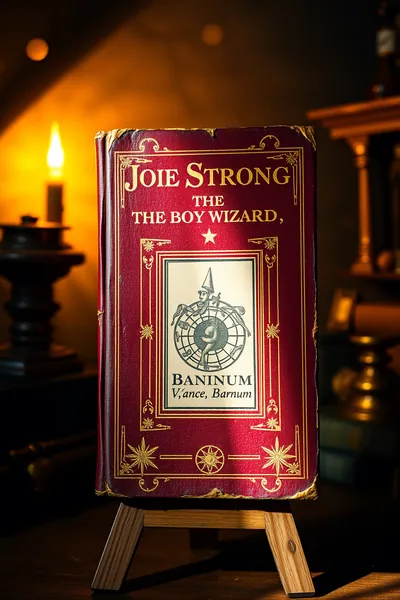
The Magus, Book 1
 71
71

The Magus, Book 1

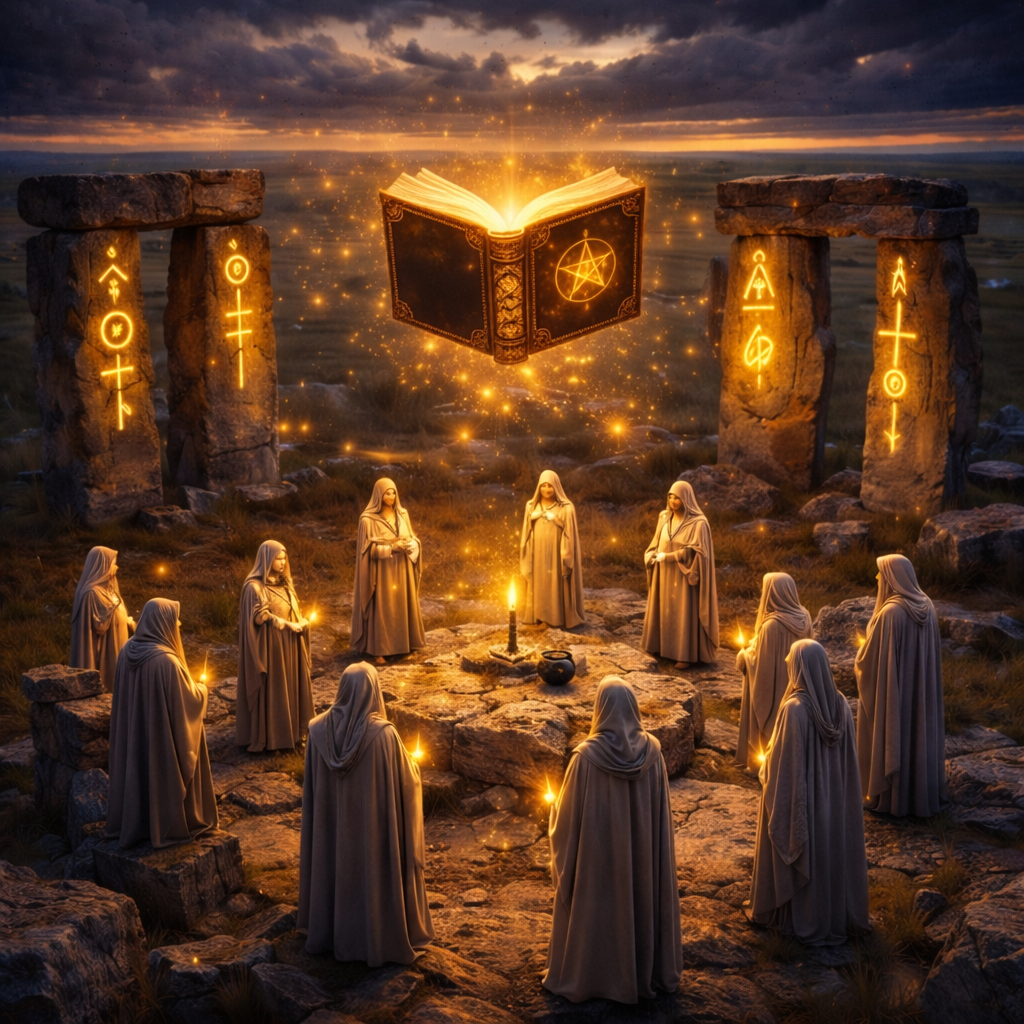

Alaric Kestrel (Metaphysical Studies Reviewer): Francis Barrett’s 'The Magus, Book 1' stands as a monumental achievement in the preservation and dissemination of esoteric lore. This comprehensive treatise offers unparalleled clarity on the foundational principles of Western magic, integrating diverse streams of ancient knowledge into a cohesive whole. Barrett’s meticulous organization and insightful commentary make complex concepts accessible, fostering a deep understanding of magical theory and practice. Its enduring strength lies in its synthesis of Kabbalistic, astrological, and alchemical doctrines, providing practitioners and scholars alike with an invaluable roadmap for spiritual exploration. A truly essential text for anyone serious about the occult arts.
📝 Description
71
Embark on a profound journey into the heart of Western esoteric wisdom with Francis Barrett's seminal work, 'The Magus, Book 1.' Published at the cusp of a new century, this masterful compendium unfurls a rich tapestry of arcane knowledge, weaving together the threads of natural magic, celestial astrology, the profound mysteries of the Kabbalah, and the alchemical quest for transformation. Barrett, a devoted scholar of the occult, meticulously reconstructs and illuminates ancient traditions, drawing inspiration from the Renaissance masters. This volume is not merely a historical artifact; it is a vibrant gateway, inviting serious students and intrepid seekers to delve into the hidden correspondences of the universe and unlock the secrets of spiritual mastery. Its intricate diagrams, philosophical discussions, and practical insights offer a comprehensive framework for understanding the interconnectedness of all things, making it an indispensable resource for those drawn to the deeper currents of existence.
✍️ Author
Francis Barret
List of English writers lists writers in English, born or raised in England (or who lived in England for a lengthy period), who already have Wikipedia pages. References for the information here appear on the linked Wikipedia pages.
💡 Why Read This Book?
Unravel the foundational principles of Western magic, explore the intricate links between astrology, Kabbalah, and alchemy, and gain access to a wealth of arcane knowledge. Ideal for dedicated students of the occult, spiritual seekers yearning for deeper understanding, and practitioners seeking to enrich their magical practice with historical depth and theoretical rigor. 'The Magus, Book 1' offers a clear path into the heart of esoteric philosophy.
⭐ Reader Reviews
Honest opinions from readers who have explored this book.
❓ Frequently Asked Questions
What is the primary focus of 'The Magus, Book 1'?
The book serves as a comprehensive guide to Western esoteric traditions, synthesizing natural magic, astrology, Kabbalah, and alchemy for a 19th-century audience, aiming to revive and organize arcane knowledge.
Who was Francis Barrett?
Francis Barrett was an English occultist and author, deeply interested in reviving and systematizing magical traditions. 'The Magus' is his most significant contribution to occult literature.
What kind of magical practices are discussed?
The book delves into theoretical aspects of magic, including the use of talismans, astral projection, and the understanding of divine names and angelic hierarchies, rather than providing direct spellcraft.
Is this book suitable for beginners?
While comprehensive, it requires a dedicated reader. Beginners may find it dense but rewarding with focused study, especially when approached with an interest in historical magical theory.
What is the relationship between Book 1 and Book 2?
Book 1 focuses on foundational theories, principles, and the theoretical underpinnings of magic. Book 2, though less commonly published, was intended to offer more practical applications and rituals.
🔮 Key Themes & Symbolism
The Synthesis of Esoteric Disciplines
Barrett masterfully weaves together disparate strands of Western occultism—natural magic, astrology, Kabbalah, and alchemy—creating a unified framework of arcane knowledge. This synthesis reveals the interconnectedness of cosmic forces and their influence on the terrestrial realm. The book demonstrates how understanding the celestial patterns (astrology), the divine language (Kabbalah), and the transformative processes (alchemy) can unlock the principles of natural magic, offering a holistic approach to spiritual and practical application. It’s a testament to the belief that true magical understanding arises from the integration of these ancient wisdom traditions.
The Revival of Ancient Magical Arts
Published at a time when much esoteric knowledge was fragmented or lost, 'The Magus, Book 1' served as a crucial effort to revive and codify the magical arts. Barrett drew heavily from Renaissance occultists and earlier philosophical texts, meticulously organizing and presenting this knowledge for a new era. His aim was to reintroduce the power and efficacy of these ancient practices, demonstrating their continued relevance and potential for those seeking to understand the hidden workings of the universe. The book acts as a bridge between historical magical thought and the burgeoning interest in the occult at the dawn of the 19th century.
The Power of Symbolism and Divine Names
Central to Barrett's magical philosophy is the profound significance of symbols and divine names. The text explores how specific correspondences, sigils, and the proper invocation of divine appellations can serve as keys to unlocking spiritual power and influencing the material world. It emphasizes that true magic lies not in mere incantation, but in a deep comprehension of the underlying symbolic language of creation. Through intricate diagrams and detailed explanations, Barrett guides the reader to perceive the hidden order and the potent forces that are revealed through the careful study and application of these sacred elements.
💬 Memorable Quotes
“The whole world is a great book, and the wise man reads it with his eyes.”
— This quote highlights the esoteric view of the cosmos as a divinely written text, accessible through keen observation and understanding of its intricate patterns and correspondences.
“Magic is the science and art of causing change to occur in conformity with will.”
— This concise definition encapsulates the core principle of ceremonial magic: the intentional application of will and knowledge to manifest desired outcomes in the physical world.
“The Kabbalah is the key that unlocks the mysteries of the Old Testament.”
— This emphasizes the Jewish mystical tradition's role as a hermeneutic tool, suggesting that a deeper, spiritual understanding of scripture is revealed through its esoteric interpretations.
“Astrology is the language of the stars, which speaks to the wise.”
— This poetic statement underscores the belief that celestial movements are not random but convey significant information and guidance, understandable to those who have learned to interpret their cosmic dialogue.
“True knowledge is not acquired by hearsay, but by experience.”
— This reflects a fundamental tenet of mystical and practical occultism, stressing the importance of direct, personal experience and inner realization over theoretical learning alone.
🌙 Esoteric Significance
Tradition
This work is a cornerstone of Western Esotericism, specifically drawing heavily from Hermeticism, Kabbalah, Renaissance magic, and astrological traditions. It aims to synthesize these disparate yet interconnected streams of thought into a coherent system of magical philosophy and practice. Barrett’s approach reflects the Neoplatonic ideal of understanding the divine through the study of nature and symbolic correspondences, presenting magic as a legitimate path to spiritual enlightenment and interaction with higher realms.
Symbolism
The Magus is rich with symbolism, utilizing diagrams of celestial spheres, angelic hierarchies, alchemical processes, and Kabbalistic Tree of Life as visual keys to understanding cosmic order. Barrett emphasizes the power of divine names, sigils, and sacred geometry as conduits for spiritual energy and manifestation. The book teaches that the universe is imbued with symbolic meaning, and by deciphering these symbols, one can gain insight into the divine plan and the hidden forces that govern reality, enabling a more profound connection with the sacred.
Modern Relevance
Despite its 19th-century origins, 'The Magus, Book 1' remains remarkably relevant for contemporary practitioners and scholars of esotericism. Its comprehensive overview of foundational magical principles provides an invaluable historical and theoretical context for modern magical systems. The emphasis on synthesis, the study of symbolism, and the rigorous approach to arcane knowledge continues to inspire those seeking a deeper, more structured understanding of magic and metaphysics. It serves as a vital resource for navigating the vast landscape of esoteric thought and for developing a personal magical philosophy grounded in historical wisdom.
👥 Who Should Read This Book
This text is essential for serious students of Western Esotericism, including those interested in the history of magic, Kabbalah, astrology, and alchemy. Scholars of religious studies and philosophy will find its comprehensive synthesis illuminating. Dedicated practitioners seeking to deepen their theoretical understanding and historical grounding will benefit greatly. While its density may present a challenge for absolute beginners, those with a strong desire to explore the roots of occult philosophy and a willingness for dedicated study will find 'The Magus, Book 1' an immensely rewarding and foundational text.
📜 Historical Context
Francis Barrett's 'The Magus, Book 1,' published in 1801, emerged during a period of intense interest in the occult and spiritualism in Europe, often termed the Romantic era. This era saw a reaction against the purely rationalistic Enlightenment, with a renewed fascination for ancient wisdom, mystery religions, and the supernatural. Following the societal upheavals of the French Revolution, many sought solace and meaning in esoteric traditions. Barrett's work capitalized on this intellectual climate, aiming to synthesize and present the scattered fragments of Western magic—from Neoplatonism and Hermeticism to Kabbalah and Renaissance grimoires—in a systematic manner. It sought to revive a perceived golden age of magical understanding for a new generation grappling with modernity, positioning itself as a vital bridge between historical esoteric practices and the evolving spiritual landscape.
📔 Journal Prompts
Reflect on the concept of the universe as a 'great book' as described by Barrett. What patterns or symbols do you observe in your daily life that might represent cosmic correspondences?
Barrett synthesizes multiple esoteric traditions. Which of these traditions (magic, Kabbalah, astrology, alchemy) resonates most with you, and why?
Consider the quote: 'Magic is the science and art of causing change to occur in conformity with will.' How do you currently align your will with natural processes or desired outcomes?
The book emphasizes the power of divine names and symbols. Brainstorm a personal symbol or a divine name that holds significant meaning for you, and meditate on its potential energetic influence.
How can the integration of different wisdom traditions, as presented by Barrett, lead to a more profound understanding of reality and one's place within it?
🗂️ Glossary
Kabbalah
A system of Jewish mysticism that explores the nature of God and the universe through esoteric interpretations of scripture, often involving symbolic diagrams like the Tree of Life.
Alchemy
An ancient practice involving the transformation of matter, often associated with the pursuit of the elixir of life and the transmutation of base metals into gold, but also deeply symbolic of spiritual purification.
Astrology
The study of the movements and relative positions of celestial bodies interpreted as having an influence on human affairs and the natural world.
Talismans
Objects believed to possess magical properties, often inscribed with symbols, divine names, or astrological symbols, intended to attract specific influences or provide protection.
Sigil
A symbol, often created through a specific process, believed to hold magical power or represent a specific intent or entity, used in ritualistic magic.