The holy book of women's mysteries

 82
82

The holy book of women's mysteries
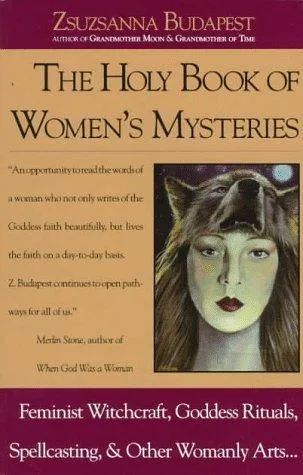
Zsuzsanna Emese Budapest’s *The Holy Book of Women's Mysteries* functions less as a historical survey and more as a practical grimoire for a specific spiritual path. Its enduring strength lies in its clear, step-by-step presentation of rituals and the Divine Feminine cosmology it champions, making it accessible to newcomers. Budapest’s direct, authoritative voice guides the reader through invoking the Goddess and structuring sacred space. However, the book’s inherent focus is narrow; readers seeking comparative mythology or a broader historical overview of witchcraft might find its perspective limited. A particularly effective section details the 'Eight Sabbats,' offering concrete ritual structures for seasonal celebrations that are both spiritually potent and adaptable. While some of the language can feel dated, the core teachings remain potent. It is an essential, if specialized, manual for those drawn to the Goddess path.
📝 Description
82
### What It Is
Zsuzsanna Emese Budapest's *The Holy Book of Women's Mysteries* is a foundational text for modern Goddess spirituality and feminist witchcraft. First published in 1986, the book presents a structured system for understanding and practicing rituals and beliefs centered on the divine feminine. It offers a comprehensive guide, moving from foundational principles to advanced magical workings, all framed within a context that reclaims and elevates female divinity. The work is designed not merely as a theoretical exploration but as a practical manual for personal and communal spiritual development.
### Who It's For
This volume is intended for individuals seeking to connect with or deepen their understanding of the Goddess, particularly within a Wiccan or neo-pagan framework. It will appeal to those drawn to feminist spirituality, seeking to explore the sacred feminine as a primary spiritual focus. Readers interested in developing their own ritual practices, understanding the cycles of nature through a divine feminine lens, and engaging with witchcraft as a spiritual path will find substantial material here. It serves both those new to these concepts and those with some prior experience looking for a structured approach.
### Historical Context
The book emerged during a significant period of feminist theological and spiritual reawakening in the late 20th century. As a key text in the rise of Goddess-centered spirituality, it provided a much-needed accessible framework for those questioning patriarchal religious structures. Its publication in 1986 followed closely on the heels of influential works by figures like Starhawk and Margot Adler, contributing to a burgeoning movement that sought to recover and reinvent pre-patriarchal spiritual traditions. The book's focus on female experience and divinity resonated with a generation of women exploring alternative spiritual paths outside mainstream Western religions.
### Key Concepts
*The Holy Book of Women's Mysteries* centers on the concept of the Triple Goddess (Maiden, Mother, Crone), a powerful archetype representing the cycles of life, death, and rebirth. It emphasizes the immanence of the divine within nature and within women themselves, advocating for direct experience and personal revelation over dogma. Rituals are presented as a means to access this inner divinity and connect with the Earth's energies. The book also explores the concept of priestesshood, outlining the training and responsibilities associated with leading spiritual circles and facilitating sacred ceremonies.
💡 Why Read This Book?
• You will learn a structured approach to celebrating the Eight Sabbats, gaining practical, adaptable ritual frameworks for each seasonal festival that connect you directly to Earth’s cycles. • You will discover how to understand and work with the Triple Goddess archetype (Maiden, Mother, Crone) as a lens for personal growth and spiritual exploration, moving beyond abstract concepts to embodied practice. • You will gain practical techniques for creating sacred space and performing rituals, empowering you to facilitate ceremonies for yourself or a coven, drawing on a lineage of feminist spiritual practice.
⭐ Reader Reviews
Honest opinions from readers who have explored this book.
❓ Frequently Asked Questions
What is the significance of the Triple Goddess in *The Holy Book of Women's Mysteries*?
The Triple Goddess (Maiden, Mother, Crone) represents the cyclical nature of life, death, and rebirth. Budapest uses this archetype to structure spiritual understanding and ritual, emphasizing the divine feminine's presence in all stages of existence and transformation.
When was *The Holy Book of Women's Mysteries* first published?
The book was first published in 1986, positioning it as a significant contribution to the burgeoning Goddess spirituality movement of the late 20th century.
Does the book offer practical magical techniques?
Yes, *The Holy Book of Women's Mysteries* provides practical guidance for creating sacred space, performing rituals, and celebrating the Eight Sabbats, functioning as a manual for personal and group spiritual practice.
Who is Zsuzsanna Emese Budapest?
Zsuzsanna Emese Budapest is a Hungarian-American Wiccan priestess, author, and activist, known for her foundational work in Goddess-centered spirituality and feminist witchcraft.
What is the primary focus of the rituals described in the book?
The primary focus is on honoring the Divine Feminine, the cycles of nature, and the inherent sacredness of women. Rituals are designed to foster personal empowerment and connection to the Goddess.
Is this book suitable for beginners in witchcraft?
Yes, its structured approach and clear explanations make it highly suitable for beginners interested in Goddess spirituality and feminist witchcraft, offering a solid foundation for practice.
🔮 Key Themes & Symbolism
The Divine Feminine
The central theme is the recognition and worship of the Divine Feminine in all its forms. Budapest posits that the Goddess is an immanent force, present within nature and within every woman. The book provides frameworks for understanding this divinity through various archetypes, particularly the Triple Goddess, and offers methods for invoking and communing with her. This focus moves away from patriarchal deities, centering the sacred experience of women and their connection to life-giving and life-sustaining energies.
Ritual and Sacred Practice
This work is fundamentally a practical guide to ritual. Budapest outlines specific ceremonies for the Eight Sabbats (seasonal festivals), moon cycles, and personal rites of passage. She details the construction of a sacred circle, the use of tools, and the invocation of energies. The emphasis is on creating meaningful, empowering experiences that connect participants to the Goddess and the natural world, fostering a sense of community and personal spiritual authority.
Feminist Spirituality and Priestesshood
Emerging from the second-wave feminist movement, the book reclaims and reinterprets spiritual traditions through a feminist lens. It challenges patriarchal religious structures and offers an alternative path that honors female power, wisdom, and experience. Budapest also addresses the role of the priestess, outlining the responsibilities and training required to guide women's spiritual circles and facilitate sacred rites, positioning women as central figures in their own spiritual lives.
The Cycles of Nature
A core tenet is the interconnectedness of the divine, humanity, and the natural world. The book uses the cycles of the seasons, the moon, and a woman's life (as represented by the Triple Goddess) as primary metaphors and organizing principles for spiritual practice. Understanding these rhythms is presented as key to aligning oneself with the flow of life and accessing spiritual power.
💬 Memorable Quotes
“The Goddess is not a distant, judging deity, but the immanent life force within all things.”
— This interpretation highlights the book's departure from traditional monotheistic concepts, emphasizing an embodied, nature-based spirituality where the divine is experienced directly rather than through intermediaries or abstract doctrine.
“Ritual is the language of the soul, a way to speak directly to the powers within and without.”
— This emphasizes the active, participatory nature of the spiritual path presented. It suggests that ceremonies are not mere performances but essential tools for personal transformation and connection to both inner divinity and cosmic forces.
“The Maiden, Mother, and Crone represent the eternal cycles of birth, life, death, and rebirth.”
— This paraphrased concept underscores the central archetype of the Triple Goddess, framing it not just as a symbolic figure but as a dynamic representation of fundamental life processes that can be understood and integrated.
“To be a priestess is to be a guardian of sacred space and a facilitator of divine connection.”
— This defines the role of a priestess within the framework of the book, focusing on service, empowerment, and the creation of environments where others can experience the sacred, rather than on hierarchical authority.
“The power of the Goddess is within you; ritual helps you to awaken and direct it.”
— This captures the empowering message that spiritual strength is inherent. The book's practices are presented as methods to unlock and consciously utilize this innate power, fostering self-reliance and personal agency.
🌙 Esoteric Significance
Tradition
This work firmly belongs to the modern Goddess spirituality and Wiccan traditions, drawing heavily on concepts popularized in the mid-20th century but re-framing them through a distinctively feminist and activist lens. It departs from some earlier interpretations by prioritizing direct, personal experience of the Goddess and emphasizing a structured, yet adaptable, approach to ritual and magical practice, particularly for women.
Symbolism
Key symbols include the Triple Goddess (Maiden, Mother, Crone), representing cycles of life, death, and rebirth. The Moon is also a potent symbol, often associated with the Goddess's power, intuition, and cyclical nature. Sacred circles serve as symbolic representations of wholeness, protection, and the microcosm of the universe within which divine energies are invoked and worked.
Modern Relevance
Contemporary practitioners of Wicca, Dianic Wicca, and broader Goddess-centered spiritual paths continue to draw heavily on Budapest's foundational texts. Her emphasis on accessible ritual and the reclamation of female divinity remains influential in online spiritual communities, women's circles, and academic studies of contemporary paganism.
👥 Who Should Read This Book
• Aspiring priestesses and leaders of women's spiritual circles seeking practical guidance on ritual structure, invocation, and facilitation. • Individuals exploring feminist theology and seeking spiritual paths that center the Divine Feminine outside of patriarchal religious frameworks. • Newcomers to witchcraft and neo-paganism interested in a comprehensive, foundational text on Goddess worship and seasonal celebrations.
📜 Historical Context
Published in 1986, *The Holy Book of Women's Mysteries* arrived during a period of intense spiritual innovation and feminist resurgence. The late 20th century saw a significant growth in neo-paganism and Goddess spirituality, offering alternatives to patriarchal religious structures. Budapest’s work emerged alongside influential figures like Starhawk and Dianne Owen, contributing to a burgeoning movement that sought to recover pre-Christian, earth-based traditions. This era was marked by a profound questioning of established religious norms and a desire to reconnect with feminine divine principles. While not facing overt censorship, the book contributed to a counter-cultural discourse that challenged mainstream religious narratives and provided a structured framework for a rapidly growing spiritual subculture.
📔 Journal Prompts
The Three Aspects of the Goddess: Explore your personal connection to the Maiden, Mother, and Crone archetypes.
Sacred Space: Describe the elements you would include in a personal sacred circle for empowerment.
The Eight Sabbats: Reflect on how one Sabbat aligns with a significant personal experience.
Priestess Role: Consider the qualities of a facilitator of divine connection.
Nature's Cycles: How does the lunar cycle influence your intuition and spiritual practice?
🗂️ Glossary
Goddess Spirituality
A contemporary spiritual movement that centers the divine in feminine form, emphasizing immanence, nature, and often drawing from pre-patriarchal traditions.
Triple Goddess
An archetype representing the divine feminine in three stages: Maiden (youth, new beginnings), Mother (maturity, creation), and Crone (wisdom, endings and transformation).
Sabbats
Eight major festivals celebrated in Wiccan and neo-pagan traditions, marking significant points in the solar and agricultural year, such as Samhain, Yule, and Beltane.
Sacred Circle
A consecrated space, typically circular, created through ritual to contain and focus spiritual energy during magical workings or ceremonies.
Invocation
The act of calling upon a deity, spirit, or energy, inviting its presence and influence into a ritual space or one's own being.
Priestess
A female spiritual leader who facilitates rituals, guides congregants, and serves as a conduit for divine energy within a spiritual community.
Immanence
The concept that the divine is present within the physical world and within individuals, as opposed to being transcendent or existing solely outside of creation.