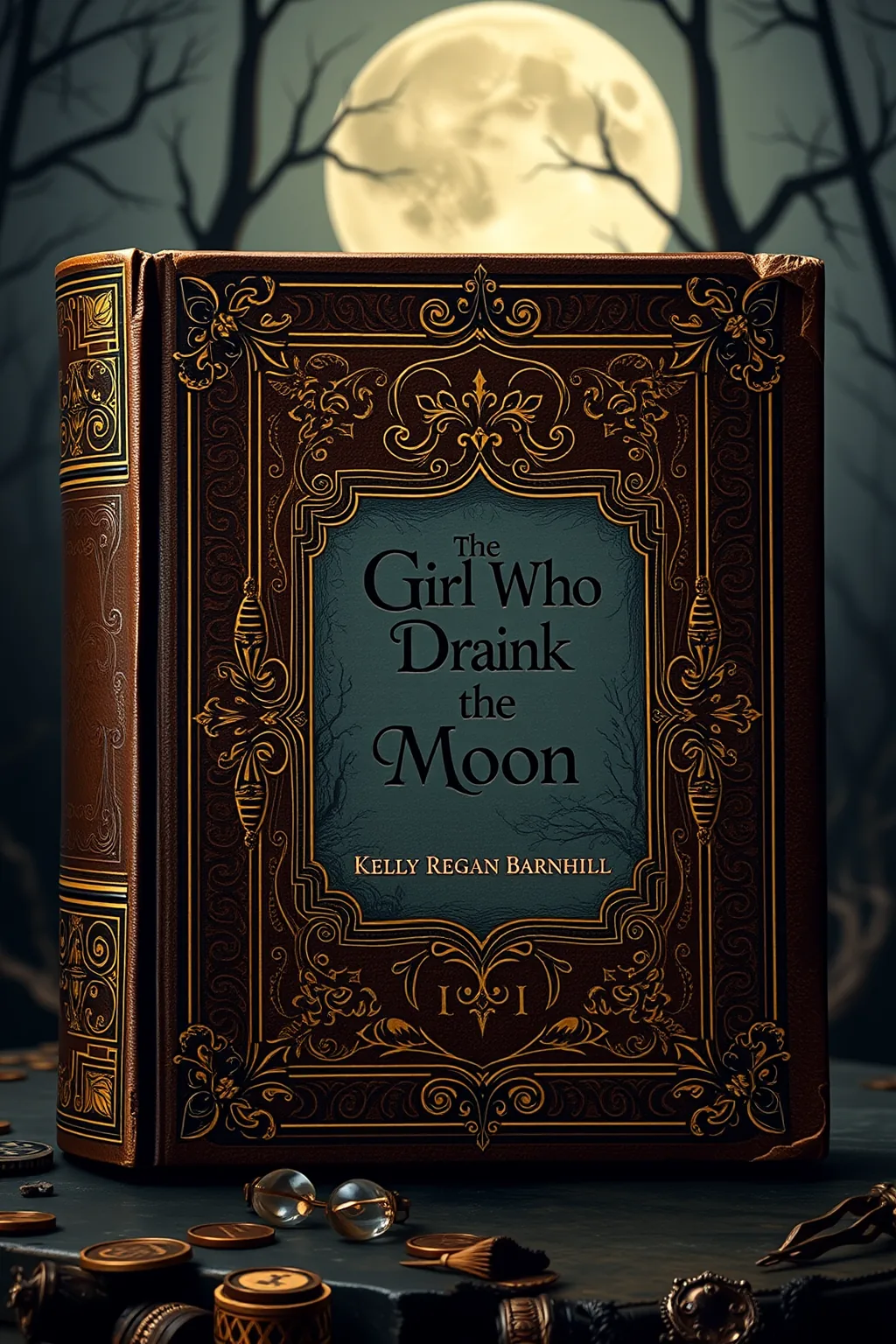
The Girl Who Drank the Moon
 84
84

The Girl Who Drank the Moon
Kelly Regan Barnhill’s *The Girl Who Drank the Moon* presents a compelling reimagining of the witch-and-child trope, moving beyond simple good-versus-evil to a more intricate examination of love, fear, and belonging. The novel’s strength lies in its nuanced characterization, particularly of Xan, the witch who is more burdened than wicked, and Luna, whose magic is a manifestation of her emotional landscape rather than a simple power-up. The world-building, while drawing on fairy tale conventions, feels grounded in its exploration of how fear can solidify into societal dogma. A minor limitation might be the occasional predictability of certain plot points for seasoned fantasy readers. However, the passage where Xan attempts to explain to Luna the nature of the moonlight magic, describing it as a "love made visible," offers a poignant moment that encapsulates the book's emotional core. Barnhill’s prose effectively captures the wonder and terror of growing up with uncontrollable power, making it a memorable work.
This is a beautifully rendered story about the burdens of parenthood and the terror of the unknown.
📝 Description
84
### What It Is Kelly Regan Barnhill's 2016 novel, *The Girl Who Drank the Moon*, is a fantasy narrative centered on a young girl named Luna, who is left as a sacrifice to a witch in the forest. However, the witch, Xan, is not malevolent but rather kind, and she accidentally feeds the infant Luna moonlight. This act imbues Luna with powerful, unpredictable magic that manifests as she grows. The story unfolds as Luna grapples with her burgeoning abilities, the societal fear that led to her abandonment, and the true nature of the magic she wields. The narrative is framed by the traditions of the nearby town of Middlewick, where an annual sacrifice is made to appease the witch, a practice rooted in generations of fear and misunderstanding.
### Who It's For This work is ideal for readers who appreciate fairy tales reimagined with a deeper psychological and emotional resonance. It will appeal to those interested in themes of found family, the nature of love, and the consequences of fear and prejudice. Readers who enjoy explorations of magic not as a mere plot device but as an extension of character and emotion will find much to ponder. It is also suitable for younger readers (aged 10+) transitioning into more complex thematic literature, offering a gateway to nuanced discussions about societal structures and individual agency. The narrative structure also appeals to those who enjoy multiple perspectives and interwoven timelines.
### Historical Context Published in 2016, *The Girl Who Drank the Moon* emerged during a period of renewed interest in classic fairy tale retellings and a growing appreciation for diverse voices in children's and young adult literature. While not directly tied to a specific philosophical movement, its exploration of societal anxieties and the manipulation of fear by those in power echoes contemporary concerns. The book's thematic concerns about scapegoating and the dangers of inherited narratives align with discussions found in works exploring social psychology and critical theory. Barnhill's work gained significant traction, culminating in the prestigious John Newbery Medal in 2017, a testament to its critical reception within the literary landscape of American children's literature.
### Key Concepts The novel intricately explores the concept of **"The Protectorate"**, the oppressive societal structure that maintains the sacrifice ritual through fear and misinformation. This entity functions as a symbolic representation of how fear can be weaponized to control populations. Another central concept is **"The Poison"**, which represents the fear and negativity that the townspeople absorb and perpetuate, believing it to be a necessary protection. The book also delves into the nature of **magic** itself, not as an external force, but as an intrinsic part of Luna, tied to emotions and understanding, contrasting with the villagers' view of magic as inherently dangerous and separate from humanity.
💡 Why Read This Book?
• You will learn how societal fear can be manufactured and perpetuated, as seen in the town of Middlewick's annual sacrifice ritual, a concept explored throughout the book's narrative arc. • You will feel the profound impact of love as a source of strength and transformation, exemplified by Xan's protective magic for Luna, a core theme illustrated by the "love made visible" interpretation. • You will gain insight into how misunderstood power can be, mirroring Luna's struggle with her moonlight-infused magic, a central conflict that drives the plot from her infancy.
⭐ Reader Reviews
Honest opinions from readers who have explored this book.
❓ Frequently Asked Questions
When was 'The Girl Who Drank the Moon' first published?
The novel 'The Girl Who Drank the Moon' by Kelly Regan Barnhill was first published in 2016, entering the literary scene as a fresh take on fairy tale narratives.
What is the main theme of 'The Girl Who Drank the Moon'?
The primary themes revolve around love, fear, and the nature of magic, exploring how societal fear can lead to prejudice and how love can overcome it, particularly through the character of Xan and her relationship with Luna.
Who is the author of 'The Girl Who Drank the Moon'?
The author is Kelly Regan Barnhill, an American writer known for her children's and young adult fantasy novels. She received the John Newbery Medal for this work in 2017.
What is the significance of the moonlight in the book?
The moonlight is the source of Luna's magic. When Xan accidentally fed her moonlight as an infant, it imbued her with extraordinary, often unpredictable, powers that are intrinsically linked to her emotions and growth.
What is the 'Protectorate' in 'The Girl Who Drank the Moon'?
The Protectorate represents the ruling body or societal structure within the town of Middlewick that enforces the tradition of sacrificing a baby to the witch in the forest, driven by inherited fear and a desire for control.
Is 'The Girl Who Drank the Moon' suitable for young readers?
Yes, it is generally considered suitable for middle-grade readers, typically ages 10 and up. It handles complex themes like abandonment and fear in a way that is accessible yet thought-provoking for this age group.
🔮 Key Themes & Symbolism
The Alchemy of Love and Fear
The narrative intricately dissects how societal constructs, like the Protectorate and its fear-driven sacrifice ritual, can warp perceptions and create 'poison' within a community. Conversely, it presents love, embodied by Xan's actions and Luna's developing empathy, as a transformative force capable of dissolving fear and healing generational trauma. This is not merely romantic love, but the profound, often challenging, love of caretaking and found family, suggesting an alchemical process where the base elements of fear and vulnerability are transmuted into courage and connection through the catalyst of genuine affection.
Inherent Magic and Societal Control
Magic in *The Girl Who Drank the Moon* is depicted not as an external power to be wielded, but as an intrinsic part of beings, particularly Luna, whose abilities are tied to her emotional state and her consumption of moonlight. The story contrasts this organic magic with the rigid, fear-based control exerted by the Protectorate, which demonizes what it doesn't understand. The book explores the idea that true magic, like inherent potential, can be dangerous if suppressed or misunderstood, but ultimately serves a purpose when integrated and accepted, challenging the notion that power must be feared rather than understood.
The Scapegoat and the Unseen Burden
The annual sacrifice of an infant to the witch serves as a powerful allegory for the scapegoating mechanism, where a community projects its anxieties and perceived evils onto an innocent party to maintain a fragile sense of order. Luna, as the chosen sacrifice, and later as the bearer of uncontrolled magic, embodies this role. The narrative also highlights the unseen burdens carried by those who are different or possess unusual gifts, as well as the heavy weight of responsibility borne by figures like Xan, who must protect and guide while navigating societal prejudice.
Found Family and Belonging
Central to the novel is the formation of a non-traditional family unit. Xan, a solitary witch, finds herself unexpectedly responsible for Luna, the 'sacrificed' child. Their relationship, along with the inclusion of Fyrian, the dragon, and Gler, the bog monster, creates a dynamic found family that thrives on mutual care and understanding, standing in stark contrast to the fear-based community of Middlewick. This theme underscores the idea that belonging is not determined by blood or societal norms, but by shared experiences, acceptance, and unconditional love, offering a potent counter-narrative to isolation.
💬 Memorable Quotes
“The moonlight tasted like love.”
— This simple, sensory description encapsulates the accidental enchantment of Luna. It suggests that the magic she absorbs is fundamentally tied to affection and care, framing her powerful, inherent abilities as a form of love made tangible, rather than a curse.
“Fear is a poison.”
— This is a recurring motif, representing the destructive influence of fear on individuals and communities. The townspeople of Middlewick are consumed by it, believing the sacrifice is necessary, while Xan and Luna learn to confront and overcome it through understanding and love.
“She was a monster. She was a witch. She was a mother.”
— This internal reflection by Xan highlights her complex identity and the societal labels imposed upon her versus her chosen role. It speaks to the multifaceted nature of individuals and how perception can be skewed by fear and prejudice, contrasting outward appearances with inner reality.
“The Protectorate kept the town safe. The Protectorate kept the town fed. The Protectorate kept the town clean. The Protectorate kept the town pure.”
— This quote demonstrates the manipulative rhetoric of the Protectorate, emphasizing how oppressive regimes use promises of security and purity to maintain control. It reveals the insidious nature of authoritarianism, which thrives on manufactured threats and the suppression of dissent.
“There was a story that the witch fed the baby moonlight. And that was how the baby became a witch.”
— This highlights the power of narrative and how easily misinformation can become accepted 'truth.' The story itself, born from a misunderstanding of Xan's kindness, fuels the town's fear and justifies their ritual, showcasing how myths can shape reality.
🌙 Esoteric Significance
Tradition
While not explicitly belonging to a single esoteric lineage, *The Girl Who Drank the Moon* draws heavily on archetypal themes found across various traditions, particularly those involving the archetype of the wise woman/witch, the child as a vessel of power, and the transformative potential of nature (moonlight). It echoes Gnostic ideas of hidden knowledge and the corrupting influence of societal structures (the 'demiurge' of the Protectorate) that obscure true understanding. The narrative's focus on inner magic and emotional alchemy also aligns with Neoplatonic and Hermetic principles concerning the interconnectedness of the microcosm (individual) and macrocosm (universe).
Symbolism
The **Moon** is the most potent symbol, representing intuition, emotion, feminine energy, and the subconscious. Luna's ingestion of moonlight directly links her to these qualities, making her magic inherently tied to her inner world. **The Witch (Xan)** embodies the archetype of the misunderstood feminine power, often demonized by patriarchal or fear-based societies, yet possessing deep wisdom and healing capabilities. **The Forest** serves as a liminal space, a place of both danger and refuge, where the natural, intuitive world (represented by Xan and Luna) exists apart from the rigid, fear-bound human settlement.
Modern Relevance
Contemporary thinkers and practitioners in fields like ecopsychology and archetypal psychology find relevance in Barnhill's depiction of nature's influence and the symbolic weight of lunar cycles. The book's exploration of how fear perpetuates societal ills speaks to current discussions on social justice, the dangers of misinformation, and the power of narrative. Its emphasis on found family and challenging oppressive structures resonates with modern movements advocating for inclusivity and questioning traditional authority. The concept of 'love as a force' also aligns with various therapeutic and spiritual approaches focused on compassion and emotional healing.
👥 Who Should Read This Book
• Aspiring writers and storytellers interested in deconstructing fairy tale tropes and exploring nuanced character motivations within fantasy settings. • Readers exploring themes of parenthood, sacrifice, and the formation of unconventional families, seeking narratives that offer emotional depth and thoughtful character arcs. • Individuals interested in the symbolic use of nature, particularly lunar symbolism, within literature and its connection to intuition, emotion, and the feminine principle.
📜 Historical Context
Published in 2016, *The Girl Who Drank the Moon* emerged in a literary landscape increasingly interested in nuanced fairy tale retellings and exploring complex emotional themes within young adult and middle-grade fiction. The book gained significant critical acclaim, culminating in its award of the John Newbery Medal in 2017. This prestigious award recognized its literary merit within the tradition of American children's literature. While not directly aligned with a specific philosophical school, its exploration of societal control through fear and the manipulation of narratives resonates with themes found in contemporary critical theory and social psychology. Barnhill's work can be seen alongside authors like Naomi Novik, who also re-examines folklore, and Ursula K. Le Guin, known for her thoughtful explorations of societal structures and magic within fantasy. The book's success arrived during a period where diverse voices and deeper thematic exploration were gaining prominence, challenging simpler, more didactic forms of storytelling.
📔 Journal Prompts
Luna’s moonlight magic as an extension of her emotions.
The societal fear embodied by the Protectorate.
Xan's transition from solitary witch to mother figure.
The symbolic meaning of the forest as a sanctuary.
The 'poison' of fear versus the 'alchemy' of love.
🗂️ Glossary
The Protectorate
The governing body or societal structure within the town of Middlewick that enforces the tradition of sacrificing a baby to the witch in the forest, driven by fear and a desire for control.
Middlewick
The town adjacent to the forest where the story is set. Its inhabitants live under the oppressive rule of the Protectorate and are bound by generations of fear regarding the witch.
Moonlight Magic
The unique and powerful magic imbued in Luna when she accidentally consumed moonlight as an infant. It is depicted as intrinsically linked to her emotions and growth.
The Sacrifice
The ritualistic offering of a baby, made annually by the townspeople of Middlewick to the witch in the forest, ostensibly to appease her and ensure the town's safety.
The Poison
A metaphorical concept representing the pervasive fear, negativity, and misunderstanding that grips the townspeople of Middlewick, influencing their actions and beliefs.
Fyrian
A small, ancient dragon who lives with Xan. He is fiercely loyal and protective, particularly of Luna, and provides a source of companionship and wisdom.
Gler
A bog monster, also a companion to Xan, who is generally gentle and wise, offering a grounding presence within their unconventional family.