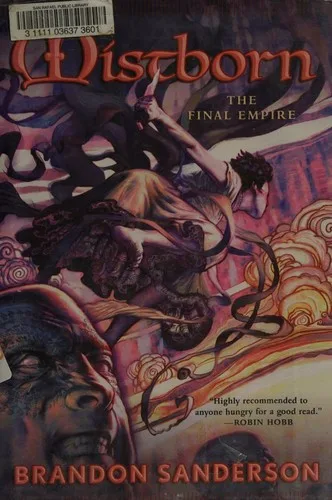
The Final Empire

 81
81

The Final Empire
Brandon Sanderson's "The Final Empire" presents a meticulously constructed world, "Scadrial," where ash perpetually falls and an immortal tyrant, the Lord Ruler, maintains absolute control. The narrative's strength lies in its unique magic system, Allomancy, a detailed science of burning metals for supernatural powers, which informs both the action and the plot's intricate heist structure. The novel excels in depicting the oppressive society and the desperate hope of a rebellion. However, the sheer density of world-building and exposition, particularly in the initial chapters, can feel overwhelming, occasionally slowing the pacing. A standout moment is the intricate planning and execution of the central heist, demonstrating the Allomantic powers in creative ways. Ultimately, "The Final Empire" is a compelling entry point into a complex fantasy world that prioritizes system-driven magic and societal critique.
📝 Description
81
### What It Is Brandon Sanderson's "The Final Empire," first published in 2016, is the inaugural volume in the "Mistborn" series. It constructs an intricate world set on a planet called Scadrial, a land perpetually shrouded in ash and ruled by an immortal tyrant, the Lord Ruler. The narrative centers on a group of rebels who employ a unique magic system, Allomancy, to challenge the oppressive regime. This system allows certain individuals, known as Mistborn, to ingest and "burn" metals for supernatural abilities.
### Who It's For This work appeals to readers seeking complex world-building and detailed magic systems. It is particularly suited for those interested in epic fantasy narratives that blend political intrigue, heist elements, and character-driven arcs. Readers who appreciate a meticulously crafted society, complete with its own history, mythology, and social stratification, will find "The Final Empire" rewarding. It is also for those who enjoy a story where oppressed populations strive for liberation against seemingly insurmountable odds.
### Historical Context Published in 2016, "The Final Empire" entered a fantasy landscape already robust with intricate magic systems and grand narratives. Sanderson himself had gained significant traction with his "Stormlight Archive" series, establishing a reputation for detailed world-building. The novel emerged in an era where epic fantasy often explored themes of societal collapse, rebellion, and the nature of power. While not directly engaging with specific philosophical movements of the past, its exploration of a rigid, divinely-ordained social hierarchy and the subsequent rebellion can be seen as echoing historical cycles of revolution against autocracy. Its reception was largely positive, cementing Sanderson's status as a leading voice in modern fantasy literature.
### Key Concepts The novel introduces several foundational concepts for its universe. Allomancy, the magic system based on burning ingested metals, is central, with specific metals granting distinct powers like enhanced senses (Seeker), emotional manipulation (Charmer), or increased physical prowess (Strength). Feruchemy, another metallic art, allows users to store attributes in metals for later use. The Deepness, a catastrophic event from the world's past, and the subsequent reign of the Lord Ruler, who supposedly saved humanity, form the historical backdrop. The pervasive ash, a result of the planet's volcanic activity, symbolizes the constant oppression and decay within the empire.
💡 Why Read This Book?
• Gain a comprehensive understanding of Allomancy, a unique magic system where burning ingested metals grants specific powers, as detailed in the early chapters outlining its rules and applications. • Experience a meticulously crafted dystopian society under the Lord Ruler's millennia-long reign, learning how social stratification and constant ashfall shape the lives of Scadrial's inhabitants. • Witness a high-stakes rebellion orchestrated through a sophisticated heist, observing how characters like Kelsier and Vin utilize their unique metallic arts to challenge a seemingly invincible empire.
⭐ Reader Reviews
Honest opinions from readers who have explored this book.
❓ Frequently Asked Questions
What is Allomancy in The Final Empire?
Allomancy is a magic system in "The Final Empire" where individuals ingest and "burn" metals to gain supernatural abilities. Different metals grant distinct powers, such as enhanced senses, emotional influence, or increased physical strength, forming the core of the narrative's conflict and character abilities.
Who is the Lord Ruler in The Final Empire?
The Lord Ruler is the immortal, tyrannical emperor who has ruled the planet Scadrial for a thousand years. He established the current oppressive society and is the primary antagonist the protagonists seek to overthrow, claiming to have saved humanity in the past.
What is the significance of the ash in The Final Empire?
The perpetual ashfall in "The Final Empire" symbolizes the oppressive, decaying nature of the Lord Ruler's reign. It constantly blankets the world, affecting visibility, agriculture, and the general mood, serving as a persistent reminder of the empire's suffocating control and the harsh environment.
What is the primary goal of the rebel group in The Final Empire?
The primary goal of Kelsier's rebel group in "The Final Empire" is to overthrow the Lord Ruler and dismantle his thousand-year-old oppressive empire. They plan to achieve this through a complex heist, aiming to sow chaos and ignite a larger rebellion among the skaa population.
When was The Final Empire first published?
"The Final Empire" was first published in 2016. It is the first book in the "Mistborn" series, introducing readers to the world of Scadrial and its unique metallic magic system.
What are Mistborn in Sanderson's world?
Mistborn are individuals in "The Final Empire" who possess the rare ability to "burn" all eight basic metals of Allomancy. This grants them a wide range of supernatural powers, making them exceptionally dangerous and the key to the protagonists' rebellion.
🔮 Key Themes & Symbolism
Oppression and Rebellion
The narrative is deeply rooted in the struggle against overwhelming tyranny. The skaa, the subservient class on Scadrial, endure brutal oppression under the Lord Ruler's thousand-year reign. "The Final Empire" meticulously details the systemic control, from social stratification to the omnipresent fear. The story chronicles the daring rebellion, led by Kelsier and his crew, which seeks not just to survive but to dismantle the entire power structure. This theme explores the psychological impact of long-term subjugation and the sparks of hope that can ignite widespread resistance, using the harsh environment of ash and mists as a constant backdrop to this struggle.
The Nature of Power and Belief
Central to "The Final Empire" is an examination of power – both its corrupting influence and its potential for liberation. The Lord Ruler embodies absolute, seemingly divine authority, maintained through fear and a manufactured history. Conversely, the rebels wield power through the intricate magic of Allomancy, challenging the established order. The novel questions the foundations of authority, exploring how belief systems, historical narratives, and the control of information shape societal structures. It probes whether power derived from force or from perceived destiny is ultimately more potent, and how individuals react when these foundations are shaken.
Identity and Belonging
Within the rigid social hierarchy of "The Final Empire," characters grapple with their sense of self and place. Vin, the protagonist, begins as an orphaned, distrustful street urchin, uncertain of her own capabilities and lineage. Her journey involves discovering her innate Allomantic talents and learning to trust others, particularly Kelsier and the crew. The novel explores how societal labels and expectations can limit an individual, and how embracing one's true nature, even if it deviates from prescribed roles, is essential for personal growth and collective change. The concept of "mistings" and "mistborn" further categorizes individuals, influencing their societal standing and self-perception.
Hope in Despair
Despite the pervasive gloom of Scadrial, perpetually covered in ash and ruled by a seemingly invincible tyrant, "The Final Empire" is a narrative fueled by persistent hope. Kelsier's unwavering belief in the possibility of overthrowing the Lord Ruler serves as the driving force for the rebellion. This hope is not passive but actively cultivated through daring acts and the belief in the skaa's inherent worth. The novel illustrates how hope can be a powerful weapon against despair, inspiring individuals to take extraordinary risks and to envision a future beyond their current suffering, even when the odds appear insurmountable.
💬 Memorable Quotes
“There's so many kinds of evil, you see. There's the evil that's done by the cruel and the wicked. But then there's the evil that's done by men who think they are good. And that, perhaps, is the worst kind.”
— This quote encapsulates the novel's exploration of morality within oppressive systems. It suggests that the most insidious forms of evil arise not from malice, but from individuals who believe their actions are justified or righteous, often leading to greater suffering for others.
“The Lord Ruler is a god. He can do anything. He can kill anyone. He can raise armies from the dead. He has been ruling for a thousand years. He is immortal.”
— This statement, reflecting common belief within the world, highlights the seemingly insurmountable power and divine status attributed to the antagonist. It establishes the extreme challenge faced by the protagonists and the pervasive fear that underpins the empire's stability.
“He said he was going to take over the world. He said he was going to change it. And he did.”
— This paraphrased concept reflects on the Lord Ruler's historical achievement. It acknowledges his immense power and successful implementation of his vision, underscoring the long-standing nature of his reign and the profound impact he has had on Scadrial.
“I will be a thief. I will be a thief who steals hope.”
— This sentiment, attributed to Kelsier, signifies his core motivation. Beyond material gain, his ambition is to actively undermine the despair enforced by the Lord Ruler, offering the oppressed a vision of a different future and the courage to pursue it.
“Metal, the source of power. Ingested, burned, used. Each grants a different gift.”
— This concise summary defines the fundamental principle of Allomancy. It highlights the unique magic system of "The Final Empire," where specific metals are the catalysts for supernatural abilities, forming the basis of the world's unique conflict and character dynamics.
🌙 Esoteric Significance
Tradition
While "The Final Empire" does not explicitly align with a single, named esoteric tradition like Hermeticism or Gnosticism, its conceptual framework shares resonances with certain Gnostic ideas concerning a flawed, oppressive creator deity (the Lord Ruler) and the necessity of gnosis (knowledge of one's true nature and abilities) to escape subjugation. The pervasive ash and oppressive atmosphere can be interpreted as a material manifestation of a lower, corrupt reality, a common theme in Gnostic cosmologies. The magic system, Allomancy, while scientifically codified, also functions as a form of hidden knowledge and inherent spiritual or elemental power that separates the initiated from the masses.
Symbolism
The pervasive ash that blankets the world of Scadrial serves as a potent symbol of oppression, decay, and the suffocating grip of the Lord Ruler's thousand-year reign. It obscures vision, hinders growth, and represents the spiritual and physical stagnation imposed upon the populace. The mists, which appear nightly, offer a contrasting, albeit mysterious, element. They can symbolize the unknown, hidden potential, and the liminal space between the oppressive reality and the possibility of change. The metals used in Allomancy – such as tin for enhanced senses or iron for physical manipulation – act as symbolic conduits, representing the unlocking of inner potential and the transformation of base elements into extraordinary power.
Modern Relevance
Contemporary fantasy literature and game design continue to draw inspiration from Sanderson's meticulously crafted magic systems, including Allomancy. The concept of codified, scientific magic systems influences how authors and creators approach world-building, aiming for internal consistency and intellectual engagement. Furthermore, the novel's exploration of societal structures, rebellion against entrenched power, and the psychological effects of long-term oppression remains highly relevant in discussions of social justice, political change, and the nature of authority in the 21st century. Thinkers and creators interested in systemic critique and the interplay of individual agency within oppressive frameworks find fertile ground in Scadrial's narrative.
👥 Who Should Read This Book
• Aspiring fantasy authors and world-builders seeking examples of intricate, rule-based magic systems and detailed societal structures. • Readers interested in epic fantasy narratives that combine elements of political intrigue, heist plots, and character-driven arcs against a backdrop of dystopian oppression. • Fans of Brandon Sanderson's previous works who appreciate his signature style of detailed exposition, complex characters, and large-scale conflict.
📜 Historical Context
Brandon Sanderson's "The Final Empire," published in 2016, arrived during a period of immense popularity for epic fantasy, a genre that had evolved significantly since the late 20th century. While Sanderson had already established himself with series like "The Way of Kings" (begun in 2010), "The Final Empire" represented his continued exploration of intricate, rule-based magic systems, a hallmark of his writing that set him apart from authors focusing on more abstract or symbolic magic. The novel's detailed world-building and societal critique, particularly its depiction of a rigid, thousand-year-old autocracy, can be seen as engaging with enduring themes of revolution and power found in various historical and literary contexts, though it doesn't directly align with a specific philosophical school of the era it depicts. Its reception was strong, contributing to Sanderson's reputation as a leading contemporary fantasy author, and it quickly became a cornerstone of his "Mistborn" universe, demonstrating a consistent demand for complex, internally logical fantasy worlds.
📔 Journal Prompts
The Lord Ruler's thousand-year reign and the skaa's perpetual subjugation.
Vin's discovery of her Allomantic abilities and growing self-trust.
Kelsier's philosophy of stealing hope from the oppressed.
The symbolic weight of the ever-present ash on Scadrial.
The mechanics and limitations of the metallic arts.
🗂️ Glossary
Allomancy
A magic system where individuals ingest and "burn" metals to gain supernatural abilities. Different metals grant distinct powers, such as enhanced senses, emotional manipulation, or physical augmentation. It is a core element of "The Final Empire."
Mistborn
Individuals who possess the rare ability to "burn" all eight basic Allomantic metals. This grants them a wide spectrum of powers, making them exceptionally potent and central to the plot of "The Final Empire."
Skaa
The subservient, oppressed lower class in the society of "The Final Empire." They are treated as laborers and are subject to the brutal rule of the Lord Ruler and the nobility.
Lord Ruler
The immortal, tyrannical emperor who has ruled the planet Scadrial for a millennium. He established the current oppressive social order and is the primary antagonist the protagonists seek to overthrow.
Feruchemy
Another metallic art, distinct from Allomancy. Feruchemy allows users to store attributes (like speed, strength, or health) in metal "mists" for later use, rather than burning them for immediate effect.
The Deepness
A catastrophic event from Scadrial's past, described as a large-scale natural disaster. The Lord Ruler claims he saved humanity from it, using this event to legitimize his thousand-year rule.
Ashmounts
Volcanic mountains on Scadrial that constantly spew ash into the atmosphere, causing the perpetual ashfall that characterizes the planet's environment in "The Final Empire."