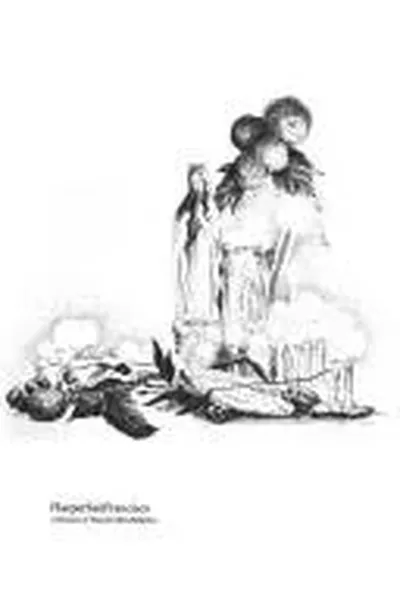
Snow Angels with Tattoos

 73
73

Snow Angels with Tattoos
Wendy Cheyette Lewison’s *Snow Angels with Tattoos* is less a treatise and more a series of illuminated reflections. The prose often possesses a dreamlike quality, particularly when describing moments of unexpected spiritual clarity. A notable strength lies in Lewison’s ability to render abstract spiritual concepts through concrete, personal anecdote. For instance, her descriptions of synchronicities feel grounded rather than ethereal. However, the book occasionally suffers from a lack of clear structure, at times feeling like a collection of diary entries rather than a cohesive exploration. The titular 'snow angels' concept, while evocative, could have been more thoroughly developed as a central metaphor. Despite this, the work offers a sincere and unvarnished look at one individual's ongoing quest for meaning. It is a quiet, introspective piece that rewards patient reading.
📝 Description
73
Wendy Cheyette Lewison's 1998 book, Snow Angels with Tattoos, examines how personal experience relates to spiritual understanding.
Published in 1998, *Snow Angels with Tattoos* by Wendy Cheyette Lewison is an esoteric text that connects personal life stories with spiritual inquiry. Lewison does not follow a single religious system. Instead, she combines ideas from various metaphysical traditions to create an account that feels both personal and broadly applicable. The book looks at how everyday events can lead to self-awareness and a grasp of universal energies.
This work is for readers interested in spiritual autobiography, comparative mysticism, and applying metaphysical ideas to daily living. It suits those who like introspective writing that questions typical views of reality and the self. People looking for meaning in their own lives, especially those drawn to themes of change and hidden knowledge, will find much to consider.
Emerging in 1998, *Snow Angels with Tattoos* appeared during a time of growing interest in New Age spirituality and individual spiritual paths. The late 20th century saw a shift from rigid religious doctrines toward more varied and experiential spiritual practices. Lewison's book fits this period by blending her own experiences with wider philosophical thoughts, reflecting a cultural move toward personal spiritual growth and the mixing of different wisdom traditions.
💡 Why Read This Book?
• Understand the symbolic resonance of everyday occurrences, as Lewison illustrates through her personal experiences with synchronicities, offering a unique lens beyond typical spiritual texts. • Explore the concept of 'snow angels' as a metaphor for ephemeral spiritual encounters and their lasting impact, a motif specific to Lewison's narrative. • Gain a practical perspective on integrating spiritual inquiry with personal life, demonstrated through Lewison's 1998 publication context and her synthesis of diverse metaphysical ideas.
⭐ Reader Reviews
Honest opinions from readers who have explored this book.
❓ Frequently Asked Questions
What is the central theme of 'Snow Angels with Tattoos'?
The central theme revolves around finding profound spiritual meaning and connection within ordinary life experiences, using personal narrative and symbolic interpretation to explore the nature of the soul and interconnectedness.
Who is the author, Wendy Cheyette Lewison?
Wendy Cheyette Lewison is the author of 'Snow Angels with Tattoos,' a work first published in 1998 that draws from her personal journey and metaphysical explorations.
When was 'Snow Angels with Tattoos' first published?
The book 'Snow Angels with Tattoos' was first published in 1998, placing it within the late 20th-century context of New Age spirituality and personalized esoteric thought.
Does the book offer practical exercises or is it purely reflective?
While primarily reflective, the book implicitly encourages readers to find spiritual significance in their own lives, suggesting a practical approach to interpreting personal experiences through a metaphysical lens.
What kind of esoteric philosophy does the book engage with?
The book engages with a broad range of esoteric and metaphysical concepts, including themes of soul, interconnectedness, synchronicity, and symbolic interpretation, without adhering strictly to a single tradition.
What does the title 'Snow Angels with Tattoos' refer to?
The title is metaphorical, likely alluding to the transient beauty of snow angels contrasted with the permanence suggested by tattoos, symbolizing ephemeral spiritual insights and their indelible impact on the self.
🔮 Key Themes & Symbolism
The Soul's Journey
Lewison's work posits the individual life as a sacred path for the soul's unfolding. The book suggests that external events and internal dialogues are not random but are integral parts of a larger spiritual curriculum. Through personal anecdotes, she illustrates how moments of perceived difficulty or clarity can serve as crucial lessons, guiding the soul toward greater self-awareness and integration with the universal consciousness. This perspective elevates the mundane to the mystical, framing personal history as a divine narrative.
Synchronicity and Meaning
A significant aspect of the book is its exploration of synchronicity – meaningful coincidences that appear to transcend mere chance. Lewison interprets these occurrences not as accidents but as signposts from the universe, offering guidance and validation on one's spiritual path. The book encourages readers to cultivate an awareness of these patterns in their own lives, suggesting that by recognizing and reflecting upon them, one can deepen their understanding of their connection to the underlying order of existence.
Symbolic Language of Existence
The book posits that reality communicates through a rich symbolic language, accessible to those who are attuned. Lewison suggests that symbols, whether encountered in dreams, nature, or personal experiences, hold profound messages about our inner state and our relationship to the cosmos. The act of interpreting these symbols becomes a spiritual practice in itself, a way to decode the universe's wisdom and align oneself with a higher purpose. This theme encourages a more poetic and intuitive engagement with the world.
Personal Transformation
Central to 'Snow Angels with Tattoos' is the idea that profound personal transformation is an ongoing process, often initiated by moments of spiritual awakening or insight. Lewison’s narrative demonstrates how embracing vulnerability and engaging with one’s inner landscape can lead to a fundamental shift in perspective. The book implies that true growth occurs when individuals actively seek to understand themselves and their place in the universe, integrating lessons learned into their being.
💬 Memorable Quotes
“The world speaks in whispers, if only we learn to listen.”
— This paraphrase captures Lewison's idea that the universe communicates subtly through events and intuitions. It suggests that spiritual understanding requires developing a receptive awareness, moving beyond superficial observation to perceive deeper, meaningful patterns.
“Every coincidence holds a secret message for the attentive soul.”
— This highlights the book's focus on synchronicity. It frames seemingly random events as deliberate communications from a higher source, intended to guide or inform the individual on their spiritual journey.
“Our scars are not flaws, but maps of our resilience.”
— This interpretation reflects the book's approach to personal history and transformation. It reframes past difficulties and 'flaws' as integral parts of one's story that demonstrate strength and provide direction.
“The soul recognizes its echo in the vastness.”
— This captures the concept of interconnectedness. It suggests an innate recognition or resonance between the individual spirit and the universal consciousness, a feeling of belonging within the grand cosmic scheme.
“Even fleeting moments can leave indelible marks.”
— This relates to the title's imagery, contrasting the temporary nature of snow angels with the lasting impression of tattoos. It speaks to how brief spiritual insights or significant experiences can profoundly shape an individual.
🌙 Esoteric Significance
Tradition
While not strictly adhering to a single lineage, *Snow Angels with Tattoos* draws from a broad spectrum of esoteric thought, including elements of Gnosticism (emphasis on inner knowing and personal revelation) and Hermeticism (the principle of correspondence between the inner and outer). It leans towards a modern, personalized form of mysticism, prioritizing individual experience and intuitive understanding over codified dogma. This aligns with a late 20th-century trend towards eclectic spiritual paths, where practitioners synthesize diverse wisdom traditions to form a unique spiritual framework.
Symbolism
The 'snow angels' themselves serve as a primary symbol, representing ephemeral moments of grace, beauty, or spiritual insight that appear briefly and then vanish, leaving an impression. The 'tattoos' can symbolize the indelible mark these experiences leave upon the soul or the conscious self, suggesting that even fleeting moments can lead to lasting transformation. The work likely explores other natural symbols or personal motifs, interpreting them as conduits for understanding the self and the universe.
Modern Relevance
Contemporary readers interested in spiritual memoir, introspective psychology, and the practice of finding meaning in everyday life continue to find value in Lewison's work. It speaks to modern spiritual seekers who prioritize personal experience and intuitive wisdom over institutional religion. Thinkers and practitioners in fields like transpersonal psychology or those exploring the concept of synchronicity may find Lewison's personal account a relatable and illuminating example of these phenomena in action.
👥 Who Should Read This Book
• Individuals interested in spiritual autobiography who seek authentic narratives of personal transformation and self-discovery. • Seekers exploring the concept of synchronicity and looking for personal reflections on how to interpret meaningful coincidences in their own lives. • Readers drawn to introspective and philosophical works that connect everyday experiences with deeper metaphysical or spiritual themes.
📜 Historical Context
Published in 1998, *Snow Angels with Tattoos* emerged during a dynamic period for esoteric thought. The late 20th century saw a surge in personalized spirituality, moving beyond the more structured movements of mid-century Theosophy or the counter-cultural spirituality of the 1960s. This era witnessed a growing interest in memoir as a vehicle for spiritual exploration, exemplified by works that blended personal narrative with metaphysical inquiry. Lewison’s book fits within this trend, offering an introspective account that resonated with readers seeking meaning outside traditional religious institutions. While not directly engaging with academic discourse, it reflected a broader cultural shift towards subjective experience and the integration of diverse spiritual ideas, a contrast to the more dogmatic approaches prevalent in earlier esoteric traditions. The reception was primarily within independent spiritual and literary circles, highlighting its niche appeal.
📔 Journal Prompts
Reflect on a personal 'snow angel' moment: a brief, beautiful insight that left a lasting impression.
Consider the symbolic meaning of a recurring pattern in your life since 1998.
How do the 'tattoos' of your past experiences inform your present spiritual path?
Identify a synchronicity you've experienced and explore its potential message.
Describe a moment where the mundane revealed a deeper truth for you.
🗂️ Glossary
Synchronicity
The experience of two or more events occurring in a meaningful manner without a causal relationship, often perceived as a sign or guidance from a higher power or the universe.
Esoteric
Relating to or embodying some inward or secret spiritual truth; intended for or understood by only a small number of people with a specialized knowledge or interest.
Metaphysical
Based upon a theory of the nature of reality; concerning the fundamental nature of being and the world, often extending beyond the physical.
Spiritual Autobiography
A literary genre where the author recounts their personal spiritual journey, including moments of crisis, revelation, and transformation.
Soul
In various spiritual and philosophical traditions, the immaterial essence of a living being, often considered immortal and the seat of consciousness, personality, and emotion.
Symbolism
The use of symbols to represent ideas and qualities, especially in literature or art, often carrying deeper, hidden meanings.
Inner Landscape
A metaphorical term referring to one's internal world of thoughts, feelings, memories, and spiritual awareness.